
Preeclampsia Awareness Week

May is Preeclampsia Awareness Month, a time to raise awareness of this potentially fatal pregnancy condition.  

Preeclampsia is a complication of pregnancy that occurs around the 20th week during pregnancy and lasts about six weeks after birth. It is characterized by symptoms, such as high blood pressure and protein in the urine, and can cause major difficulties for the mother and baby if the condition isn’t monitored and managed.   

Other symptoms of preeclampsia include: 

  • Severe headache 
  • Swelling in the hands and face 
  • Vision problems 
  • Nausea and vomiting 
  • Pain in the stomach or abdomen 
  • Sudden weight gain 
  • Shortness of breath 

Symptoms of postpartum preeclampsia include: 

  • Severe headache 
  • Vision changes 
  • Swelling of the hands and face 
  • Difficulty breathing 

It is important to note that the shorter the time between diagnosis and treatment, the better the outcomes for the mother and baby.  

Preeclampsia and related hypertension diseases of pregnancy (HDPs) affect approximately 76,000 mothers and 500,000 newborns every year and are the leading cause of maternal and infant illness and death in the U.S. and worldwide.  

According to a report done by the Preeclampsia Foundation based on survey data, which analyzed knowledge from almost 3,000 new and expectant mothers that closely represent the demographics of the U.S. population, found that 80% of new and expectant mothers are aware of preeclampsia as a dangerous high blood pressure condition related to pregnancy. However, only 8% of them can correctly name all its major symptoms, and only 29% expressed fear that it may impact their own pregnancy.  

Here are some additional statistics about preeclampsia: 

  • Hypertensive disorders of pregnancy complicate 5%-10% of all pregnancies worldwide. They include: 
  • Preeclampsia, with or without features 
  • Eclampsia 
  • Hemolysis, elevated liver enzymes, and low platelets (HELLP) syndrome 
  • Gestational hypertension 
  • Black women experience severe maternal morbidity events at 2.1 times the rate of white women 
  • Most maternal and infant deaths caused by HDPs occur in low- and middle-income countries 
  • The U.S. ranks 47th worldwide for maternal mortality, and is the only industrialized nation with a rising maternal mortality rate 
  • Sixty percent of hypertension-related maternal deaths are potentially preventable, which highlights missed opportunities for appropriate, recommended care of maternal hypertension 

There are several ways to improve outcomes for women affected by preeclampsia, including: 

  • Screening for risk factors and early hypertension control, nutrition, and exercise, which may help decrease rates of preeclampsia 
  • Providing easy-to-understand preeclampsia signs and symptoms education tools to improve patient understanding of these, and to discuss with their healthcare providers 
  • Supporting prenatal quality collaboratives that help hospitals to implement care practices that reduce early delivery and reduce severe pregnancy complications 
  • Providing access to midwives, doulas, and other trained childbirth attendants throughout the prenatal, labor, and delivery, and postpartum periods. This can improve pregnancy outcomes for all moms, especially those in the BIPOC community 
  • Encouraging and instructing prenatal and postpartum patients on self-measured blood pressure protocols. Pregnancy is the perfect time for women to check, know, and share their blood pressure readings 
  • Standardizing and providing care guidelines on the leading causes of maternal mortality, including hypertensive disorders of pregnancy. This has been shown to decrease maternal illness and death 

Preeclampsia rates in the U.S. are on the rise. It is important that all women know the signs, symptoms, and risk factors for developing high blood pressure during pregnancy, but also know they don’t need to have risk factors to develop it. 

Flushing Hospital’s Women’s Center for Obstetrics and Gynecology offers comprehensive, multi-disciplinary, and culturally sensitive care. Our services are provided by a highly skilled team of OBGYNs. For more information about gynecological services at FHMC’s Center for Obstetrics and Gynecology, call us at (718) 670 8994. 

All content of this newsletter is intended for general information purposes only and is not intended or implied to be a substitute for professional medical advice, diagnosis or treatment. Please consult a medical professional before adopting any of the suggestions on this page. You must never disregard professional medical advice or delay seeking medical treatment based upon any content of this newsletter. PROMPTLY CONSULT YOUR PHYSICIAN OR CALL 911 IF YOU BELIEVE YOU HAVE A MEDICAL EMERGENCY.
Older Americans Month- Mobility Exercises as You Age

May is observed as Older Americans Month. It is a time when the contributions of older adults are recognized across the country.  

As we get older, our joints may feel stiffer, and our balance and reactions might be slower. According to recent studies, over 30% of adults 65 years of age and older experience some form of mobility limitation.  

Mobility for older adults usually means the ability to move freely and independently. It’s all about different aspects of activities and movement like walking, bending, reaching, and balancing.   

For older adults, balance is extremely important, and those with limited mobility are at a higher risk of experiencing a fall. According to the Centers for Disease Control and Prevention (CDC), falls are the leading cause of death for older adults, with about one in four adults 65 years and older experiencing a fall every year.  

One way to reduce the risk of falling is by doing mobility exercises. Mobility exercises are low-impact movements that are designed to improve how joints move through their natural range of motion, while maintaining control and balance.  

Mobility exercises promote active movement and coordination, and usually focus on: 

  • Balance and coordination to prevent falls  
  • The ankles and feet for walking stability 
  • The hips and knees for standing, stepping, and going up and down stairs 
  • The spine for posture and reaching 
  • The shoulders for overhead and daily arm use 

Doing mobility exercises regularly may help support:  

  • Better balance and control of posture 
  • Reduced stiffness from long periods of sitting  
  • Easier walking and smoother transitions, such as going from sitting to standing and turning 
  • Improved confidence when engaging in daily tasks 
  • Long-term joint comfort and movement quality 

Here are some mobility exercises to help improve joint movement, balance, and coordination: 

  • Head rolls 
  • Shoulder rolls 
  • Arm circles 
  • Ankle circles 
  • Standing or seated hip circles 
  • Standing or seated marches  
  • Wrist flexibility exercises 
  • Standing side leg swings 
  • Heel-to-toe rocking 
  • Sit-to-stands 
  • Chair or floor cat-cows 
  • Seated leg raises 
  • Seated torse twists 
  • Supported single-leg stands 
  • Wall shoulder slides 

It is important to note that you should stretch before engaging in any physical activity, so you don’t injure yourself. It is also important that you keep mobility training safe and effective by: 

  • Moving slowly and with control 
  • Using a chair, wall, or rail for support 
  • Staying within a comfortable, pain-free range 
  • Wearing supportive footwear 
  • Stopping if dizziness, sharp pain, or discomfort occurs 

Mobility exercises don’t just help maintain and improve strength, flexibility, and balance to prevent falls. They also help improve your mental well-being, heart health, and overall quality of life.  

If you experience medical problems while exercising, you can schedule an appointment with a doctor at Flushing Hospital Medical Center’s Ambulatory Care Center. To schedule an appointment, please call (718) 670-5486. 

All content of this newsletter is intended for general information purposes only and is not intended or implied to be a substitute for professional medical advice, diagnosis or treatment. Please consult a medical professional before adopting any of the suggestions on this page. You must never disregard professional medical advice or delay seeking medical treatment based upon any content of this newsletter. PROMPTLY CONSULT YOUR PHYSICIAN OR CALL 911 IF YOU BELIEVE YOU HAVE A MEDICAL EMERGENCY.

Metabolic Syndrome and How it Can Lead to Heart Disease

Metabolic syndrome is a group of conditions that increase the risk of heart disease, stroke, type 2 diabetes, and other health problems.  

The number of people with metabolic syndrome is increasing, as up to one-third of adults in the U.S. have it. 

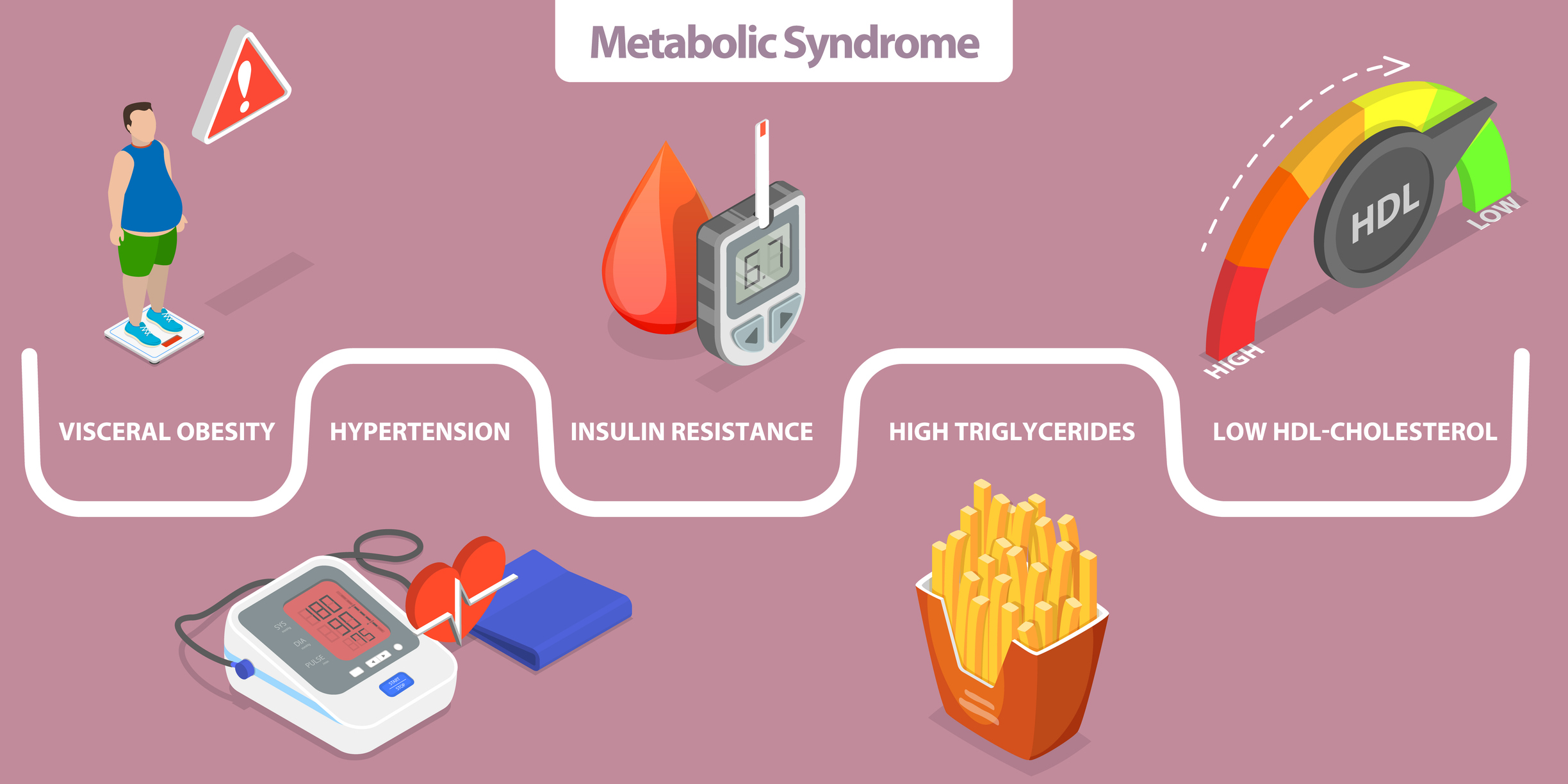
When a person is diagnosed with metabolic syndrome, they have three or more risk factors, such as: 

  • High blood pressure 
  • High blood sugar  
  • Low levels of HDL, or good cholesterol  
  • High triglyceride levels in the blood 
  • A large waist circumference or an apple-shaped body 

Although each of these conditions is a risk factor for cardiovascular disease, when a person has three or more of them and is diagnosed with metabolic syndrome, the chances of them developing a serious cardiovascular condition increase.  

There are several underlying causes of metabolic syndrome, such as: 

  • Being overweight and being obese 
  • Having an insulin resistance 
  • Being physically inactive 
  • Genetic factors 
  • Increasing age 

Metabolic syndrome is a serious health condition; however, there are ways to reduce your risk of developing it, such as: 

  • Being more physically active 
  • Losing weight 
  • Eating a heart-healthy diet that is rich in: 
  • Whole grains 
  • Fruits and vegetables 
  • Fish  

Another way to reduce your risk of developing metabolic syndrome is working with your healthcare team to monitor and manage your blood sugar, blood cholesterol, and blood pressure. 

If you or a loved one is experiencing symptoms of metabolic syndrome, you can receive treatment at Flushing Hospital Medical Center’s Ambulatory Care Center. To schedule an appointment, please call (718) 670-5486. 

All content of this newsletter is intended for general information purposes only and is not intended or implied to be a substitute for professional medical advice, diagnosis or treatment. Please consult a medical professional before adopting any of the suggestions on this page. You must never disregard professional medical advice or delay seeking medical treatment based upon any content of this newsletter. PROMPTLY CONSULT YOUR PHYSICIAN OR CALL 911 IF YOU BELIEVE YOU HAVE A MEDICAL EMERGENCY.
How Microplastics and Nanoplastics Affect Our Long-Term Health

Microplastics and nanoplastics (MNPs) are plastic particles that fail to break down and have become a major concern for environmental and human health.

These plastic particles are extremely small, as microplastics range from 1 micrometer to 5 millimeters. Nanoplastics are even smaller, as they are less than one micrometer.

There are two types of microplastics, primary microplastics and secondary microplastics. These microplastics typically come from two main sources. Primary microplastics are manufactured at a small size intentionally. Secondary microplastics are formed from the breakdown of larger plastic items.

There are public concerns about the health effects of microplastics and nanoplastics, as they have been found in our bodies because of what we eat, drink, or breathe.

Nanoplastics can behave differently from microplastics or materials that are larger. Their small size means that they may move more easily through biological membranes or interact differently with cells in the body.

Larger microplastics are filtered by the body’s natural defenses, such as the mucus and cilia in the airways, but can still get inhaled into the lungs and even infiltrate the bloodstream or the barriers to the digestive system.

Scientific research has pointed to the likelihood of nanoplastics being far more toxicologically active than microplastics, due to their being small enough to pass through some biological barriers and easily absorbed into the body, which can potentially disrupt and damage internal organs and processes.

Evidence suggests that microplastics may be correlated with health conditions, including:

  • Chronic degenerative diseases
  • Cardiovascular disease
  • Inflammatory diseases, such as inflammatory bowel disease (IBS)

Additionally, existing research has found that microplastics can accumulate in the human brain. They can also be found in plaque formed in our arteries.

Currently, the U.S. doesn’t have regulations around microplastics. However, there are ways to reduce your exposure to microplastics, including:

  • Cutting back on bottled water
  • Getting an NSF-certified water filter
  • Avoiding storing food in plastic containers
  • Avoiding the reuse of single-use plastics for food and drinks
  • Avoiding heating plastic
  • Washing plastic by hand
  • Keeping your air clean

According to health experts, there are ways you can lower your risk of the health effects linked to microplastics, including:

  • Eating a balanced diet
  • Getting enough sleep and exercise
  • Lowering stress
  • Seeing preventative care

Unfortunately, plastic is everywhere, and it is hard to avoid. However, it is important to remember that all the plastic we use will end up in a landfill and eventually in our environment and in our bodies. Limiting plastic usage and production will hopefully have a positive impact on future generations.

All content of this newsletter is intended for general information purposes only and is not intended or implied to be a substitute for professional medical advice, diagnosis or treatment. Please consult a medical professional before adopting any of the suggestions on this page. You must never disregard professional medical advice or delay seeking medical treatment based upon any content of this newsletter. PROMPTLY CONSULT YOUR PHYSICIAN OR CALL 911 IF YOU BELIEVE YOU HAVE A MEDICAL EMERGENCY.

Snow STEMI

A powerful winter storm called a Nor’easter has brought blizzard-like conditions and a large amount of snowfall to our area.

When we get such large amounts of snow, the easy part is watching the beauty of the snow falling. Unfortunately, the most difficult part is having to shovel several inches of snow from the sidewalk and driveway.

A major worry when shoveling large amounts of snow is how it can affect our health.

According to the National Library of Medicine, heavy snowfall, cold temperatures, and low atmospheric pressure during the winter months have been associated with increased adverse cardiovascular events, such as “snow-shoveler’s ST-elevated myocardial infarction (STEMI).”

Snow-shoveler’s STEMI is a type of heart attack that occurs when there is a partial or complete blockage in one of the coronary arteries, which stops blood flow to part of the heart muscle. This can especially occur due to the over-exertion caused by shoveling snow.

Per the American Heart Association, shoveling snow can put some people at risk of a heart attack, but most people won’t have a problem. Sudden exertion, such as shoveling hundreds of pounds of snow or pushing a heavy snow blower after being sedentary for several months, can put a huge strain on the heart.

There is also a factor of cold weather, as it can increase heart rate and blood pressure, and make blood clots form more easily and constrict arteries, which can decrease blood supply. This can even affect healthy people. People who are over the age of 40 years old, or are relatively inactive, are especially at risk. Other people who are at risk of STEMI include:

Those with preexisting heart conditions:

  • Those with high blood pressure (hypertension)
  • Those who smoke tobacco products

According to Medical News Today, research indicates that heavy snowfall is linked to a 6% higher likelihood of hospital admission for men with a heart attack and a 34% increase in dying.

The National Safety Council recommends the following safety tips to shovel safely:

  • Know the signs of a heart attack, stop immediately, and call 911 if you’re experiencing any of them; every minute counts

The warning signs of a heart attack include:

    • Chest discomfort that lasts more than a few minutes or doesn’t go away and returns
    • Pain or discomfort in the arms, back, neck, jaw, and stomach
    • Shortness of breath

Other signs of a heart attack can include:

    • Breaking out in a cold sweat
    • Nausea
    • A rapid or irregular heartbeat
    • Unusual tiredness
    • Heartburn or indigestion
    • Lightheadedness
  • Take it slow and stretch before you start shoveling
  • Shovel only fresh, powdery snow because it is lighter
  • Push the snow instead of lifting it. If you do lift the snow, use a small shovel or only partially fill the shovel
  • Lift with your legs and not your back
  • Dress in warm layers
  • Do not shovel after eating or while smoking
  • Do not work to the point of exhaustion

If you have a history of heart disease, do not pick up a shovel without the permission of your healthcare provider.

If you or a loved one is experiencing symptoms of STEMI, while, during, or after shoveling snow, you can receive treatment from a cardiologist at Flushing Hospital Medical Center’s Ambulatory Care Center. To schedule an appointment, please call (718) 670-5486. If you are experiencing an emergency, please call 911 immediately.

All content of this newsletter is intended for general information purposes only and is not intended or implied to be a substitute for professional medical advice, diagnosis or treatment. Please consult a medical professional before adopting any of the suggestions on this page. You must never disregard professional medical advice or delay seeking medical treatment based upon any content of this newsletter. PROMPTLY CONSULT YOUR PHYSICIAN OR CALL 911 IF YOU BELIEVE YOU HAVE A MEDICAL EMERGENCY.

How to Set Healthy Weight Loss Goals

Embarking on a weight loss journey can be a difficult and sometimes daunting experience. There are many factors that can affect a person’s weight management, such as medical conditions, certain medicines, stress, age, genes, hormones, and environment.  

However, maintaining a lifestyle that consists of a good nutritional diet, regular physical activity, stress management, and proper sleep can support a healthy weight. Additionally, people who lose weight gradually, which is about one to two pounds a week, are more likely to keep the weight off than those who lose weight more quickly.  

If a person is not at a healthy weight, moderate weight loss can help improve their cholesterol, blood pressure, and blood sugar levels. Just a 5% to 10% reduction of their current weight may lower their risk for some chronic diseases, such as heart disease, prediabetes, and type 2 diabetes. Other benefits of moderate weight loss include: 

  • More energy  
  • Better mobility  
  • A boost in self-confidence 
  • Improved fitness 

Starting a weight loss journey can be challenging. However, having and following a plan can help make the journey easier. Here are five steps that can help guide you to a healthier weight: 

  • Consider the reasons why you want to lose weight. Writing down your reasons and posting them where you can see them can help remind you why you are making this change and keep you focused on your weight loss goals 
  • Keep track of where you are as you begin your weight loss journey. You can keep a journal of your nutrition to help you keep track of what you eat and drink in a day. Make note of your physical activity by including the time of day you exercised, what activities you did, and for how long. Maintain a chart of your sleep schedule, including what time you went to sleep and woke up, and the number of hours you slept. Monitor your stress levels and the healthy ways you are reducing your stress. You can also track how you felt during your meals, when you exercise, and any lifestyle challenges that have affected your progress 
  • Set specific and realistic goals. Creating short-term goals with rewards can help prevent you from feeling frustrated when there is a setback. When setting short-term goals, focus on two or three goals at a time 
  • Find a good support system. Surround yourself with family or friends who are supportive of your weight loss goals. If they have similar goals, they may share resources that have helped them on their weight loss journey 
  • Stay up to date with your progress throughout your weight loss journey. Regularly evaluate your progress by revisiting the goals you set. Determine what has been working well and what hasn’t been, and use this information to make any changes to your goals and weight loss plan. If you are consistently meeting a particular goal, you can reward yourself for achieving your goals. It is important to recognize and be proud of your progress as you meet your goals. Rewarding yourself helps to keep you motivated and on the right path 

Please note that before you start your weight loss journey, speak with your healthcare provider so you can decide whether or not it’s a good time to set a weight loss goal. 

And if you do go on a weight loss journey, don’t get discouraged if you aren’t losing weight as quickly as you had hoped. Remember that sustainable weight loss takes time.  

For more information about the Bariatric Surgery Services at Flushing Hospital or procedures performed by our doctors, please call718-408-6977 or 718-670-8908. 


All content of this newsletter is intended for general information purposes only and is not intended or implied to be a substitute for professional medical advice, diagnosis or treatment. Please consult a medical professional before adopting any of the suggestions on this page. You must never disregard professional medical advice or delay seeking medical treatment based upon any content of this newsletter. PROMPTLY CONSULT YOUR PHYSICIAN OR CALL 911 IF YOU BELIEVE YOU HAVE A MEDICAL EMERGENCY.

Chair Exercises for Older Adults

Physical activity can reduce not only the risk of heart disease but also cognitive decline. It can also help you to sustain your ability to perform everyday activities. Maintaining physical fitness as we age becomes increasingly important for our overall well-being. However, for many older adults, high-impact workouts may not be suitable or comfortable, especially if they have challenges with balance or mobility.

Fortunately, engaging in seated or standing chair-based exercises has many health benefits that can help older adults stay active safely.

Doing chair-based exercises offers many health benefits to older adults, including:

  • Improved flexibility
  • Improved balance
  • Improved stamina and endurance
  • Helps build strength
  • Helps burn calories
  • Helps maintain muscle mass
  • Contributes to weight management

Some seated chair-based exercises include:

  • Seated leg extensions
  • Pelvic tilts
  • Seated calf raises
  • Toe raises
  • Shoulder blade squeezes
  • Thigh squeezes
  • Arm raises
  • Bicep curls
  • Seated marches
  • Side bend stretches
  • Seated shoulder stretches
  • Seated hamstring stretches
  • Seated neck rotations
  • Sit-to-stands
  • Knee extensions
  • Seated torso twists

Some standing chair-based exercises include:

  • Standing leg curls
  • Chair planks
  • Standing side leg raises
  • Calf raises
  • Standing marches
  • Standing torso twists

Older adults should aim to do chair-based exercises regularly. It is recommended to engage in these exercises at least two to three times a week to maintain and improve strength, flexibility, and balance. Consistency is key to experiencing the full benefits.

Whether you are looking to maintain your current level of fitness or start a new journey towards better health, these chair-based exercises offer a safe and effective way to achieve your goals.

It is recommended that you consult your doctor before starting a new exercise routine. You can schedule an appointment with a doctor at Flushing Hospital’s Ambulatory Care Center by calling (718) 670-5486.


All content of this newsletter is intended for general information purposes only and is not intended or implied to be a substitute for professional medical advice, diagnosis or treatment. Please consult a medical professional before adopting any of the suggestions on this page. You must never disregard professional medical advice or delay seeking medical treatment based upon any content of this newsletter. PROMPTLY CONSULT YOUR PHYSICIAN OR CALL 911 IF YOU BELIEVE YOU HAVE A MEDICAL EMERGENCY.

How Making Lifestyle Changes Can Reduce the Risk of Chronic Diseases

According to the World Health Organization (WHO), chronic diseases, also known as non-communicable diseases, are conditions that tend to have a long duration and result from a combination of genetic, physiological, environmental, and behavioral factors.

Chronic diseases are the leading cause of death worldwide. These diseases include:

  • Cancers
  • Cardiovascular disease, such as heart attacks and strokes
  • Chronic respiratory diseases, such as chronic obstructive pulmonary disease (COPD) and asthma
  • Diabetes

A person’s lifestyle and daily habits can increase their risk of developing a chronic disease. About 80% of chronic diseases are driven by a person’s daily habits. These include:

  • Tobacco use, including the effects of exposure to second-hand smoke
  • Unhealthy diets, including excess salt, sugar, and fats
  • Excessive alcohol use
  • Insufficient physical activity

These habits can contribute to metabolic changes that can increase a person’s risk of chronic disease, including:

  • Hypertension
  • Obesity
  • Diabetes
  • High cholesterol

Making the following lifestyle changes is one of the best ways to address harmful habits and help prevent chronic diseases.

  • Dietary changes include eating whole, unrefined, and minimally processed plants. Eating plant-based foods can help reduce diabetes, heart disease, and the risk of cancer
  • Increasing physical activity by engaging in a recommended 150 minutes of moderate-intensity activity each week
  • Getting a good, restful night’s sleep of about seven to nine hours. This can be achieved by:
    • Having a consistent bedtime and waking up on time, even on weekends
    • Being physically active
    • Limiting alcohol and caffeine
    • Putting digital devices away 90 minutes before bedtime
    • Keeping your sleeping area cool, dark, and comfortable
  • Reducing stress by practicing mindfulness, meditation, and gratitude can help relieve stress and improve your physical and mental health.
  • Staying socially connected with friends and family can help keep you emotionally and physically healthy.
  • Quitting smoking, or never starting, lowers the risk of serious health problems, such as heart disease, cancer, Type 2 diabetes, and lung disease, as well as premature death
  • Limiting alcohol use can reduce health risks that excessive drinking can lead to, such as high blood pressure, various cancers, heart disease, stroke, and liver disease

By avoiding these risks and getting good preventive care, you can improve your chance of staying well, feeling good, and living longer.

For more information on how you can make lifestyle changes, you can schedule an appointment with a doctor at Flushing Hospital Medical Center’s Ambulatory Care Center by calling (718) 670-5486.

All content of this newsletter is intended for general information purposes only and is not intended or implied to be a substitute for professional medical advice, diagnosis or treatment. Please consult a medical professional before adopting any of the suggestions on this page. You must never disregard professional medical advice or delay seeking medical treatment based upon any content of this newsletter. PROMPTLY CONSULT YOUR PHYSICIAN OR CALL 911 IF YOU BELIEVE YOU HAVE A MEDICAL EMERGENCY.

The Impact of Ultraprocessed Foods on Your Health

Ultraprocessed foods, or UPFs, are food products such as frozen pizza, ready-to-eat meals, instant noodles, and many store-bought breads that contain a long list of ingredients, chemical additives, and little to no “whole” foods.

Understanding ultraprocessed foods is tricky, as even experts don’t fully agree on what they specifically are and whether they are good or bad. However, a 2024 study led by researchers at Harvard T.H. Chan School of Public Health also found that a high intake of ultraprocessed foods may increase the risk of early death. Participants who ate the most ultraprocessed foods of any kind had a 4% higher risk of death from any cause and an 8% higher risk of death from neurodegenerative diseases. And according to the Yale School of Public Health, high ultraprocessed food intake has been linked to a 25%-58% higher risk of health issues related to the heart and metabolism, and a 21%-66% higher risk of mortality.

People who eat more ultraprocessed foods may tend to eat more calories overall. Data from the Centers for Disease Control and Prevention (CDC) shows that 53% of the calories that adults consumed daily, on average, came from ultraprocessed foods between 2021 and 2023. For children 18 years old and younger, it is 61.9%. Scientists are studying whether ultraprocessed foods high in saturated fat, added sugars, and sodium may mimic addictive substances in some people, and if they do, how they may do so.

Some ultraprocessed foods may contribute to poorer health outcomes. Examples of this include:

  • They may displace or replace healthier foods
  • They could lead to eating too many calories
  • They may result in eating too much saturated fat, added sugars, or sodium
  • They may influence how the brain responds to these foods
  • The changed textures may trigger the brain to stay hungry even after eating
  • They can potentially disrupt blood sugar
  • They can potentially disrupt your gut health
  • They could cause exposure to toxins

The recommendation to limit the intake of ultraprocessed foods reinforces the long-standing nutrition guidance to limit unhealthy fats, added sugars, and sodium. A diet composed mainly of ultraprocessed foods also exposes people to unhealthy additives and increases the risk of chronic inflammatory diseases.

The best way to identify ultraprocessed foods is to read the packaging of the product to see if its list of ingredients contains either food substances never or rarely used in kitchens, such as high-fructose corn syrup, hydrogenated or interesterified oils, and hydrolyzed proteins. Or it may contain classes of additives designed to make the final product palatable or more appealing, such as flavors, flavor enhancers, colors, emulsifiers, emulsifying salts, sweeteners, thickeners, and anti-foaming, bulking, carbonating, foaming, gelling, and glazing agents.

It is important to note that an overall healthy diet pattern should focus on eating healthier options such as vegetables, fruits, whole grains, beans, nuts, seeds, healthy non-tropical oils, and lean proteins.

The Yale School of Public Health offers four ways to reduce ultraprocessed foods in your diet. They include:

  1. Planning and preparing meals at home in advance that use less processed and ultraprocessed foods
  2. Drinking water and unsweetened beverages such as coffee and tea instead of soda and other sweetened drinks
  3. Eating fresh fruits and vegetables, if they are available to you. If they are not available, choose minimally processed frozen or canned options with no added salt or sugar
  4. Adding an unprocessed fruit or vegetable to your meal if an ultraprocessed food is your only option and you are short on time. And to choose an ultraprocessed food option with less sodium, saturated fat, and added sugar

If you would like to learn more about Flushing Hospital Medical Center’s nutritional services, you can visit the Ambulatory Care Center. To schedule an appointment, please call (718) 670-5486.

All content of this newsletter is intended for general information purposes only and is not intended or implied to be a substitute for professional medical advice, diagnosis or treatment. Please consult a medical professional before adopting any of the suggestions on this page. You must never disregard professional medical advice or delay seeking medical treatment based upon any content of this newsletter. PROMPTLY CONSULT YOUR PHYSICIAN OR CALL 911 IF YOU BELIEVE YOU HAVE A MEDICAL EMERGENCY.

What Is A Stress Test?

A stress or stress exercise test shows how the heart works during physical activity. Exercise makes the heart pump harder and faster. A stress test can determine how well your heart responds when working its hardest.

Your healthcare provider may recommend a stress test if you have symptoms of coronary artery disease, congenital heart disease, congestive heart failure, heart valve disease, hypertrophic cardiomyopathy, or an irregular heart rhythm.

A stress test typically involves walking on a treadmill or pedaling on a stationary bike while hooked up to an EKG to monitor your heart’s activity. Healthcare providers assess your response to the increased workload by measuring:

  • Blood pressure
  • Heart rate
  • Oxygen levels
  • Electrical activity in your heart

A stress test can also be used to learn:

  • How well your heart pumps blood
  • Whether your heart is receiving an adequate supply of blood
  • How you perform during physical activity compared with other people your age and sex
  • If your symptoms (chest discomfort, shortness of breath, feeling like your heart is racing, or dizziness) can be reproduced while performing physical activity

Having a stress test makes it easier to identify and evaluate certain heart issues, such as:

  • Issues with your heart muscle and valves
  • Electric stability of your heart at rest and during exercise

The stress test results help your healthcare provider plan or change your treatment. If the test shows that your heart is working well, you may not need more tests. If the test suggests you might have coronary artery disease, you may need a coronary angiogram, which helps see blockages in the heart arteries.

If the results are satisfactory, but your symptoms worsen, your healthcare provider might recommend more testing.

To schedule an appointment with a Flushing Hospital Medical Center healthcare provider, please call 718-670-5486.

All content of this newsletter is intended for general information purposes only and is not intended or implied to be a substitute for professional medical advice, diagnosis or treatment. Please consult a medical professional before adopting any of the suggestions on this page. You must never disregard professional medical advice or delay seeking medical treatment based upon any content of this newsletter. PROMPTLY CONSULT YOUR PHYSICIAN OR CALL 911 IF YOU BELIEVE YOU HAVE A MEDICAL EMERGENCY.