Metabolic Syndrome and How it Can Lead to Heart Disease

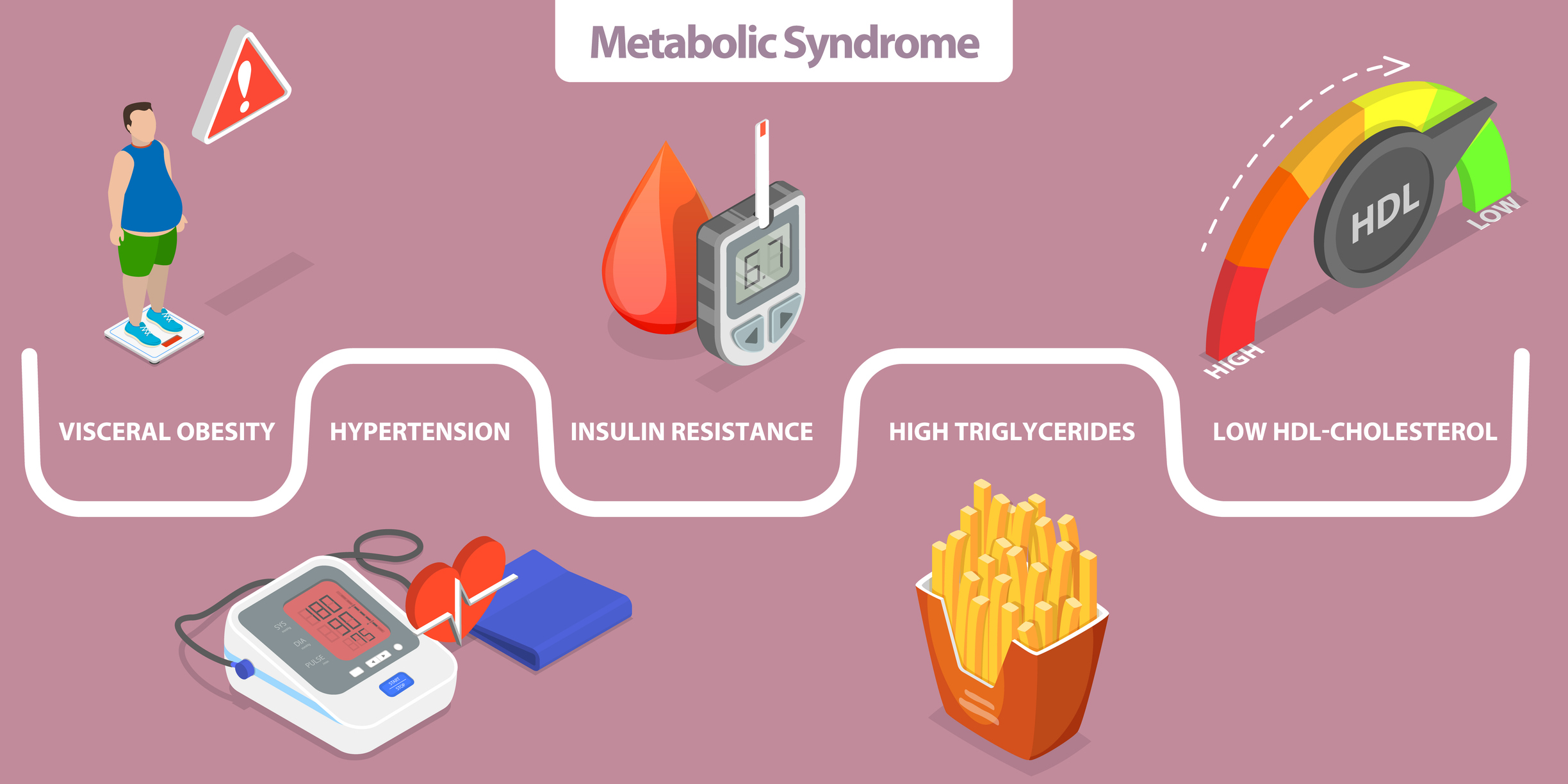
Metabolic syndrome is a group of conditions that increase the risk of heart disease, stroke, type 2 diabetes, and other health problems.  

The number of people with metabolic syndrome is increasing, as up to one-third of adults in the U.S. have it. 

When a person is diagnosed with metabolic syndrome, they have three or more risk factors, such as: 

  • High blood pressure 
  • High blood sugar  
  • Low levels of HDL, or good cholesterol  
  • High triglyceride levels in the blood 
  • A large waist circumference or an apple-shaped body 

Although each of these conditions is a risk factor for cardiovascular disease, when a person has three or more of them and is diagnosed with metabolic syndrome, the chances of them developing a serious cardiovascular condition increase.  

There are several underlying causes of metabolic syndrome, such as: 

  • Being overweight and being obese 
  • Having an insulin resistance 
  • Being physically inactive 
  • Genetic factors 
  • Increasing age 

Metabolic syndrome is a serious health condition; however, there are ways to reduce your risk of developing it, such as: 

  • Being more physically active 
  • Losing weight 
  • Eating a heart-healthy diet that is rich in: 
  • Whole grains 
  • Fruits and vegetables 
  • Fish  

Another way to reduce your risk of developing metabolic syndrome is working with your healthcare team to monitor and manage your blood sugar, blood cholesterol, and blood pressure. 

If you or a loved one is experiencing symptoms of metabolic syndrome, you can receive treatment at Flushing Hospital Medical Center’s Ambulatory Care Center. To schedule an appointment, please call (718) 670-5486. 

All content of this newsletter is intended for general information purposes only and is not intended or implied to be a substitute for professional medical advice, diagnosis or treatment. Please consult a medical professional before adopting any of the suggestions on this page. You must never disregard professional medical advice or delay seeking medical treatment based upon any content of this newsletter. PROMPTLY CONSULT YOUR PHYSICIAN OR CALL 911 IF YOU BELIEVE YOU HAVE A MEDICAL EMERGENCY.


Things You Should and Shouldn’t Do After Bariatric Surgery

Bariatric surgery is a life-changing procedure. Following your doctor’s post-operation instructions and making healthy lifestyle changes are essential to avoiding complications and achieving long-term weight loss success. 

Patients should expect to have a new lifestyle that combines healthy eating, exercise, and attending regular visits with their healthcare providers. They should also consider these dos and don’ts after bariatric surgery: 

  • What you should do after bariatric surgery: 
    • Eat slowly and chew food well 
    • Aim to drink 64oz of fluids daily, taking small sips 
    • Eat 60g or more of protein daily, starting every meal with it 
    • Make fruits and vegetables the priority of your diet 
    • Start walking for five minutes every hour after surgery 
    • Aim for a goal of 30 minutes of exercise daily after it is allowed to do so 
    • Take all medications and supplements as prescribed, they will need to be taken for the rest of your lifetime 
  • What you shouldn’t do after bariatric surgery: 
    • Skip any meals 
    • Eat red meat early in recovery 
    • Engage in any strenuous activities 
    • Lift any objects over 10 lbs. for the first four to six weeks after surgery 
    • Eat fast food 
    • Eat or drink anything with natural sugar 
    • Drink liquids within 30 minutes after eating 
    • Eat bread, rice, pasta, bagels, or dumplings 
    • Allow yourself to get too hungry 
    • Take a bath or go swimming for two weeks after surgery 
    • Smoke cigarettes or drink alcohol 
    • Eat snacks loaded with empty calories 
    • Get pregnant for 12 to 18 months after surgery 
    • Stop taking medications as directed by your healthcare provider 

Bariatric surgery can be a life-changing and life-altering event for those who are trying to lose weight and live a healthier lifestyle. Making diet changes, modifying exercise routine, and following the guidelines set by your healthcare provider and surgical team can lead you to long-term success. 

For more information about the Bariatric Surgery Services at Flushing Hospital or procedures performed by our doctors, please call718-408-6977 or 718-670-8908. 

All content of this newsletter is intended for general information purposes only and is not intended or implied to be a substitute for professional medical advice, diagnosis or treatment. Please consult a medical professional before adopting any of the suggestions on this page. You must never disregard professional medical advice or delay seeking medical treatment based upon any content of this newsletter. PROMPTLY CONSULT YOUR PHYSICIAN OR CALL 911 IF YOU BELIEVE YOU HAVE A MEDICAL EMERGENCY.

Dumping Syndrome

Dumping syndrome or rapid gastric emptying is a condition that occurs when food and gastric juices move abnormally quickly from the stomach to the small intestine after eating.  

Dumping syndrome most commonly occurs after stomach surgery due to it altering the stomach, which can increase the risk of developing the condition. These surgeries are performed mostly to treat obesity, but they can also treat stomach cancer. Dumping syndrome can also happen after esophageal surgery, such as surgery to treat esophageal cancer. Surgeries for other conditions can cause dumping syndrome, including: 

  • Bariatric surgery 
  • Esophagectomy 
  • Gastrectomy 
  • Vagotomy 
  • Fundoplication 
  • Pyloroplasty 

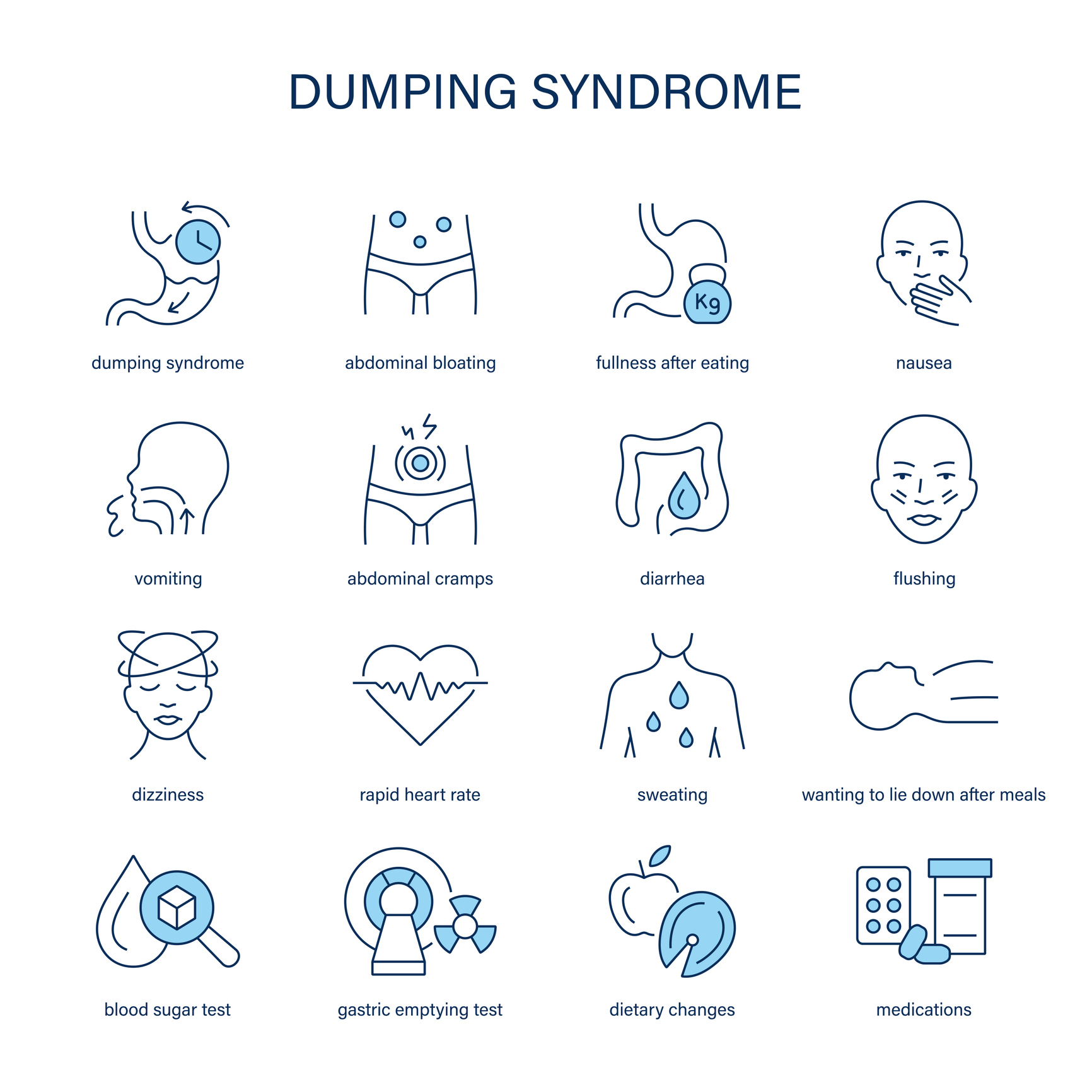
Symptoms of dumping syndrome generally start within minutes after eating, especially meals containing high levels of table sugar and fruit sugar. Symptoms include: 

  • Nausea 
  • Vomiting 
  • Feeling bloated or too full after eating 
  • Stomach cramps 
  • Diarrhea 
  • Rapid heart rate 
  • Dizziness or lightheadedness 
  • Flushing  

Late dumping syndrome starts one to three hours after eating a meal that is high in sugar. It takes time for symptoms to develop because the body releases large amounts of insulin to absorb the sugars entering the small intestine after eating. This process results in low blood sugar levels. Symptoms of late dumping syndrome can include: 

  • Rapid heart rate 
  • Sweating 
  • Weakness  
  • Dizziness or lightheadedness 
  • Flushing 

Some people can have both early and late symptoms. 

A healthcare provider can diagnose dumping syndrome by using the following methods: 

  • Discussing medical history and performing a medical evaluation 
  • Testing blood sugar 
  • Performing a gastric emptying test 

If a person has early dumping syndrome, the condition is likely to resolve itself on its own within three months. In the interim, dietary changes may help ease symptoms. If dietary changes don’t help, an antidiarrheal medicine will be prescribed and injected under the skin to slow food from emptying into the intestine.  

If medication doesn’t work, surgical procedures such as reconstructing the pylorus of a reverse gastric bypass may be recommended. 

There are dietary strategies that can help maintain good nutrition and minimize symptoms, including: 

  • Eating smaller meals 
  • Drinking 6-8 cups of fluids per day 
  • Drinking most of your fluids between meals 
  • Lying down for 30 minutes after meals 
  • Changing your diet 
  • Increasing fiber intake 

If you are going to drink alcohol, it is important to speak with your healthcare provider before doing so. Drinking alcohol beverages can worsen dumping syndrome symptoms because they can be absorbed quickly and can have high sugar content, which can lead to blood sugar levels rising rapidly and cause a significant insulin spike and then eventually low blood sugar. 

If you or a loved one is experiencing symptoms associated with dumping syndrome, you can receive treatment at Flushing Hospital Medical Center’s Ambulatory Care Center. To schedule an appointment, please call (718) 670-5486. 

All content of this newsletter is intended for general information purposes only and is not intended or implied to be a substitute for professional medical advice, diagnosis or treatment. Please consult a medical professional before adopting any of the suggestions on this page. You must never disregard professional medical advice or delay seeking medical treatment based upon any content of this newsletter. PROMPTLY CONSULT YOUR PHYSICIAN OR CALL 911 IF YOU BELIEVE YOU HAVE A MEDICAL EMERGENCY.
How to Set Healthy Weight Loss Goals

Embarking on a weight loss journey can be a difficult and sometimes daunting experience. There are many factors that can affect a person’s weight management, such as medical conditions, certain medicines, stress, age, genes, hormones, and environment.  

However, maintaining a lifestyle that consists of a good nutritional diet, regular physical activity, stress management, and proper sleep can support a healthy weight. Additionally, people who lose weight gradually, which is about one to two pounds a week, are more likely to keep the weight off than those who lose weight more quickly.  

If a person is not at a healthy weight, moderate weight loss can help improve their cholesterol, blood pressure, and blood sugar levels. Just a 5% to 10% reduction of their current weight may lower their risk for some chronic diseases, such as heart disease, prediabetes, and type 2 diabetes. Other benefits of moderate weight loss include: 

  • More energy  
  • Better mobility  
  • A boost in self-confidence 
  • Improved fitness 

Starting a weight loss journey can be challenging. However, having and following a plan can help make the journey easier. Here are five steps that can help guide you to a healthier weight: 

  • Consider the reasons why you want to lose weight. Writing down your reasons and posting them where you can see them can help remind you why you are making this change and keep you focused on your weight loss goals 
  • Keep track of where you are as you begin your weight loss journey. You can keep a journal of your nutrition to help you keep track of what you eat and drink in a day. Make note of your physical activity by including the time of day you exercised, what activities you did, and for how long. Maintain a chart of your sleep schedule, including what time you went to sleep and woke up, and the number of hours you slept. Monitor your stress levels and the healthy ways you are reducing your stress. You can also track how you felt during your meals, when you exercise, and any lifestyle challenges that have affected your progress 
  • Set specific and realistic goals. Creating short-term goals with rewards can help prevent you from feeling frustrated when there is a setback. When setting short-term goals, focus on two or three goals at a time 
  • Find a good support system. Surround yourself with family or friends who are supportive of your weight loss goals. If they have similar goals, they may share resources that have helped them on their weight loss journey 
  • Stay up to date with your progress throughout your weight loss journey. Regularly evaluate your progress by revisiting the goals you set. Determine what has been working well and what hasn’t been, and use this information to make any changes to your goals and weight loss plan. If you are consistently meeting a particular goal, you can reward yourself for achieving your goals. It is important to recognize and be proud of your progress as you meet your goals. Rewarding yourself helps to keep you motivated and on the right path 

Please note that before you start your weight loss journey, speak with your healthcare provider so you can decide whether or not it’s a good time to set a weight loss goal. 

And if you do go on a weight loss journey, don’t get discouraged if you aren’t losing weight as quickly as you had hoped. Remember that sustainable weight loss takes time.  

For more information about the Bariatric Surgery Services at Flushing Hospital or procedures performed by our doctors, please call718-408-6977 or 718-670-8908. 


All content of this newsletter is intended for general information purposes only and is not intended or implied to be a substitute for professional medical advice, diagnosis or treatment. Please consult a medical professional before adopting any of the suggestions on this page. You must never disregard professional medical advice or delay seeking medical treatment based upon any content of this newsletter. PROMPTLY CONSULT YOUR PHYSICIAN OR CALL 911 IF YOU BELIEVE YOU HAVE A MEDICAL EMERGENCY.

Common Misconceptions About Bariatric Surgery

Bariatric, or gastric bypass surgery for weight loss, is a surgical treatment for severe obesity that involves making changes to the digestive system. It is performed when diet and exercise haven’t worked, or when a person is at risk for serious health problems due to their weight.

There are several myths and misconceptions about bariatric surgery and its outcomes, including:

  • Bariatric surgery is unnecessary, and people just need to eat less and exercise more
  • Bariatric surgery is dangerous
  • Bariatric surgery will make a person thin
  • Bariatric surgery and weight loss will make a person happy and improve their relationships
  • Bariatric surgery will prevent a person from overeating
  • Bariatric surgery is an easy way out
  • Most people will gain the weight back after surgery

Bariatric surgery can be a lifesaving solution for many people who are overweight. Bariatric surgery, along with a commitment to lifestyle changes, not only provides long-term weight loss but it significantly improves the health and quality of life for many.

For more information about the Bariatric Surgery Services at Flushing Hospital or procedures performed by our doctors, please call 718-408-6977 or 718-670-8908.


All content of this newsletter is intended for general information purposes only and is not intended or implied to be a substitute for professional medical advice, diagnosis or treatment. Please consult a medical professional before adopting any of the suggestions on this page. You must never disregard professional medical advice or delay seeking medical treatment based upon any content of this newsletter. PROMPTLY CONSULT YOUR PHYSICIAN OR CALL 911 IF YOU BELIEVE YOU HAVE A MEDICAL EMERGENCY.
The Benefits Of Beets and A Recipe Too!

According to Healthline, Beets are packed with essential nutrients. They are a great source of fiber, folate (vitamin B9), manganese, potassium, iron, and vitamin C. Beetroot and beetroot juice have been associated with numerous health benefits, including improved blood flow, lower blood pressure, and increased exercise performance.

If you are in the mood for a beet based citrus salad delight, try this recipe for a quick, nourishing, and delicious salad.

INGREDIENTS:

  • 1 bunch kale
  • 1 bunch lettuce
  • 1 kohlrabi
  • 1 beet
  • 2 carrots
  • 1 grapefruit
  • 4 tablespoons olive oil
  • 1 tablespoon honey
  • 1 teaspoon Dijon mustard
  • ½ teaspoon kosher salt
  • ¼ teaspoon freshly ground pepper
  • ¼ cup sunflower seeds or pepitas

DIRECTIONS:

  1. Remove the stems from the kale and chop it into bite-sized pieces. Chop the lettuce into bite-sized pieces. Peel the kohlrabi, beet, and 2 carrots and chop them into matchsticks (julienne) with a knife or using a food processor. Remove the sections from half of the grapefruit and peel them.
  2. In a small canning jar, combine juice from the remaining half grapefruit (around ¼ cup), 4 tablespoons olive oil, 1 tablespoon honey, 1 teaspoon Dijon mustard, ½ teaspoon kosher salt, and ¼ teaspoon freshly ground pepper. Cover the jar and shake vigorously to combine (or whisk all ingredients together in a bowl).
  3. To serve, place vegetables on serving plates or in bowls. Top with grapefruit vinaigrette and sunflower seeds or pepitas.

For this and other delicious seasonal recipes visit –  www.acouplecooks.com

If you want to learn more about the nutritional value of beets, visit: https://www.healthline.com/nutrition/foods/beetroot#:~:text=Packed%20with%20essential%20nutrients%2C%20beetroots,pressure%2C%20and%20increased%20exercise%20performance.

All content of this newsletter is intended for general information purposes only and is not intended or implied to be a substitute for professional medical advice, diagnosis or treatment. Please consult a medical professional before adopting any of the suggestions on this page. You must never disregard professional medical advice or delay seeking medical treatment based upon any content of this newsletter. PROMPTLY CONSULT YOUR PHYSICIAN OR CALL 911 IF YOU BELIEVE YOU HAVE A MEDICAL EMERGENCY.

Facts About Dietary Supplements

Did you know that more than two-third of adults in the United States are overweight or obese?

According to the National Institute of health (NIH), many ameri9cans are using dietary supplements for weight loss as a solution.  The trend towards dietary supplements could be attributed to the belief that these products may help you lose weight more quickly.  However, according to the NIH, “There’s little scientific evidence that weight-loss supplements work.  Many are expensive and some can interact or interfere with medications, and a few might be harmful.”

There are many kinds of dietary supplements.  They come in a variety of forms, such as capsules, tablets, liquids, powders, and bars.

Some of the more common ingredients in dietary supplements that are mostly save include:

  • Dietary fiber
  • Caffeine
  • Minerals (magnesium, calcium, potassium)

Certain ingredients included in supplements that might be harmful are:

  • Bitter orange
  • Hoodia
  • Yohimbe

Keep in mind, before choosing to take dietary supplements, it would be a good idea to consult with your doctor or a licensed nutritionist.  They may be able to assist you in preventing supplement-drug interactions and other risks.

The proven and healthy way to lose weight is by eating a balanced diet and exercising.  If you would like to speak with a nutritionist at Flushing Hospital Medical Center about how to get started on a healthier lifestyle, call 718-670-5486 for an appointment.

All content of this newsletter is intended for general information purposes only and is not intended or implied to be a substitute for professional medical advice, diagnosis or treatment. Please consult a medical professional before adopting any of the suggestions on this page. You must never disregard professional medical advice or delay seeking medical treatment based upon any content of this newsletter. PROMPTLY CONSULT YOUR PHYSICIAN OR CALL 911 IF YOU BELIEVE YOU HAVE A MEDICAL EMERGENCY.

Pulmonary Fibrosis

According to the Mayo Clinic, pulmonary fibrosis is a lung disease that occurs when lung tissue becomes thickened, damaged and scarred. This thickened, stiff tissue makes it more difficult for your lungs to work properly. As pulmonary fibrosis worsens, you become progressively more short of breath.


Some symptoms of pulmonary fibrosis are:

  • Shortness of breath
  • Dry cough
  • Fatigue
  • Unexplained weight loss
  • Aching muscles and joints
  • Widening and rounding of the tips of the fingers or toes

Pulmonary fibrosis can be caused by certain medical conditions, radiation therapy impurities and contaminants such as:

  • Silica dust
  • Asbestos fibers
  • Hard metal dusts
  • Coal dust
  • Grain dust
  • Bird and animal droppings

Unfortunately, pulmonary fibrosis cannot be cured.  There are medications that can help ease symptoms.  In severe cases, a lung transplant may be suggested.


If you have the symptoms of pulmonary fibrosis and would like to schedule an appointment with a at, please call

For this and additional information regarding pulmonary fibrosis visit –


All content of this newsletter is intended for general information purposes only and is not intended or implied to be a substitute for professional medical advice, diagnosis or treatment. Please consult a medical professional before adopting any of the suggestions on this page. You must never disregard professional medical advice or delay seeking medical treatment based upon any content of this newsletter. PROMPTLY CONSULT YOUR PHYSICIAN OR CALL 911 IF YOU BELIEVE YOU HAVE A MEDICAL EMERGENCY.

Do Detox Teas Do More Harm Than Good?

Dieting is never easy, nor is there a “quick fix” for weight loss on the market that comes without some risk.

The latest trend seems to be detox teas.  The active ingredient in most of the teas is caffeine.  Caffeine can produce side effects such as nervousness, stomach irritation, nausea, vomiting, anxiety and agitation, headache, ringing in the ears as well as increased heart and breathing rates.

As an appetite suppressant, products containing caffeine may work for the short term. Often times detox teas that combine caffeine with a diuretic that may trigger a false sense of weight loss since diuretics cause a loss of water weight, not actual body fat.

Additionally, the caffeine in the teas may cause you to have insomnia.  Studies have shown that a lack of sleep can trigger excessive eating and even slow your metabolism causing you to gain weight.

Nutritionists and healthcare professionals agree that there is no magic formula to weight loss.  The best way to plan for weight loss is to start with a visit to your doctor, make healthy food choices, implement portion control when eating and start a light exercise regimen slowly building as your endurance increases.  The formula for keeping the weight off is to retrain your brain so that you can maintain your new healthier lifestyle.

If you are thinking about taking off a few pounds and would like to speak with a health care professional at Flushing Hospital Medical Center, please call 718-670-5486 to schedule an appointment.

All content of this newsletter is intended for general information purposes only and is not intended or implied to be a substitute for professional medical advice, diagnosis or treatment. Please consult a medical professional before adopting any of the suggestions on this page. You must never disregard professional medical advice or delay seeking medical treatment based upon any content of this newsletter. PROMPTLY CONSULT YOUR PHYSICIAN OR CALL 911 IF YOU BELIEVE YOU HAVE A MEDICAL EMERGENCY.

Benefit of the Annual Physical

The greatest benefit of an annual physical is knowledge for both you and your physician.  An annual visit establishes a baseline for your personal health.  Armed with this information, your doctor can detect unhealthy trends before they become risk factors.

Nearly one third of the population with a chronic disease is unaware that they have the disease.  According to the Partnership to Fight Chronic Disease, as many as 100,000 lives could be saved each year by increasing preventive care services.

Health screenings, such as blood glucose and blood pressure tests can easily detect the two most chronic conditions, diabetes and hypertension before they cause serious health issues.  The Centers for Disease Control cites that seven out of every 10 deaths are caused by chronic disease.  Proper management of these conditions can prevent unnecessary hospitalization.

In order to get the most out of your annual physical, take a moment to prepare:

  • Make a list of your health concerns
  • Make a list of all the medications you are taking
  • Get a copy of your medical records and your family medical history

Dozens of Patient Care Specialists, on staff at Flushing Hospital Medical Center, are ready to provide you with your annual check-up.

Flushing Hospital is a certified Patient Centered Medical Home (PCMH) in its Ambulatory Care Center. The Center offers more than 50 outpatient general and specialty services for children adolescents and adults.

Flushing Hospital’s ambulatory care services accepts most major insurances, is centrally located and has convenient patient hours.  Call 718-670-5486 to schedule an appointment.

All content of this newsletter is intended for general information purposes only and is not intended or implied to be a substitute for professional medical advice, diagnosis or treatment. Please consult a medical professional before adopting any of the suggestions on this page. You must never disregard professional medical advice or delay seeking medical treatment based upon any content of this newsletter. PROMPTLY CONSULT YOUR PHYSICIAN OR CALL 911 IF YOU BELIEVE YOU HAVE A MEDICAL EMERGENCY.