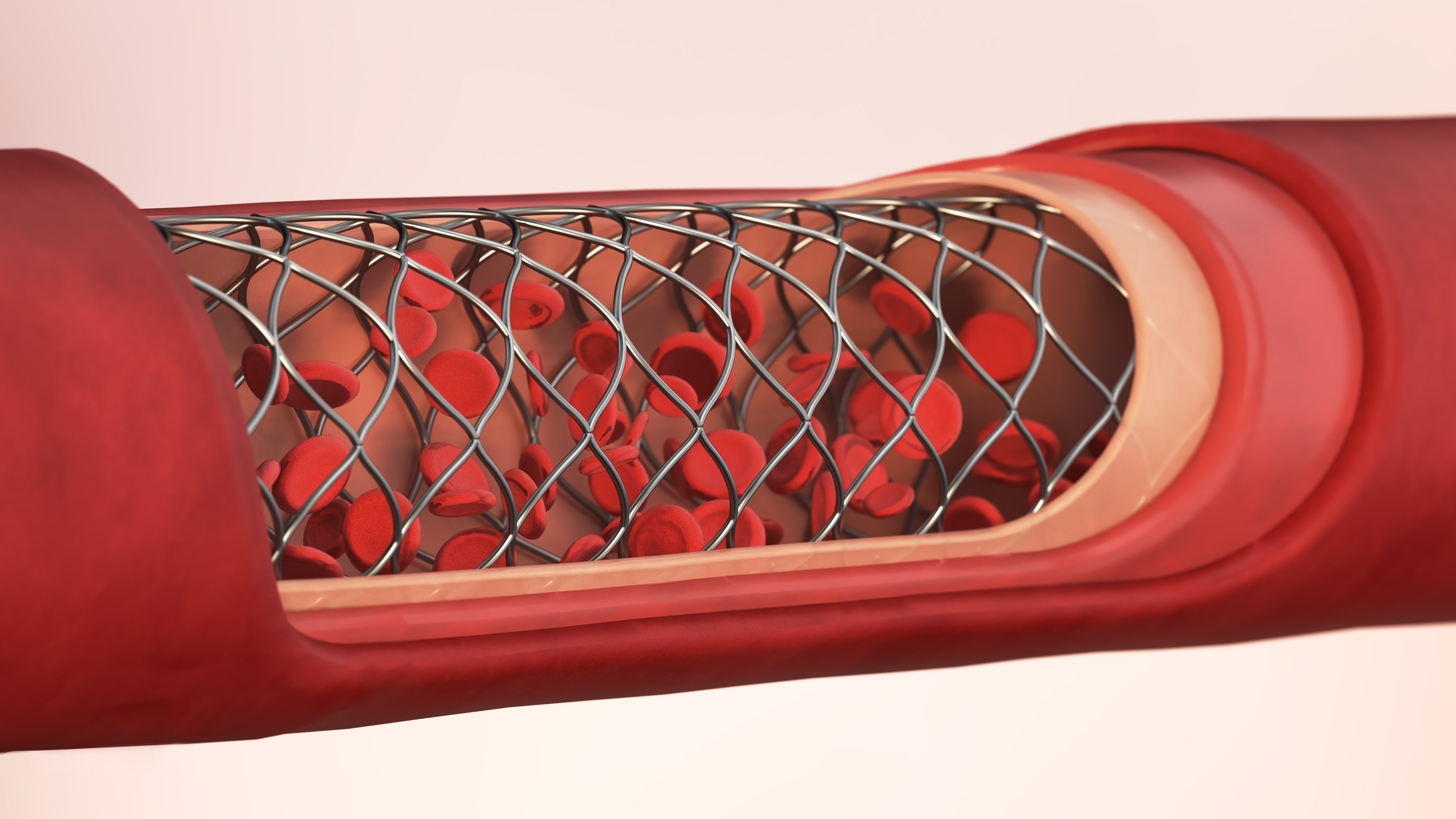
Heart Stent

When a coronary artery becomes narrow, it is due to the buildup of plaque. When this occurs, it may reduce blood flow to the heart and cause symptoms such as chest pain.

If a clot forms in a narrow coronary artery, it completely blocks blood flow and causes a heart attack. This is when a heart stent is used. A heart stent is a tiny, flexible wire-mesh tube that helps keep a coronary artery open, increasing blood flow to the heart.

A heart stent is used when a coronary artery is about 70% blocked. Using a stent improves blood flow to the heart and relieves chest pain. Most stents are permanent and help to reduce the risk of a heart attack.

There are many types of stents used to keep the coronary arteries open. They include:

· Bare metal stents

· Biodegradable stents

· Drug-eluting stents

When a stent is placed in a coronary artery, it is done through a minimally invasive procedure called angioplasty or percutaneous coronary intervention (PCI). During this procedure, a healthcare provider will insert a thin, flexible tube called a catheter in the heart’s blood vessels. The catheter has a balloon at the tip, which will be inflated to open the narrowed coronary artery and allow placement of the stent. After the procedure, a healthcare provider will prescribe blood thinners to prevent blood clots from blocking the artery again.

It is important to watch out for complications after getting a heart stent. If you are experiencing chest pain, it may be a symptom of restenosis, which is when the artery narrows again due to the growth of tissue. When this occurs, it can lead to a heart attack. If you are experiencing restenosis, you may need another procedure to place a drug-eluting stent.

Speak with your healthcare provider about the recovery time for the procedure. Most people will need to rest for a few days to a week before returning to work and any physical activity. It is also important to discuss follow-up care with your healthcare provider, as you may need to see a cardiologist or pulmonologist.

If you or a loved one is experiencing symptoms of chest pain, you can receive treatment at Flushing Hospital Medical Center’s Ambulatory Care Center. To schedule an appointment, please call (718) 670-5486.

All content of this newsletter is intended for general information purposes only and is not intended or implied to be a substitute for professional medical advice, diagnosis or treatment. Please consult a medical professional before adopting any of the suggestions on this page. You must never disregard professional medical advice or delay seeking medical treatment based upon any content of this newsletter. PROMPTLY CONSULT YOUR PHYSICIAN OR CALL 911 IF YOU BELIEVE YOU HAVE A MEDICAL EMERGENCY.

Snow STEMI

A powerful winter storm called a Nor’easter has brought blizzard-like conditions and a large amount of snowfall to our area.

When we get such large amounts of snow, the easy part is watching the beauty of the snow falling. Unfortunately, the most difficult part is having to shovel several inches of snow from the sidewalk and driveway.

A major worry when shoveling large amounts of snow is how it can affect our health.

According to the National Library of Medicine, heavy snowfall, cold temperatures, and low atmospheric pressure during the winter months have been associated with increased adverse cardiovascular events, such as “snow-shoveler’s ST-elevated myocardial infarction (STEMI).”

Snow-shoveler’s STEMI is a type of heart attack that occurs when there is a partial or complete blockage in one of the coronary arteries, which stops blood flow to part of the heart muscle. This can especially occur due to the over-exertion caused by shoveling snow.

Per the American Heart Association, shoveling snow can put some people at risk of a heart attack, but most people won’t have a problem. Sudden exertion, such as shoveling hundreds of pounds of snow or pushing a heavy snow blower after being sedentary for several months, can put a huge strain on the heart.

There is also a factor of cold weather, as it can increase heart rate and blood pressure, and make blood clots form more easily and constrict arteries, which can decrease blood supply. This can even affect healthy people. People who are over the age of 40 years old, or are relatively inactive, are especially at risk. Other people who are at risk of STEMI include:

Those with preexisting heart conditions:

  • Those with high blood pressure (hypertension)
  • Those who smoke tobacco products

According to Medical News Today, research indicates that heavy snowfall is linked to a 6% higher likelihood of hospital admission for men with a heart attack and a 34% increase in dying.

The National Safety Council recommends the following safety tips to shovel safely:

  • Know the signs of a heart attack, stop immediately, and call 911 if you’re experiencing any of them; every minute counts

The warning signs of a heart attack include:

    • Chest discomfort that lasts more than a few minutes or doesn’t go away and returns
    • Pain or discomfort in the arms, back, neck, jaw, and stomach
    • Shortness of breath

Other signs of a heart attack can include:

    • Breaking out in a cold sweat
    • Nausea
    • A rapid or irregular heartbeat
    • Unusual tiredness
    • Heartburn or indigestion
    • Lightheadedness
  • Take it slow and stretch before you start shoveling
  • Shovel only fresh, powdery snow because it is lighter
  • Push the snow instead of lifting it. If you do lift the snow, use a small shovel or only partially fill the shovel
  • Lift with your legs and not your back
  • Dress in warm layers
  • Do not shovel after eating or while smoking
  • Do not work to the point of exhaustion

If you have a history of heart disease, do not pick up a shovel without the permission of your healthcare provider.

If you or a loved one is experiencing symptoms of STEMI, while, during, or after shoveling snow, you can receive treatment from a cardiologist at Flushing Hospital Medical Center’s Ambulatory Care Center. To schedule an appointment, please call (718) 670-5486. If you are experiencing an emergency, please call 911 immediately.

All content of this newsletter is intended for general information purposes only and is not intended or implied to be a substitute for professional medical advice, diagnosis or treatment. Please consult a medical professional before adopting any of the suggestions on this page. You must never disregard professional medical advice or delay seeking medical treatment based upon any content of this newsletter. PROMPTLY CONSULT YOUR PHYSICIAN OR CALL 911 IF YOU BELIEVE YOU HAVE A MEDICAL EMERGENCY.
What Is A Stress Test?

A stress or stress exercise test shows how the heart works during physical activity. Exercise makes the heart pump harder and faster. A stress test can determine how well your heart responds when working its hardest.

Your healthcare provider may recommend a stress test if you have symptoms of coronary artery disease, congenital heart disease, congestive heart failure, heart valve disease, hypertrophic cardiomyopathy, or an irregular heart rhythm.

A stress test typically involves walking on a treadmill or pedaling on a stationary bike while hooked up to an EKG to monitor your heart’s activity. Healthcare providers assess your response to the increased workload by measuring:

  • Blood pressure
  • Heart rate
  • Oxygen levels
  • Electrical activity in your heart

A stress test can also be used to learn:

  • How well your heart pumps blood
  • Whether your heart is receiving an adequate supply of blood
  • How you perform during physical activity compared with other people your age and sex
  • If your symptoms (chest discomfort, shortness of breath, feeling like your heart is racing, or dizziness) can be reproduced while performing physical activity

Having a stress test makes it easier to identify and evaluate certain heart issues, such as:

  • Issues with your heart muscle and valves
  • Electric stability of your heart at rest and during exercise

The stress test results help your healthcare provider plan or change your treatment. If the test shows that your heart is working well, you may not need more tests. If the test suggests you might have coronary artery disease, you may need a coronary angiogram, which helps see blockages in the heart arteries.

If the results are satisfactory, but your symptoms worsen, your healthcare provider might recommend more testing.

To schedule an appointment with a Flushing Hospital Medical Center healthcare provider, please call 718-670-5486.

All content of this newsletter is intended for general information purposes only and is not intended or implied to be a substitute for professional medical advice, diagnosis or treatment. Please consult a medical professional before adopting any of the suggestions on this page. You must never disregard professional medical advice or delay seeking medical treatment based upon any content of this newsletter. PROMPTLY CONSULT YOUR PHYSICIAN OR CALL 911 IF YOU BELIEVE YOU HAVE A MEDICAL EMERGENCY.

10 Interesting Facts About The Human Heart

Ours hearts are essential to our survival. They are part of our circulatory system and they are responsible for pumping oxygen-rich blood throughout our body, but how much do we really know about our heart?

Here are 10 interesting facts about the human heart that you may not have known:

  • The average heart is the size of an adult fist.
  • Your heart will beat about 115,000 times each day.
  • The beating sound your heart makes is caused by the opening and closing of its valves.
  • Each day, your heart pumps about 2,000 gallons of blood.
  • If you were to stretch out your blood vessel system, it would extend over 60,000 miles.
  • The human heart weighs less than one pound, but a man’s heart is typically two ounces heavier than a woman’s.
  • A woman’s heart beats slightly faster than a man’s.
  • There is such a thing as a broken heart. Symptoms are similar to a heart attack but the cause is usually stress and not heart disease.
  • Laughing is good for your heart. It reduces stress and gives a boost to your immune system.

While these facts are meant to be light and fun, the most important thing to understand is how important it is to maintain proper heart health. By eating right and exercising, you can remain heart healthy.

To speak with a doctor at Flushing Hospital about your heart health, please call 718-670-5486.

All content of this newsletter is intended for general information purposes only and is not intended or implied to be a substitute for professional medical advice, diagnosis or treatment. Please consult a medical professional before adopting any of the suggestions on this page. You must never disregard professional medical advice or delay seeking medical treatment based upon any content of this newsletter. PROMPTLY CONSULT YOUR PHYSICIAN OR CALL 911 IF YOU BELIEVE YOU HAVE A MEDICAL EMERGENCY.

February is American Heart Month

Over 50 years ago President Lyndon B. Johnson proclaimed the month of February to be American Heart Month in order to bring attention to one of the leading causes of death in the United States. This tradition has been carried on by every President since.
Each year over 800,000 lives are taken as a result of heart disease, stroke and other cardiovascular diseases.  Every 84 seconds someone in the United States dies from the disease and each year approximately 750,000 people experience a heart attack and of those, about 115,000 will not survive.
The American Heart Association recommends the following behavioral modifications to prevent heart disease:
• Avoid smoking
• Engage in some form of daily physical activity
• Follow a healthy diet
• Maintain a healthy body weight
• Control cholesterol, blood pressure and blood sugar levels
The death rate from heart disease has been improving slowly over the last decade due to advances in medications, better diagnostic capabilities, and better access to health care, but the statistics are still pretty alarming. If you would like to schedule an appointment with a cardiologist at Jamaica Hospital, please call 718-670-5486.

All content of this newsletter is intended for general information purposes only and is not intended or implied to be a substitute for professional medical advice, diagnosis or treatment. Please consult a medical professional before adopting any of the suggestions on this page. You must never disregard professional medical advice or delay seeking medical treatment based upon any content of this newsletter. PROMPTLY CONSULT YOUR PHYSICIAN OR CALL 911 IF YOU BELIEVE YOU HAVE A MEDICAL EMERGENCY.

Holiday Heart Syndrome

200371290-001

Holiday Heart Syndrome, coined in 1978, is a real syndrome in which the heart’s vulnerability to certain arrhythmias is increased by excessive alcohol ingestion (binge drinking) and the onset of a heart rhythm disturbance in people who are otherwise healthy.

The most frequently seen arrhythmia during the holiday season is atrial fibrillation, in which the top chambers of the heart quiver or fibrillate causing the heart to beat irregular and often quite fast.

Excessive alcohol intake in women is defined as consuming seven or more drinks per week or over three doses at one time.  For men, heavy consumption is defined as over 14 drinks per week or over four drinks at one time by the U.S. Department of health and Human Service.

Alcohol alone does not fully explain Holiday Heart Syndrome.  There are other risk factors for atrial fibrillation that are higher around the holidays such as:

  • Overeating
  • Stress
  • High levels of sodium consumption
  • Dehydration

Everyone has some degree of stress in their lives.  Health concerns, family and relationship issues, financial problems can all cause stress which can ultimately affect your health; the idea of “letting go” at a holiday event and consuming more alcohol than usual as a way to forget the present may have a negative effect on your future.

If you have any heart symptoms, it is best to seek medical attention immediately; even if your symptoms appear ON a holiday.

All content of this newsletter is intended for general information purposes only and is not intended or implied to be a substitute for professional medical advice, diagnosis or treatment. Please consult a medical professional before adopting any of the suggestions on this page. You must never disregard professional medical advice or delay seeking medical treatment based upon any content of this newsletter. PROMPTLY CONSULT YOUR PHYSICIAN OR CALL 911 IF YOU BELIEVE YOU HAVE A MEDICAL EMERGENCY.

Is Juicing Heart Healthy?

Heart disease is the leading cause of death for people living in the U.S., according to the American Heart Association. While no one juice or juice blend can prevent heart disease or repair damaged heart and blood vessel tissue, some juices contain heart-friendly nutrients. Some juicing proponents say that juicing is better for you than is eating whole fruits and vegetables because your body can absorb the nutrients better and it gives your digestive system a rest from working on fiber. Pomegranate, beet and red grape juices could give your cardiovascular system an overall health boost.

Pomegranate juice has shown the ability to lower blood pressure and is considered a heart-healthy fruit juice. Scientists found, as published in “Nutrition Journal,” that beet juice, combined with a low-nitrate diet, lowered blood pressure as soon as six hours after drinking the juice. Grape juice is naturally high in flavonoids, particularly in the case of red or purple grape juice. Flavonoids are natural antioxidants that can protect your cells from damage from aging and may help reduce your risk of developing cancer and heart disease. An article from “Advances in Experimental Medicine and Biology” said studies have shown that red grape juice provided protection from “bad” or low-density lipoprotein cholesterol, which can cause hardened arteries. The scientists concluded that medical findings made it reasonable to suggest including purple grape juice in a daily diet as a way of reducing the risk of developing heart disease.

As with all premade juices, check to make sure there is little added sugar to derive the most benefits from the juice. Also, make only as much juice as you can drink in one sitting because fresh squeezed juice can quickly develop harmful bacteria. When juicing, try to keep some of the pulp. Not only does it have healthy fiber, but it can help fill you up.

Although these juicing ingredient suggestions have proven to prevent heart disease it is still important to check in with your doctor for heart health tests. The Department of Cardiology at Flushing Hospital Medical Center is available to assess and treat heart conditions and diseases. To make an appointment, please call 718-670-5486.

All content of this newsletter is intended for general information purposes only and is not intended or implied to be a substitute for professional medical advice, diagnosis or treatment. Please consult a medical professional before adopting any of the suggestions on this page. You must never disregard professional medical advice or delay seeking medical treatment based upon any content of this newsletter. PROMPTLY CONSULT YOUR PHYSICIAN OR CALL 911 IF YOU BELIEVE YOU HAVE A MEDICAL EMERGENCY.