Dumping Syndrome

Dumping syndrome or rapid gastric emptying is a condition that occurs when food and gastric juices move abnormally quickly from the stomach to the small intestine after eating.  

Dumping syndrome most commonly occurs after stomach surgery due to it altering the stomach, which can increase the risk of developing the condition. These surgeries are performed mostly to treat obesity, but they can also treat stomach cancer. Dumping syndrome can also happen after esophageal surgery, such as surgery to treat esophageal cancer. Surgeries for other conditions can cause dumping syndrome, including: 

  • Bariatric surgery 
  • Esophagectomy 
  • Gastrectomy 
  • Vagotomy 
  • Fundoplication 
  • Pyloroplasty 

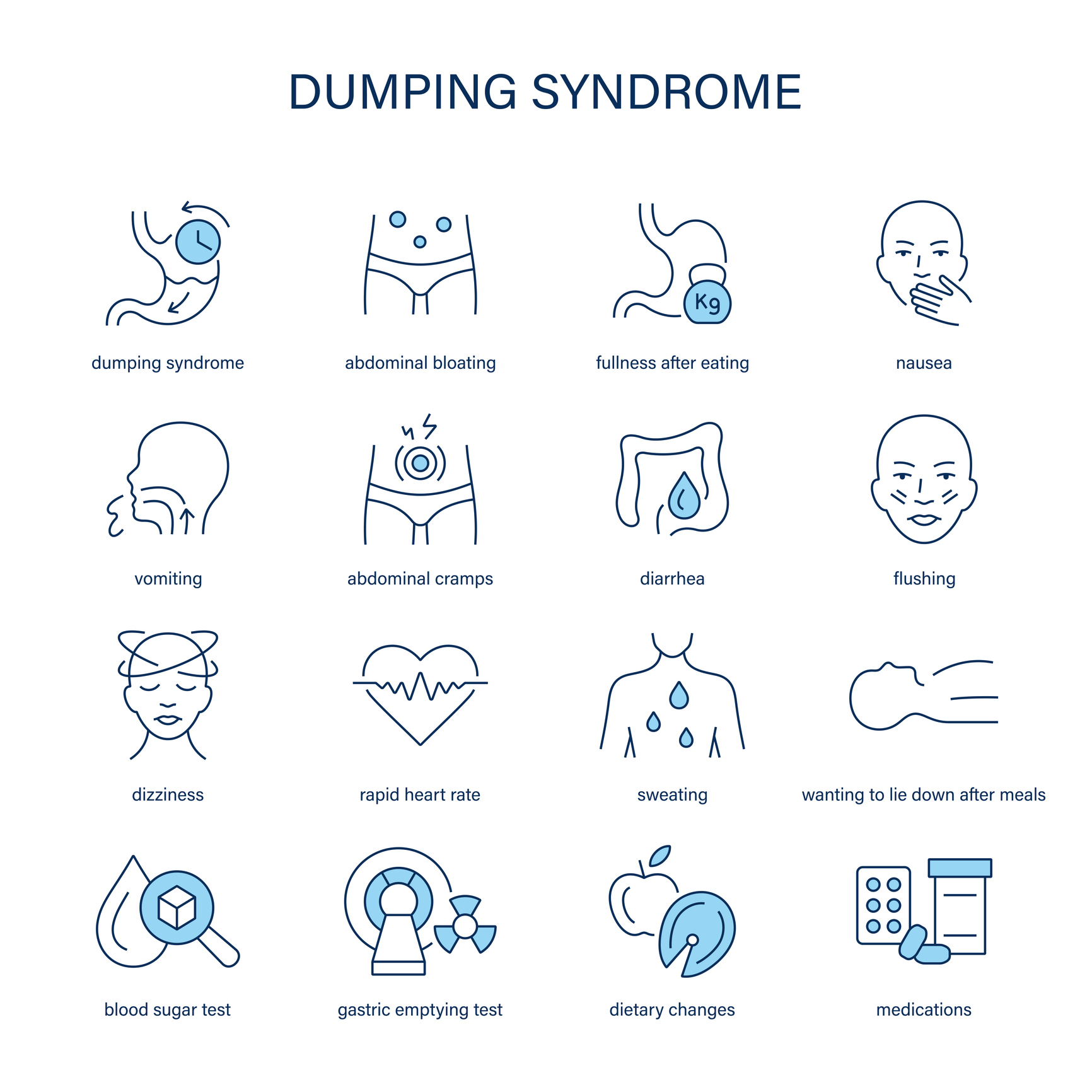
Symptoms of dumping syndrome generally start within minutes after eating, especially meals containing high levels of table sugar and fruit sugar. Symptoms include: 

  • Nausea 
  • Vomiting 
  • Feeling bloated or too full after eating 
  • Stomach cramps 
  • Diarrhea 
  • Rapid heart rate 
  • Dizziness or lightheadedness 
  • Flushing  

Late dumping syndrome starts one to three hours after eating a meal that is high in sugar. It takes time for symptoms to develop because the body releases large amounts of insulin to absorb the sugars entering the small intestine after eating. This process results in low blood sugar levels. Symptoms of late dumping syndrome can include: 

  • Rapid heart rate 
  • Sweating 
  • Weakness  
  • Dizziness or lightheadedness 
  • Flushing 

Some people can have both early and late symptoms. 

A healthcare provider can diagnose dumping syndrome by using the following methods: 

  • Discussing medical history and performing a medical evaluation 
  • Testing blood sugar 
  • Performing a gastric emptying test 

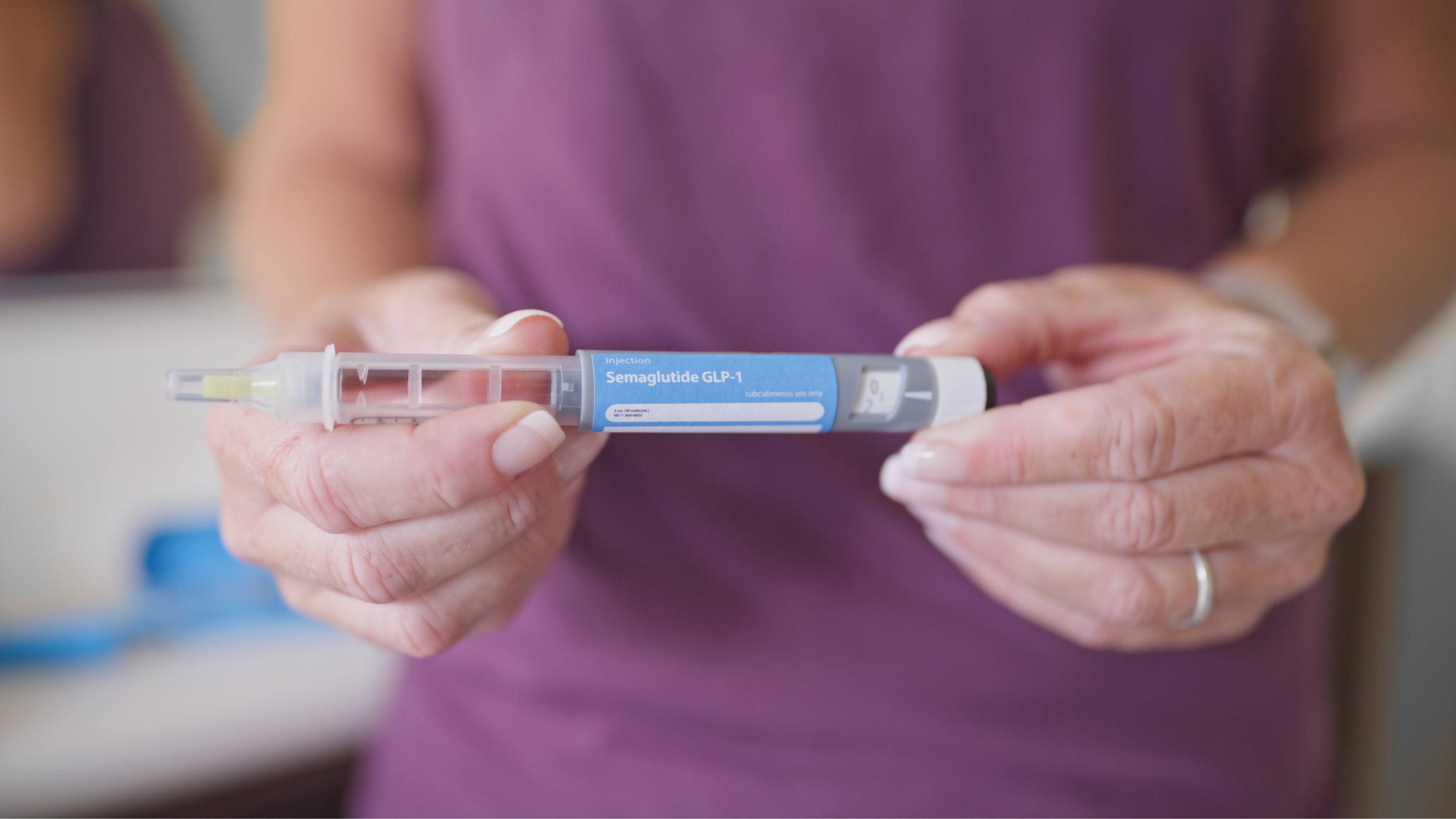
If a person has early dumping syndrome, the condition is likely to resolve itself on its own within three months. In the interim, dietary changes may help ease symptoms. If dietary changes don’t help, an antidiarrheal medicine will be prescribed and injected under the skin to slow food from emptying into the intestine.  

If medication doesn’t work, surgical procedures such as reconstructing the pylorus of a reverse gastric bypass may be recommended. 

There are dietary strategies that can help maintain good nutrition and minimize symptoms, including: 

  • Eating smaller meals 
  • Drinking 6-8 cups of fluids per day 
  • Drinking most of your fluids between meals 
  • Lying down for 30 minutes after meals 
  • Changing your diet 
  • Increasing fiber intake 

If you are going to drink alcohol, it is important to speak with your healthcare provider before doing so. Drinking alcohol beverages can worsen dumping syndrome symptoms because they can be absorbed quickly and can have high sugar content, which can lead to blood sugar levels rising rapidly and cause a significant insulin spike and then eventually low blood sugar. 

If you or a loved one is experiencing symptoms associated with dumping syndrome, you can receive treatment at Flushing Hospital Medical Center’s Ambulatory Care Center. To schedule an appointment, please call (718) 670-5486. 

All content of this newsletter is intended for general information purposes only and is not intended or implied to be a substitute for professional medical advice, diagnosis or treatment. Please consult a medical professional before adopting any of the suggestions on this page. You must never disregard professional medical advice or delay seeking medical treatment based upon any content of this newsletter. PROMPTLY CONSULT YOUR PHYSICIAN OR CALL 911 IF YOU BELIEVE YOU HAVE A MEDICAL EMERGENCY.


How to Set Healthy Weight Loss Goals

Embarking on a weight loss journey can be a difficult and sometimes daunting experience. There are many factors that can affect a person’s weight management, such as medical conditions, certain medicines, stress, age, genes, hormones, and environment.  

However, maintaining a lifestyle that consists of a good nutritional diet, regular physical activity, stress management, and proper sleep can support a healthy weight. Additionally, people who lose weight gradually, which is about one to two pounds a week, are more likely to keep the weight off than those who lose weight more quickly.  

If a person is not at a healthy weight, moderate weight loss can help improve their cholesterol, blood pressure, and blood sugar levels. Just a 5% to 10% reduction of their current weight may lower their risk for some chronic diseases, such as heart disease, prediabetes, and type 2 diabetes. Other benefits of moderate weight loss include: 

  • More energy  
  • Better mobility  
  • A boost in self-confidence 
  • Improved fitness 

Starting a weight loss journey can be challenging. However, having and following a plan can help make the journey easier. Here are five steps that can help guide you to a healthier weight: 

  • Consider the reasons why you want to lose weight. Writing down your reasons and posting them where you can see them can help remind you why you are making this change and keep you focused on your weight loss goals 
  • Keep track of where you are as you begin your weight loss journey. You can keep a journal of your nutrition to help you keep track of what you eat and drink in a day. Make note of your physical activity by including the time of day you exercised, what activities you did, and for how long. Maintain a chart of your sleep schedule, including what time you went to sleep and woke up, and the number of hours you slept. Monitor your stress levels and the healthy ways you are reducing your stress. You can also track how you felt during your meals, when you exercise, and any lifestyle challenges that have affected your progress 
  • Set specific and realistic goals. Creating short-term goals with rewards can help prevent you from feeling frustrated when there is a setback. When setting short-term goals, focus on two or three goals at a time 
  • Find a good support system. Surround yourself with family or friends who are supportive of your weight loss goals. If they have similar goals, they may share resources that have helped them on their weight loss journey 
  • Stay up to date with your progress throughout your weight loss journey. Regularly evaluate your progress by revisiting the goals you set. Determine what has been working well and what hasn’t been, and use this information to make any changes to your goals and weight loss plan. If you are consistently meeting a particular goal, you can reward yourself for achieving your goals. It is important to recognize and be proud of your progress as you meet your goals. Rewarding yourself helps to keep you motivated and on the right path 

Please note that before you start your weight loss journey, speak with your healthcare provider so you can decide whether or not it’s a good time to set a weight loss goal. 

And if you do go on a weight loss journey, don’t get discouraged if you aren’t losing weight as quickly as you had hoped. Remember that sustainable weight loss takes time.  

For more information about the Bariatric Surgery Services at Flushing Hospital or procedures performed by our doctors, please call718-408-6977 or 718-670-8908. 


All content of this newsletter is intended for general information purposes only and is not intended or implied to be a substitute for professional medical advice, diagnosis or treatment. Please consult a medical professional before adopting any of the suggestions on this page. You must never disregard professional medical advice or delay seeking medical treatment based upon any content of this newsletter. PROMPTLY CONSULT YOUR PHYSICIAN OR CALL 911 IF YOU BELIEVE YOU HAVE A MEDICAL EMERGENCY.
Holiday Eating Tips After Bariatric Surgery

It’s the holiday season, and as we spend time with our family and friends, we enjoy each other’s company over delicious meals. Unfortunately, the holiday season can be a time when we run into problems with weight gain. It can be especially challenging after bariatric surgery. Fortunately, there are many ways to manage our weight during the holiday season. Here are 10: 

  1. Don’t save your calories. It may be tempting to skip meals to save calories for holiday treats, but it is better to stick to your regular eating patterns. You are more likely to overeat if you arrive at a holiday function hungry 
  1. Remember the basics. Just because it is the holidays doesn’t mean you can’t maintain the same healthy eating habits you had during the rest of the year. Pay attention to your portion sizes, start with protein, eat slowly, and track what you eat. Keeping these basic rules in mind can help you avoid overeating 
  1. Be mindful of how much you are eating. Eating while socializing can easily lead to eating too much. Enjoy the company and conversation and save eating for a time when you can focus on your meal 
  1. Avoid the buffet table and the kitchen. Standing close to where the food is being served may result in mindless noshing. Carefully select the food you truly want to try, and then walk away 
  1. Limit alcohol consumption. Drinks containing alcohol are full of empty calories. It is better to eat your calories than to drink them. Additionally, alcohol doesn’t just add calories; it can also dehydrate you. Be aware that alcohol can affect you differently after bariatric surgery. You may feel the effects much sooner, even after consuming less alcohol. You are also more likely to overeat at the buffet table after a couple of drinks 
  1. Stay hydrated. It is important to drink plenty of water and plan ahead. This ensures that you can avoid drinking within 30 minutes of eating and still get in the recommended 64 ounces a day 
  1. Exercise. The holiday season can be a busy time, and our exercise routines may suffer because of it. It is easier to get out of the habit of exercising than it is to get back into it after the holidays. Consider creating a workout schedule or organizing activities for the family that get everyone moving 
  1. Bring a healthy dish to share. This will ensure that there is a healthy food option at the gathering 
  1. Find healthy alternatives for your favorite recipes. Look for healthier substitutions that cut the fat and calories of recipes. Some examples include: 
  • Using skim milk instead of whole milk in mashed potatoes 
  • Using fat-free creamed soups in recipes rather than full-fat versions 
  • Replacing sugar with unsweetened apple sauce or noncaloric sweeteners in desserts 
  • Adding flavor with garlic, spices, and herbs rather than fats such as butter and gravy 
  • Combining ¼ cup of Greek yogurt with ½ cup of butter to replace 1 cup of butter in a recipe 
  • Replacing each egg with two egg whites and substitute evaporated skim milk in place of heavy cream when baking your favorite holiday treats 
  1. Be kind to yourself. You may overeat a bit or sample more treats than you should. However, that doesn’t mean all is lost. It is important to forgive yourself and recommit to healthy patterns and move forward. It is okay to have a treat once in a while. 

Undergoing bariatric surgery requires preparation, dedication, and several lifestyle adjustments. Adopting a whole different way of eating can be challenging, and it will take some time to get used to it. Following these tips can help you plan and enjoy your food in moderation. 

For more information about the Bariatric Surgery Services at Flushing Hospital or procedures performed by our doctors, please call718-408-6977 or 718-670-8908. 


All content of this newsletter is intended for general information purposes only and is not intended or implied to be a substitute for professional medical advice, diagnosis or treatment. Please consult a medical professional before adopting any of the suggestions on this page. You must never disregard professional medical advice or delay seeking medical treatment based upon any content of this newsletter. PROMPTLY CONSULT YOUR PHYSICIAN OR CALL 911 IF YOU BELIEVE YOU HAVE A MEDICAL EMERGENCY.

Common Misconceptions About Bariatric Surgery

Bariatric, or gastric bypass surgery for weight loss, is a surgical treatment for severe obesity that involves making changes to the digestive system. It is performed when diet and exercise haven’t worked, or when a person is at risk for serious health problems due to their weight.

There are several myths and misconceptions about bariatric surgery and its outcomes, including:

  • Bariatric surgery is unnecessary, and people just need to eat less and exercise more
  • Bariatric surgery is dangerous
  • Bariatric surgery will make a person thin
  • Bariatric surgery and weight loss will make a person happy and improve their relationships
  • Bariatric surgery will prevent a person from overeating
  • Bariatric surgery is an easy way out
  • Most people will gain the weight back after surgery

Bariatric surgery can be a lifesaving solution for many people who are overweight. Bariatric surgery, along with a commitment to lifestyle changes, not only provides long-term weight loss but it significantly improves the health and quality of life for many.

For more information about the Bariatric Surgery Services at Flushing Hospital or procedures performed by our doctors, please call 718-408-6977 or 718-670-8908.


All content of this newsletter is intended for general information purposes only and is not intended or implied to be a substitute for professional medical advice, diagnosis or treatment. Please consult a medical professional before adopting any of the suggestions on this page. You must never disregard professional medical advice or delay seeking medical treatment based upon any content of this newsletter. PROMPTLY CONSULT YOUR PHYSICIAN OR CALL 911 IF YOU BELIEVE YOU HAVE A MEDICAL EMERGENCY.

Bariatric Surgery- What is Revision Surgery?

Bariatric or gastric bypass surgery involves making changes to the digestive system to help lose weight. It is done when diet and exercise haven’t worked or when you are at risk of serious health problems due to your weight.

Bariatric revision surgery is a broad term used to describe follow-up procedures required for all patients who previously had weight-loss surgery. These procedures are intended to make a patient’s initial weight-loss procedure more effective, to minimize unpleasant side effects, or to reverse the original surgery.

A patient may be a candidate for bariatric revision surgery for one or more of the following reasons:

  • Insufficient weight loss
  • Complications
  • Side effects
  • Weight regain
  • Malnutrition

Surgeons can revise an initial bariatric surgery in several ways, depending on the problems that stem from the initial surgery. The surgeons then repair, convert, or reverse that procedure.

The bariatric revision surgical procedure options that are used for the three most common types of bariatric surgery include:

  • Sleeve gastronomy
  • Gastric bypass surgery
  • Gastric band surgery

Bariatric revision surgery is performed to improve a patient’s health or quality of life. The procedure may encourage greater weight loss in patients whose previous surgeries didn’t lead to the expected loss of excess body weight. It may also address complications from the prior bariatric procedure, such as an ulcer or stricture, and reduce or eliminate unwanted side effects, such as swallowing difficulties or GERD.

For more information about the Bariatric Surgery Services at Flushing Hospital or procedures performed by our doctors, please call 718-408-6977 or 718-670-8908.


All content of this newsletter is intended for general information purposes only and is not intended or implied to be a substitute for professional medical advice, diagnosis or treatment. Please consult a medical professional before adopting any of the suggestions on this page. You must never disregard professional medical advice or delay seeking medical treatment based upon any content of this newsletter. PROMPTLY CONSULT YOUR PHYSICIAN OR CALL 911 IF YOU BELIEVE YOU HAVE A MEDICAL EMERGENCY.

Robotics: Gastric Bypass

Gastric bypass or “Roux-en-Y” is a metabolic and weight-loss procedure that works by modifying your digestive system so that you consume and absorb fewer calories. It modifies your stomach and also your small intestines.

Similar to other bariatric surgery operations, gastric bypass is recommended for people who have clinically severe obesity. It has been shown to help relieve a long list of obesity-related health conditions, including:

  • Type 2 diabetes
  • Hypertension
  • Obstructive sleep apnea
  • GERD (chronic acid reflux)
  • Heart disease
  • Hyperglycemia
  • Fatty liver disease
  • Hyperlipidemia
  • Osteoarthrosis

The Roux-en-Y procedure gets its name from how it changes your digestive system. “Roux-en-Y” means “in the shape of a Y”. The procedure divides your stomach and small intestine, connecting each new segment to form a “Y” shape. This procedure reduces the functional part of your stomach to a small pouch, separating it from the rest with surgical staples, and restricting the amount of food your stomach can hold. Then, it connects the new stomach pouch to a lower segment of your small intestine. This means that when food goes through your digestive system, it will now bypass most of your stomach and the first part of your small intestine, causing your digestive system to not absorb all of the nutrients or calories in your food.

Gastric bypass surgery requirements are similar to those of other bariatric procedures. A qualified healthcare provider must recommend you for surgery. You may be a candidate for gastric bypass surgery if you:

  • Have been diagnosed with class III obesity
  • Have a BMI of at least 35 with at least one obesity-related condition
  • Have obesity-related type 2 diabetes

Most Roux-en-Y surgical procedures today are laparoscopic, a minimally invasive surgical technique. However, sometimes they are done with robotic assistance.

There are many potential advantages of robotic-assisted surgery over other types of surgery including:

  • Robot-assisted surgery provides the surgeon with 3D images of inside your abdomen that create a clearer picture for them to reference as they operate compared to the 2D images used during laparoscopic surgery
  • Under the surgeon’s direction, the robot can move more freely and with more versatility than a human hand
  • You’ll have a few tiny scars rather than one large incision scar (as with open surgery)
  • You’re more likely to experience less pain and less bleeding after surgery compared to open surgery
  • You’re more likely to have a quicker recovery time than with open surgery

To learn more about the robotic surgical procedures at Flushing Hospital Medical Center or to schedule an appointment, call (718) 670-5000.


All content of this newsletter is intended for general information purposes only and is not intended or implied to be a substitute for professional medical advice, diagnosis or treatment. Please consult a medical professional before adopting any of the suggestions on this page. You must never disregard professional medical advice or delay seeking medical treatment based upon any content of this newsletter. PROMPTLY CONSULT YOUR PHYSICIAN OR CALL 911 IF YOU BELIEVE YOU HAVE A MEDICAL EMERGENCY.

National Healthy Weight Week

The third week in January is designated as National Healthy Weight Week. In an effort to promote a healthy nutritional lifestyle, Flushing Hospital Medical Center would like to offer the following tips to help you achieve and maintain a healthy weight.

  • Set a Goal – You can’t set out on a mission to lose weight without knowing how you are going to do it. Create a detailed weight-loss plan and set a goal that is specific, measurable and realistic.
  • Be Patient – In most cases if you make modest adjustments in your lifestyle, you can lose the weight gradually, but steadily. Dietary changes are typically easier to follow when you take slow, small steps.
  • Drink Plenty of Water – Water is free of calories, inexpensive and provides your body with a quenching boost. Recommendations are to drink eights cups of water every day, but if that is unrealistic, try slowly increasing your intake by drinking a few ounces more than you did the previous day.
  • Avoid temptations to snack– It is very easy to lose track of how much we eat when we are constantly nibbling on snacks. To avoid constant grazing, try chewing gum or drinking water.  If you must snack, try choosing healthy alternatives.
  • Make a Deal to Indulge – Definitely remove your dietary weakness from your home, but totally banning your favorite foods is bound to backfire. Instead of totally eliminating temptations from your life, allow yourself to modestly indulge once a week.
  • Begin a Manageable Workout Program – Forking over money on an annual gym membership can be helpful, but simply signing up isn’t enough. Instead of setting unrealistic workout goals, create a convenient and realistic workout routine at home.
  • Have a Friend Help You – Starting healthy nutritional lifestyle can be more effective if you have someone to hold you accountable. Teaming up with a weight-loss companion can assist you reach your goal by helping you stick to your diet and accompany you with your workout routine.
  • Weigh yourself – Regular weight check-ins can help you maintain your desired weight. Keep track of your progress and, if you see a trend toward gaining weight, you can revert back to the steps you took to begin your weight loss.

Hopefully, these tips will help you reach and maintain your weight loss goals in 2021. If however, you need professional assistance, Flushing Hospital’s Bariatric Center can help. They offer a variety of non-invasive, medically managed surgical weight loss options for those who qualify.

To make an appointment, please call 718-670-8908.


All content of this newsletter is intended for general information purposes only and is not intended or implied to be a substitute for professional medical advice, diagnosis or treatment. Please consult a medical professional before adopting any of the suggestions on this page. You must never disregard professional medical advice or delay seeking medical treatment based upon any content of this newsletter. PROMPTLY CONSULT YOUR PHYSICIAN OR CALL 911 IF YOU BELIEVE YOU HAVE A MEDICAL EMERGENCY.

New Year’s Weight Loss Goals

One of the most common New Year’s resolutions is losing weight.  For some, this goal can be accomplished through diet and exercise; however, for others losing weight may require more intensive approaches.

Losing a significant amount of weight can be very challenging, especially for people who are overweight or obese. Weight loss (bariatric surgery) has been proven to be a safe and effective way to overcome this challenge.

Bariatric surgery is performed on the stomach or intestines to reduce food intake or absorption, and induce weight loss. Weight loss surgery can also help those who are at risk of diabetes and hypertension to reduce their chances of developing these or other obesity-related diseases.

If you are interested in surgery, one of the first steps you should take is finding out if you are a good candidate.  Surgery may be appropriate for people who:

  • Have a body mass index  (BMI) over 40
  • Are 100 lbs. over their ideal body weight
  • Are experiencing disabling pain in weight-bearing joints
  • Have a BMI of 35 along with obesity-related disorders such as high blood pressure, diabetes, sleep apnea or degenerative joint disease.
  • Have tried to lose weight through diet and exercise but  have been unsuccessful

Choosing a weight loss surgery provider that is accredited by programs such as the Metabolic and Bariatric Surgery Accreditation and Quality Improvement Program (MBSAQIP®) is highly recommended. This accreditation ensures that your provider follows a high standard of care.

Flushing Hospital’s Bariatric Surgical Center is the first Bariatric Center of Excellence accredited by the MBSAQIP. The center provides care from a multi-disciplinary group of health care practitioners who are compassionate and fully invested in helping you in every step of your weight loss journey.

To learn more about Flushing Hospital’s Bariatric Surgical Center, please call 718-408-6977or 718-670-8908.

All content of this newsletter is intended for general information purposes only and is not intended or implied to be a substitute for professional medical advice, diagnosis or treatment. Please consult a medical professional before adopting any of the suggestions on this page. You must never disregard professional medical advice or delay seeking medical treatment based upon any content of this newsletter. PROMPTLY CONSULT YOUR PHYSICIAN OR CALL 911 IF YOU BELIEVE YOU HAVE A MEDICAL EMERGENCY.

Is Bariatric Surgery Right For You?

Obesity is a growing public health issue in our region.  According to NYC.gov, more than half of New Yorkers are overweight, and nearly a quarter qualify as obese.  The New York City Department of Health and Mental Hygiene, reports that an estimated 23% of the population living in Queens is obese.

These rates are concerning  because people who are obese are at an increased risk for developing chronic diseases such as diabetes, stroke, hypertension, heart disease and some cancers.  However, the good news is the risks associated with many of these conditions can be significantly reduced by losing weight.

Diet and exercise are highly recommended methods of weight loss but they may not be enough to yield significant results for those who are obese.   Bariatric surgery offers an extremely effective weight loss solution for people who have tried and failed to lose weight by way of diet and exercise. Additionally, it has been shown to help improve several obesity-related health conditions.

The two most popular bariatric surgeries are the sleeve gastrectomy and gastric bypass procedures. In the sleeve gastrectomy operation a large portion of the stomach is removed and a smaller, new stomach in the shape of a tube or “sleeve” is created.  During bypass surgery, a new small stomach pouch is created, and a section of the small bowel is bypassed. These surgeries are usually done through small incisions either laparoscopically or using the da Vinci surgical robot, ensuring a minimally invasive approach. Both surgeries offer excellent long term results and positive outcomes in most patients.

With this is in mind, it is important to understand that bariatric surgery is a major operation, no matter which procedure is chosen.  Bariatric surgery is not an easy way out. It is an important decision to be made under strict physician supervision and with the support of loved ones.  The process is immersive and takes approximately 4-5 months of supervised dieting and being seen by multiple specialties for approval.

Although bariatric surgery is considered safe, it is very important that patients understand the risks of surgery. As with most major surgical procedures, the risks can include bleeding or other complications.

For those who would like to explore non-surgical weight loss procedures, there are options such as the FDA-approved Obalon Balloon System. This involves three air filled balloons inserted via a swallowed capsule. The patient is given no anesthesia and most people return to work the same day. The balloons stay in for six months after which they are removed via endoscopy. The procedure is generally very well tolerated with some side effects such as nausea and cramping. Studies have shown weight loss to continue beyond removal and many patients lose significant amount of weight.

When deciding which procedure is best for you, it is recommended that you receive an expert consultation with a surgeon. Your physician can assess your health which can lead to the decision on which surgery is suitable for your needs.

To ensure the highest quality care and maximize your chances of a successful weight loss procedure, it is recommended that you receive treatment at a “Bariatric Center of Excellence”, such as Flushing Hospital Medical Center.

Flushing Hospital is the only Center of Excellence in Queens. The process to reach this designation is arduous and ensures that the center and the surgeons are of the highest quality and preparedness. Surgical outcomes are measured very strictly and the capability of both the surgeons and the center must be of the highest caliber when compared nationally.

To make an appointment, please call 718-408-6977.

All content of this newsletter is intended for general information purposes only and is not intended or implied to be a substitute for professional medical advice, diagnosis or treatment. Please consult a medical professional before adopting any of the suggestions on this page. You must never disregard professional medical advice or delay seeking medical treatment based upon any content of this newsletter. PROMPTLY CONSULT YOUR PHYSICIAN OR CALL 911 IF YOU BELIEVE YOU HAVE A MEDICAL EMERGENCY.

Is Bariatric Surgery Right For You?

Obesity is a growing public health issue in our region.  According to NYC.gov, more than half of New Yorkers are overweight, and nearly a quarter qualify as obese.  The New York City Department of Health and Mental Hygiene, reports that an estimated 23% of the population living in Queens is obese.

These rates are concerning because people who are obese are at an increased risk for developing chronic diseases such as diabetes, stroke, hypertension, heart disease and some cancers.  However, the good news is the risks associated with many of these conditions can be significantly reduced by losing weight.

Diet and exercise are highly recommended methods of weight loss but they may not be enough to yield significant results for those who are obese.   Bariatric surgery offers an extremely effective weight loss solution for people who have tried and failed to lose weight by way of diet and exercise. Additionally, it has been shown to help improve several obesity-related health conditions.

The two most popular bariatric surgeries are the sleeve gastrectomy and gastric bypass procedures. In the sleeve gastrectomy operation, a large portion of the stomach is removed and a smaller, new stomach in the shape of a tube or “sleeve” is created.  During bypass surgery, a new small stomach pouch is created, and a section of the small bowel is bypassed. These surgeries are usually done through small incisions either laparoscopically or using the da Vinci surgical robot, ensuring a minimally invasive approach. Both surgeries offer excellent long-term results and positive outcomes in most patients.

With this is in mind, it is important to understand that bariatric surgery is a major operation, no matter which procedure is chosen.  Bariatric surgery is not an easy way out. It is an important decision to be made under strict physician supervision and with the support of loved ones.  The process is immersive and takes approximately 4-5 months of supervised dieting and being seen by multiple specialties for approval.

Although bariatric surgery is considered safe, it is very important that patients understand the risks of surgery. As with most major surgical procedures, the risks can include bleeding or other complications.

For those who would like to explore non-surgical weight loss procedures, there are options such as the FDA-approved Obalon Balloon System. This involves three air filled balloons inserted via a swallowed capsule. The patient is given no anesthesia and most people return to work the same day. The balloons stay in for six months after which they are removed via endoscopy. The procedure is generally very well tolerated with some side effects such as nausea and cramping. Studies have shown weight loss to continue beyond removal and many patients lose a significant amount of weight.

When deciding which procedure is best for you, it is recommended that you receive an expert consultation with a surgeon. Your physician can assess your health which can lead to the decision on which surgery is suitable for your needs.

To ensure the highest quality care and maximize your chances of a successful weight loss procedure, it is recommended that you receive treatment at a “Bariatric Center of Excellence”, such as Flushing Hospital Medical Center.

Flushing Hospital is the only Center of Excellence in Queens. The process to reach this designation is arduous and ensures that the center and the surgeons are of the highest quality and preparedness. Surgical outcomes are measured very strictly and the capability of both the surgeons and the center must be of the highest caliber when compared nationally.

To make an appointment, please call 718-408-6977.

All content of this newsletter is intended for general information purposes only and is not intended or implied to be a substitute for professional medical advice, diagnosis or treatment. Please consult a medical professional before adopting any of the suggestions on this page. You must never disregard professional medical advice or delay seeking medical treatment based upon any content of this newsletter. PROMPTLY CONSULT YOUR PHYSICIAN OR CALL 911 IF YOU BELIEVE YOU HAVE A MEDICAL EMERGENCY.