
Flushing Hospital Offers Tips To Enjoy a Happy and Safe Memorial Day

Memorial Day is the unofficial start of Summer for many.  Whether you are planning a weekend road trip, firing up the grill, or heading out on the water, Flushing Hospital Medical Center wants you to have a fun and safe holiday weekend by following some of these simple safety tips.

Driving Safety Tips:

  • Don’t follow other vehicles too closely and use caution in construction zones.
  • Be sure to make frequent stops and use multiple drivers if necessary.
  • Ensure that your vehicle’s gas tank doesn’t get too low.
  • Let someone know where you’re going before you leave.
  • Avoid distractions such as cell phones, and always buckle your seatbelt

Backyard Barbeque Tips:

  • Keep your grill out in the open and away from overhangs, enclosed areas, or anything that could catch fire.
  • Make sure that no one gets too close to the grill, such as children or pets.
  • Use long-handled tools as to avoid any burns.
  • Never add starter fluid if your coals have already been lit.

Water Safety Tips:

  • Learn CPR in case of an emergency and ensure that all swimmers are skilled.
  • Actively supervise children and stay within arms-reach of new swimmers.
  • If you’re on a boat, wear a U.S. Coast Guard-approved life jacket.
  • Remain within eyeshot of a lifeguard and swim with a buddy.
  • Keep a life preserver nearby, and in case of drowning, throw it, but don’t jump in.

By following these tips, you can ensure not only just a fun Memorial Day weekend, but a safe Summer.

All content of this newsletter is intended for general information purposes only and is not intended or implied to be a substitute for professional medical advice, diagnosis or treatment. Please consult a medical professional before adopting any of the suggestions on this page. You must never disregard professional medical advice or delay seeking medical treatment based upon any content of this newsletter. PROMPTLY CONSULT YOUR PHYSICIAN OR CALL 911 IF YOU BELIEVE YOU HAVE A MEDICAL EMERGENCY.

Flushing Hospital Now Offering Podcasts To Our Community

Podcasts have become an increasingly popular medium to distribute information about a variety of topics. Millions of people listen to them to learn about many things including politics, entertainment, sports, and health. For this reason, Flushing Hospital has begun producing and distributing podcasts to help members of our community learn how to better manage their health as well as how our hospital can provide valuable services to assist them.

The podcast which is named Flushing Hospital MedTalk began production earlier this year. Each episode is approximately 15-minutes-long and features providers from various medical specialties discussing a wide range of topics.

The podcasts can be found on multiple podcast platforms including Apple, Google, IHeart Radio, Spotify, Stitcher and others.  In addition, those interested can listen to or download the podcasts on the hospital’s website. Episodes are also being shared on our social media platforms, including Twitter, Instagram, and YouTube.

Flushing Hospital is dedicated to providing important information about health and wellness to our community. We are excited to utilize our podcasts as a new way to engage everyone.

To listen to any of the Flushing Hospital podcasts, please click the link below:

https://flushinghospital.org/podcast/

All content of this newsletter is intended for general information purposes only and is not intended or implied to be a substitute for professional medical advice, diagnosis or treatment. Please consult a medical professional before adopting any of the suggestions on this page. You must never disregard professional medical advice or delay seeking medical treatment based upon any content of this newsletter. PROMPTLY CONSULT YOUR PHYSICIAN OR CALL 911 IF YOU BELIEVE YOU HAVE A MEDICAL EMERGENCY.

Learning The Facts About Aphasia

Aphasia is a neurological condition that can affect your speech, as well as your ability to write and understand both spoken and written language.

Aphasia typically occurs after a stroke or a head injury, but it can also have a gradual onset as the result of a slow-growing brain tumor or a disease that causes degenerative damage. Sometimes temporary episodes of aphasia can occur. These can be due to migraines, seizures or a transient ischemic attack (TIA). A TIA occurs when blood flow is temporarily blocked to an area of the brain.

The severity of aphasia varies depending on the cause and the extent of the brain damage.

Some of the symptoms of aphasia include:

  • Speaking in short or incomplete sentences
  • Speaking in sentences that don’t make sense
  • Substituting one word for another or one sound for another
  • Using unrecognizable words
  • Not understanding conversations
  • Writing sentences that don’t make sense

Aphasia can create numerous quality-of-life problems because communication is so much a part of your life. Communication difficulty may affect your job, relationships, and general day-to-day functionality.  Communication difficulties can also lead to feelings of shame and depression.

Once the cause has been addressed, the main treatment for aphasia is speech and language therapy. The person with aphasia relearns and practices language skills and learns to use other ways to communicate. Family members often participate in the process, helping the person communicate.

Because aphasia is often a sign of a serious problem, such as a stroke, seek emergency medical care if you suddenly develop any symptoms.

All content of this newsletter is intended for general information purposes only and is not intended or implied to be a substitute for professional medical advice, diagnosis or treatment. Please consult a medical professional before adopting any of the suggestions on this page. You must never disregard professional medical advice or delay seeking medical treatment based upon any content of this newsletter. PROMPTLY CONSULT YOUR PHYSICIAN OR CALL 911 IF YOU BELIEVE YOU HAVE A MEDICAL EMERGENCY.

Parkinson’s Awareness Month

April is Parkinson’s Awareness Month, a month dedicated to raising awareness about Parkinson’s disease and all of the available resources we have developed to make life better for people with Parkinson’s disease.

Parkinson’s disease is a progressive disease of the nervous system that causes tremors, and muscular rigidity combined with slow and imprecise movement of the body.  It is associated with degeneration of the basal ganglia of the brain and a deficiency of the neurotransmitter dopamine.  The disease mostly affects people who are middle-aged and elderly people.

Parkinson’s signs and symptoms may include:

  • Tremor – A tremor, or shaking, usually begins in a limb, often your hand or fingers.
  • Slowed movement –Over time, Parkinson’s disease may reduce your ability to move and slow your movement, making simple tasks difficult and time-consuming.
  • Rigid muscles – Muscle stiffness can occur in any part of your body. The stiff muscles can limit your range of motion and cause you pain.
  • Impaired posture and balance –Your posture may become stooped, or you may have balance problems.
  • Loss of automatic movements – Decreased ability to perform unconscious movements, including blinking, smiling or swinging your arms when you walk.
  • Speech changes – You may speak softly, quickly, slur or hesitate before talking. Your speech may be more monotone rather than with the usual inflections.
  • Writing changes – It may become hard to write, and your writing may appear small.

Managing some of the symptoms, such as tremors can be helped with medications.  The medications prescribed can act as a substitute for dopamine and send a similar signal to the neurotransmitter in your brain.

Although these medications can become less effective over time, some patients realize significant improvement in their symptoms after starting treatment and continue to do.

All content of this newsletter is intended for general information purposes only and is not intended or implied to be a substitute for professional medical advice, diagnosis or treatment. Please consult a medical professional before adopting any of the suggestions on this page. You must never disregard professional medical advice or delay seeking medical treatment based upon any content of this newsletter. PROMPTLY CONSULT YOUR PHYSICIAN OR CALL 911 IF YOU BELIEVE YOU HAVE A MEDICAL EMERGENCY.

Islam Family Praises Flushing Hospital For Exceptional Care

The decision of where to have your baby delivered is an especially important one. Flushing Hospital Medical Center considers it an honor when we are entrusted with this responsibility, and our team does everything in its power to ensure that our patients have a positive and memorable experience. That is why we are so appreciative when one of our families feels compelled to share their story with us.

Nazrul Islam brought his wife Anika to Flushing Hospital to deliver their child earlier this year. Nazrul was initially skeptical of choosing Flushing Hospital based on what some of his neighbors told him, but everything changed when they entered the lobby for her scheduled pre-admission testing. “I was immediately impressed with how beautiful the hospital looked. It felt like a hotel. Everyone was so nice. They treated my wife and I so well,” said Nazrul.

With their fears allayed, Mr. and Mrs. Islam returned two days later for a scheduled cesarean section delivery. According to Nazrul, “We were scheduled for delivery at 8:00 a.m. and by 9:41 my son Saheim was born. Everything was extremely well-managed, and it could not have gone any better.” In addition to how smooth everything went Mr. and Mrs. Islam were also extremely impressed with the accommodations and how well the entire Flushing Hospital team treated them. “We found the Labor, Delivery and Recovery suite to be very spacious and comfortable and everyone from the doctors and nurses to the environmental services and dietary care employees to be so helpful. They made us feel at ease.” Nazrul added “I didn’t hesitate one second when I had to leave my wife and son because I knew they were in great hands. They treated us like a member of the family.”

Mr. and Mrs. Islam are so thankful to Flushing Hospital they have been sharing their positive experience with everyone who will listen. Nazrul stated “I have written multiple positive reviews on-line and I tell all my friends who are thinking about having a baby to choose Flushing Hospital. It is the top hospital in my experience.”

All content of this newsletter is intended for general information purposes only and is not intended or implied to be a substitute for professional medical advice, diagnosis or treatment. Please consult a medical professional before adopting any of the suggestions on this page. You must never disregard professional medical advice or delay seeking medical treatment based upon any content of this newsletter. PROMPTLY CONSULT YOUR PHYSICIAN OR CALL 911 IF YOU BELIEVE YOU HAVE A MEDICAL EMERGENCY.
What is Exocrine Pancreatic Insufficiency??

Exocrine pancreatic insufficiency (EPI) is a condition affecting the pancreas, an organ located in the abdomen that plays an essential role in converting the food we eat into fuel for the body’s cells. The pancreas has two main functions: it helps with digestion, and it regulates blood sugar.

The pancreas produces enzymes that break down food and keep digestion moving properly. For those with EPI, the pancreas does not make enough of these enzymes, which prevents the absorption of nutrients and disrupts digestion.

There are numerous gastro-intestinal symptoms of EPI, ranging from mild to extreme including:

  • Gas
  • Bloating
  • Diarrhea
  • Abdominal pain
  • Greasy, oily stools
  • Foul-smelling stools
  • Unexplained weight loss

Other symptoms can include fatigue, dizziness, dry skin, brittle nails, hair loss, depression, irritability, and problems with memory and concentration. These can occur when the body does not absorb the necessary fats and nutrients from food.

EPI is often the result of a variety of conditions, such as

  • Pancreatitis
  • Cystic fibrosis
  • Pancreatic cancer
  • Celiac disease
  • Crohn’s disease
  • Ulcerative colitis
  • Diabetes

There are diagnostic tests your doctor can perform if he or she suspects you have EPI. Once EPI is confirmed, the most common form of treatment is pancreatic enzyme replacement therapy (PERT). PERT supplements are capsules that contain a mixture of digestive enzymes that those with EPI cannot produce to help them break down fat and assist with digestion.

It is also recommended that people with EPI eat a healthy diet rich in fruits, vegetables, whole grains, and healthy proteins. It is also important not to avoid foods with fats, as these are essential to maintaining a healthy weight. However, it is best to stick with healthy fats, like salmon, avocado, and nuts rather than unhealthy trans or saturated fats found in red meats, dairy products, and fried foods.

To schedule an appointment with a gastroenterologist at Flushing Hospital’s Ambulatory Care Center, please call 718-670-5486.


All content of this newsletter is intended for general information purposes only and is not intended or implied to be a substitute for professional medical advice, diagnosis or treatment. Please consult a medical professional before adopting any of the suggestions on this page. You must never disregard professional medical advice or delay seeking medical treatment based upon any content of this newsletter. PROMPTLY CONSULT YOUR PHYSICIAN OR CALL 911 IF YOU BELIEVE YOU HAVE A MEDICAL EMERGENCY.

Flushing Hospital Adds Bi-Directional Communication Boards To Improve The Patient Experience

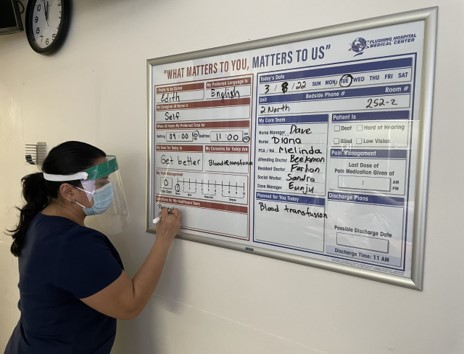
The Patient Centered Services Department at Flushing Hospital Medical Center is proud to announce the installation of bi-directional communication boards in all in-patient rooms.

The boards, which are 3’ x 2’ have been placed at the foot of each bed and are intended to convey information between the patient and the care team, enhance patient and family engagement, and improve the patient experience.

“What Matters to You, Matters to Us” is boldly written across the top of each board to emphasize the importance of effective communication and understanding.  The board is split into two halves underneath this title. Each half contains blank fields that are to be filled in daily by the care team and patient together.

The left side of the board is designated as the patient side. On this side of the board the patient can express how they prefer to be addressed, their goals for the day, their language of choice, and any questions or concerns they want to share with their healthcare team.

The right side of the board is to be completed by the care team and includes important information such as the names of everyone on the healthcare team. It can also identify any special needs the patients might have as well as address the care plan for the day.

The response to the bi-directional boards has been overwhelmingly positive with employees stating that the boards are “helpful,” “engaging,” and “good for the patients.  The patients are appreciative as well, sharing that they “really like them” and that the boards make them “feel cared about.”

The implementation of the bi-directional boards is one of many initiatives the hospital has taken to demonstrate our commitment to patient-centered care.

All content of this newsletter is intended for general information purposes only and is not intended or implied to be a substitute for professional medical advice, diagnosis or treatment. Please consult a medical professional before adopting any of the suggestions on this page. You must never disregard professional medical advice or delay seeking medical treatment based upon any content of this newsletter. PROMPTLY CONSULT YOUR PHYSICIAN OR CALL 911 IF YOU BELIEVE YOU HAVE A MEDICAL EMERGENCY.

Tips For A Successful Telemedicine Mental Health Appointment

The COVID pandemic has forced us to rethink the way we approach several aspects of our lives. Many of the things we were accustomed to doing in-person are now being performed virtually, including how we receive mental health care. Even now, as we emerge from the pandemic, many mental healthcare providers and patients still prefer to use telemedicine technology for its convenience.

While the advent of telehealth technology has greatly benefitted many patients, some might still find the concept awkward or uncomfortable. If you fall into this category, Flushing Hospital has provided the following tips to help you navigate your next telehealth experience and get the most out of your visit.

Some of the things you can do to enhance your telehealth visit beforehand include:

  • Troubleshoot early- Find out what technology will be used and make sure you know how to use it prior to your appointment. If you are unfamiliar with an app, test it before your appointment to troubleshoot any potential issues.
  • Set an alert – Setting your calendar to send you an alert 5-10 minutes prior to your virtual session can give you the time needed to gather questions and to prepare yourself mentally.
  • Choose a quiet setting – Select a private location, preferably behind closed doors (such as a bedroom) to eliminate distractions. Try to minimize any background noises, such as the TV or a barking dog. Also consider using headphones to improve sound quality and maximize privacy.
  • Be prepared – Make a list of the symptoms you want to address and write down any questions you want to ask beforehand. Make sure to have your complete medical and psychiatric history available, including a list of any medications you are taking.

 Once the appointment begins, there are a few keys to making sure that you get the most out of it, including:

  • Take notes – Sometimes your provider will record the session, but if he or she does not, it is always a good idea to take notes to help you remember important insights and recommendations.
  • Speak clearly – Make sure your provider can understand what you are saying. Check in periodically to make sure that what you are communicating is being understood and that you clearly understand what is being communicated to you.
  • Pretend your visit isn’t virtual – Treat your telehealth therapy session as if you are meeting with your doctor in person. Avoid engaging in any tasks you wouldn’t do if you were at his or her office, such as folding laundry, smoking, or cooking.

By following these helpful tips, you can maximize your next mental health visit.

All content of this newsletter is intended for general information purposes only and is not intended or implied to be a substitute for professional medical advice, diagnosis or treatment. Please consult a medical professional before adopting any of the suggestions on this page. You must never disregard professional medical advice or delay seeking medical treatment based upon any content of this newsletter. PROMPTLY CONSULT YOUR PHYSICIAN OR CALL 911 IF YOU BELIEVE YOU HAVE A MEDICAL EMERGENCY.

Tips on How to Avoid Purchasing a Fake At-Home COVID Test Kit

There was a time when many of us would stand in line for hours to get a COVID test, but due to the increased availability of at-home kits, more and more are opting to perform the test themselves. While home tests are very convenient, consumers must be careful that the tests they are purchasing are real.

Experts warn that inadvertently buying fake tests are not only are a waste of money, but they can also increase the risk of unknowingly spreading the virus and not receiving appropriate treatment.

Flushing Hospital offers the following information on how to avoid buying a fake test.

When purchasing a COVID-19 home test on-line, it is best to check the Food and Drug Administration’s (FDA) website: https://www.fda.gov/  The FDA maintains a running list of every SARS-CoV-2 antigen diagnostic test approved under its emergency use authorization (EUA) process. The list includes several types of test kits and features product brand names for easy reference. Websites selling false tests may falsely claim that that their tests are FDA approved so it’s important to check for authenticity.

When buying an over-the counter COVID test kit in person, it’s important that you purchase it from a reliable source, such as your local pharmacy or supermarket. It is strongly advised that you do not buy a test kit from a street vendor as they may be selling kits from oversees that are not FDA-approved or they may be selling old or fake kits in boxes that appear to be legitimate. Experts warn if the seller cannot produce a business license, then you should not buy a kit from them. Additional tips include avoid packaging in foreign languages and kits not sold in boxes.

Flushing Hospital warns when purchasing a test kit, avoid being tempted by lower prices and don’t rush to buy a suspect kit out of fear of limited availability.  You owe it to yourself and your loved ones to get a test kit that will offer you accurate results.

All content of this newsletter is intended for general information purposes only and is not intended or implied to be a substitute for professional medical advice, diagnosis or treatment. Please consult a medical professional before adopting any of the suggestions on this page. You must never disregard professional medical advice or delay seeking medical treatment based upon any content of this newsletter. PROMPTLY CONSULT YOUR PHYSICIAN OR CALL 911 IF YOU BELIEVE YOU HAVE A MEDICAL EMERGENCY.

Thyroid Eye Disease

Thyroid eye disease (or TED) is a condition that causes the immune system to attack the muscles and other tissues around the eyes. The condition is most commonly associated with Graves’ disease, which is an autoimmune disorder that attacks the thyroid gland, causing it to produce more thyroid hormone than the body needs.

In most cases people who develop TED are already diagnosed with Graves’ disease, but for some, it is the first indicator of thyroid problem.  Approximately one half of all people diagnosed with Graves disease develop eye symptoms. In most cases the symptoms are mild, but for some, it can have more serious consequences.

The most common symptoms of TED include:

  • Pain and pressure
  • Dry, itchy, or watery eyes
  • Difficulty wearing contact lenses
  • Inflammation and swelling of the eye and its surrounding tissues
  • Bulging or wide-eyed stare caused by swelling in the orbital tissues
  • Red or bloodshot eyes
  • Double vision
  • Light sensitivity
  • Impaired vision
  • Difficulty moving the eyes

Thyroid eye disease can affect people differently. Symptoms can last from 6 months to 2 years. For some, symptoms may go away on their own, but others may experience lasting effects. To best treat the condition, it is best to work with a team of doctors, including a primary care physician, an ophthalmologist, and an endocrinologist.

For milder cases, applying lubricating eye drops and artificial tears a few times during the day can help be helpful.  It is also recommended to avoid conditions that can worsen the condition, such as wind and bright light (or try to wear sunglasses in these elements to protect your eyes). Other tips include applying cool compresses to provide relief and elevating your head while you sleep to relieve pressure on the eyes.

If you have severe symptoms, a doctor may prescribe corticosteroids, such as prednisone to reduce the swelling in and around your eyes.  In a very small percentage of patients, orbital decompression surgery may be recommended if your vision becomes impaired.

To schedule an appointment at Flushing Hospital’s Ambulatory Care Center, please call 718-670-5486.

All content of this newsletter is intended for general information purposes only and is not intended or implied to be a substitute for professional medical advice, diagnosis or treatment. Please consult a medical professional before adopting any of the suggestions on this page. You must never disregard professional medical advice or delay seeking medical treatment based upon any content of this newsletter. PROMPTLY CONSULT YOUR PHYSICIAN OR CALL 911 IF YOU BELIEVE YOU HAVE A MEDICAL EMERGENCY.