
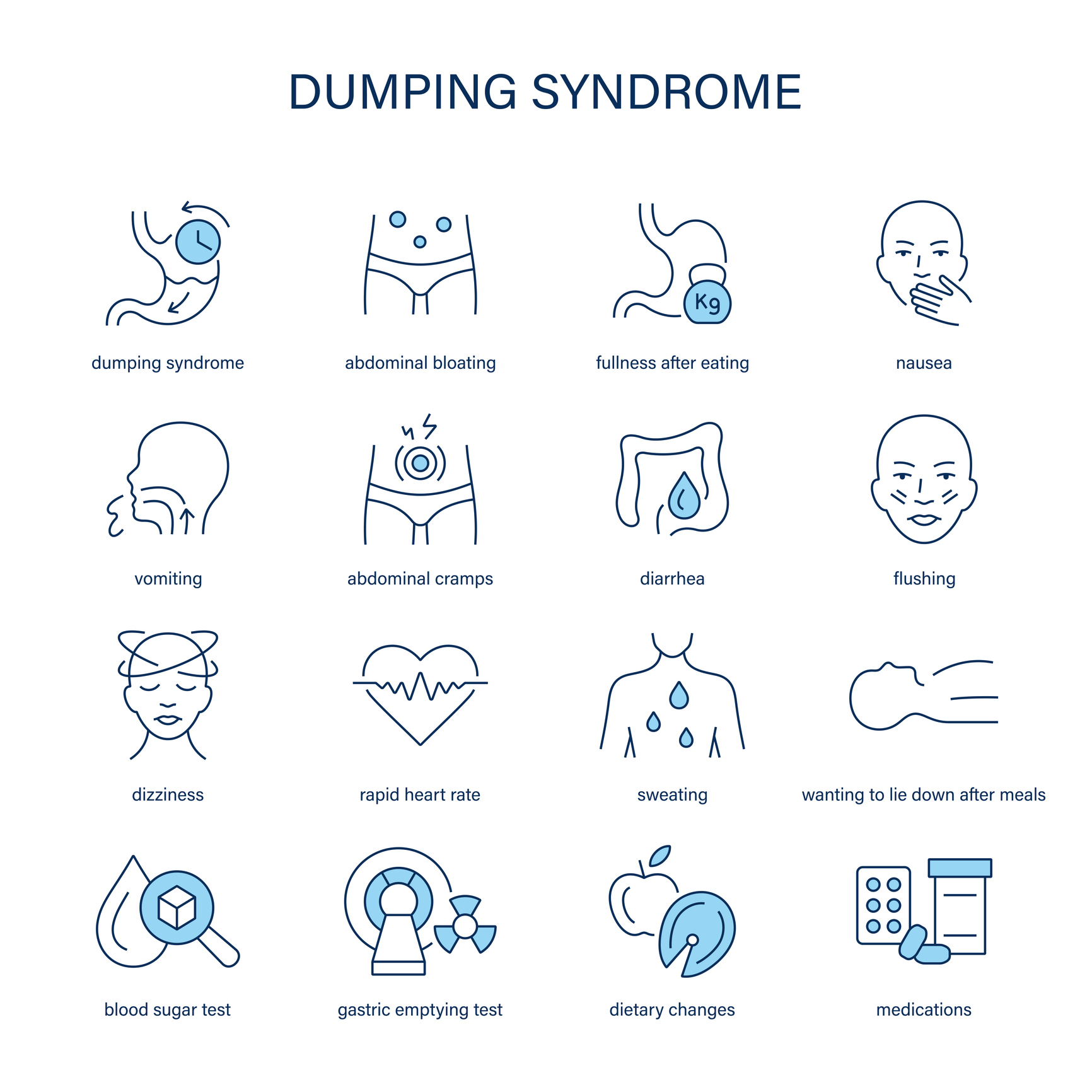
 Dumping syndrome or rapid gastric emptying is a condition that occurs when food and gastric juices move abnormally quickly from the stomach to the small intestine after eating.
Dumping syndrome most commonly occurs after stomach surgery due to it altering the stomach, which can increase the risk of developing the condition. These surgeries are performed mostly to treat obesity, but they can also treat stomach cancer. Dumping syndrome can also happen after esophageal surgery, such as surgery to treat esophageal cancer. Surgeries for other conditions can cause dumping syndrome, including:
- Bariatric surgery
- Esophagectomy
- Gastrectomy
- Vagotomy
- Fundoplication
- Pyloroplasty
Symptoms of dumping syndrome generally start within minutes after eating, especially meals containing high levels of table sugar and fruit sugar. Symptoms include:
- Nausea
- Vomiting
- Feeling bloated or too full after eating
- Stomach cramps
- Diarrhea
- Rapid heart rate
- Dizziness or lightheadedness
- Flushing
Late dumping syndrome starts one to three hours after eating a meal that is high in sugar. It takes time for symptoms to develop because the body releases large amounts of insulin to absorb the sugars entering the small intestine after eating. This process results in low blood sugar levels. Symptoms of late dumping syndrome can include:
- Rapid heart rate
- Sweating
- Weakness
- Dizziness or lightheadedness
- Flushing
Some people can have both early and late symptoms.
A healthcare provider can diagnose dumping syndrome by using the following methods:
- Discussing medical history and performing a medical evaluation
- Testing blood sugar
- Performing a gastric emptying test
If a person has early dumping syndrome, the condition is likely to resolve itself on its own within three months. In the interim, dietary changes may help ease symptoms. If dietary changes don’t help, an antidiarrheal medicine will be prescribed and injected under the skin to slow food from emptying into the intestine.
If medication doesn’t work, surgical procedures such as reconstructing the pylorus of a reverse gastric bypass may be recommended.
There are dietary strategies that can help maintain good nutrition and minimize symptoms, including:
- Eating smaller meals
- Drinking 6-8 cups of fluids per day
- Drinking most of your fluids between meals
- Lying down for 30 minutes after meals
- Changing your diet
- Increasing fiber intake
If you are going to drink alcohol, it is important to speak with your healthcare provider before doing so. Drinking alcohol beverages can worsen dumping syndrome symptoms because they can be absorbed quickly and can have high sugar content, which can lead to blood sugar levels rising rapidly and cause a significant insulin spike and then eventually low blood sugar.
If you or a loved one is experiencing symptoms associated with dumping syndrome, you can receive treatment at Flushing Hospital Medical Center’s Ambulatory Care Center. To schedule an appointment, please call (718) 670-5486.
All content of this newsletter is intended for general information purposes only and is not intended or implied to be a substitute for professional medical advice, diagnosis or treatment. Please consult a medical professional before adopting any of the suggestions on this page. You must never disregard professional medical advice or delay seeking medical treatment based upon any content of this newsletter. PROMPTLY CONSULT YOUR PHYSICIAN OR CALL 911 IF YOU BELIEVE YOU HAVE A MEDICAL EMERGENCY.