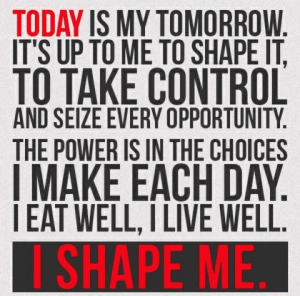
#WELLNESSWEDNESDAY

With all the running around we do and the stress we deal with each and every day, try to take a moment to center your mind and bring wellness to your entire being.  Try reciting these and other positive affirmations to help start your day in a positive way.

All content of this newsletter is intended for general information purposes only and is not intended or implied to be a substitute for professional medical advice, diagnosis or treatment. Please consult a medical professional before adopting any of the suggestions on this page. You must never disregard professional medical advice or delay seeking medical treatment based upon any content of this newsletter. PROMPTLY CONSULT YOUR PHYSICIAN OR CALL 911 IF YOU BELIEVE YOU HAVE A MEDICAL EMERGENCY.

Holidays Should Bring Lots of Presents Not Pounds

The holidays are full of cheer, family gatherings and lots of calories!

Here are some tips on how to maintain your weight during the holiday food fest:

  • Stay Active – Although the weather may not be conducive to outdoor physical activity, you can try some simple indoor activities such as workout videos, stationary bikes and treadmill.
  • Healthy Snacking – Treats are easily accessible during the holiday season. Be mindful to stay away from snacks that are high in sugar and unhealthy fats.  Stick to the veggie and fruit platters.
  • Portion Control – The best way to overcome obesity and maintain a healthy weight is through portion control. Check the serving sizes for the foods you are choosing to eat and try to remain within the guidelines of the recommended portion.
  • Don’t Stress Eat – Try to remain mindful of your stress level during the holiday season. Use exercise, meditation, yoga or deep breathing to reduce stress.
  • Bring a Healthy Dish – By bringing your own healthy meal to share, you are guaranteed to be in control of your choices.
  • Limit Alcohol Consumption– Everyone loves a libation during the holiday season, but keep in mind that alcohol contains lots of calories and can cause you to gain weight.

Addition tips include cooking and baking holiday favorites with less calorie rich ingredients, such as substituting sugar and butter with more healthy options like Greek yogurt, pumpkin puree, olive oil, mashed bananas or avocado.

Hopefully, these tips will give you all the holiday cheer with none of the holiday guilt!

Happy Holidays!

All content of this newsletter is intended for general information purposes only and is not intended or implied to be a substitute for professional medical advice, diagnosis or treatment. Please consult a medical professional before adopting any of the suggestions on this page. You must never disregard professional medical advice or delay seeking medical treatment based upon any content of this newsletter. PROMPTLY CONSULT YOUR PHYSICIAN OR CALL 911 IF YOU BELIEVE YOU HAVE A MEDICAL EMERGENCY.

Trick-or-Treat Safety Tips During COVID-19

Halloween is known as a kid-favorite holiday full of spooky fun and lots of candy.  However, it can also present many opportunities for injury, as children take to the streets in pursuit of trick-or-treat goodies.

Although the restrictions regarding COVID-19 have somewhat relaxed, it is still suggested that you and your child where a mask, wash or sanitize hands regularly and  try not to be part of large crowds while trick-or-treating.

Additionally, statistics show that roughly four times as many children aged 5-14 are killed while walking on Halloween evening compared with other evenings of the year.  Also, injuries such as falls are a leading cause of injuries among children on Halloween.

Parents can help minimize the risk of children getting injured at Halloween by following these safety tips from the American Academy of Pediatrics, the Centers for Disease Control and Prevention and the National Safety Council.

On Halloween children should:

  • Go only to well-lit houses and remain on porches than entering houses.
  • Travel in small groups accompanied by an adult.
  • Use costume plastic knives and swords that are flexible, not rigid or sharp.
  • When walking through neighborhoods trick or treating, use flashlights, stay on sidewalks, and avoid crossing yards.
  • Cross at the corner, use crosswalks and do not cross between parked cars.
  • Be sure to stop at all corners and stay together in a group before crossing.
  • Wear clothing or costumes that are bright, reflective and flame retardant.
  • Consider using face paint instead of masks which can obstruct a child’s vision.
  • Avoid wearing hats that will slide over children’s eyes.
  • Avoid wearing long, baggy or loose costumes or oversized shoes to prevent tripping.
  • Be reminded to look left, right and left again before crossing a street.

On Halloween parents and adults should:

  • Supervise the trick or treat outing for children under age 12.
  • Avoid giving choking hazards such a gum, peanuts, hard candies, or small toys as treats to young children.
  • Parents and adults should ensure the safety of pedestrian trick or treaters.
  • Make sure children under age 10 are supervised as they cross the street.
  • Drive slowly.
  • Watch for children in the street and on medians.
  • Exit driveways and alleyways slowly and carefully.
  • Have children get out of cars on the curbs side, not on the traffic side.

By following these simple tips, you and your children can have a safe and fun Halloween!

All content of this newsletter is intended for general information purposes only and is not intended or implied to be a substitute for professional medical advice, diagnosis or treatment. Please consult a medical professional before adopting any of the suggestions on this page. You must never disregard professional medical advice or delay seeking medical treatment based upon any content of this newsletter. PROMPTLY CONSULT YOUR PHYSICIAN OR CALL 911 IF YOU BELIEVE YOU HAVE A MEDICAL EMERGENCY.

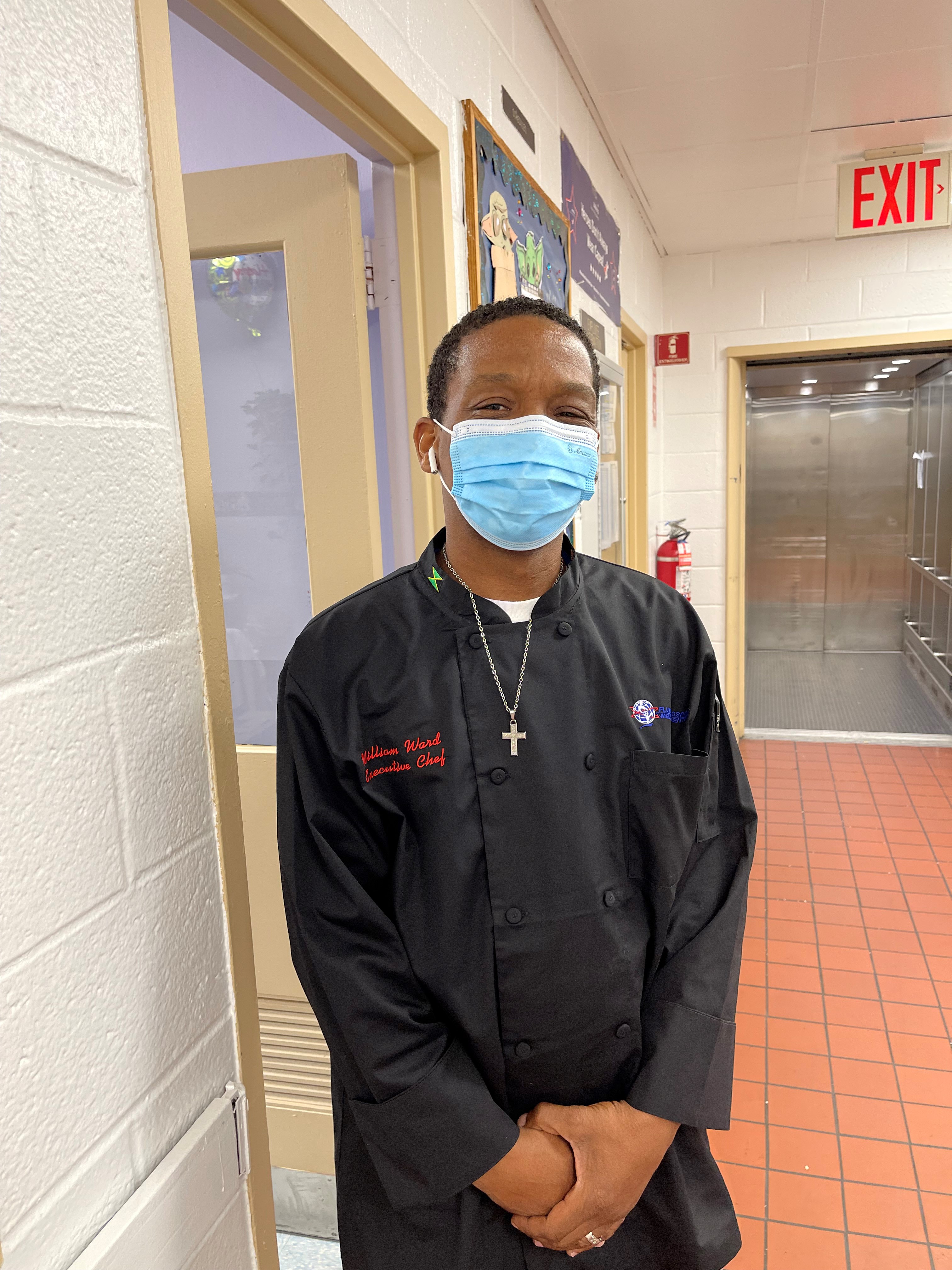
September’s Employee Spotlight – William Ward

The September Employee Spotlight shines on William Ward the Executive Chef at Flushing Hospital Medical Center (FHMC).

For almost 2 years, William has overseen all the nutritional purchasing, production, staff scheduling and patient services for the Department of Food and Nutrition.

When not at work, William enjoys spending time with his wife and five children.  He is the Assistant Coach for boys’ baseball, loves catering food and playing poker.

William Ward is dedicated to his job.  He notes that “It is my priority to make our customers happy and always put my best foot forward.”

He is adept at getting the staff to work as a team so that it makes the job easier and more gratifying.

For these, and so many other reasons, William Ward is FHMC’s September Employee Spotlight.

All content of this newsletter is intended for general information purposes only and is not intended or implied to be a substitute for professional medical advice, diagnosis or treatment. Please consult a medical professional before adopting any of the suggestions on this page. You must never disregard professional medical advice or delay seeking medical treatment based upon any content of this newsletter. PROMPTLY CONSULT YOUR PHYSICIAN OR CALL 911 IF YOU BELIEVE YOU HAVE A MEDICAL EMERGENCY.
Healthy Comfort Food Swaps

As a result of the stress that comes along with juggling home and work, it is easy to reach for the most comforting food choice to make us feel better.  Let’s talk about some ways to choose comforting foods without forsaking and maintaining healthy eating habits.

Since less healthy choices are so available while we are on-the-go. This can add to the level of difficulty when attempting to make healthy food choices. Here are some tips that may make your hectic lifestyle somewhat simpler by planning meals:

Plan your menu for both home and when eating out – Planning meals well in advance will help make sure your meals are healthier and well-balanced. Such as choosing, chicken, fish, salad, fruits and veggies over foods with higher fat and calories. You can substitute potatoes and pizza crust with cauliflower, flour oil and eggs with pumpkin and cook spaghetti squash instead of grain pasta.

Avoid fast food baked goods for breakfast – Don’t be fooled by the healthy “looking” muffin, reach for a yogurt smoothie instead.  It will provide you with vitamin C and potassium, high fiber and keep you full from breakfast to lunch.

Prepare Coffee or Tea at home – Often times, barista coffee can be flavored with syrups that are high in fructose. Additionally, while waiting in line at your local coffee shop, you may be more apt to choose an unhealthy breakfast choice.  Skip the impulse purchase and brew your coffee or tea at home.

Passing on the less healthy comfort food choices can be more challenging when you’re busy. Often times, it’s easy to lose track of time and skip lunch.  No matter how heavy your workload, make time to leave the office and eat your lunch.  Starving through lunch will only lead to making unhealthy food choices later.

In order to maintain a healthy diet, you should prioritize time to purchase and prepare healthy eating choices. Although a home cooked substitution isn’t always possible, these tips can help you choose food that will give you all the comfort you need with none of the guilt.

All content of this newsletter is intended for general information purposes only and is not intended or implied to be a substitute for professional medical advice, diagnosis or treatment. Please consult a medical professional before adopting any of the suggestions on this page. You must never disregard professional medical advice or delay seeking medical treatment based upon any content of this newsletter. PROMPTLY CONSULT YOUR PHYSICIAN OR CALL 911 IF YOU BELIEVE YOU HAVE A MEDICAL EMERGENCY.
Alzheimer’s Awareness Month

Alzheimer’s Awareness Month was started in 2012 in order to raise awareness about the disease and to link families affected by it with resources to help. There is great emphasis placed on early detection and early intervention when dementia is detected.
Alzheimer’s is the most common cause of dementia. It mainly affects the part of the brain that is responsible for memory, and is responsible for almost 75 percent of the cases diagnosed of dementia. While most commonly seen in people who are over 65, it can be found in people who are younger.
Commonly seen symptoms include:
• Forgetting of names, places, and recent events
• Confusion
• Personality changes
• Mood swings
• Loss of inhibition
• Wandering from home
There is no cure for Alzheimer’s at the present time though some medications are available that may slow down its progression. If you would like to schedule an appointment with a physician at Flushing Hospital who may be able to assist you or someone you know, please call 718-670-5486.

All content of this newsletter is intended for general information purposes only and is not intended or implied to be a substitute for professional medical advice, diagnosis or treatment. Please consult a medical professional before adopting any of the suggestions on this page. You must never disregard professional medical advice or delay seeking medical treatment based upon any content of this newsletter. PROMPTLY CONSULT YOUR PHYSICIAN OR CALL 911 IF YOU BELIEVE YOU HAVE A MEDICAL EMERGENCY.
Cantaloupe Breakfast Bowl

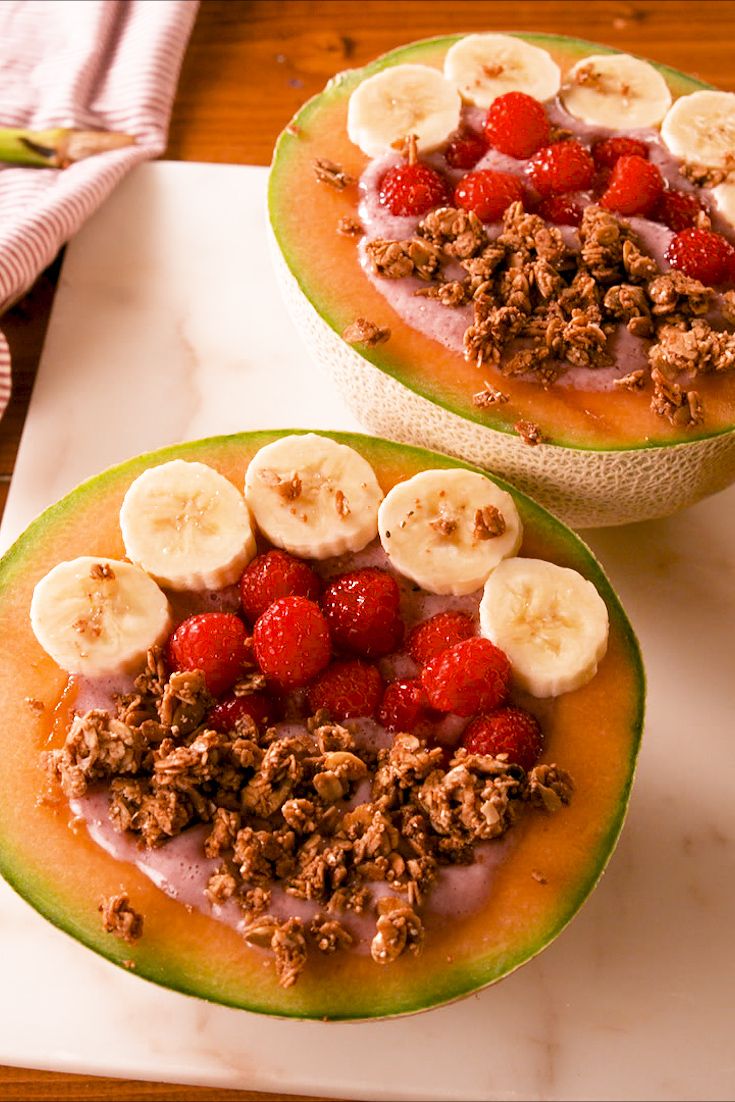
If you are a fruit lover, this simple breakfast bowl is This easy breakfast bowl is picture-perfect when you’re craving a cold and refreshing treat.

INGREDIENTS

  • 1 cantaloupe, halved
  • 1 1/2 c. almond milk
  • 1 c. frozen raspberries, plus fresh raspberries, for garnish
  • 1 banana, sliced into coins, divided
  • 1/2 c. frozen pineapple or mango
  • 1/2 c. Greek yogurt
  • 1 tsp. pure vanilla extract
  • 1/2 c. granola

This ingredient shopping module is created and maintained by a third party and imported onto this page. You may be able to find more information about this and similar content on their web site.

DIRECTIONS

  1. Using a spoon, remove and discard seeds from cantaloupe. Use a spoon to widen hole in the center, leaving a 1″ border at the edges. Reserve removed fruit to add to smoothie.
  2. Combine almond milk, raspberries, half the banana, pineapple, Greek yogurt, vanilla, and extra cantaloupe. Blend until smooth.
  3. Pour smoothie into cantaloupe “bowls” and garnish with raspberries, granola, and remaining banana slices. Serve.

For more breakfast bowl recipe ideas visit, https://www.delish.com/cooking/menus/g27664093/smoothie-bowl-recipes/?slide=2

All content of this newsletter is intended for general information purposes only and is not intended or implied to be a substitute for professional medical advice, diagnosis or treatment. Please consult a medical professional before adopting any of the suggestions on this page. You must never disregard professional medical advice or delay seeking medical treatment based upon any content of this newsletter. PROMPTLY CONSULT YOUR PHYSICIAN OR CALL 911 IF YOU BELIEVE YOU HAVE A MEDICAL EMERGENCY.

Summer Wellness Tip – Swim Safety

The warmer weather is upon us and people are looking for ways to keep cool. One way that has always been popular  during the warm summer months is by swimming in a pool, whether it be at someone’s home, or a community pool in the neighborhood.

Every year there are countless accidents and also fatalities at or near swimming pools. Many could have been avoided had precautions been taken.

Safety Tips to follow:

  • Never leave children unattended near a pool
  • Only swim when there is a lifeguard present
  • Every pool should have proper drain covers
  • Pools should have alarms and proper fencing
  • Keep the pool clean
  • There should be no diving allowed in pools that are shallow
  • Never swim alone
  • There should be no horseplay in or near a pool
  • Do not swim under the influence of alcohol or drugs
  • Do not swim in a thunderstorm
  • It is a good idea to give children swimming lessons before the start of the summer
  • Children who don’t know how to swim should be given flotation devices to wear

There are many organizations around the country that offer swimming lessons for children and adults of all ages. If you don’t know how to swim, look into getting some lessons before heading out to the pool. You will have a good time and you will also be a lot safer this summer.

All content of this newsletter is intended for general information purposes only and is not intended or implied to be a substitute for professional medical advice, diagnosis or treatment. Please consult a medical professional before adopting any of the suggestions on this page. You must never disregard professional medical advice or delay seeking medical treatment based upon any content of this newsletter. PROMPTLY CONSULT YOUR PHYSICIAN OR CALL 911 IF YOU BELIEVE YOU HAVE A MEDICAL EMERGENCY.
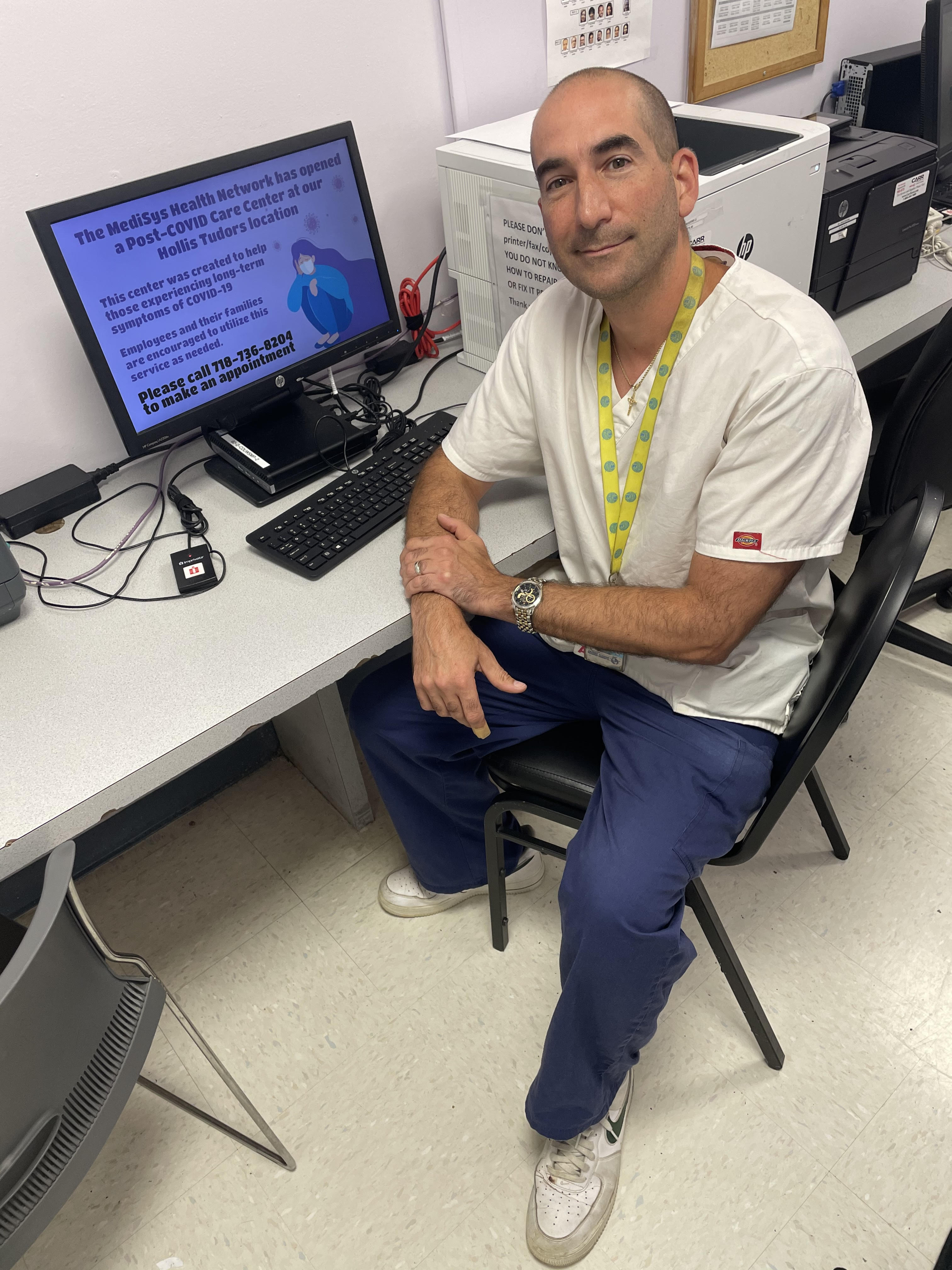
Eric Fernandez – FHMC’s July Employee Spotlight

July’s Flushing Hospital Medical Center’s Employee Spotlight shines on Eric Fernandez, Assistant Head Nurse, in  our 2 West/Addiction Services Unit.

Eric has been at FHMC for the past 14 years.  He has a Bachelor’s Degree in Computer Science from NYU, as well as being a graduate of LaGuardia Community College of Nursing.

As a valued member of the FHMC Department of Nursing, Eric is known for always pitching in whenever and wherever he is needed.  He was an integral part of the COVID-19 vaccination team, spending countless hours making sure all who wanted to be vaccinated were given the chance.

Eric stated, “It was gratifying to be part of the COVID vaccine team because I was witnessing people have tears of joy in their eyes because they would finally be able to visit family and friends that they hadn’t seen in over a year.

When he is not working, Eric loves to go to the movies, travel, exercise and spend time with his wife, Starr watching his son, Sawyer, play sports.

He has a love for history, especially U.S. and NYC History.  He is an avid reader and a regular at the New York Blood Center donating much needed blood and platelets.

When asked what the best part and most challenging part of his job was, Eric stated, “The best part of working in the CDU is when former patients visit or call us to say they turned their life around.  They thank our staff and attribute our care for being a big part of their recovery. That type of affirmation makes me work even much harder for the patient who is struggling with breaking the chain of relapse that can often happen with Addiction”

For these, and so many other reasons, Eric Fernandez is Flushing Hospital’s July Employee Spotlight.  Congratulations!

All content of this newsletter is intended for general information purposes only and is not intended or implied to be a substitute for professional medical advice, diagnosis or treatment. Please consult a medical professional before adopting any of the suggestions on this page. You must never disregard professional medical advice or delay seeking medical treatment based upon any content of this newsletter. PROMPTLY CONSULT YOUR PHYSICIAN OR CALL 911 IF YOU BELIEVE YOU HAVE A MEDICAL EMERGENCY.

Lyme Disease

With summer in full swing, we will be spending more time doing activities outdoors in areas such as parks, forests and hiking trails.  While getting out and keeping physically fit is strongly encouraged it is important to keep in mind that being in these areas can put you at risk for Lyme disease.

Dr. Sherman Klein, MD, specializing in Internal Medicine at Flushing Hospital Medical Center’s Ambulatory Care Center offers the following information on Lyme disease, how it is spread, its symptoms, and treatment.

Lyme disease is the most common tick-born infection in New York City and in the United States.  On the east coast, Lyme disease is spread by the bite of a black-legged tick infected with the bacterium Borrelia burgdorferi.  Not all black-legged ticks carry this bacterium and, even if they are infected, they must be attached for at least 36 – 48 hours after a person is bitten to transmit the disease.

Blacklegged ticks are rarely found in NYC, but if you have been traveling in more rural areas of New York such as Westchester and Long Island you are at greater risk of coming into contact with an infected tick.

The annual number of cases of Lyme disease reported continues to rise each year in non-rural communities.

Some of the early warning signs of Lyme disease are:

  • Muscle aches
  • Headache
  • Fatigue
  • Fever
  • Rash

These signs and symptoms may occur anywhere from three to 30 days after being bitten.  After an infected tick bite, a widening red area may appear at the infected site that is clear in the center, forming a bull’s eye appearance.

Dr. Klein suggests that the best way to avoid contracting Lyme disease is to avoid direct contact with ticks.  You can do this by avoiding wooded and brushy areas, and high grass.  If you are hiking, try to walk in the center of the trails and wear long pants and a long-sleeved shirt. If in a wooded area you should use a strong repellent.  Dr. Klein cautions that when using any repellent, you should avoid applying the solution to your hands, eyes and mouth.

Some of the tips to find and remove ticks from your body and clothing are:

  • Do a check of your entire body viewing under your arms, behind and in your ears, inside your navel, behind your knees, along your legs, waist and hair. Also, check your pet.
  • Take a shower soon after returning indoors. If you wash within two hours of returning indoors, the ticks are more easily found and washed off your body.
  • Once you are indoors, take your clothing and place them in the wash using hot water and then put them in the dryer on “high” for at least 10 minutes; if the clothes were washed in cold water, place them in the dryer on “high” for at least 90 minutes

If Lyme disease is left untreated, it can spread to other parts of the body causing arthritis cardiac and nervous system problems.   Dr. Sherman Klein is one of the many qualified doctors specializing in Internal Medicine at Flushing Hospital Medical Center.  To schedule an appointment with him, or any of our other doctors, please call 718-670-5486

All content of this newsletter is intended for general information purposes only and is not intended or implied to be a substitute for professional medical advice, diagnosis or treatment. Please consult a medical professional before adopting any of the suggestions on this page. You must never disregard professional medical advice or delay seeking medical treatment based upon any content of this newsletter. PROMPTLY CONSULT YOUR PHYSICIAN OR CALL 911 IF YOU BELIEVE YOU HAVE A MEDICAL EMERGENCY.