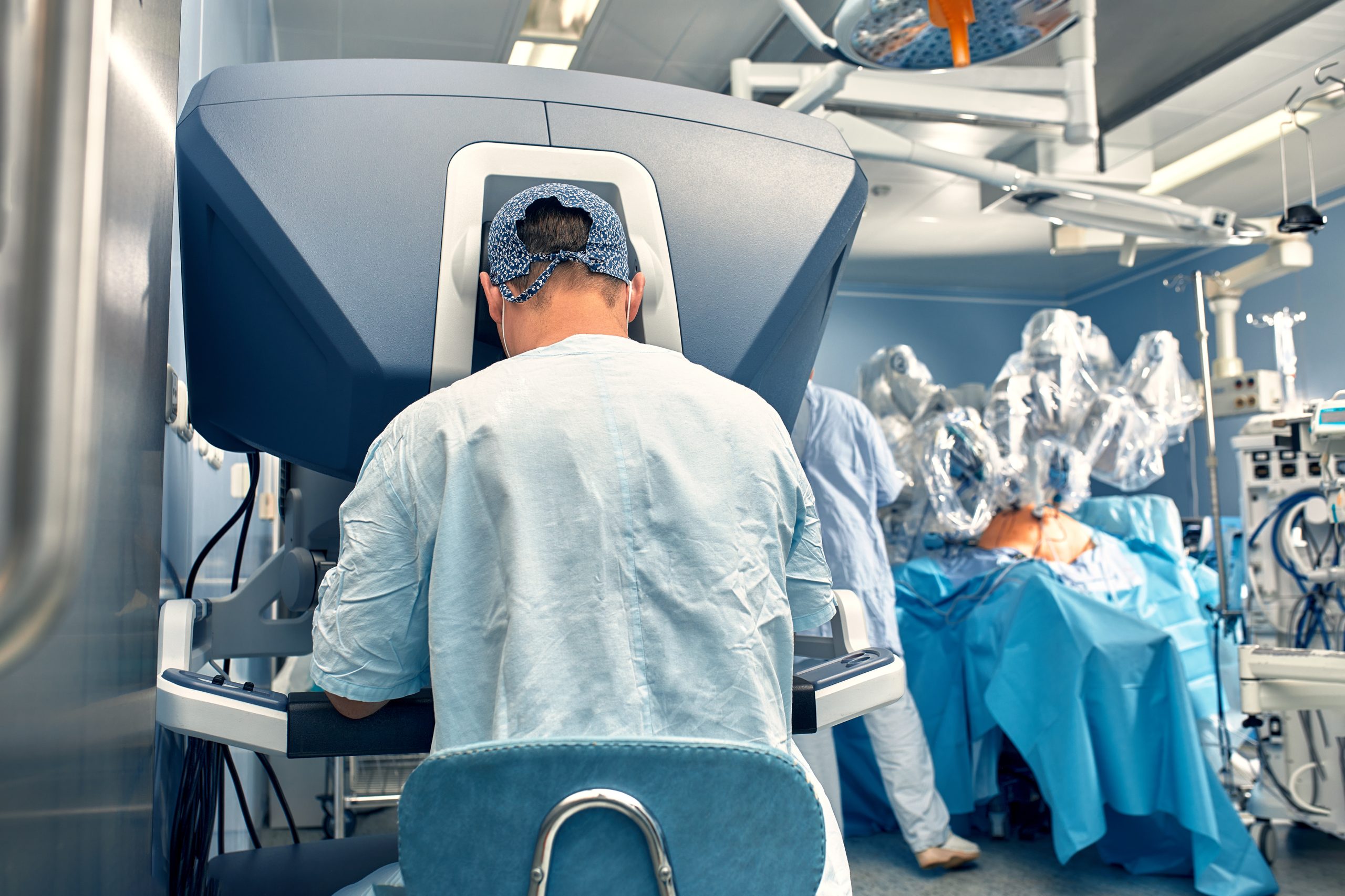
Robotics: Gastric Bypass

Gastric bypass or “Roux-en-Y” is a metabolic and weight-loss procedure that works by modifying your digestive system so that you consume and absorb fewer calories. It modifies your stomach and also your small intestines.

Similar to other bariatric surgery operations, gastric bypass is recommended for people who have clinically severe obesity. It has been shown to help relieve a long list of obesity-related health conditions, including:

  • Type 2 diabetes
  • Hypertension
  • Obstructive sleep apnea
  • GERD (chronic acid reflux)
  • Heart disease
  • Hyperglycemia
  • Fatty liver disease
  • Hyperlipidemia
  • Osteoarthrosis

The Roux-en-Y procedure gets its name from how it changes your digestive system. “Roux-en-Y” means “in the shape of a Y”. The procedure divides your stomach and small intestine, connecting each new segment to form a “Y” shape. This procedure reduces the functional part of your stomach to a small pouch, separating it from the rest with surgical staples, and restricting the amount of food your stomach can hold. Then, it connects the new stomach pouch to a lower segment of your small intestine. This means that when food goes through your digestive system, it will now bypass most of your stomach and the first part of your small intestine, causing your digestive system to not absorb all of the nutrients or calories in your food.

Gastric bypass surgery requirements are similar to those of other bariatric procedures. A qualified healthcare provider must recommend you for surgery. You may be a candidate for gastric bypass surgery if you:

  • Have been diagnosed with class III obesity
  • Have a BMI of at least 35 with at least one obesity-related condition
  • Have obesity-related type 2 diabetes

Most Roux-en-Y surgical procedures today are laparoscopic, a minimally invasive surgical technique. However, sometimes they are done with robotic assistance.

There are many potential advantages of robotic-assisted surgery over other types of surgery including:

  • Robot-assisted surgery provides the surgeon with 3D images of inside your abdomen that create a clearer picture for them to reference as they operate compared to the 2D images used during laparoscopic surgery
  • Under the surgeon’s direction, the robot can move more freely and with more versatility than a human hand
  • You’ll have a few tiny scars rather than one large incision scar (as with open surgery)
  • You’re more likely to experience less pain and less bleeding after surgery compared to open surgery
  • You’re more likely to have a quicker recovery time than with open surgery

To learn more about the robotic surgical procedures at Flushing Hospital Medical Center or to schedule an appointment, call (718) 670-5000.


All content of this newsletter is intended for general information purposes only and is not intended or implied to be a substitute for professional medical advice, diagnosis or treatment. Please consult a medical professional before adopting any of the suggestions on this page. You must never disregard professional medical advice or delay seeking medical treatment based upon any content of this newsletter. PROMPTLY CONSULT YOUR PHYSICIAN OR CALL 911 IF YOU BELIEVE YOU HAVE A MEDICAL EMERGENCY.

Is Gastric Bypass Surgery Right For You?

Is being overweight affecting your health and overall quality of life? For several people,the answer is yes. Obesity is a disease that affects more than one-third of people in the United States. It is the second leading cause of preventable death.

The contributing factors that can lead to obesity include metabolic, pre-existing health conditions, eating disorders, environment and genetics.

Overcoming obesity can be difficult. You may have tried several weight loss treatments or methods that include diet and exercise to lose weight, but were unsuccessful. Bariatric (weight loss) surgery is an option that has proven to be effective in producing significant weight loss.

One of the most commonly performed types of bariatric surgery is gastric bypass surgery. The procedure requires a surgeon to divide the stomach into two parts (one small and one large). The surgeon may use staples or vertical banding to create a small pouch from the upper part of the stomach.

The small pouch is then directly attached to the small intestine bypassing the rest of the stomach and the upper part of the small intestine. This limits the amount of food that can be eaten and reduces the fat and calories that can be absorbed. The larger part of the stomach will remain intact to produce digestive juices. This surgery is usually performed laparoscopically.

The benefits of having this procedure may include:
•Accelerated weight loss
•Improvement in quality of life
•Improvement in obesity- related medical conditions such as diabetes, hypertension or high cholesterol

There are several accepted medical criteria that will determine if you are a candidate for surgery. You may be eligible if:
•You have a body mass index (BMI) over 40
•Are 100 lbs. or more over your ideal body weight
•Are experiencing disabling pain in weight-bearing joints
•You have a BMI of 35 along with obesity-related disorders such as high blood pressure, diabetes, sleep apnea or degenerative joint disease.
•Your efforts to lose weight through diet and exercise have been unsuccessful

If you meet these requirements and are considering moving forward with bypass surgery, there a few things you can expect after the procedure:
•You may experience pain at the incision site; however, your medical team will be available to help you in keeping your pain under control.
•There is a possibility that you may experience discomfort from the gas used during laparoscopic surgery.
•You will be asked to walk on the day of your surgery as frequently as possible. This will promote circulation and prevent blood from clotting.
•To prevent possible complications such as pneumonia, you may be asked to take deep breaths and breathe into an instrument called an incentive spirometer and cough frequently.
•You will be given ice chips and water to sip, if these are not rejected by the body, you will be placed on a clear liquid diet. Gradually you will be able to ingest solid foods.
•Prior to discharge, the surgeon, nurse or discharge coordinator will instruct you to follow a specific diet.

When combined with eating a healthy diet and exercise, gastric bypass surgery can offer long-term weight loss success. It is important to keep in mind that each case is unique to the individual and it is suggested that you consult a bariatric surgeon for an assessment.

Flushing Hospital Medical Center offers a unique and multidisciplinary program that involves a complete mind, body and wellness approach to weight loss surgery. For more information about the Bariatric Surgery Services at Flushing Hospital or procedures performed by our doctors, please call 718-670-8908

All content of this newsletter is intended for general information purposes only and is not intended or implied to be a substitute for professional medical advice, diagnosis or treatment. Please consult a medical professional before adopting any of the suggestions on this page. You must never disregard professional medical advice or delay seeking medical treatment based upon any content of this newsletter. PROMPTLY CONSULT YOUR PHYSICIAN OR CALL 911 IF YOU BELIEVE YOU HAVE A MEDICAL EMERGENCY.