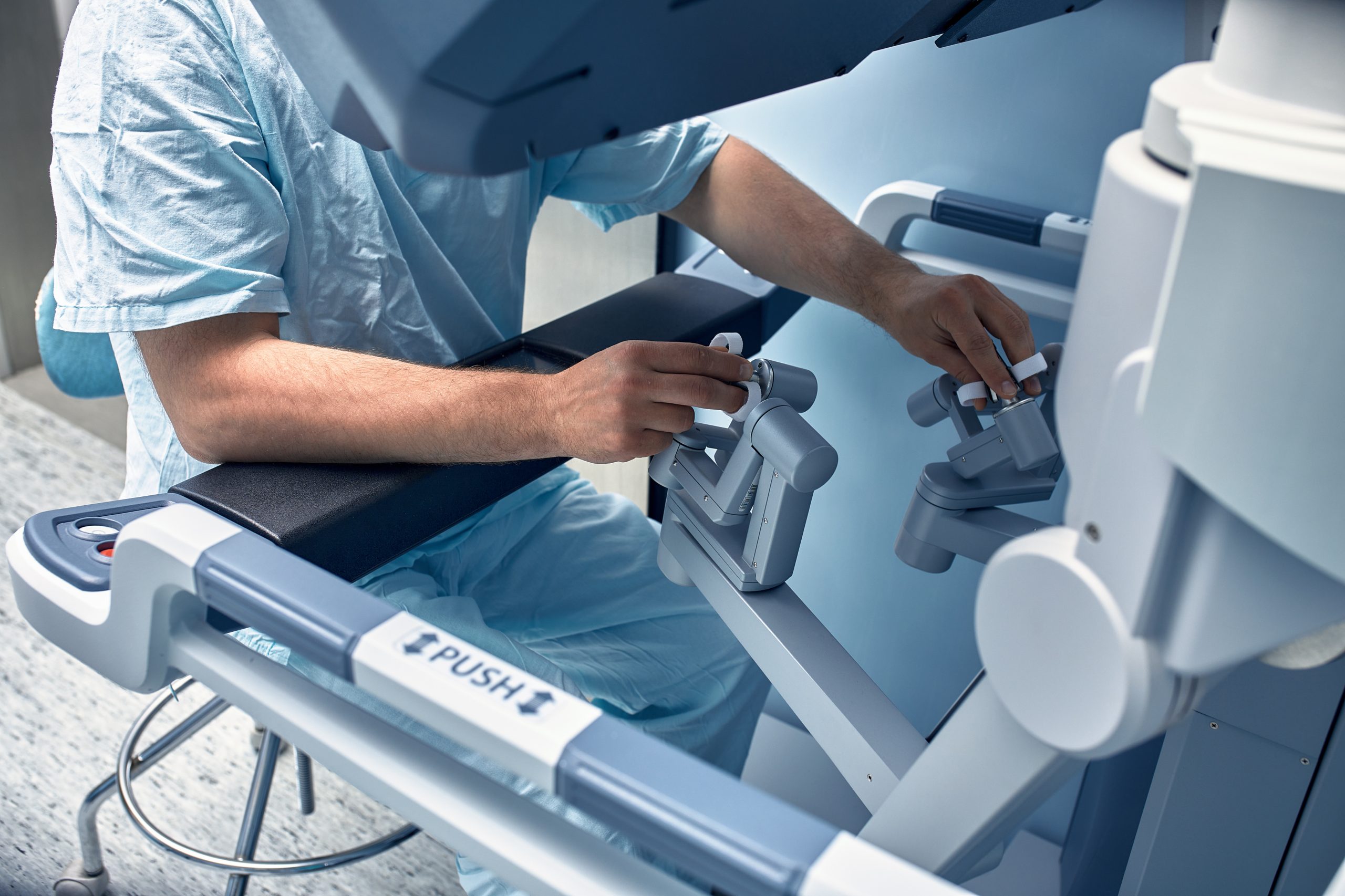
Robotic Gynecological Surgery

Endometriosis is an often painful condition in which tissue that is similar to the inner lining of the uterus grows outside the uterus. It often affects the ovaries, fallopian tubes, and the tissue lining the pelvis. Rarely, endometriosis growths may be found beyond the area where pelvic organs are located.

Endometriosis tissue acts as the lining inside the uterus, it thickens, breaks down, and bleeds with each menstrual cycle. But it grows in places where it doesn’t belong, and it doesn’t leave the body. When endometriosis involves the ovaries, cysts called endometriomas may form. Surrounding tissue can become irritated and form scar tissue. Bands of fibrous tissue called adhesions also may form. These can cause pelvic tissues and organs to stick to each other.

The main symptom of endometriosis is pelvic pain. This pain can be intense or mild. Symptoms often feel worse just before and during your period due to inflammation brought on by the hormonal changes that occur at the time. Other symptoms of endometriosis include:

  • Excruciating menstrual cramps
  • Abdominal pain or back pain during your period or in between periods
  • Heavy bleeding during periods, or spotting between periods
  • Pain during sex
  • Infertility
  • Pain when pooping or peeing
  • Stomach problems like diarrhea, constipation, or bloating

You can have no symptoms of endometriosis. The seriousness of your pain may not be a sign of the number or extent of endometriosis growth in your body. You could have a small amount of tissue with bad pain. Or you could have little to no pain and have lots of endometriosis tissue. Women often find out they have the condition when they can’t get pregnant or after they have an unrelated surgery.

The exact cause of endometriosis isn’t clear. But some possible causes include:

  • Retrograde menstruation
  • Transformed peritoneal cells
  • Embryonic cell changes
  • Surgical scar complication
  • Endometrial cell transport
  • Immune system condition

Factors that raise the risk of endometriosis include:

  • Never giving birth
  • Starting your period at an early age
  • Going through menopause at an older age
  • Short menstrual cycles (less than 27 days)
  • Heavy menstrual periods that last longer than seven days
  • Having higher levels of estrogen in your body or greater lifetime exposure to estrogen your body produces
  • Low body mass index
  • One or more relatives with endometriosis, such as a mother, aunt, or sister

Any health condition that prevents blood from flowing out of the body during menstrual periods also can be a risk factor for endometriosis. So can conditions of the reproductive tract.

To diagnose endometriosis, your doctor will likely start by giving you a physical exam. You’ll be asked to describe your symptoms, including where and when you feel pain. Tests to check for clues of endometriosis include:

  • A pelvic exam
  • Ultrasound
  • MRI
  • Laparoscopy

Treatment for endometriosis often involves medicine or surgery. The approach you and your healthcare team choose will depend on how serious your symptoms are and whether you hope to become pregnant. Medicine is typically recommended first. If it doesn’t help enough, surgery becomes an option. Treatments for endometriosis include:

  • Pain medicines
  • Hormone therapy
  • Fertility treatment
  • Conservative therapy
  • Hysterectomy with removal of the ovaries

Surgery options may include robotic surgery. Long recovery times of up to six weeks and large incisions made recovery very difficult, but with advances in gynecologic surgery, especially robotic-assisted surgery, women can expect a much shorter recovery from pelvic surgery.

There are many potential advantages of robotic-assisted surgery over other types of surgery, including:

  • Robot-assisted surgery provides the surgeon with 3D images of inside your abdomen and pelvis that create a clearer picture for them to reference as they operate.
  • Under the surgeon’s direction, the robot can move more freely and with more versatility than a human hand
  • You’ll have a few tiny scars.
  • You’re more likely to experience less pain and less bleeding after surgery compared to open surgery.
  • A shorter hospital stay.

Experienced surgeons use the da Vinci robot to treat women who suffer from troubling gynecologic conditions like endometriosis.

To learn more about the robotic surgical procedures at Flushing Hospital Medical Center or to schedule an appointment, call (718) 670-5000.


All content of this newsletter is intended for general information purposes only and is not intended or implied to be a substitute for professional medical advice, diagnosis or treatment. Please consult a medical professional before adopting any of the suggestions on this page. You must never disregard professional medical advice or delay seeking medical treatment based upon any content of this newsletter. PROMPTLY CONSULT YOUR PHYSICIAN OR CALL 911 IF YOU BELIEVE YOU HAVE A MEDICAL EMERGENCY.


Is Bariatric Surgery Right For You?

Obesity is a growing public health issue in our region.  According to NYC.gov, more than half of New Yorkers are overweight, and nearly a quarter qualify as obese.  The New York City Department of Health and Mental Hygiene, reports that an estimated 23% of the population living in Queens is obese.

These rates are concerning  because people who are obese are at an increased risk for developing chronic diseases such as diabetes, stroke, hypertension, heart disease and some cancers.  However, the good news is the risks associated with many of these conditions can be significantly reduced by losing weight.

Diet and exercise are highly recommended methods of weight loss but they may not be enough to yield significant results for those who are obese.   Bariatric surgery offers an extremely effective weight loss solution for people who have tried and failed to lose weight by way of diet and exercise. Additionally, it has been shown to help improve several obesity-related health conditions.

The two most popular bariatric surgeries are the sleeve gastrectomy and gastric bypass procedures. In the sleeve gastrectomy operation a large portion of the stomach is removed and a smaller, new stomach in the shape of a tube or “sleeve” is created.  During bypass surgery, a new small stomach pouch is created, and a section of the small bowel is bypassed. These surgeries are usually done through small incisions either laparoscopically or using the da Vinci surgical robot, ensuring a minimally invasive approach. Both surgeries offer excellent long term results and positive outcomes in most patients.

With this is in mind, it is important to understand that bariatric surgery is a major operation, no matter which procedure is chosen.  Bariatric surgery is not an easy way out. It is an important decision to be made under strict physician supervision and with the support of loved ones.  The process is immersive and takes approximately 4-5 months of supervised dieting and being seen by multiple specialties for approval.

Although bariatric surgery is considered safe, it is very important that patients understand the risks of surgery. As with most major surgical procedures, the risks can include bleeding or other complications.

For those who would like to explore non-surgical weight loss procedures, there are options such as the FDA-approved Obalon Balloon System. This involves three air filled balloons inserted via a swallowed capsule. The patient is given no anesthesia and most people return to work the same day. The balloons stay in for six months after which they are removed via endoscopy. The procedure is generally very well tolerated with some side effects such as nausea and cramping. Studies have shown weight loss to continue beyond removal and many patients lose significant amount of weight.

When deciding which procedure is best for you, it is recommended that you receive an expert consultation with a surgeon. Your physician can assess your health which can lead to the decision on which surgery is suitable for your needs.

To ensure the highest quality care and maximize your chances of a successful weight loss procedure, it is recommended that you receive treatment at a “Bariatric Center of Excellence”, such as Flushing Hospital Medical Center.

Flushing Hospital is the only Center of Excellence in Queens. The process to reach this designation is arduous and ensures that the center and the surgeons are of the highest quality and preparedness. Surgical outcomes are measured very strictly and the capability of both the surgeons and the center must be of the highest caliber when compared nationally.

To make an appointment, please call 718-408-6977.

All content of this newsletter is intended for general information purposes only and is not intended or implied to be a substitute for professional medical advice, diagnosis or treatment. Please consult a medical professional before adopting any of the suggestions on this page. You must never disregard professional medical advice or delay seeking medical treatment based upon any content of this newsletter. PROMPTLY CONSULT YOUR PHYSICIAN OR CALL 911 IF YOU BELIEVE YOU HAVE A MEDICAL EMERGENCY.

Flushing Hospital’s Hernia Center Offers Expert Care to Those in Need

Flushing Hospital Medical Center now offers a comprehensive center to diagnose and treat a variety of forms of hernias.

A hernia occurs when an organ or fatty tissue pushes through a weak spot or an opening in the muscle or tissue that is supposed to hold it in place.  There are many different types of hernias, including inguinal, hiatal, umbilical, and incisional.


  • An inguinal hernia occurs when the intestines push through the lower abdominal wall, often in the inguinal canal located in the groin. . This is the most common type of hernia and it is more common in man than women.
  • A hiatal hernia develops when part of the stomach protrudes up through the diaphragm into the chest cavity. This type of hernia almost always results in gastroesophageal reflux. Hiatal hernias are most common in adults 50 years or older.
  • Umbilical hernias present in children and babies under six months old. They occur when the child’s intestines bulge through their abdominal wall, near the belly button.  An umbilical hernia is the only type that can go away on its own as the babies muscles get stronger.
  • An incisional hernia can take place after abdominal surgery. During this time, the tissues and muscles are typically weak and the intestines may push through an incision scar.

Hernias can develop quickly or slowly build over a long period of time. There are many factors that can contribute to the onset of a hernia. One of the most common reasons is straining a muscle while lifting heavy weight. Other factors include: being pregnant, being constipated, sudden weight gain, or persistent coughing or sneezing.

The most common symptom of a hernia is a bulge in the affected area. They are most identifiable through touch, especially when standing up, bending over, coughing, or crying (in babies). Other symptoms include pain in the affected area, weakness, or a burning sensation. Hiatal hernias will often result in acid reflux, chest pain, and possibly difficulty swallowing.

Your doctor can diagnose a hernia through a physical examination. Sometimes an x-ray or endoscopy is necessary. Treatment options for your hernia depend on the size and severity and can include lifestyle changes, medication or surgery.

Lifestyle changes can include altering your diet, exercising to increase muscle strength, avoiding lifting heavy objects and maintaining good posture.  Medications may be helpful in the treatment of a hiatal hernia. In most cases however, surgery may be required.

Hernia procedures can be done using open or laparoscopic techniques and Flushing Hospital’s new Hernia Center offers a wide variety of options for both methods. Our expert staff has a great deal of experience in this field with excellent outcomes. Many of the procedures can be performed with minimally invasive techniques, including the utilization of our da Vinci Robotic Surgery System.

For more information about Flushing Hospital’s Hernia Center, please call 718-670-3135.


All content of this newsletter is intended for general information purposes only and is not intended or implied to be a substitute for professional medical advice, diagnosis or treatment. Please consult a medical professional before adopting any of the suggestions on this page. You must never disregard professional medical advice or delay seeking medical treatment based upon any content of this newsletter. PROMPTLY CONSULT YOUR PHYSICIAN OR CALL 911 IF YOU BELIEVE YOU HAVE A MEDICAL EMERGENCY.

A Robot Is Removing My Hernia

A hernia is the protrusion of an organ or tissue through the structure or muscle that usually contains it. A hernia occurs immediately or over a long period of time when a combination of muscle strain and weakness is present in the body.

Hernias are most common in the abdomen, but they can also appear in the upper thigh, belly button, and groin areas. Most hernias are not immediately life threatening, but they don’t go away on their own and can require surgery to prevent potentially dangerous complications.

Factors that strain your body and may cause a hernia, especially if your muscles are weak, include:

  • Being pregnant, (which puts pressure on your abdomen)
  • Being constipated, which causes you to strain when having a bowel movement
  • Heavy weight lifting
  • Fluid in the abdomen, or ascites
  • Suddenly gaining weight
  • Straining with urination
  • An Underlying malignancy
  • Persistent coughing or sneezing

Common symptoms of a hernia include:

  • Pain or discomfort in the affected area, especially when bending over, coughing, or lifting
  • Feeling weakness, pressure or heaviness in the abdomen
  • A bulge or protrusion which enlarges with straining and resolves when lying down
  • Feeling a burning or aching sensation at the site of the bulge

If you suspect that these symptoms could be a hernia, visit your doctor for an examination of the affected area and be sure to detail all symptoms. If the results reveal a hernia then the next step would be surgical repair. Whether or not you need surgery depends on the size of your hernia and the severity of your symptoms. During hernia surgery, the weak tissue in the wall of the abdomen or groin is repaired with a mesh.

Technology in surgery is constantly evolving with the intent of increasing positive clinical outcomes and improving patient safety and recovery. One of the greatest medical advances to occur in the pursuit of these goals was the development of surgical robots. Flushing Hospital Medical Center in its dedication to providing patients with the most technologically advanced tools in health care, acquired the da Vinci Surgical Robot. This tool allows for a minimally invasive surgery offering many benefits including, less pain, faster healing time, shorter hospital stay and less risk of infection.

If you have been diagnosed with a hernia and are looking to have the procedure done using the da Vinci surgical robot, Flushing Hospital Medical Center offers this procedure.

For more information about robotic surgery or procedures performed by our surgeons, please contact Flushing Hospital’s Department of Surgery at 718-670-3135.

All content of this newsletter is intended for general information purposes only and is not intended or implied to be a substitute for professional medical advice, diagnosis or treatment. Please consult a medical professional before adopting any of the suggestions on this page. You must never disregard professional medical advice or delay seeking medical treatment based upon any content of this newsletter. PROMPTLY CONSULT YOUR PHYSICIAN OR CALL 911 IF YOU BELIEVE YOU HAVE A MEDICAL EMERGENCY.

Flushing Hospital Uses Robotic Surgery to Remove Gallstones


Many people have gallstones without knowing it. Gallstones are hard deposits in your gallbladder, a small organ that stores a digestive fluid made in the liver. Bile usually dissolves or breaks down cholesterol. However, if your liver makes more cholesterol than your bile can dissolve, hard stones may develop.

Not all people experience symptoms from gallstones. According to the American College of Gastroenterology, 80 percent of people who have gallstones don’t have any pain at all. These are called “silent” gallstones. The most common symptom of gallstones is pain in the right upper quadrant of your abdomen.


Other symptoms include:

  • Fever
  • A yellowish tint in your skin or eyes, which can indicate jaundice
  • Nausea or vomiting
  • abdominal pain

Many risk factors for gallstones are related to diet.

These include:

  • Being overweight or obese
  • Eating a diet that’s high in fat or cholesterol

To diagnose gallstones your doctor will perform a physical examination that includes checking your eyes and skin for visible changes in color. The examination may involve using diagnostic testing to see inside your body. These tests include Ultrasound, Abdominal CT Scan, Gallbladder Radionuclide Scan, and blood tests.

If gallstones are detected in your gallbladder surgery is often the first option if you have significant symptoms. Technology in surgery is constantly evolving with the intent of increasing positive clinical outcomes and improving patient safety and recovery. One of the greatest medical advances to occur in the pursuit of these goals was the development of surgical robots. Flushing Hospital Medical Center in its dedication to supplying patients with superior and technologically advanced tools in health care, acquired the da Vinci Surgical Robot. This tool allows for a minimally invasive surgery with a faster recovery time.

For more information about robotic surgery or procedures performed by our surgeons, please contact Flushing Hospital’s Department of Surgery at 718-670-3135.


All content of this newsletter is intended for general information purposes only and is not intended or implied to be a substitute for professional medical advice, diagnosis or treatment. Please consult a medical professional before adopting any of the suggestions on this page. You must never disregard professional medical advice or delay seeking medical treatment based upon any content of this newsletter. PROMPTLY CONSULT YOUR PHYSICIAN OR CALL 911 IF YOU BELIEVE YOU HAVE A MEDICAL EMERGENCY.