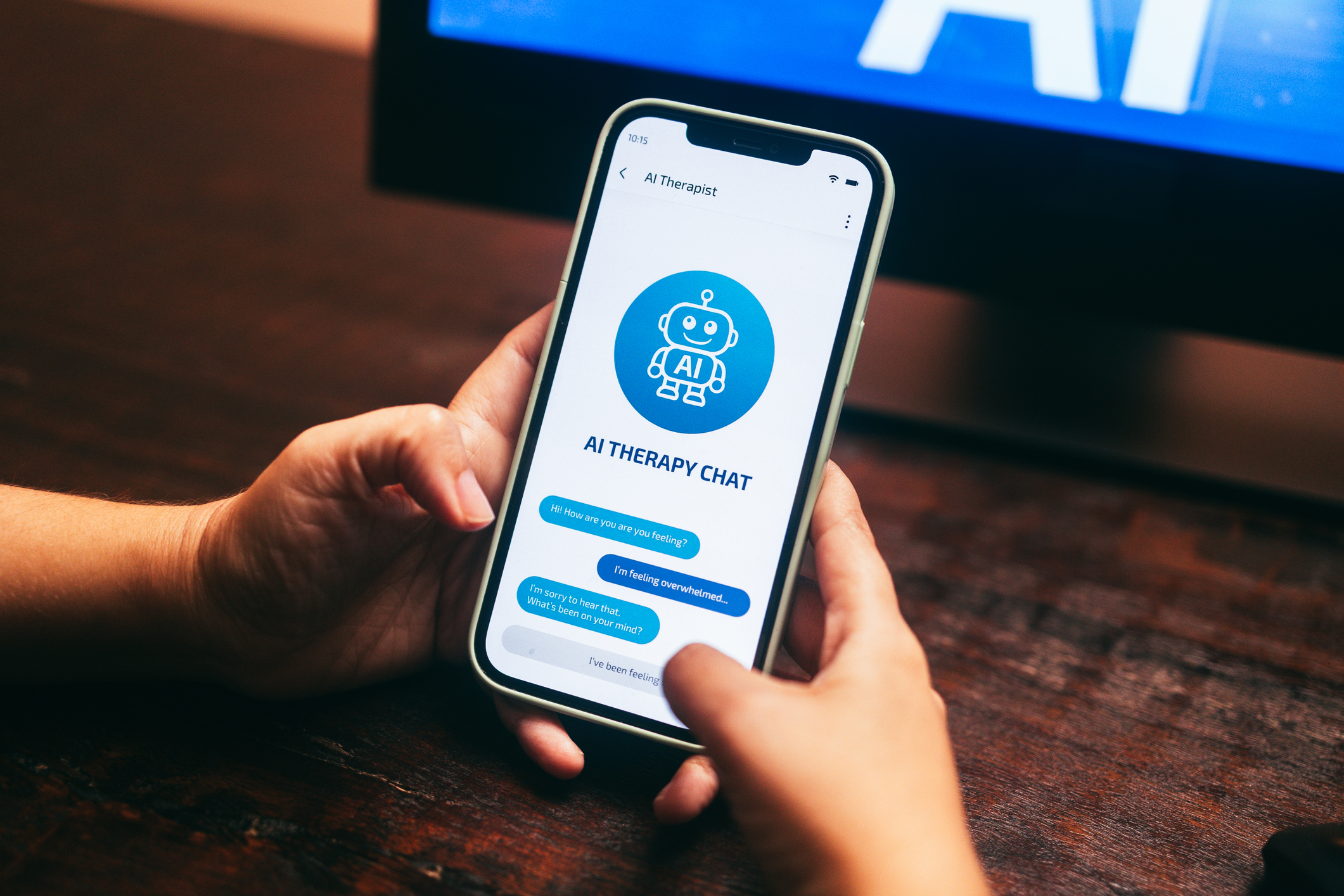
A.I. Therapy

During the COVID-19 pandemic, access to healthcare services through telehealth and telemedicine was implemented to help limit the spread of the virus. It was also used for those who were using mental health services, as that time was very lonely and isolated for many people.  

A 2020 review published in BMC Public Health concluded that telehealth improved the delivery of healthcare during the pandemic, minimizing COVID-19 transmission and potentially reducing morbidity and deaths. 

Telehealth is a way to receive healthcare services remotely through electronic devices such as a computer, tablet, or smartphone. These telehealth services can come in various forms, including: 

  • Live video or audio appointments 
  • Secured text messaging with a healthcare provider 
  • Remote devices that allow a healthcare provider to track blood sugar 

Today, many people use telehealth to get support for any mental health challenges they may be experiencing. Unfortunately, obtaining professional mental health support can be challenging as there is a shortage of mental healthcare providers. There is also the daunting task of searching for and finding the right one. This has caused many people to turn to A.I. therapy.  

A.I. therapy uses artificial intelligence to support mental health through chatbots, digital therapy apps, and A.I.-driven counseling tools.  

Many American adults, 22% in fact, have found some relief by using mental health chatbots as a therapeutic tool.  

There are many possible reasons why people are turning to A.I. therapy as a viable option to address their mental health, including: 

  • Accessibility 
  • Affordability 
  • Anonymity 

There are many A.I. therapy platforms. They include: 

  • CBT-focused chatbots that use meditation and cognitive behavioral therapy (CBT) techniques that offer personalized recommendations and crisis support 
  • Skill-building apps that teach CBT skills, provide personalized recommendations, and collect user data to improve the experience 
  • Self-guided wellness platforms that combine A.I. chatbots with emotion tracking, journaling, and self-directed therapeutic exercises 
  • Mood tracking apps that allow users to track their moods and symptoms, while sometimes receiving self-care recommendations 
  • Conversational A.I. companions that provide daily support through advanced A.I. and adapt to the user’s needs. It is typically aimed at mild anxiety or overthinking, with CBT-focused conversations 

A.I. can be a promising tool for enhancing mental healthcare, but it can’t replace personalized mental healthcare.  

Although A.I. therapy can’t replace human therapists, it could be a helpful supplement for those who may need additional support, along with therapy.  

There are several reasons why A.I. therapy might be helpful, including: 

  • 24/7 availability due to A.I. chatbots being able to provide additional support outside of therapy sessions and holidays 
  • Affordability of A.I. therapy provides a low-cost way to get support outside of sessions 
  • Discretion of A.I. therapy helping people explore mental health support in a low- pressure, judgment-free way 

While A.I. therapy may have some benefits for those seeking support with their mental health, it also poses several potential risks, including: 

  • It can cause A.I.-induced psychosis 
  • It can give unsafe advice and misinformation 
  • It engages in sycophantic behavior by validating a user’s emotions, which can be dangerous if they have suicidal ideation, delusions, mania, or hallucinations 
  • There is a lack of human connection and empathy: A user might take a self-assessment without human input that can lead to false reassurance or dangerous delays in getting help. A.I. can miss nonverbal cues, and a user may take its output as definitive 

A.I. therapy can offer those who are seeking support with their mental health a convenient way to do so. However, effective mental healthcare should be safe and provided by trained, human mental health professionals.  

If you or a loved one needs the assistance and support of a mental health professional at Jamaica Hospital Medical Center, please call 718-206-5575 to schedule an appointment. 


All content of this newsletter is intended for general information purposes only and is not intended or implied to be a substitute for professional medical advice, diagnosis or treatment. Please consult a medical professional before adopting any of the suggestions on this page. You must never disregard professional medical advice or delay seeking medical treatment based upon any content of this newsletter. PROMPTLY CONSULT YOUR PHYSICIAN OR CALL 911 IF YOU BELIEVE YOU HAVE A MEDICAL EMERGENCY.


When is The Best Time to Drink Coffee? And How Late is Too Late?

Many people wake up and have a cup of coffee to start their day. And some people drink several cups of coffee throughout the day.  

Depending on the type of coffee grounds and how they are brewed, an 8-ounce cup of coffee can contain close to 100 milligrams of caffeine. Caffeine is a stimulant, and it helps wake you up by increasing the amount of cortisol, the stress hormone, in your body.  

Cortisol levels usually peak between 7 a.m. and 8 a.m. and gradually drop throughout the day, reaching their lowest point in the middle of the night while you’re sleeping. Cortisol helps the body maintain its sleep-wake cycle.  

However, drinking caffeinated coffee first thing in the morning can increase cortisol production. 

If you drink coffee later in the day or at night, it could affect your sleep. Depending on your metabolism, it may take two to ten hours to get rid of half the caffeine from one cup of coffee.  

Certain people have a “coffee gene”, CYP1A2, that helps the body break down and get rid of caffeine, and some people have two copies of this gene, which helps them break down caffeine faster than those with one copy of the gene. If a person has two copies of the gene, they may not be affected after drinking a late-night cup of coffee. 

There is no scientific evidence that supports a “best time” to drink coffee. However, drinking a mid- to late-morning cup of coffee between 9:30 a.m. and 11 a.m. may help you receive the most benefits from coffee. This is the range of time when cortisol levels begin to drop, and the caffeine in a cup of coffee may be most effective.  

The best time to drink coffee is ultimately determined by your metabolism and how the caffeine in coffee affects your body.  

If you would like to learn more about how caffeine may affect your body, you can schedule an appointment at Flushing Hospital Medical Center’s Ambulatory Care Center. Please call (718) 670-5486. 


All content of this newsletter is intended for general information purposes only and is not intended or implied to be a substitute for professional medical advice, diagnosis or treatment. Please consult a medical professional before adopting any of the suggestions on this page. You must never disregard professional medical advice or delay seeking medical treatment based upon any content of this newsletter. PROMPTLY CONSULT YOUR PHYSICIAN OR CALL 911 IF YOU BELIEVE YOU HAVE A MEDICAL EMERGENCY.

Dealing with Depression During the Holiday Season

The holidays are a time when we spend joyous and happy moments with friends and family. However, for some, the holidays can bring a lot of sadness, loneliness, and even depression. This is called holiday depression.  

Holiday depression can feel a lot like regular depression; however, it is triggered by the onset of the holidays, large family gatherings, and attending or hosting social events. Holiday depression is like the “winter blues”, but it may come and go in quick bursts as one event ends and another begins, or it can linger for days or weeks leading up to and beyond the holiday season.  

Holiday depression can disrupt relationships, mental health, and the ability to manage everything that comes with the holiday season.  

Holiday depression can affect anyone at any time, and it can be hard on a person’s mental health, as it can be triggered by various things, including: 

  • Stressful schedules 
  • Putting pressure on yourself 
  • Separation from loved ones 
  • Loneliness 
  • Family dynamics 
  • Seasonal depression 
  • Social anxiety 
  • Holiday trauma 

There are several signs of holiday depression. They can include: 

  • Feeling depressed and hopeless for more days than not 
  • Loss of interest in things you used to enjoy 
  • Constantly feeling anxious, nervous, or on edge 
  • Trouble sleeping over an extended time 
  • Intrusive thoughts that are difficult to manage on your own 
  • Thoughts of self-harm or suicide 

Holiday depression can feel daunting as you navigate the season. However, there are many ways to cope with and find support and emotional stability that can help you get through this difficult time of year. They include: 

  • Remembering a loved one 
  • Setting boundaries 
  • Staying connected with friends and family 
  • Limiting social media use 
  • Sharing happy memories 
  • Setting realistic expectations for the holidays 
  • Taking care of yourself 
  • Seeking support and help 

If you are having harmful thoughts, such as thoughts about suicide, or believe you are experiencing a mental health or emotional crisis, you can contact the 988 Suicide & Crisis Lifeline 24/7 through phone, chat, or text, go to the hospital, or call your local 911 hotline and your doctor right away to get the help you need. 

No one should face their mental health challenges alone. To learn more about our outpatient mental health services at Flushing Hospital Medical Center or to schedule a virtual appointment, please call (718) 670-5316 to speak with our intake coordinator or (718) 670-5562 to reach the clinic. 

All content of this newsletter is intended for general information purposes only and is not intended or implied to be a substitute for professional medical advice, diagnosis or treatment. Please consult a medical professional before adopting any of the suggestions on this page. You must never disregard professional medical advice or delay seeking medical treatment based upon any content of this newsletter. PROMPTLY CONSULT YOUR PHYSICIAN OR CALL 911 IF YOU BELIEVE YOU HAVE A MEDICAL EMERGENCY.

How Having a Sedentary Job Contributes to a Higher Risk of Insomnia

According to a study published on January 7th, 2025, by the Journal of Occupational Health Psychology, people with sedentary jobs, an estimated 80% of the workforce, have a much higher risk of experiencing insomnia compared with people who are active at work. Insomnia is a common sleep disorder that can make it difficult to fall asleep or stay asleep. A sedentary job is any job that requires an employee to sit for about six hours of an eight-hour workday.

Researchers surveyed nearly 1,300 people twice over a span of ten years, inquiring about their job schedules and physical activity levels while at work. They also asked about the participants’ sleep habits, identifying three sleep health categories: good sleepers, insomnia-like sleepers, and catch-up sleepers.

Good sleepers are people who exhibit optimal sleep patterns, such as regular sleep cycles with low levels of daytime tiredness.

Insomnia-like sleepers are people who experience short sleep cycles and higher levels of daytime fatigue.

Catch-up sleepers fall between both groups and often rely on naps or extra weekend sleep to compensate for irregular sleeping patterns.

Compared to active work, sedentary work was 37% likely to lead to a variety of insomnia symptoms, such as difficulty falling asleep, interrupted sleep, and frequent daytime tiredness. The findings of the study also indicated that workers who fall into a pattern of poor sleep due to their job design (defined as elements such as the amount of technology used at work, levels of physical activity, and work schedules, and specifically the time of day when the employee works) can end up stuck in such unhealthy patterns for many years. Insomnia-like sleepers, for example, reported their symptoms persisted ten years later, at the end of the study.

Those experiencing insomnia may have the following symptoms:

  • Having a hard time falling asleep at night
  • Waking up during the night
  • Waking up too early
  • Feeling tired or sleepy during the day
  • Feeling cranky, depressed, or anxious
  • Having a hard time paying attention, focusing on tasks, or remembering
  • Making more errors or having more accidents
  • Having ongoing worries about sleep

If you are experiencing insomnia, there are several ways you can improve your sleep, including:

  • Taking short breaks throughout the day to move
  • Unplugging smartphones and computers two hours before bedtime
  • Using light exposure to readjust your circadian rhythms if you work a night shift

If you are experiencing symptoms of insomnia, you can learn more about our outpatient mental health services at Flushing Hospital Medical Center. To schedule a virtual appointment, please call (718) 670-5316 to speak with our intake coordinator or (718) 670-5562 to reach the clinic.

All content of this newsletter is intended for general information purposes only and is not intended or implied to be a substitute for professional medical advice, diagnosis or treatment. Please consult a medical professional before adopting any of the suggestions on this page. You must never disregard professional medical advice or delay seeking medical treatment based upon any content of this newsletter. PROMPTLY CONSULT YOUR PHYSICIAN OR CALL 911 IF YOU BELIEVE YOU HAVE A MEDICAL EMERGENCY.

How Making Lifestyle Changes Can Reduce the Risk of Chronic Diseases

According to the World Health Organization (WHO), chronic diseases, also known as non-communicable diseases, are conditions that tend to have a long duration and result from a combination of genetic, physiological, environmental, and behavioral factors.

Chronic diseases are the leading cause of death worldwide. These diseases include:

  • Cancers
  • Cardiovascular disease, such as heart attacks and strokes
  • Chronic respiratory diseases, such as chronic obstructive pulmonary disease (COPD) and asthma
  • Diabetes

A person’s lifestyle and daily habits can increase their risk of developing a chronic disease. About 80% of chronic diseases are driven by a person’s daily habits. These include:

  • Tobacco use, including the effects of exposure to second-hand smoke
  • Unhealthy diets, including excess salt, sugar, and fats
  • Excessive alcohol use
  • Insufficient physical activity

These habits can contribute to metabolic changes that can increase a person’s risk of chronic disease, including:

  • Hypertension
  • Obesity
  • Diabetes
  • High cholesterol

Making the following lifestyle changes is one of the best ways to address harmful habits and help prevent chronic diseases.

  • Dietary changes include eating whole, unrefined, and minimally processed plants. Eating plant-based foods can help reduce diabetes, heart disease, and the risk of cancer
  • Increasing physical activity by engaging in a recommended 150 minutes of moderate-intensity activity each week
  • Getting a good, restful night’s sleep of about seven to nine hours. This can be achieved by:
    • Having a consistent bedtime and waking up on time, even on weekends
    • Being physically active
    • Limiting alcohol and caffeine
    • Putting digital devices away 90 minutes before bedtime
    • Keeping your sleeping area cool, dark, and comfortable
  • Reducing stress by practicing mindfulness, meditation, and gratitude can help relieve stress and improve your physical and mental health.
  • Staying socially connected with friends and family can help keep you emotionally and physically healthy.
  • Quitting smoking, or never starting, lowers the risk of serious health problems, such as heart disease, cancer, Type 2 diabetes, and lung disease, as well as premature death
  • Limiting alcohol use can reduce health risks that excessive drinking can lead to, such as high blood pressure, various cancers, heart disease, stroke, and liver disease

By avoiding these risks and getting good preventive care, you can improve your chance of staying well, feeling good, and living longer.

For more information on how you can make lifestyle changes, you can schedule an appointment with a doctor at Flushing Hospital Medical Center’s Ambulatory Care Center by calling (718) 670-5486.

All content of this newsletter is intended for general information purposes only and is not intended or implied to be a substitute for professional medical advice, diagnosis or treatment. Please consult a medical professional before adopting any of the suggestions on this page. You must never disregard professional medical advice or delay seeking medical treatment based upon any content of this newsletter. PROMPTLY CONSULT YOUR PHYSICIAN OR CALL 911 IF YOU BELIEVE YOU HAVE A MEDICAL EMERGENCY.

The Loneliness Epidemic

In May 2023, former U.S. Surgeon General Dr. Vivek Murthy issued a report that drew attention to an epidemic that affects half of American adults: loneliness and social isolation.

Dr. Murthy said that loneliness and social isolation are “urgent public health concerns, more widespread than smoking, diabetes, or anxiety”.

Loneliness is feeling lonely or disconnected from others and not having meaningful or close relationships or a sense of belonging. It also describes the negative feelings that can occur when your needs for social connection aren’t met.

Social isolation is when a person doesn’t have relationships or contact with others and has little to no social support. It can pose a health risk to people, even if they don’t feel lonely.

Certain conditions or experiences may increase a person’s risk of social isolation and loneliness, including:

  • Having a mental or physical challenge, such as:
    • Chronic disease or condition
    • Psychiatric or depressive condition
    • Long-term disability
  • Being marginalized or discriminated against
  • Having limited or no access to resources, which may result in:
    • Living in rural areas
    • Limited transportation
    • Language barriers
    • Being a victim of violence or abuse
  • Facing a divorce, unemployment, or the loss of a loved one

Loneliness may impact some groups more than others, including:

  • Low-income adults
  • Young adults
  • Older adults
  • Adults living alone
  • Immigrants
  • People who identify as LGBTQ+

Social isolation and loneliness can increase a person’s risk for:

  • Heart disease and stroke
  • Type 2 diabetes
  • Depression, anxiety, suicide, and self-harm
  • Dementia
  • Earlier death

It is important to make meaningful social connections, as those who do experience benefits, including:

  • Less stress
  • Better sleep
  • A longer, healthier life

Making social connections can be hard, especially if you are in poor health, have money problems, or live alone. However, a few small acts of connection can build supportive and meaningful relationships.

You can take various steps to fight against loneliness, including the following:

  • Talking to family, friends, neighbors, and co-workers
  • Connecting with others on social media
  • Volunteering in your community
  • Being kind to yourself
  • Learning more about ways to improve social connectedness
  • Getting help from a professional

To find out more about Flushing Hospital Medical Center’s outpatient mental health services or to schedule a virtual appointment, please call (718) 670-5316 to speak with our intake coordinator or (718) 670-5562 to reach the clinic.


All content of this newsletter is intended for general information purposes only and is not intended or implied to be a substitute for professional medical advice, diagnosis or treatment. Please consult a medical professional before adopting any of the suggestions on this page. You must never disregard professional medical advice or delay seeking medical treatment based upon any content of this newsletter. PROMPTLY CONSULT YOUR PHYSICIAN OR CALL 911 IF YOU BELIEVE YOU HAVE A MEDICAL EMERGENCY.

Wellness Wednesday: The Benefits of Writing In A Gratitude Journal

The hustle of daily life sometimes overshadows the simple joys, but taking time to pause and reflect can highlight the small pleasures and improve your well-being.

A tool that can help you with reflection is writing in a gratitude journal. Writing in a gratitude journal could be beneficial as it can also help to:

  • Boost happiness
  • Reduce stress
  • Improve sleep
  • Enhance self-awareness
  • Cultivate optimism
  • Strengthen relationships
  • Improves physical health
  • Encourage resilience

A gratitude journal is a personal space to record and cherish the good things in your life, big or small. It is also a place to write down everything you feel thankful for. This can be as simple as a sunny day, a good meal, or a smile from a stranger. The key is to focus on the positives and things that bring you joy and comfort.

Taking the time to acknowledge the positives can help change your mindset, shifting your focus from what you don’t have to what you do have.

There is no wrong way to keep a gratitude journal. You can get started by writing down up to five things you feel grateful for. You can use a notebook, your phone’s notes app, your computer, or whatever works best for you.

Here are some important tips for you to consider as you start journaling:

  • Be as specific as possible- being clear is the key to fostering gratitude.
  • Go for depth over breadth- going into detail about a particular person or thing for which you’re grateful, carries more benefits than a surface-level list of many things.
  • Get personal- focusing on people you are grateful for has more of an impact than focusing on things you are grateful for.
  • Try subtraction, not just addition- Be grateful for the negative outcomes you avoided, escaped, prevented, or turned into something positive. Try not to take the good fortune for granted.
  • See the good things as gifts- thinking of the good things as gifts helps you avoid taking them for granted. Try to enjoy and savor the gifts you have received.
  • Savor surprises- try to record unexpected or surprising events, as they can bring up stronger feelings of gratitude.
  • Aim for variety- writing about some of the same people and things is fine, but try to expand on different details each time you write about them.
  • Write regularly- whether you write daily or every other day, commit to a regular time to journal.

Gratitude journaling can be an enjoyable path to a more appreciative and positive life. Take the steps to make it a regular part of your daily routine to soak up the benefits.

All content of this newsletter is intended for general information purposes only and is not intended or implied to be a substitute for professional medical advice, diagnosis or treatment. Please consult a medical professional before adopting any of the suggestions on this page. You must never disregard professional medical advice or delay seeking medical treatment based upon any content of this newsletter. PROMPTLY CONSULT YOUR PHYSICIAN OR CALL 911 IF YOU BELIEVE YOU HAVE A MEDICAL EMERGENCY.

What Is A Stress Test?

A stress or stress exercise test shows how the heart works during physical activity. Exercise makes the heart pump harder and faster. A stress test can determine how well your heart responds when working its hardest.

Your healthcare provider may recommend a stress test if you have symptoms of coronary artery disease, congenital heart disease, congestive heart failure, heart valve disease, hypertrophic cardiomyopathy, or an irregular heart rhythm.

A stress test typically involves walking on a treadmill or pedaling on a stationary bike while hooked up to an EKG to monitor your heart’s activity. Healthcare providers assess your response to the increased workload by measuring:

  • Blood pressure
  • Heart rate
  • Oxygen levels
  • Electrical activity in your heart

A stress test can also be used to learn:

  • How well your heart pumps blood
  • Whether your heart is receiving an adequate supply of blood
  • How you perform during physical activity compared with other people your age and sex
  • If your symptoms (chest discomfort, shortness of breath, feeling like your heart is racing, or dizziness) can be reproduced while performing physical activity

Having a stress test makes it easier to identify and evaluate certain heart issues, such as:

  • Issues with your heart muscle and valves
  • Electric stability of your heart at rest and during exercise

The stress test results help your healthcare provider plan or change your treatment. If the test shows that your heart is working well, you may not need more tests. If the test suggests you might have coronary artery disease, you may need a coronary angiogram, which helps see blockages in the heart arteries.

If the results are satisfactory, but your symptoms worsen, your healthcare provider might recommend more testing.

To schedule an appointment with a Flushing Hospital Medical Center healthcare provider, please call 718-670-5486.

All content of this newsletter is intended for general information purposes only and is not intended or implied to be a substitute for professional medical advice, diagnosis or treatment. Please consult a medical professional before adopting any of the suggestions on this page. You must never disregard professional medical advice or delay seeking medical treatment based upon any content of this newsletter. PROMPTLY CONSULT YOUR PHYSICIAN OR CALL 911 IF YOU BELIEVE YOU HAVE A MEDICAL EMERGENCY.

How Can Stress Affect Rheumatoid Arthritis?

Stress is a common trigger for rheumatoid arthritis flare-ups, during which symptoms such as pain, swelling, and joint stiffness worsen for a temporary period of time. The factor most closely linked to the onset of flare-ups is the inflammatory response of your immune system to stress. Inflammation is the primary means by which rheumatoid arthritis damages your joints over time.

Once a flare-up has been triggered, your arthritis symptoms may contribute to the amount of stress you experience, creating a cycle that causes both issues to worsen over time and disrupts daily activities and movement.

There are certain steps you can take to manage your stress levels and reduce the frequency of your rheumatoid arthritis flare-ups. These include:

Following a regular exercise routine: Regular physical exercise can be significantly helpful for both stress reduction and increased joint mobility. Your routine should include strength exercises, cardio, and stretching to improve flexibility and reduce your chances of injury.

Targeting work-related stress: Twenty-five percent of Americans report that their workplace is the number one cause of stress in their lives. Make sure to pace yourself with periodic breaks throughout your work day, take time to move around and stretch, and make a point of tackling any specific problems that are stressing you out (such as a delayed project or a dispute with a coworker) directly in a calm, reasoned way.

Talking to a doctor: If you experience symptoms of rheumatoid arthritis, you should work with a rheumatologist to manage your physical symptoms and find the most effective treatment approach for you. Additionally, if you experience chronic stress, you should work with a psychiatrist to determine the root causes and the best way to approach them.

You can schedule an appointment with a rheumatologist at Flushing Hospital Medical Center’s Ambulatory Care Center by calling (718) 670-5486. You can also find a psychiatrist at our Outpatient Psychiatric Clinic by calling (718) 670-5562.

All content of this newsletter is intended for general information purposes only and is not intended or implied to be a substitute for professional medical advice, diagnosis or treatment. Please consult a medical professional before adopting any of the suggestions on this page. You must never disregard professional medical advice or delay seeking medical treatment based upon any content of this newsletter. PROMPTLY CONSULT YOUR PHYSICIAN OR CALL 911 IF YOU BELIEVE YOU HAVE A MEDICAL EMERGENCY.

Tips to Avoid Stress and Anxiety While Awaiting a Diagnosis

Awaiting a clinical diagnosis or the results of a medical test can be a frightening experience for any patient. Even though most of us have experienced the anticipation of receiving good or bad news from a doctor or healthcare provider, depending on the person, this process can produce a wide range of feelings including: impatience, frustration, anger, sadness and anxiety.

It is totally natural to have some degree of concern while waiting for answers, but if you happen to be someone who has a higher degree of anxiety, please consider following these tips to help you remain calm:

  • Consider yourself proactive –Understand that getting tests performed is part of a process. Rationalize to yourself that if the results are positive, then testing is the first step to addressing the problem and if the results are negative, then you can finally feel relieved.
  • Get professional advice – Seek as much information as you can from your doctor before the tests and avoid searching the internet unless these are recommended sites.
  • Speak with friends and family – If you are anxious, bottling up your feelings can make you feel much worse. Speaking with trusted friends and family members can help you get things off your chest.
  • Maintain your normal routine – Sticking to your usual day-to-day schedule and staying busy can help. You are more likely to dwell on pending test results if you are sitting at home alone.
  • Practice mindfulness – Incorporating breathing exercises when your anxiety levels rise can also help to calm you and improve your mental well-being. You can also try complementary therapies such as yoga and meditation to alleviate stress.

Understand that fixating on the pending results will not change the outcome, so there is no benefit in doing so.  Hopefully, by following the suggestions above, you can better manage this otherwise tense time in your life.

All content of this newsletter is intended for general information purposes only and is not intended or implied to be a substitute for professional medical advice, diagnosis or treatment. Please consult a medical professional before adopting any of the suggestions on this page. You must never disregard professional medical advice or delay seeking medical treatment based upon any content of this newsletter. PROMPTLY CONSULT YOUR PHYSICIAN OR CALL 911 IF YOU BELIEVE YOU HAVE A MEDICAL EMERGENCY.