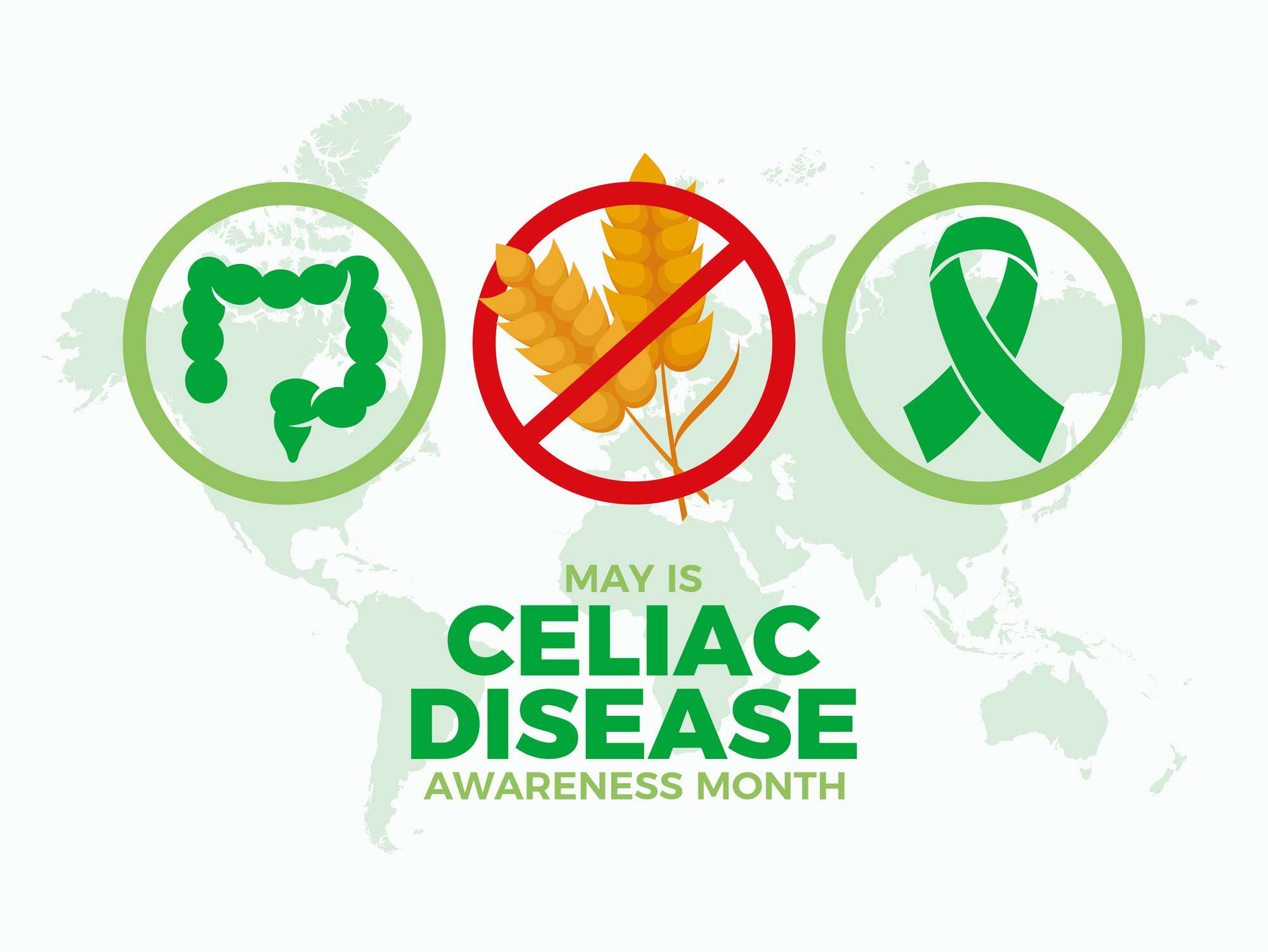
Celiac Disease Awareness Month

May is Celiac Awareness Month. It is observed as a time to raise awareness for the more than three million Americans living with celiac disease, an autoimmune condition that causes the immune system to react to gluten, a protein found in foods containing wheat, barley, and rye. 

 It is estimated that up to 83% of Americans who have celiac disease are undiagnosed or misdiagnosed with other conditions. 

When a person has celiac disease, eating gluten triggers an immune response to the gluten protein in the small intestines. The immune system sends inflammatory cells and antibodies to destroy the gluten molecules. Over time, this reaction can damage the lining of the small intestine, which prevents it from absorbing nutrients. This condition is called malabsorption. It can also lead to malnutrition and several other conditions resulting from a lack of nutrients. 

The symptoms of celiac disease can vary greatly. They can also be different in children and adults. Digestive symptoms for adults include: 

  • Diarrhea 
  • Fatigue 
  • Weight loss 
  • Bloating and gas 
  • Belly pain 
  • Nausea and vomiting 
  • Constipation 

However, more than half the adults with celiac disease have symptoms that are not related to the digestive system, including: 

  • Anemia 
  • Osteoporosis 
  • Dermatitis herpetiformis 
  • Mouth ulcers 
  • Headaches and fatigue 
  • Nervous system injury, including numbness, tingling in the feet and hands, as well as possible problems with balance, and cognitive impairment 
  • Joint pain 
  • Hyposplenism 
  • Elevated liver enzymes 

Children with celiac disease are more likely than adults to have digestive problems, including: 

  • Nausea and vomiting 
  • Chronic diarrhea 
  • Swollen belly 
  • Constipation 
  • Gas 
  • Pale, foul-smelling stools 

For children who aren’t able to absorb nutrients, it may cause: 

  • Failure to thrive in infants 
  • Damage to tooth enamel 
  • Weight loss 
  • Anemia 
  • Irritability 
  • Short stature 
  • Delayed puberty 
  • Neurological symptoms, including attention-deficit/hyperactivity disorder (ADHD), learning disabilities, headaches, lack of muscle coordination, and seizures 

Celiac disease is most commonly found in people of Northern European descent. It is estimated to affect 1% of the populations of Europe and North America. A person has a 10% chance of developing the disease if they have a first-degree relative, such as a parent or child, who has it. About 97% of people diagnosed with celiac disease have a recognizable gene variant associated with it. 

A person’s genes, combined with eating foods with gluten and other factors, can contribute to celiac disease. However, the precise cause isn’t known. Sometimes celiac disease becomes active after surgery, pregnancy, childbirth, viral infection, or severe emotional distress. 

Several risk factors cause celiac disease to be more common in people who have: 

  • A family member with celiac disease or dermatitis herpetiformis 
  • Type 1 diabetes 
  • Down syndrome, Williams syndrome, or Turner syndrome 
  • Autoimmune thyroid disease 
  • Microscopic colitis 
  • Addison’s disease 

Many people with celiac disease don’t know they have it. However, two blood tests can help diagnose it: 

  • Serology testing 
  • Genetic testing 

It is important to be tested for celiac disease before trying a gluten-free diet. Eliminating gluten from your diet might make the results of the blood tests appear in the standard range. 

The first and most important step in treating and the only way to manage celiac disease is to stop eating gluten and adopt a strict, lifelong gluten-free diet. You can’t change the way your body reacts to gluten, but you can prevent gluten from triggering a reaction. Additional treatments may include: 

  • Nutritional supplements 
  • Specific medications 
  • Corticosteroids 
  • Continuous follow-up care 

To schedule an appointment with a gastroenterologist or dietitian at Flushing Hospital Medical Center, please call 718-670-5486. 

All content of this newsletter is intended for general information purposes only and is not intended or implied to be a substitute for professional medical advice, diagnosis or treatment. Please consult a medical professional before adopting any of the suggestions on this page. You must never disregard professional medical advice or delay seeking medical treatment based upon any content of this newsletter. PROMPTLY CONSULT YOUR PHYSICIAN OR CALL 911 IF YOU BELIEVE YOU HAVE A MEDICAL EMERGENCY.

IBS vs Lactose Intolerance

Irritable bowel syndrome (IBS) and lactose intolerance can cause similar symptoms in the digestive system. They include: 

  • Diarrhea  
  • Abdominal pain 
  • Gas 
  • Bloating 

Although their symptoms overlap, they are separate conditions with differences in how they are diagnosed and treated. 

IBS is a common condition that affects the stomach and intestines. It causes various symptoms, including: 

  • Cramping that is related to the urge to poop 
  • Excess gas 
  • Mucus in the poop 
  • Alternating diarrhea and constipation 
  • The feeling of being unable to empty the bowels after pooping 

There are three types of irritable bowel syndrome, which are categorized based on how poops look on the days of having symptom flare-ups. They include: 

  • IBS with constipation (IBS-C) causes most poop to be hard and lumpy 
  • IBS with diarrhea (IBS-D) causes most poop to be watery and loose 
  • IBS with mixed bowel habits (IBS-M) causes hard and lumpy, as well as watery and loose bowel movements 

Unfortunately, researchers don’t know what causes IBS. However, IBS is classified as a neurogastrointestinal disorder or a gut-brain interaction. A gut-brain interaction means there are problems with how the gut and brain coordinate to help the digestive system work. IBS can also be caused by: 

  • An imbalance in the microbes that normally live in the digestive system 
  • Emotional stress and adverse life events 
  • An infection of the digestive tract, which includes common stomach bugs 

Lactose intolerance is a condition that occurs when people lack the enzyme lactase. This makes it difficult to digest lactose, which is the sugar present in milk and milk products.  

Lactose malabsorption is the inability to break down and absorb lactose molecules in the digestive system. Lactose malabsorption is common, as about 65% of adults worldwide can’t break down and absorb lactose.  

Lactose intolerance symptoms can appear inside and outside of the digestive system. Symptoms include: 

  • Nausea and vomiting 
  • Headaches 
  • Fatigue 
  • Joint pain 
  • Problems concentrating 
  • Mouth ulcers 

Primary lactose intolerance is inherited and is more common in certain ethnicities and parts of the world. In the U.S., African Americans, Latinx, Asian Americans, and Native Americans are more likely to suffer from lactose intolerance.  

Although it is uncommon, other forms of lactose intolerance are caused by disease or medications.  

IBS and lactose intolerance can be diagnosed without testing. A person’s health history is an important part of diagnosing these conditions.  

An IBS diagnosis is based on symptoms described in the Rome criteria, the guidelines used to diagnose gut-brain interaction, which includes stool changes, such as diarrhea, constipation, or a combination, and abdominal pain for at least one day each week during the previous three months. 

If these symptoms meet the Rome criteria, an IBS diagnosis can be made without the need for an invasive test such as a colonoscopy.  

However, further diagnostic testing would be needed if symptoms include blood in the stool, fever, and weight loss to determine if these are symptoms of another condition. 

The first steps in diagnosing lactose intolerance include a health history and physical exam. In some cases, a clear connection between a person consuming dairy products and symptoms can suggest a diagnosis of lactose intolerance.  

In certain cases, a breath test to diagnose lactose intolerance is available. During this test, a person drinks a solution that contains lactose and breathes to have their breath captured and measured for hydrogen. A higher level of hydrogen in the breath can indicate lactose intolerance. 

IBS treatment starts with diet and lifestyle changes, including: 

  • Adopting a low-FODMAP diet, which is a diet that is low in certain carbohydrates such as fermentable oligosaccharides, disaccharides, monosaccharides, and polyols 
  • Eating more fiber 
  • Avoiding caffeine and alcohol 
  • Decreasing and managing stress 
  • Identifying and avoiding foods that cause symptoms 
  • Eating small meals on a regular schedule 
  • Treating mental health conditions 
  • Increasing physical activity 
  • Trying a peppermint oil supplement 

If lifestyle and diet changes don’t help, many drugs could help, including: 

  • Antidiarrheals 
  • Antispasmodics 
  • Laxatives 
  • Selective serotonin reuptake inhibitors (SSRIs) 
  • Tricyclic antidepressants (TCAs) 
  • Other prescription drugs 

Treating lactose intolerance consists of avoiding foods that cause symptoms, dairy products that have less lactose or are lactose-free, or taking a supplement that breaks down lactose. 

If you or a loved one is experiencing symptoms associated with IBS or lactose intolerance, you can receive treatment at Flushing Hospital Medical Center’s Ambulatory Care Center. To schedule an appointment, please call (718) 670-5486. 

All content of this newsletter is intended for general information purposes only and is not intended or implied to be a substitute for professional medical advice, diagnosis or treatment. Please consult a medical professional before adopting any of the suggestions on this page. You must never disregard professional medical advice or delay seeking medical treatment based upon any content of this newsletter. PROMPTLY CONSULT YOUR PHYSICIAN OR CALL 911 IF YOU BELIEVE YOU HAVE A MEDICAL EMERGENCY.

What Are the Symptoms of Celiac Disease?

Celiac disease is an autoimmune condition where the immune system reacts to gluten, a protein sometimes found in foods containing wheat, barley, and rye.

When a person has celiac disease, eating gluten triggers an immune response to the gluten protein in the small intestines. The immune system sends inflammatory cells and antibodies to destroy the gluten molecules. Over time, this reaction can damage the lining of the small intestine, which prevents it from absorbing nutrients. This condition is called malabsorption. It can also lead to malnutrition and many other conditions that follow from the lack of different nutrients.

The symptoms of celiac disease can vary greatly. They can also be different in children and adults. Digestive symptoms for adults include:

  • Diarrhea
  • Fatigue
  • Weight loss
  • Bloating and gas
  • Belly pain
  • Nausea and vomiting
  • Constipation

However, more than half the adults with celiac disease have symptoms that are not related to the digestive system, including:

  • Anemia
  • Osteoporosis
  • Dermatitis herpetiformis
  • Mouth ulcers
  • Headaches and fatigue
  • Nervous system injury, including numbness, tingling in the feet and hands, as well as possible problems with balance, and cognitive impairment
  • Joint pain
  • Hyposplenism
  • Elevated liver enzymes

Children with celiac disease are more likely than adults to have digestive problems, including

  • Nausea and vomiting
  • Chronic diarrhea
  • Swollen belly
  • Constipation
  • Gas
  • Pale, foul-smelling stools

For children who aren’t able to absorb nutrients, it may cause:

  • Failure to thrive in infants
  • Damage to tooth enamel
  • Weight loss
  • Anemia
  • Irritability
  • Short stature
  • Delayed puberty
  • Neurological symptoms, including attention-deficit/hyperactivity disorder (ADHD), learning disabilities, headaches, lack of muscle coordination, and seizures

Celiac disease is most commonly found in people of Northern European descent. It is estimated to affect 1% of the populations of Europe and North America. A person has a 10% chance of developing the disease if they have a first-degree relative, such as a parent or child, who has it. About 97% of people diagnosed with celiac disease have a recognizable gene variant associated it with it.

A person’s genes, combined with eating foods with gluten and other factors, can contribute to celiac disease. However, the precise cause isn’t known. Sometimes celiac disease becomes active after surgery, pregnancy, childbirth, viral infection, or severe emotional distress.

Several risk factors cause celiac disease to be more common in people who have:

  • A family member with celiac disease or dermatitis herpetiformis
  • Type 1 diabetes
  • Down syndrome, Williams syndrome, or Turner syndrome
  • Autoimmune thyroid disease
  • Microscopic colitis
  • Addison’s disease

Many people with celiac disease don’t know they have it. However, two blood tests can help diagnose it:

  • Serology testing
  • Genetic testing

It is important to be tested for celiac disease before trying a gluten-free diet. Eliminating gluten from your diet might make the results of the blood tests appear in the standard range.

The first and most important step in treating and the only way to manage celiac disease, is to stop eating gluten and adopt a strict, lifelong gluten-free diet. You can’t change the way your body reacts to gluten, but you can prevent gluten from triggering a reaction. Additional treatments may include:

  • Nutritional supplements
  • Specific medications
  • Corticosteroids
  • Continuous follow-up care

To schedule an appointment with a gastroenterologist or dietitian at Flushing Hospital Medical Center, please call 718-670-5486.

All content of this newsletter is intended for general information purposes only and is not intended or implied to be a substitute for professional medical advice, diagnosis or treatment. Please consult a medical professional before adopting any of the suggestions on this page. You must never disregard professional medical advice or delay seeking medical treatment based upon any content of this newsletter. PROMPTLY CONSULT YOUR PHYSICIAN OR CALL 911 IF YOU BELIEVE YOU HAVE A MEDICAL EMERGENCY.

Preparing for Allergy Season

Spring has arrived, and with it comes longer days, warmer weather, and the blooming of trees and flowers. However, as trees and flowers bloom they release pollen, causing those who suffer from seasonal allergies to experience allergy symptoms. Spring allergy symptoms can include:

  • Runny nose
  • Watery eyes
  • Sneezing
  • Itchy eyes and nose
  • Dark circles under your eyes.

Some ways you can reduce your exposure to allergy triggers include:

  • Staying indoors on dry, windy days. The best time to go outside is after a good rain, which helps clear pollen from the air.
  • Avoiding garden chores like mowing the lawn and pulling weeds that stir up allergens.
  • Removing clothes worn outside and showering to rinse pollen from your skin and hair.
  • Avoid hanging laundry outside because pollen can stick to sheets and towels.
  • Wearing a face mask when doing chores outside.
  • Checking your local TV or the internet for pollen forecasts and the current pollen levels.
  • Taking allergy medication before symptoms start or if high pollen counts are forecasted.
  • Closing doors and windows at night when there are high pollen counts.
  • Avoiding outdoor activity when pollen counts are highest.

There isn’t a miracle product that can get rid of all allergens from the air in your home, but ways to keep indoor air clean include:

  • Using air conditioning in your house.
  • Using high-efficiency filters if you have a forced air conditioning or heating system, and following regular maintenance schedules.
  • Keeping indoor air dry with a dehumidifier.
  • Using a portable HEPA filter in your bedroom.
  • Cleaning floors with a vacuum cleaner that has a HEPA filter regularly.

Here are some over-the-counter medications that can help ease allergy symptoms:

  • Oral antihistamines
  • Corticosteroid nasal sprays
  • Cromolyn sodium nasal spray
  • Oral decongestants

If you are experiencing seasonal allergy symptoms, you can get an allergy test and treatment at Flushing Hospital Medical Center’s Ambulatory Care Center. To schedule an appointment, please call (718) 670-5486.

All content of this newsletter is intended for general information purposes only and is not intended or implied to be a substitute for professional medical advice, diagnosis or treatment. Please consult a medical professional before adopting any of the suggestions on this page. You must never disregard professional medical advice or delay seeking medical treatment based upon any content of this newsletter. PROMPTLY CONSULT YOUR PHYSICIAN OR CALL 911 IF YOU BELIEVE YOU HAVE A MEDICAL EMERGENCY.

Top Summer Health Concerns and How to Prevent Them

Summer is in full swing, so most of our time will be spent outside doing various activities. However, there are many health concerns to consider.

Here are some summer health concerns and how to prevent them:

  1. Dehydration

Up to 78% of the human body is made of water, when it doesn’t get enough of it, it can’t function properly. In high heat, dehydration can become severe and fatal.

To prevent dehydration, it is important to stay hydrated. You can do this by drinking water and eating water-rich foods. Staying properly hydrated can also prevent kidney stones.

  1. Sunburns

A sunburn is when UV or ultraviolet rays from the sun cause a radiation burn on the skin. Sunburns can contribute to premature aging of skin and skin cancer. It can also lead to dehydration, sun poisoning, and infection from severe burns.

To prevent sunburn, wear sunscreen containing titanium oxide or zinc oxide every day, even on overcast days. Make sure to cover your entire body, including your ears, eyelids, lips, scalp, and if exposed, the top of your feet.

  1. Heat illnesses

Spending time in the sun doesn’t only bring the risks of sunburn and dehydration. It also brings the risk of heat illnesses which include:

  • Heat rash- a red stinging rash that develops when sweat gets trapped in your glands.
  • Heat cramps- are painful muscle cramps that occur when you sweat so much that your body loses salts and fluids.
  • Heat exhaustion- is when your body can’t cool itself through sweating. If it’s not treated, it can quickly turn into heatstroke.
  • Heatstroke- or sunstroke, is when your body temperature climbs to dangerous levels. It’s the most severe heat-related illness and can be fatal.

To prevent heat illnesses, limit the time you spend outdoors. Also, take any symptoms you observe in yourself and others seriously.

  1. Bee stings and insect bites

Since insects are more active during the summer, there’s a higher risk of encountering them. Especially for:

  • Bee stings
  • Mosquito bites
  • Tick bites
  • Ant bites

To prevent bugs from stinging or biting you, wear an insect repellent with the active ingredients DEET or picaridin. Other ways to prevent stings and bites include:

  • Avoid using scented products.
  • Drain any standing water.
  • Put on protective clothing.
  • Don’t leave any food uncovered outside.
  1. Drowning

We want to spend more time near water to cool off as temperatures rise. However, it is important to follow proper safety precautions to avoid drowning risks.

Here are some ways to prevent drowning risks:

  • Learn CPR
  • Use drain covers on pool drains.
  • Wear life jackets
  • Sign up for swimming lessons.
  1. Unsafe summer foods

Everybody loves a good summer barbecue or cookout, but sometimes the food we eat doesn’t always love us back.

The smoking process that gives smoked meats their flavor also creates harmful substances called polycyclic aromatic hydrocarbons or PAHs and heterocyclic amines or HCAs. The National Cancer Institute warns that PAHs and HCAs are mutagenic, meaning they can cause changes to your DNA that put you at risk for certain types of cancer.

You can prevent ingesting these harmful substances by using liquid smoke as an alternative marinade for your meats.

Foodborne illness can be a concern for cookout food as well. This is the case for food left out or leftover sitting in the “temperature danger zone” of 40 to 140 degrees Fahrenheit. These temperatures allow bacteria to grow that can make you sick.

You can prevent foodborne illness by cooking meats to a safe temperature and throwing any food that has sat out too long in the trash.

  1. Seasonal allergies

Pollen is a huge problem in the summer as the weather gets warmer and trees, grass, and flowers pollinate.

To prevent seasonal allergies, try taking allergy medications before the season starts so your body can build its defense.

These preventative measures can help you enjoy your summer and keep you safe.

If you or someone you are with are experiencing an emergency, call 911 immediately.


All content of this newsletter is intended for general information purposes only and is not intended or implied to be a substitute for professional medical advice, diagnosis or treatment. Please consult a medical professional before adopting any of the suggestions on this page. You must never disregard professional medical advice or delay seeking medical treatment based upon any content of this newsletter. PROMPTLY CONSULT YOUR PHYSICIAN OR CALL 911 IF YOU BELIEVE YOU HAVE A MEDICAL EMERGENCY.

Asthma and Allergies

The most common form of asthma is caused by an allergic reaction. More than fifty percent of people who suffer from asthma have this type of disease. Asthma is an airway obstruction caused by inflammation and is a reaction that people have when they are exposed to substances that they are allergic to. Some of the offending substances are pet dander, pollen, dust mites, mold, and some foods. An asthma attack has three components:

• The bands of muscles surrounding the airways in the lungs tighten. This is called bronchospasm.

• The lining of the airways becomes inflamed and swollen.

• There is an increase in mucous production in the lining of the airway.

All of these factors make it harder for air to pass through the lungs, and breathing becomes difficult.

Treatment for allergy-induced asthma requires testing to see what a person is allergic to. Once these allergens have been identified the patient will be advised to avoid them. There is no cure for asthma but, there are several medications available that can help control it. Antihistamines are often administered, which help reduce the allergic reaction.

A physician may prescribe corticosteroids to reduce the inflammation of the airway and make breathing easier. Some medications are given for immediate relief of symptoms. Such as bronchodilators which are inhaled as needed to help to relax the airways.

Other medications are used for long-term control of symptoms and are taken on a daily basis. Speak to your physician if you experience difficulty breathing after coming in contact with certain substances. There are different treatment options available and you want to learn about the one that will be best for you.  You can also schedule an appointment with a pulmonologist at Flushing Hospital by calling 718-670-5486.

All content of this newsletter is intended for general information purposes only and is not intended or implied to be a substitute for professional medical advice, diagnosis or treatment. Please consult a medical professional before adopting any of the suggestions on this page. You must never disregard professional medical advice or delay seeking medical treatment based upon any content of this newsletter. PROMPTLY CONSULT YOUR PHYSICIAN OR CALL 911 IF YOU BELIEVE YOU HAVE A MEDICAL EMERGENCY.

Are You REALLY Allergic to Antibiotics?

If taken correctly and not used to inappropriately combat viruses, antibiotics can  be extremely effective in preventing the spread of infection.  While there is a great deal of information circulating about the misuse or overuse of antibiotics, there is relatively very little shared about the underuse of antibiotics due to suspected allergies.

Many Americans are under the impression that they are allergic to antibiotics, but according to a recent New York Times article, it is estimated that up to 90 percent of antibiotic allergy claims are not legitimate. So why do so many people believe they are allergic when they are not? Most often it is not the individual’s fault; they were either falsely told by their parents that they were allergic to antibiotics when they were a child or they do not understand what constitutes an allergic reaction.

In reality, many individuals experience some type of reaction after taking antibiotics, such as an upset stomach, headache or diarrhea. These bodily responses are considered side effects, and should not be classified as an allergic reaction. A true allergic reaction is when your body treats the medication entering your system as an invader and releases chemicals called histamines to attack it.

Symptoms of a mild allergic reaction can include the development of a rash, swelling of the face, or some difficulty breathing. For most mild reactions, medications such as antihistamines or corticosteroids can be taken to treat symptoms.

In rare case however, some experience a more severe allergic reaction, known as anaphylaxis. Symptoms of an anaphylactic allergic reaction include:

  • Difficult or noisy breathing
  • Swelling of the tongue
  • Swelling or tightness in the throat
  • Wheezing or coughing
  • Dizziness or fainting
  • Pale complexion

Signs of an anaphylactic allergic reaction usually present within an hour of taking an antibiotic. If this type of reaction occurs, medical attention is necessary and 911 should be called immediately.  Treatment for a severe allergic reaction often requires an epinephrine injection to alleviate the symptoms.

While many antibiotic allergy claims are false, there are some people who are truly allergic. For those who truly are allergic, the antibiotic that they are most frequently allergic to is penicillin, or other antibiotics that are closely associated with it. Those who suspect that they are allergic to penicillin can confirm it with a simple skin test.

With the rise of so many “super-bugs,” proper treatment of infections using the correct course of antibiotics has never been more important.  Limiting the number of medications you can receive because you think you are allergic can prove to be very dangerous or even fatal.

If you believe you are allergic to antibiotics, but are not certain, speak to your doctor. Together you can discuss the pros and cons and arrive at an appropriate course of treatment.

Flushing Hospital’s Ambulatory Care Center has many qualified doctors who can advise you on the correct use of antibiotics. To make an appointment, please call 718-670-5486.

All content of this newsletter is intended for general information purposes only and is not intended or implied to be a substitute for professional medical advice, diagnosis or treatment. Please consult a medical professional before adopting any of the suggestions on this page. You must never disregard professional medical advice or delay seeking medical treatment based upon any content of this newsletter. PROMPTLY CONSULT YOUR PHYSICIAN OR CALL 911 IF YOU BELIEVE YOU HAVE A MEDICAL EMERGENCY.

Urticaria (hives) is a skin condition caused usually by an allergic reaction or in some cases, unknown reasons.  Hives can appear on any part of the body and appear when a substance within the body called histamine is released from cells called mast cells. This causes fluid to leak from blood vessels, causing a reaction on the surface of the skin.

Hives can be as small as a pencil point or appear as big welts and are usually red, itchy and have varying shapes.  They usually last a few hours but can last a day or so, and if there is constant exposure to what is causing the condition, they will last much longer. The condition can be acute, lasting just a few weeks, to chronic which can go on for months.

The allergic reaction may be a result of exposure to certain allergens, chemicals in some food, insect bites, heat, cold and being out in sunlight. Certain medications can also be responsible for causing hives, most notably nonsteroidal anti-inflammatory drugs (NSAIDS), aspirin, codeine, and morphine.

Hives usually resolve on their own in a few hours or days. One way to try to control the symptoms of hives is to avoid what is causing it, if it can be determined. Often times a physician will recommend taking an antihistamine. It is always suggested to see a physician if the condition becomes very uncomfortable or doesn’t resolve in a few days. If you would like to schedule an appointment with a physician at Flushing Hospital, please call 718-670-5486.

All content of this newsletter is intended for general information purposes only and is not intended or implied to be a substitute for professional medical advice, diagnosis or treatment. Please consult a medical professional before adopting any of the suggestions on this page. You must never disregard professional medical advice or delay seeking medical treatment based upon any content of this newsletter. PROMPTLY CONSULT YOUR PHYSICIAN OR CALL 911 IF YOU BELIEVE YOU HAVE A MEDICAL EMERGENCY.

Is It A Cold Or Is It Allergies?

The transition from winter to spring can be challenging to your health. The change in seasons often results in an overlap of symptoms that could be either the remnants of a winter cold or the first signs of spring allergies.

Woman coughing and blowing her nose in autumn

While many of the symptoms of colds and allergies are similar, the causes of each are very different.

Colds are contagious and they are contracted when a person is exposed to an individual infected with a cold virus.  Our body’s immune system will launch a counter attack against the virus. This response usually brings on the classic symptoms, such as a runny nose or cough.

An allergic reaction is caused by an overactive immune system that mistakes harmless things, such as pollen, and attacks them. To combat what it thinks are germs, your body releases chemicals called histamines as a defense. The release of these histamines can cause a swelling of the nasal passages and result in coughing and sneezing. Allergies are not contagious.

While many of the symptoms are similar, the easiest way to determine if you have a cold or are suffering from allergies is the duration of your condition. While most colds last from three to 14 days, allergies can last for months as long as the person is in contact with the allergen. Other differences are:

  • An allergic reaction will begin immediately after exposure to an allergen while cold symptoms usually take approximately three days to appear after exposure
  • Colds can sometimes cause fever and body aches while allergies never do
  • An allergic reaction can often result in itchy, watery eyes, which a cold rarely produces this type of reaction

Once a determination between cold or allergy is made, the appropriate treatment can be applied.

There is no cure for a cold, but there are medications that can help alleviate the symptoms. Cough syrups, pain relievers, decongestant sprays, or multi-symptom cold relief medicines can all be used to help, but should only be taken after consulting your doctor, especially if you are taking other medications or if you have other underlying health conditions. Drinking plenty of liquids also speeds up the recovery process.

To treat allergies, your doctor may recommend an over-the-counter antihistamine to block the reaction to the allergens. There are many forms of antihistamines and some may cause drowsiness so be sure to look for the non-drowsy formula or only take them at night. Decongestants may also be suggested to relieve nasal congestion and avoid an infection.

If you are not sure if you have a cold or allergies, please speak with your doctor. If you do not have a doctor, Flushing Hospital’s Ambulatory Care Center can help. To make an appointment, please call 718-670-8939.

All content of this newsletter is intended for general information purposes only and is not intended or implied to be a substitute for professional medical advice, diagnosis or treatment. Please consult a medical professional before adopting any of the suggestions on this page. You must never disregard professional medical advice or delay seeking medical treatment based upon any content of this newsletter. PROMPTLY CONSULT YOUR PHYSICIAN OR CALL 911 IF YOU BELIEVE YOU HAVE A MEDICAL EMERGENCY.

Ways to Reduce Symptoms of Eczema

Eczema is a condition that causes patches of skin to become red, inflamed, rough and itchy.  Eczema is not a specific health condition; it is a reaction pattern that the skin produces as a result of a number of different diseases.

The specific causes of eczema currently remain unknown, but it is believed to develop due to a combination of hereditary (genetic) and environmental factors.

Environmental symptoms of eczema include:

  • Irritants – soaps, detergents, shampoos, disinfectants, juices from fresh fruits, meats, or vegetables
  • Allergens – dust mites, pets, pollens, mold, dandruff
  • Microbes – bacteria such as Staphylococcus aureus, viruses, certain fungi
  • Hot and cold temperatures – hot weather, high and low humidity, perspiration from exercise
  • Foods – dairy products, eggs, nuts and seeds, soy products, wheat
  • Stress – it is not a cause of eczema but can make symptoms worse
  • Hormones – women can experience worsening of eczema symptoms at times when their hormone levels are changing, for example during pregnancy and at certain points in their menstrual cycle

Since there is no cure for eczema, treatment for the condition is aimed toward healing the affected skin in an effort to prevent a flare up of symptoms.  For some people, eczema goes away over time, and for others, it remains a lifelong condition.

There are a number of things that people with eczema can do to support skin health and alleviate symptoms, such as:

  • Taking regular warm baths
  • Applying moisturizer within 3 minutes of bathing to “lock in” moisture
  • Moisturizing every day
  • Wearing cotton and soft fabrics, avoiding rough, scratchy fibers, and tight-fitting clothing
  • Using mild soap or a non-soap cleanser when washing
  • Air drying or gently patting skin dry with a towel, rather than rubbing skin dry after bathing
  • Avoiding rapid changes of temperature and activities that make you sweat (where possible)
  • Learning individual eczema triggers and avoiding them
  • Using a humidifier in dry or cold weather
  • Keeping fingernails short to prevent scratching from breaking skin

Medication can also be helpful in treating or preventing symptoms.  These treatments are prescribed by a physician.  If you are experiencing symptoms of eczema and would like to speak with a physician, call Flushing Hospital Medical Center’s Ambulatory Care Center at 718-670-5486 to schedule an appointment.


All content of this newsletter is intended for general information purposes only and is not intended or implied to be a substitute for professional medical advice, diagnosis or treatment. Please consult a medical professional before adopting any of the suggestions on this page. You must never disregard professional medical advice or delay seeking medical treatment based upon any content of this newsletter. PROMPTLY CONSULT YOUR PHYSICIAN OR CALL 911 IF YOU BELIEVE YOU HAVE A MEDICAL EMERGENCY.