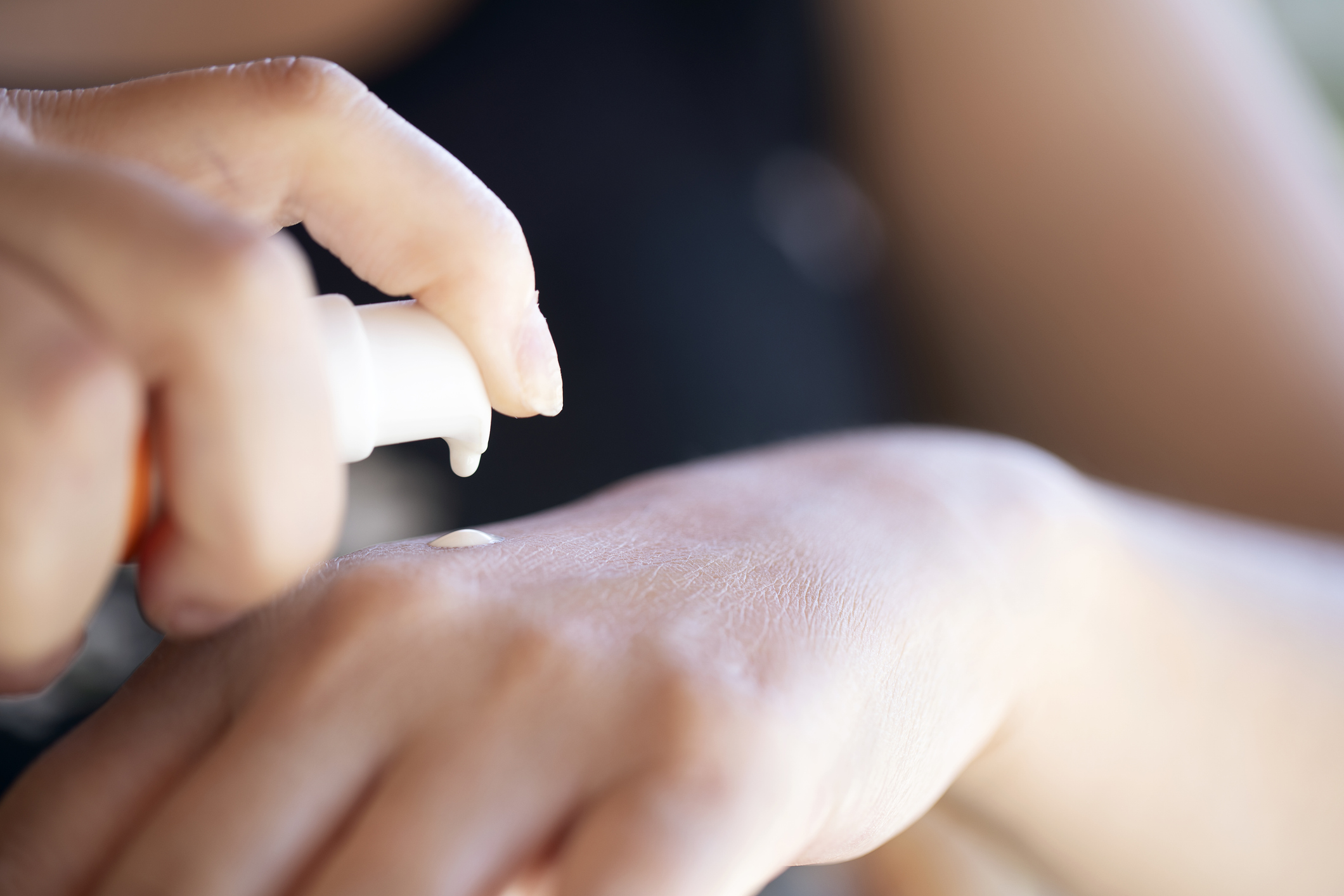
Skin Products that Increase Sensitivity to UV Rays

Summer is upon us, and with it comes days with increased ultraviolet (UV) radiation, which can put you at risk of skin damage and skin cancer, even with limited exposure.  

Using certain skin products can increase our skin’s exposure and sensitivity to harmful UV rays. When a person has heightened skin sensitivity or an unusual reaction to UV radiation from sunlight, it is called photosensitivity.  

There are two types of photosensitivity reactions: phototoxic and photoallergic.  

A phototoxic photosensitivity reaction is the most common reaction, usually occurring when a medication taken orally or topically is activated by UV light, causing skin damage that can look and feel like a sunburn or rash. It can also be triggered by certain ingredients in skin care products. The reaction can happen within minutes or after hours of exposure and is usually limited to the skin that has been exposed.  

Photoallergic photosensitivity is much less common and occurs when UV rays interact with ingredients in medicines or other products that are applied directly to the skin. The body’s immune system recognizes changes caused by sun exposure as an external threat, triggering a reaction, causing the body to generate antibodies and attacks. This reaction can leave a rash, blisters, red bumps, or even oozing lesions one to three days after application and sun exposure.  

A person can develop photosensitivity as a result of prescription or over-the-counter medications or when using certain types of skin care products.  

Certain ingredients in skin care products we use to take care of our skin, such as retinols, alpha hydroxy acids like glycolic acid, or benzoyl peroxide, remove the outermost layer of skin to fight lines or acne. Skin brighteners like vitamin C may decrease the melanin, the substance in the skin that serves as a natural defense against the sun’s rays, causing photosensitivity and increasing the risk of skin damage due to sun exposure.  

You can avoid the risk of photosensitivity when using retinol by: 

  • Only using retinol at night 
  • Avoid daily use, unless your skin has built up a tolerance to it 
  • Condition your skin to retinol by gradually increasing the strength and frequency at which you are using it 
  • Stop using it during the hot summer months when spending time outside, and seven or more days before and after a vacation at the beach 
  • Not using retinol at all if you are pregnant or breastfeeding 

As an alternative, use bio-retinol, which contains botanical ingredients and has the same benefits as retinol. 

Instead of using products that contain alpha hydroxy acids, use products containing beta hydroxy acids as they are sun-friendly alternatives. 

There are several ways to protect your skin from photosensitive sun damage due to UV radiation exposure, including: 

  • Taking care of your skin by shielding it from the sun on sunny days
  • Wearing a broad-brimmed hat and sun-protective clothing  
  • Using a broad-spectrum sunscreen with an SPF of at least 30 on all exposed skin, and not forgetting the back of the hands. Reapply sunscreen every two hours 
  • Minimizing your exposure to UV radiation, especially during the peak hours of 10 am to 4 pm 
  • Checking your skin monthly and visiting a dermatologist at least once a year for a professional skin exam 

Understanding what photosensitivity is and what causes it can help you protect your skin and limit exposure to UV radiation.  

If you or a loved one is experiencing symptoms of skin damage from photosensitivity, you can receive treatment at Flushing Hospital Medical Center’s Ambulatory Care Center. To schedule an appointment, please call (718) 670-5486. 


All content of this newsletter is intended for general information purposes only and is not intended or implied to be a substitute for professional medical advice, diagnosis or treatment. Please consult a medical professional before adopting any of the suggestions on this page. You must never disregard professional medical advice or delay seeking medical treatment based upon any content of this newsletter. PROMPTLY CONSULT YOUR PHYSICIAN OR CALL 911 IF YOU BELIEVE YOU HAVE A MEDICAL EMERGENCY.

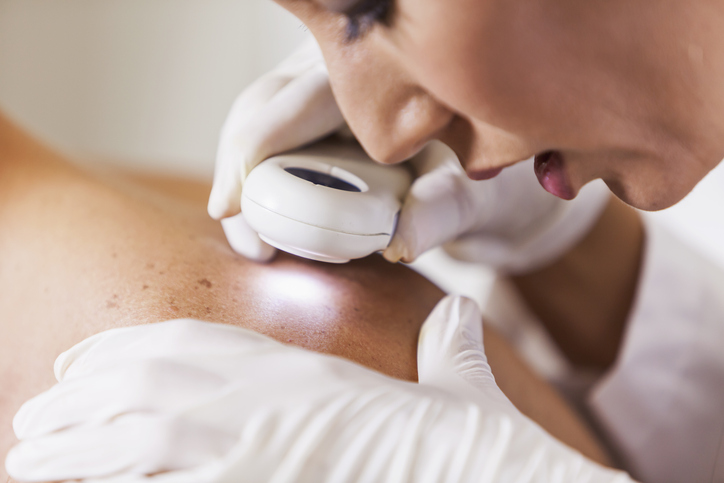
What is Merkel Cell Carcinoma?

Merkel cell carcinoma is a rare, aggressive form of skin cancer that only affects an estimated 3,000 Americans each year. It develops in Merkel cells, which are found deep in the outer layer of the skin, and causes them to grow uncontrollably. With this particular type of skin cancer, these cells tend to spread to other parts of the body quickly; additionally, the cancer often returns after treatment.

A person with Merkel cell carcinoma may notice one or more signs of the disease. Tumors typically appears on parts of the skin that have been exposed to the sun, such as the face, neck, or arms. These tumors can appear as shiny, pearly lumps that are:

  • Growing quickly
  • Firm, itchy, tender, and sore
  • Similar in appearance to a pimple or bug bite
  • Approximately the same size as a dime
  • Skin-colored, red, purple, or bluish-red

Merkel cell carcinoma usually develops in men who are fair-skinned and older than 50. This form of skin cancer is caused by exposure to ultraviolet (UV) rays, such as from the sun or artificial sources like tanning beds, as well as other risk factors such as Merkel cell polyomavirus, a common childhood virus that’s present in roughly 80% of people who develop Merkel cell carcinoma. However, despite this link, most people with the virus do not develop this cancer.

A person’s risk of developing Merkel cell carcinoma may also increase if they have other types of skin cancer, a history of severe sunburns, a weakened immune system, or frequently use light therapy (such as for psoriasis or other skin diseases) or take organ transplant medications.

Dermatologists (specialists who treat skin conditions) are the doctors who primarily diagnose and treat Merkel cell carcinoma and other forms of skin cancer. You can schedule an appointment with a dermatologist at Flushing Hospital Medical Center’s Ambulatory Care Center by calling (718) 670-5486.

All content of this newsletter is intended for general information purposes only and is not intended or implied to be a substitute for professional medical advice, diagnosis or treatment. Please consult a medical professional before adopting any of the suggestions on this page. You must never disregard professional medical advice or delay seeking medical treatment based upon any content of this newsletter. PROMPTLY CONSULT YOUR PHYSICIAN OR CALL 911 IF YOU BELIEVE YOU HAVE A MEDICAL EMERGENCY.

What Happens During a Skin Cancer Screening?

Skin cancer is the most common form of cancer in the United States, and approximately one in five Americans will develop skin cancer during their lifetime. Rates of skin cancers have also risen sharply over the past several decades. However, you can give yourself the best chance of an early diagnosis and successful treatment through a skin cancer screening.

Over 9,500 cases of skin cancer are diagnosed every day through physical screenings. If a form of skin cancer such as melanoma is caught early, the five-year survival rate is 99%, making successful treatment extremely likely.  This rate may fall dramatically as the disease progresses, however, reaching 68% when it reaches the lymph nodes and 30% once it metastasizes to other organs.

In many cases, symptoms of skin cancer may occur in seemingly normal skin, with only a low percentage developing from existing moles. In other cases, symptoms may not present at all. This can make it difficult for you to spot signs of skin cancer on your own, and even more important to get screened by a dermatologist on a regular basis.

During a skin cancer screening, a dermatologist fully examines your skin from head to toe, checking for lesions or areas that appear abnormal. Irregular borders, multiple colors, and a size greater than six millimeters in diameter are a few of the indicators your doctor may look for, though these factors alone may not provide a sufficient basis for a diagnosis.

Your doctor may request a skin sample for a biopsy during your screening to examine certain skin cells more closely. Once your test results arrive, your doctor can provide a more definitive diagnosis.

It’s recommended that you get screened for skin cancer annually, or potentially more often if you’re at a high risk of developing it. You should also regularly check your own skin and take note of any marks or spots that appear different from their surrounding areas or cause sensations such as itching or pain. These spots should be pointed out to your doctor during a screening.

You can get a skin cancer screening at Flushing Hospital Medical Center’s Ambulatory Care Center. To schedule an appointment, please call 718-670-5486.

All content of this newsletter is intended for general information purposes only and is not intended or implied to be a substitute for professional medical advice, diagnosis or treatment. Please consult a medical professional before adopting any of the suggestions on this page. You must never disregard professional medical advice or delay seeking medical treatment based upon any content of this newsletter. PROMPTLY CONSULT YOUR PHYSICIAN OR CALL 911 IF YOU BELIEVE YOU HAVE A MEDICAL EMERGENCY.

Flushing Hospital Recognizes National Don’t Fry Fry Day

The Friday before Memorial Day is designated National Don’t Fry Day – a day to raise awareness about sun safety and encourage everyone to take the necessary steps to protect their skin from cancer.

Skin cancer is the most common type of cancer in the nation, with almost 5.5 million cases diagnosed in Americans each year – more than breast, colon, lung and prostate cancers combined.  In fact, one out of every five Americans will be diagnosed with skin cancer at some time in their lives.

Flushing Hospital and the American Cancer Society would like to share the following tips to avoid frying in the sun this summer:

  • Seek shade during the peak time of day – the sun is at its strongest between 10:00 am – 2:00 pm
  • Dress properly – Wear sun-protective clothing as well as UV blocking sunglasses and wide-brimmed hats
  • Use sunscreen – It is recommended that you apply sunscreen that is at least SPF 30 every 2 hours
  • Avoid tanning devices – These give off UVA rays just like the sun.

By following these tips, you and your family can enjoy the sun, while protecting yourself from the harm that it can cause

All content of this newsletter is intended for general information purposes only and is not intended or implied to be a substitute for professional medical advice, diagnosis or treatment. Please consult a medical professional before adopting any of the suggestions on this page. You must never disregard professional medical advice or delay seeking medical treatment based upon any content of this newsletter. PROMPTLY CONSULT YOUR PHYSICIAN OR CALL 911 IF YOU BELIEVE YOU HAVE A MEDICAL EMERGENCY.