
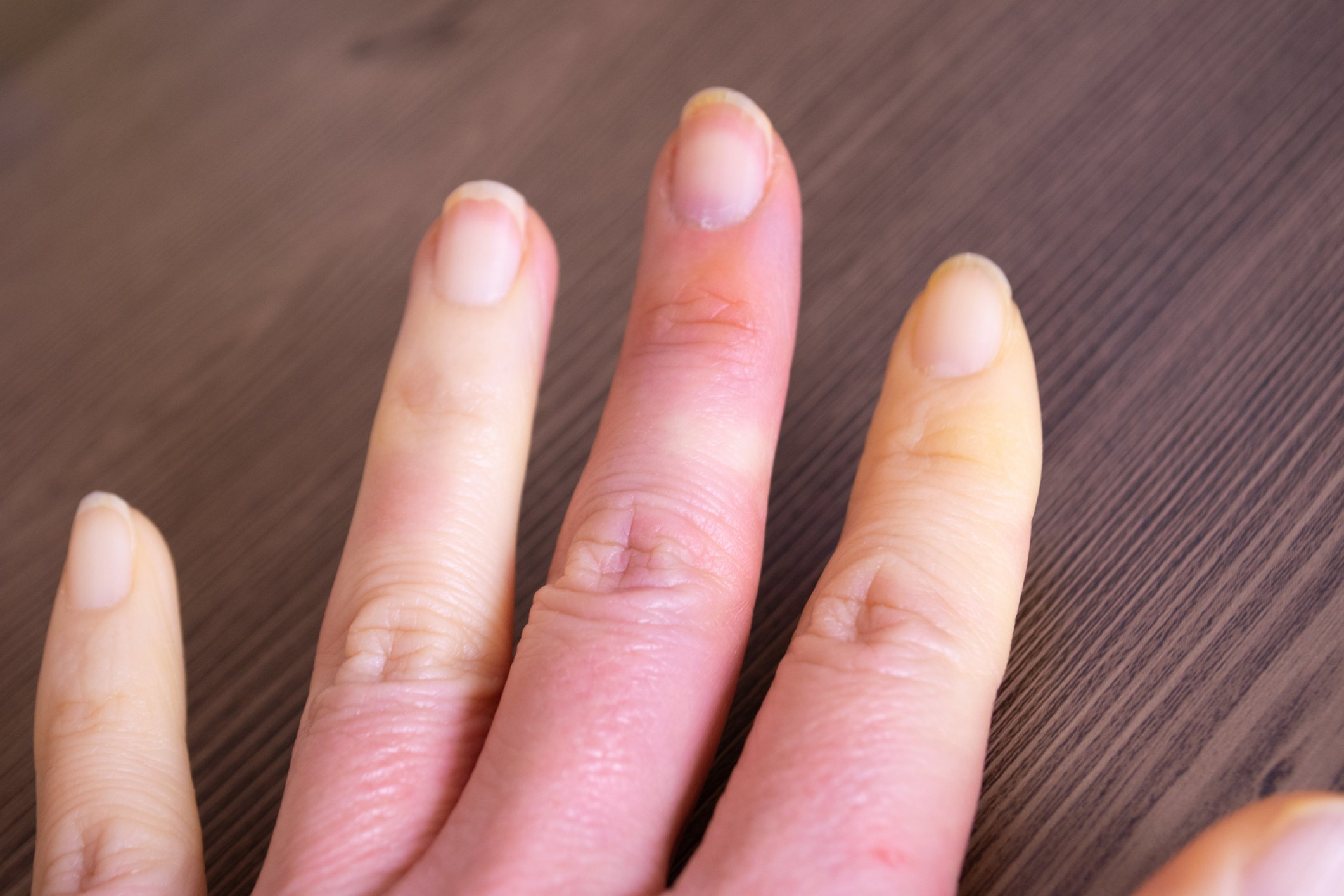
 Scleroderma is a rare chronic condition that causes the body to produce tissue that is thicker than it should be. It usually affects the skin, but it can also cause symptoms in other parts of the body.
If a person has scleroderma, their immune system triggers the body’s cells to produce too much collagen. Collagen helps the body have strong, healthy connective tissue to support the organs and hold parts of the body in place. However, when the body produces too much collagen, the skin and other tissue can become thicker and more fibrous than they should be.
Some people who have early scleroderma don’t have any symptoms. Some of the most common symptoms include:
- Joint pain
- Stiffness, especially first thing in the morning
- Fatigue
- Patches or streaks of thickened, waxy skin
- Raynaud’s syndrome
- Unexplained weight loss
- Heartburn or acid reflux
There are two main types of scleroderma: localized and systemic sclerosis.
Localized scleroderma only affects one part of the body, usually the skin, and causes thick patches or streaks on the skin that feel waxy. This type of scleroderma is most common on the chest, arms, legs, stomach, hands, and feet. Localized scleroderma may get better on its own, and it doesn’t usually spread to other parts of the body.
Systemic sclerosis can affect other organs as well as the skin, including the lungs, heart, stomach, and small bowels. It can affect a person’s ability to breathe or process nutrition. Systemic sclerosis has three subtypes:
- Diffuse sclerosis
- Limited sclerosis, also known as CREST syndrome
- Sine sclerosis
Systemic sclerosis can cause symptoms that may seem unrelated to each other, such as:
- Coughing or shortness of breath
- Trouble swallowing
- Muscle numbness or tingling
- Heartburn, bloating, constipation, diarrhea, or trouble controlling your bowels
- Abnormal heartbeats, including heart blocks
- Dry eyes and mouth
- Itching
- Erectile dysfunction or vaginal dryness
Experts aren’t sure of what causes scleroderma, but they know it is an autoimmune disease. Scleroderma can be hereditary, as biological parents can pass it on to their children. However, it is rare enough that there isn’t any definitive proof that it is a genetic disorder.
Anyone can develop scleroderma, but you may be at a higher risk if you are:
- Female
- Black
- Between the ages of 30 and 50 years old
Black people are more likely to have scleroderma, and it is more common to develop it earlier in life and experience more severe skin and lung symptoms.
A person with scleroderma is more likely to have Raynaud’s syndrome and Sjögren’s syndrome. Some types of scleroderma can cause severe complications, including:
- A weakened immune system
- Cardiovascular disease
- Congestive heart failure
- Kidney failure
- Pulmonary fibrosis
- Pulmonary hypertension
- Needing a finger or toe amputated
- Cancer
- Gastrointestinal diseases
Diagnosing scleroderma is usually part of a differential diagnosis, which means a healthcare provider will have to use a few tests to rule out other conditions that can cause similar symptoms before giving you a scleroderma diagnosis. A healthcare provider will perform a physical exam and tests, including:
- Blood tests to see how well your immune system is functioning
- A biopsy to remove a sample of your affected skin or other tissue for lab testing
- Pulmonary function tests to show if your lungs or respiratory system are affected
- Endoscopy if you are experiencing any gastrointestinal symptoms
A healthcare provider may also recommend imaging tests, such as:
- CT scan
- Chest X-ray
- Echocardiogram
- Electrocardiogram (EKG/ECG)
Unfortunately, there isn’t a cure for scleroderma. A healthcare provider will help you find treatments that manage the symptoms and lessen how much they impact your daily life. The treatments you receive depend on where you’re experiencing symptoms and their severity. Some treatment options include:
- Immunosuppressants
- Medicines to manage specific symptoms
- Skin treatments
- Physical therapy
- Phototherapy or light therapy
- Stem cell transplants
If you or a loved one is experiencing symptoms of scleroderma, you can receive treatment at Flushing Hospital Medical Center’s Ambulatory Care Center. To schedule an appointment, please call (718) 670-5486.
All content of this newsletter is intended for general information purposes only and is not intended or implied to be a substitute for professional medical advice, diagnosis or treatment. Please consult a medical professional before adopting any of the suggestions on this page. You must never disregard professional medical advice or delay seeking medical treatment based upon any content of this newsletter. PROMPTLY CONSULT YOUR PHYSICIAN OR CALL 911 IF YOU BELIEVE YOU HAVE A MEDICAL EMERGENCY.