What To Do If Your Toddler Has A Fever

A fever is an above-normal increase in the body’s temperature. A normal body temperature is about 98.6°F. A temperature of 100.4˚ Fahrenheit (38˚ Celsius) or higher is considered a fever for a child. Fevers show the body is fighting off infection from a virus or bacteria. Your child’s body is raising its temperature to kill the germs.

In most cases, fevers are harmless and go away in three days. Signs and symptoms that your child may have a fever include:

  • Feels warmer than usual
  • Shivering
  • Sweating
  • General body aches
  • Loss of appetite
  • Fussiness or irritability

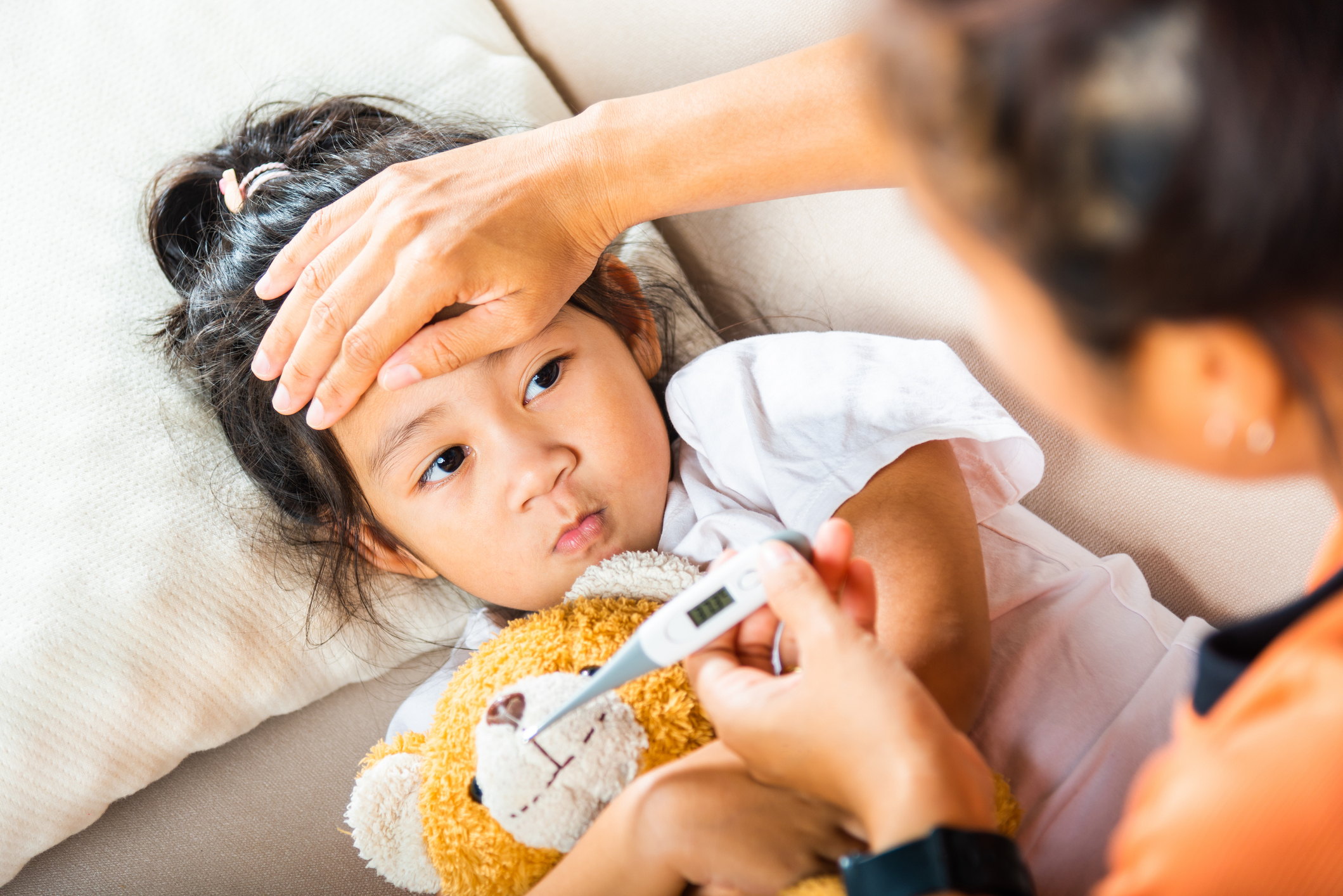
The best way to check your child’s temperature depends on their age. The type of thermometer used to take a temperature may make a difference. Use a digital thermometer. Never use a mercury thermometer. Additionally:

  • Rectal thermometers are the most accurate.
  • Forehead thermometers are the next best choice if used the right way.
  • Oral and ear thermometers can be used if done properly. For oral temperatures, wait 30 minutes after drinking something hot or cold. Wait 15 minutes after coming in from the cold for an ear temperature.
  • An axillary or armpit temperature can be used as a quick check but it isn’t very accurate.

A fever may not need to be treated unless your child is uncomfortable. Even higher temperatures are not usually dangerous unless they have a long-term illness. Here are some ways to provide relief and help reduce your child’s fever:

  • Dress your child in light clothing. Overdressing them can trap the body’s heat, causing the temperature to rise.
  • Make sure they drink lots of fluids. Prolonged fever can lead to dehydration.
    • For babies under a year old, continue to give breast milk and formula. They should not be given water. If they are older than six months, give them rehydration liquids that are rich in electrolytes.
    • For children over a year old, give them extra liquids, like water, diluted 100% juice, popsicles, or rehydration liquids that are rich in electrolytes.
  • Your child may not want to eat much. Give them small amounts of soft foods, but do not force them to eat.
  • Give them sponge baths or let them soak in a tub. Water should be lukewarm, not too hot or cold. Use a washcloth to pour the water over them.
    • Do NOT add alcohol to the water as it can be dangerous.
    • Recheck their temperature 15 minutes after the bath. Repeat the sponge bath if the temperature is 103˚F (39.4˚C) or higher.
  • Over-the-counter medicines can help lower a fever. Read the label on the bottle to know the right dose for your child.
    • Acetaminophen may be used for all children over two months.
    • Ibuprofen may be used for children over six months.
    • Do not give aspirin to children.

Call your child’s healthcare provider right away if your child:

  • Has a temperature of 104 ˚F (40 ˚C) or above.
  • Has a temperature above 102˚F (38.9˚C) for more than 2 days or keeps returning.
  • That has been treated to bring it down, but it has not worked.

To speak with a pediatrician at Flushing Hospital Medical Center about your child’s fever, please call 718-670-5440 to schedule an appointment. Please call 911 if there is an emergency.


All content of this newsletter is intended for general information purposes only and is not intended or implied to be a substitute for professional medical advice, diagnosis or treatment. Please consult a medical professional before adopting any of the suggestions on this page. You must never disregard professional medical advice or delay seeking medical treatment based upon any content of this newsletter. PROMPTLY CONSULT YOUR PHYSICIAN OR CALL 911 IF YOU BELIEVE YOU HAVE A MEDICAL EMERGENCY.

Halloween Safety Tips

Halloween is a time for dressing up, eating candy, and having fun. Unfortunately, there can be several risks when trick or treating. Here are some tips to keep you and your children safe this Halloween:

  • Wear costumes that say “flame resistant” on the label. If you make your costume, use flame-resistant fabrics like polyester or nylon.
  • Wear bright, reflective costumes, or add strips of reflective tape so you’ll be more visible.
  • Wear makeup and hats rather than costume masks that can obscure your vision.
  • Always accompany young children when trick or treating.
  • Cross the street at corners, using traffic signals and crosswalks. Look left, right, and left again when crossing.
  • Stay on well-lit streets and always use the sidewalk.
  • Always walk on sidewalks or paths. If there are no sidewalks, walk facing traffic as far to the left.
  • Put electronic devices down, and keep your head up while you walk.
  • Caution kids never enter a home or a car for a treat.
  • Wait until children are home to sort and check treats before eating them.
  • Don’t eat candy until it has been inspected at home.
  • If a child has a food allergy, check the label to ensure the allergen isn’t present. Tell children not to accept or eat anything that isn’t wrapped correctly.
  • Parents of young children should remove any choking hazards such as gum, peanuts, hard candies, or small toys from their Halloween bags.

Follow these important tips to ensure you and your loved ones stay safe this Halloween. If you experience any problems, visit Flushing Hospital Medical Center’s Ambulatory Care Center. To schedule an appointment, please call (718) 670-5486. If there is an emergency, please call 911.


All content of this newsletter is intended for general information purposes only and is not intended or implied to be a substitute for professional medical advice, diagnosis or treatment. Please consult a medical professional before adopting any of the suggestions on this page. You must never disregard professional medical advice or delay seeking medical treatment based upon any content of this newsletter. PROMPTLY CONSULT YOUR PHYSICIAN OR CALL 911 IF YOU BELIEVE YOU HAVE A MEDICAL EMERGENCY.

Enterovirus D68

Enterovirus D68 is a virus that causes respiratory illness similar to the common cold. It can sometimes lead to severe breathing issues and outbreaks of neurological disease that cause paralysis. Enterovirus D68 mostly affects children and teens, but it also affects adults.

Symptoms of enterovirus D68 include:

  • Stuffy or runny nose
  • Cough
  • Fever
  • Muscle pain or body aches
  • Sore throat
  • Wheezing
  • Shortness of breath
  • Diarrhea

Enterovirus D68 is contagious and spreads when a person sick with the virus sneezes, coughs, or touches a surface without washing their hands.

If you have mild, cold-like symptoms, your healthcare provider likely won’t test you for enterovirus D68. However, if you have more severe symptoms, they might use a nasal swab to test for common viruses like the flu or COVID-19. If those results are negative, your provider may suspect the enterovirus if it is spreading in your area.

There isn’t a specific antiviral treatment to fight enterovirus D68. Mild symptoms usually improve in a week or two with minimal at-home care. Severe cases need to be treated in a hospital. If you have severe symptoms your healthcare provider may treat you with:

  • Corticosteroids to reduce inflammation
  • Bronchodilators for severe respiratory symptoms
  • Intravenous immunoglobulin which is an antibody treatment that can help fight off infections

You can reduce your risk of getting sick and prevent infection of enterovirus D68 and spreading it to others by practicing good hygienic habits including:

  • Sneezing or coughing into the crook of your elbow
  • Disinfecting high-touch surfaces like toys, phones, countertops, and doorknobs
  • Don’t share eating utensils, cups, towels, or clothing
  • Keeping your kids home from school and away from gatherings when they’re sick
  • Washing your hands often with soap and water for at least 20 seconds especially after going to the bathroom or changing diapers and before preparing or eating food

If your child is experiencing symptoms associated with enterovirus D68, it’s important to visit a pediatrician as soon as possible. You can schedule an appointment at Forest Hills Pediatric Specialists by calling (718) 704-5020.


All content of this newsletter is intended for general information purposes only and is not intended or implied to be a substitute for professional medical advice, diagnosis or treatment. Please consult a medical professional before adopting any of the suggestions on this page. You must never disregard professional medical advice or delay seeking medical treatment based upon any content of this newsletter. PROMPTLY CONSULT YOUR PHYSICIAN OR CALL 911 IF YOU BELIEVE YOU HAVE A MEDICAL EMERGENCY.

National Childhood Obesity Awareness Month

The Centers for Disease Control and Prevention (CDC) recognizes September as National Childhood Obesity Awareness Month, a time to raise awareness about preventing childhood obesity.

Childhood obesity is a critical public health challenge that affects one in three children in the United States. Children with obesity face an increased risk of chronic health conditions, such as type 2 diabetes, high blood pressure, asthma, sleep apnea, and bone and joint problems. Obesity can also impact children beyond physical issues. It affects their emotional and social well-being as well, which leads to challenges like bullying and lower self-esteem.

Many factors impact childhood obesity, including eating and physical activity behaviors, genetics, metabolism, family and home environment, and community and social factors. For some children and families, obesity can be influenced by the following:

  • Too much time spent being inactive
  • Lack of sleep
  • Lack of places to go in the community to be physically active
  • Easy access to inexpensive, high-calorie foods and sugary beverages
  • Lack of access to affordable healthier foods

Here are some tips on how parents can help prevent their child from experiencing obesity:

  • Monitor growth
  • Provide nutritious foods
  • Promote drinking water
  • Encourage physical activity
  • Model healthy behaviors
  • Create a healthy sleep environment

Childhood obesity can be prevented by working together to help children achieve and maintain a healthy weight, improve their overall well-being, and build a foundation for a healthier future.

If you would like to speak with a pediatrician about childhood obesity at Flushing Hospital Medical Center, please call 718-670-5440 to schedule an appointment.

All content of this newsletter is intended for general information purposes only and is not intended or implied to be a substitute for professional medical advice, diagnosis or treatment. Please consult a medical professional before adopting any of the suggestions on this page. You must never disregard professional medical advice or delay seeking medical treatment based upon any content of this newsletter. PROMPTLY CONSULT YOUR PHYSICIAN OR CALL 911 IF YOU BELIEVE YOU HAVE A MEDICAL EMERGENCY.

Back to School Anxiety

A new school year is fast approaching. And with it comes lots of excitement, but it can also cause anxiety for children.

Starting a new school or being away from parents can cause much anxiety in children. That anxiety fades for most children as the year progresses. But for others, it doesn’t. Here are some examples of behaviors that may indicate your child is continuing to struggle with anxiety:

Continually seeking reassurance or asking repeated, worried questions despite receiving an answer

  • Tantrums when separating from parents or caregivers before going to school
  • Increased complaints of experiencing headaches, stomachaches, and fatigue in the absence of an illness
  • A significant change in their sleep pattern, such as taking an hour to fall asleep, or waking you up with worries during the night when they might typically sleep well
  • Difficulty getting along with family members or friends
  • Avoidance of normal activities in and outside of school

Here are some tips to help ease back-to-school anxiety:

  • Approach anxiety instead of avoiding it
  • Practice school routines
  • Model behavior you’d like to see
  • Ensure they are getting enough sleep
  • Check-in with stress levels
  • Talk to school mental health professionals
  • Blend back to school with fun activities so the transition is less sudden

To learn more about our outpatient mental health services or to schedule a virtual appointment, please call (718) 670-5316 to speak with our intake coordinator or (718) 670-5562 to reach the clinic.

All content of this newsletter is intended for general information purposes only and is not intended or implied to be a substitute for professional medical advice, diagnosis or treatment. Please consult a medical professional before adopting any of the suggestions on this page. You must never disregard professional medical advice or delay seeking medical treatment based upon any content of this newsletter. PROMPTLY CONSULT YOUR PHYSICIAN OR CALL 911 IF YOU BELIEVE YOU HAVE A MEDICAL EMERGENCY.

Children’s Eye Health and Safety Month

August is Children’s Eye Health and Safety Month. With children going back to school, it is important to get their eyes checked.

Vision is a vital part of a child’s development. It is how they learn, play, and interact with the world around them.

Unfortunately, many eye problems in children go undetected, which can lead to long-term issues. Regular eye exams are critical in identifying problems early which ensures your child has the best chance for healthy vision. Good vision is essential for their performance in school, in sports, and their overall well-being.

Children are vulnerable to many eye problems, including:

  • Injuries
  • Infections
  • Nearsightedness

There are many things to be aware of that may indicate a problem with your child’s eyes. They include:

  • Their eyes do not line up or appear crossed
  • Their eyelids are red-rimmed, crusted, or swollen
  • Their eyes are watery or inflamed
  • They rub their eyes a lot
  • They close or cover one eye
  • They tilt their head forward
  • They have trouble reading or doing other close-up work
  • They hold objects close to their eyes to see
  • They blink more than usual or seem cranky when doing close-up work
  • Things are blurry or hard to see for them

There are many ways to protect your child’s eye health, including:

  • Getting regular eye exams
  • Wearing protective eyewear during sports and other activities
  • Limiting screen time
  • Practicing healthy nutrition

If you would like to schedule an eye exam for your child, you can visit an ophthalmologist at Flushing Hospital Medical Center. To schedule an appointment, please call (718) 670-5486.

All content of this newsletter is intended for general information purposes only and is not intended or implied to be a substitute for professional medical advice, diagnosis or treatment. Please consult a medical professional before adopting any of the suggestions on this page. You must never disregard professional medical advice or delay seeking medical treatment based upon any content of this newsletter. PROMPTLY CONSULT YOUR PHYSICIAN OR CALL 911 IF YOU BELIEVE YOU HAVE A MEDICAL EMERGENCY.
National Immunization Awareness Month

August is National Immunization Awareness Month or NIAM. It is an annual observance highlighting the importance of getting routine vaccinations for people of all ages. 

Vaccines work by stimulating the immune system to protect our bodies against viruses or bacteria that cause infection. After vaccination, the immune system is better prepared to respond quickly when the body encounters disease-causing organisms.

Vaccinations are important at every stage of life. They are one of the safest preventative care measures available and help play a vital role in keeping you healthy. When you skip vaccines, you leave yourself vulnerable to illnesses such as shingles, influenza (flu), and both HPV and hepatitis B which are leading causes of cancer. 

Getting vaccinated also helps keep your family and community healthy, as vaccinations can help lessen the severity of illness and keep diseases from spreading. Additionally, vaccinations help protect those most vulnerable to illness, such as infants, elders, and people with weakened immune systems. 

If you or a loved one would like to get vaccinated, schedule an appointment with a physician at Flushing Hospital’s Department of Internal Medicine or your primary care physician as soon as possible.

To schedule an appointment for you or a loved one to get up to date on vaccinations, you can call Flushing Hospital Medical Center’s Ambulatory Care Center at (718) 670-5486.

All content of this newsletter is intended for general information purposes only and is not intended or implied to be a substitute for professional medical advice, diagnosis or treatment. Please consult a medical professional before adopting any of the suggestions on this page. You must never disregard professional medical advice or delay seeking medical treatment based upon any content of this newsletter. PROMPTLY CONSULT YOUR PHYSICIAN OR CALL 911 IF YOU BELIEVE YOU HAVE A MEDICAL EMERGENCY.

Juvenile Arthritis Awareness Month

July is Juvenile Arthritis Awareness Month. Arthritis isn’t just an older person’s disease. Children can suffer from it as well.

Juvenile arthritis or pediatric rheumatic disease is an umbrella term that describes the inflammatory and rheumatic diseases that develop in children 16 years and under.

Juvenile idiopathic arthritis (JIA) is an autoimmune disease where the immune system attacks the joints instead of fighting viruses and germs. It is the most common type of arthritis in children.

Other types of juvenile arthritis include:

  1. Juvenile myositis- is an inflammatory disease that causes muscle weakness. There are two types:
  • Juvenile polymyositis
  • Juvenile dermatomyositis
  1. Juvenile lupus- is an autoimmune disease that affects the joints, skin, internal organs, and other areas. The most common form is systemic lupus erythematosus (SLE).
  2. Juvenile scleroderma- describes a group of conditions that cause the skin to tighten and harden.
  3. Vasculitis- is a disease that causes inflammation of the blood vessels that can lead to heart complications. According to the Arthritis Foundation, Kawasaki disease and Henoch-Schonlein purpura (HCP) are the most common vasculitis in kids and teens.
  4. Fibromyalgia- is a chronic pain syndrome that causes widespread muscle pain and stiffness. It also causes fatigue, disrupted sleep, and other symptoms. It is more common in girls and rarely diagnosed before puberty.

The symptoms of juvenile arthritis can vary depending on the type. The most common symptoms include:

  • Joint pain
  • Joint swelling
  • Joint stiffness
  • Fever, swollen lymph nodes, and rash

It can be difficult to diagnose juvenile arthritis in children because joint pain can be caused by many different problems. Here are some ways it is diagnosed:

  • Physical exams
  • Blood tests
  • Imaging scans

There is no cure for arthritis. However, it can be treated. Treatments include:

  • Medications
  • Physical or occupational therapies
  • Surgery
  • Self-care

If you believe your child is experiencing arthritis symptoms, visiting a pediatrician as soon as possible is important. You can schedule an appointment at Forest Hills Pediatric Specialists by calling (718) 704-5020

All content of this newsletter is intended for general information purposes only and is not intended or implied to be a substitute for professional medical advice, diagnosis or treatment. Please consult a medical professional before adopting any of the suggestions on this page. You must never disregard professional medical advice or delay seeking medical treatment based upon any content of this newsletter. PROMPTLY CONSULT YOUR PHYSICIAN OR CALL 911 IF YOU BELIEVE YOU HAVE A MEDICAL EMERGENCY.
Tips To Prevent Summer Injuries and Illnesses In Children

During the summer, children spend more time outside participating in physical activities which can increase their risk of injury and developing certain illnesses.

Here are a few of the most common summer illnesses and injuries, and ways to prevent them:

  1. Water-related injuries and drownings are among the leading causes of injury and death in young children. Serious injuries resulting from falls often occur around swimming pools or diving areas, and children can drown quickly in any body of water.  Accidents can be prevented by:
  • Teaching children to ask permission before going into the water
  • Teaching children how to swim
  • Paying attention to children when they are in or around water
  • Wearing life jackets
  • Fencing off pools with fences made with self-latching devices
  • Installing pool covers
  • Adding a pool alarm
  • Learning how to perform CPR and knowing first-aid
  1. Fall-related injuries are among the most common in children and tend to happen more during the warmer months. However, the risk of falls, and sustaining injuries from these accidents can be reduced by:
  • Removing fall hazards or supervising children near fall hazards
  • Installing safety gates near staircases and keeping stairs clutter-free
  • Wearing appropriate footwear that is slip-resistant and fits properly
  • Using playgrounds that have soft surfaces under equipment
  • Wearing helmets when using scooters, tricycles, or bicycles
  1. Heat-related injuries can include several health complications such as dehydration, heat exhaustion, or heat stroke. These illnesses can be life-threatening, but thankfully can be avoided by:
  • Drinking plenty of fluids
  • Wearing light-colored and loose-fitting clothing
  • Spending as much time possible indoors during very hot and humid days
  • Knowing the signs and symptoms of heat-related illnesses and responding appropriately
  1. Tick-borne illnesses such as Lyme disease or babesiosis peak during the warmer months when we are more likely to participate in activities in wooded or grassy areas. To prevent tick-borne illnesses, we can:
  • Use repellants that contain 20 to 30% DEET
  • Wear protective clothing, and tuck our pants into our socks
  • Check the body for ticks and remove them as soon as they are discovered
  • Bathe or shower as soon as possible after spending time outdoors
  1. Enteroviruses can cause illnesses such as the summer flu, pink eye, and coxsackie. These illnesses are highly transmissible, and outbreaks peak in the summer. However, you can control the spread of enteroviruses by practicing hand hygiene and cleaning surfaces that children touch most often.

If your child is experiencing symptoms associated with these summer illnesses or has sustained injuries from an accident, it’s important to visit a pediatrician as soon as possible. You can schedule an appointment at Forest Hills Pediatric Specialists by calling (718) 704-5020.


All content of this newsletter is intended for general information purposes only and is not intended or implied to be a substitute for professional medical advice, diagnosis or treatment. Please consult a medical professional before adopting any of the suggestions on this page. You must never disregard professional medical advice or delay seeking medical treatment based upon any content of this newsletter. PROMPTLY CONSULT YOUR PHYSICIAN OR CALL 911 IF YOU BELIEVE YOU HAVE A MEDICAL EMERGENCY.

Pediatric Liver Disease

A pediatric gastroenterologist checking a child for symptoms of liver disease.Liver problems can lead to very serious medical complications. Whether these problems are urgent potential emergencies, such as acute liver failure, or long-term health issues, such as fatty liver disease, they can become life-threatening if they are not treated promptly and effectively. Liver problems are not rare in adults; according to the American Liver Foundation, they affect over 100 million people throughout the United States. However, in rare cases, they can also occur in children.

The most common type of liver condition in children is nonalcoholic fatty liver disease (NAFLD), which occurs when too much fat forms in the liver cells. NAFLD can occur due to:

  • Obesity
  • Insulin resistance
  • Type 2 diabetes
  • Abnormally high amounts of cholesterol or fat in the bloodstream
  • Sleep apnea

In its early stages, NAFLD doesn’t usually cause symptoms. As damage to the liver accumulates, the following symptoms may occur: 

  • Abdominal discomfort or pain
  • Fatigue
  • Irritability, depression, and/or anxiety
  • Headaches
  • Difficulty concentrating
  • Changes in skin color around the joints, upper back, and/or the back of the neck

Continued damage to the liver over an extended period of time leads to cirrhosis, which refers to the formation of nodules on the liver. Cirrhosis also causes the liver to harden. As cirrhosis occurs, other symptoms may begin to appear, including:

  • Jaundice (yellowing of the skin and eyes)
  • Itching skin
  • Stomach swelling
  • Dark-colored urine
  • Bruising easily

A variety of other conditions can also cause liver disease to occur in children. Many of these can occur as a result of a variety of factors, such as inherited genes or viral infections. They include:

  • Alagille syndrome
  • Alpha-1 antitrypsin deficiency
  • Crigler-Najjar syndrome
  • Glycogen storage disease type 1
  • Progressive familial intrahepatic cholestasis 
  • Gilbert syndrome
  • Autoimmune liver disease
  • Biliary atresia
  • Budd-Chiari syndrome
  • Galactosemia
  • Hepatitis B and C
  • Primary sclerosing cholangitis
  • Reye’s syndrome
  • Wilson disease

If your child is experiencing symptoms of liver disease, it’s important to visit a pediatrician as soon as possible. You can schedule an appointment at Forest Hills Pediatric Specialists by calling (718) 704-5020.

All content of this newsletter is intended for general information purposes only and is not intended or implied to be a substitute for professional medical advice, diagnosis or treatment. Please consult a medical professional before adopting any of the suggestions on this page. You must never disregard professional medical advice or delay seeking medical treatment based upon any content of this newsletter. PROMPTLY CONSULT YOUR PHYSICIAN OR CALL 911 IF YOU BELIEVE YOU HAVE A MEDICAL EMERGENCY.