Halloween Safety Tips

Halloween is a time for dressing up, eating candy, and having fun. Unfortunately, there can be several risks when trick or treating. Here are some tips to keep you and your children safe this Halloween:

  • Wear costumes that say “flame resistant” on the label. If you make your costume, use flame-resistant fabrics like polyester or nylon.
  • Wear bright, reflective costumes, or add strips of reflective tape so you’ll be more visible.
  • Wear makeup and hats rather than costume masks that can obscure your vision.
  • Always accompany young children when trick or treating.
  • Cross the street at corners, using traffic signals and crosswalks. Look left, right, and left again when crossing.
  • Stay on well-lit streets and always use the sidewalk.
  • Always walk on sidewalks or paths. If there are no sidewalks, walk facing traffic as far to the left.
  • Put electronic devices down, and keep your head up while you walk.
  • Caution kids never enter a home or a car for a treat.
  • Wait until children are home to sort and check treats before eating them.
  • Don’t eat candy until it has been inspected at home.
  • If a child has a food allergy, check the label to ensure the allergen isn’t present. Tell children not to accept or eat anything that isn’t wrapped correctly.
  • Parents of young children should remove any choking hazards such as gum, peanuts, hard candies, or small toys from their Halloween bags.

Follow these important tips to ensure you and your loved ones stay safe this Halloween. If you experience any problems, visit Flushing Hospital Medical Center’s Ambulatory Care Center. To schedule an appointment, please call (718) 670-5486. If there is an emergency, please call 911.


All content of this newsletter is intended for general information purposes only and is not intended or implied to be a substitute for professional medical advice, diagnosis or treatment. Please consult a medical professional before adopting any of the suggestions on this page. You must never disregard professional medical advice or delay seeking medical treatment based upon any content of this newsletter. PROMPTLY CONSULT YOUR PHYSICIAN OR CALL 911 IF YOU BELIEVE YOU HAVE A MEDICAL EMERGENCY.

Halloween 2023 Safety Tips

Halloween is a family-favorite holiday full of spooky fun and lots of candy.  However, it can also present many opportunities for injury as kids take to the streets in pursuit of trick-or-treat goodies.

Statistics show that roughly four times as many children between the ages of five and 14 are killed while walking on Halloween evening compared to other evenings of the year. Injuries due to falls and other accidents are also common among children on Halloween.

Parents can help minimize the risk of children getting injured on this holiday by following these safety tips from the American Academy of Pediatrics, the Centers for Disease Control and Prevention, and the National Safety Council.

On Halloween, children should:

  • Go only to well-lit houses.
  • Remain on porches without actually entering a house.
  • Travel in small groups accompanied by an adult.
  • Use flexible, non-sharp plastic props for costume pieces such as knives and swords.
  • When walking through neighborhoods trick-or-treating, use flashlights, stay on sidewalks, and avoid crossing yards.
  • Cross at appropriately-designated crosswalks and do not cross between parked cars.
  • Be sure to stop at all corners and stay together in a group before crossing.
  • Wear clothing or costumes that are bright, reflective, and flame-retardant.
  • Consider using face paint instead of masks that can obstruct a child’s vision.
  • Avoid wearing hats that will slide over children’s eyes.
  • Avoid wearing long, baggy, or loose costumes or oversized shoes that may cause kids to trip.
  • Be reminded to look left, right, and left again before crossing a street.

On Halloween, parents and adults should:

  • Supervise trick-or-treating for children under the age of 12.
  • Avoid giving choking hazards such as gum, peanuts, hard candies, or small toys as treats to young children.
  • Ensure the safety of pedestrian trick-or-treaters.
  • Make sure children under the age of 10 are supervised as they cross the street.
  • Drive slowly.
  • Watch for children in the street and on medians.
  • Exit driveways and alleyways slowly and carefully.
  • Have children get out of cars on the side of the sidewalk, not the street.

Follow these tips to keep both your children and yourself safe this year. Have a happy and fun Halloween!

All content of this newsletter is intended for general information purposes only and is not intended or implied to be a substitute for professional medical advice, diagnosis or treatment. Please consult a medical professional before adopting any of the suggestions on this page. You must never disregard professional medical advice or delay seeking medical treatment based upon any content of this newsletter. PROMPTLY CONSULT YOUR PHYSICIAN OR CALL 911 IF YOU BELIEVE YOU HAVE A MEDICAL EMERGENCY.
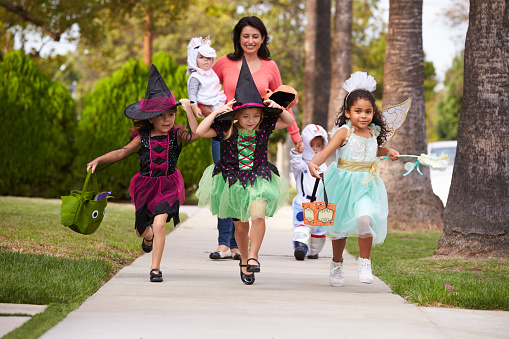
Halloween 2022 Safety Tips

Halloween is a family-favorite holiday full of spooky fun and lots of candy.  However, it can also present many opportunities for injury as kids take to the streets in pursuit of trick-or-treat goodies.

Statistics show that roughly four times as many children between the ages of five and 14 are killed while walking on Halloween evening compared to other evenings of the year. Injuries due to falls and other accidents are also common among children on Halloween.

Parents can help minimize the risk of children getting injured on this holiday by following these safety tips from the American Academy of Pediatrics, the Centers for Disease Control and Prevention, and the National Safety Council.

On Halloween, children should:

  • Go only to well-lit houses.
  • Remain on porches without actually entering a house.
  • Travel in small groups accompanied by an adult.
  • Use flexible, non-sharp plastic props for costume pieces such as knives and swords.
  • When walking through neighborhoods trick-or-treating, use flashlights, stay on sidewalks, and avoid crossing yards.
  • Cross at appropriately-designated crosswalks and do not cross between parked cars.
  • Be sure to stop at all corners and stay together in a group before crossing.
  • Wear clothing or costumes that are bright, reflective, and flame-retardant.
  • Consider using face paint instead of masks that can obstruct a child’s vision.
  • Avoid wearing hats that will slide over children’s eyes.
  • Avoid wearing long, baggy, or loose costumes or oversized shoes that may cause kids to trip.
  • Be reminded to look left, right, and left again before crossing a street.

On Halloween, parents and adults should:

  • Supervise trick-or-treating for children under the age of 12.
  • Avoid giving choking hazards such as gum, peanuts, hard candies, or small toys as treats to young children.
  • Ensure the safety of pedestrian trick-or-treaters.
  • Make sure children under the age of 10 are supervised as they cross the street.
  • Drive slowly.
  • Watch for children in the street and on medians.
  • Exit driveways and alleyways slowly and carefully.
  • Have children get out of cars on the side of the sidewalk, not the street.

Follow these tips to keep both your children and yourself safe this year. Have a happy and fun Halloween!

All content of this newsletter is intended for general information purposes only and is not intended or implied to be a substitute for professional medical advice, diagnosis or treatment. Please consult a medical professional before adopting any of the suggestions on this page. You must never disregard professional medical advice or delay seeking medical treatment based upon any content of this newsletter. PROMPTLY CONSULT YOUR PHYSICIAN OR CALL 911 IF YOU BELIEVE YOU HAVE A MEDICAL EMERGENCY.

Flushing Hospital Offers Halloween Safety Tips

Halloween is known as a kid-favorite holiday full of spooky fun and lots of candy.  However, it can also present many opportunities for injury, as children take to the streets in pursuit of trick-or-treat goodies.

Statistics show that roughly four times as many children aged 5-14 are killed while walking on Halloween evening compared with other evenings of the year.  Also, injuries such as falls are a leading cause of injuries among children on Halloween.

Parents can help minimize the risk of children getting injured at Halloween by following these safety tips from the American Academy of Pediatrics, the Centers for Disease Control and Prevention and the National Safety Council.

On Halloween children should:

  • Go only to well-lit houses and remain on porches than entering houses.
  • Travel in small groups accompanied by an adult.
  • Use costume plastic knives and swords that are flexible, not rigid or sharp.
  • When walking through neighborhoods trick or treating, use flashlights, stay on sidewalks, and avoid crossing yards.
  • Cross at the corner, use crosswalks and do not cross between parked cars.
  • Be sure to stop at all corners and stay together in a group before crossing.
  • Wear clothing or costumes that are bright, reflective and flame retardant.
  • Consider using face paint instead of masks which can obstruct a child’s vision.
  • Avoid wearing hats that will slide over children’s eyes.
  • Avoid wearing long, baggy or loose costumes or oversized shoes to prevent tripping.
  • Be reminded to look left, right and left again before crossing a street.

On Halloween parents and adults should:

  • Supervise the trick or treat outing for children under age 12.
  • Avoid giving choking hazards such a gum, peanuts, hard candies, or small toys as treats to young children.
  • Parents and adults should ensure the safety of pedestrian trick or treaters.
  • Make sure children under age 10 are supervised as they cross the street.
  • Drive slowly.
  • Watch for children in the street and on medians.
  • Exit driveways and alleyways slowly and carefully.
  • Have children get out of cars on the curbs side, not on the traffic side.

By following these simple tips, you and your children can have a safe and fun Halloween!

All content of this newsletter is intended for general information purposes only and is not intended or implied to be a substitute for professional medical advice, diagnosis or treatment. Please consult a medical professional before adopting any of the suggestions on this page. You must never disregard professional medical advice or delay seeking medical treatment based upon any content of this newsletter. PROMPTLY CONSULT YOUR PHYSICIAN OR CALL 911 IF YOU BELIEVE YOU HAVE A MEDICAL EMERGENCY.

Halloween Safety Tips

Halloween is known as a kid-favorite holiday full of spooky fun and lots of candy.  However, it can also present many opportunities for injury, as children take to the streets in pursuit of trick-or-treat goodies.

Statistics show that roughly four times as many children aged 5-14 are killed while walking on Halloween evening compared with other evenings of the year.  Also, injuries such as falls are a leading cause of injuries among children on Halloween.

Parents can help minimize the risk of children getting injured at Halloween by following these safety tips from the American Academy of Pediatrics, the Centers for Disease Control and Prevention and the National Safety Council.

On Halloween children should:

  • Go only to well-lit houses and remain on porches than entering houses.
  • Travel in small groups accompanied by an adult.
  • Use costume plastic knives and swords that are flexible, not rigid or sharp.
  • When walking through neighborhoods trick or treating, use flashlights, stay on sidewalks, and avoid crossing yards.
  • Cross at the corner, use crosswalks and do not cross between parked cars.
  • Be sure to stop at all corners and stay together in a group before crossing.
  • Wear clothing or costumes that are bright, reflective and flame retardant.
  • Consider using face paint instead of masks which can obstruct a child’s vision.
  • Avoid wearing hats that will slide over children’s eyes.
  • Avoid wearing long, baggy or loose costumes or oversized shoes to prevent tripping.
  • Be reminded to look left, right and left again before crossing a street.

On Halloween parents and adults should:

  • Supervise the trick or treat outing for children under age 12.
  • Avoid giving choking hazards such a gum, peanuts, hard candies, or small toys as treats to young children.
  • Parents and adults should ensure the safety of pedestrian trick or treaters.
  • Make sure children under age 10 are supervised as they cross the street.
  • Drive slowly.
  • Watch for children in the street and on medians.
  • Exit driveways and alleyways slowly and carefully.
  • Have children get out of cars on the curbs side, not on the traffic side.

By following these simple tips, you and your children can have a safe and fun Halloween!

All content of this newsletter is intended for general information purposes only and is not intended or implied to be a substitute for professional medical advice, diagnosis or treatment. Please consult a medical professional before adopting any of the suggestions on this page. You must never disregard professional medical advice or delay seeking medical treatment based upon any content of this newsletter. PROMPTLY CONSULT YOUR PHYSICIAN OR CALL 911 IF YOU BELIEVE YOU HAVE A MEDICAL EMERGENCY.