Children’s Eye Health and Safety Month

August is Children’s Eye Health and Safety Month. With children going back to school, it is important to get their eyes checked.

Vision is a vital part of a child’s development. It is how they learn, play, and interact with the world around them.

Unfortunately, many eye problems in children go undetected, which can lead to long-term issues. Regular eye exams are critical in identifying problems early which ensures your child has the best chance for healthy vision. Good vision is essential for their performance in school, in sports, and their overall well-being.

Children are vulnerable to many eye problems, including:

  • Injuries
  • Infections
  • Nearsightedness

There are many things to be aware of that may indicate a problem with your child’s eyes. They include:

  • Their eyes do not line up or appear crossed
  • Their eyelids are red-rimmed, crusted, or swollen
  • Their eyes are watery or inflamed
  • They rub their eyes a lot
  • They close or cover one eye
  • They tilt their head forward
  • They have trouble reading or doing other close-up work
  • They hold objects close to their eyes to see
  • They blink more than usual or seem cranky when doing close-up work
  • Things are blurry or hard to see for them

There are many ways to protect your child’s eye health, including:

  • Getting regular eye exams
  • Wearing protective eyewear during sports and other activities
  • Limiting screen time
  • Practicing healthy nutrition

If you would like to schedule an eye exam for your child, you can visit an ophthalmologist at Flushing Hospital Medical Center. To schedule an appointment, please call (718) 670-5486.

All content of this newsletter is intended for general information purposes only and is not intended or implied to be a substitute for professional medical advice, diagnosis or treatment. Please consult a medical professional before adopting any of the suggestions on this page. You must never disregard professional medical advice or delay seeking medical treatment based upon any content of this newsletter. PROMPTLY CONSULT YOUR PHYSICIAN OR CALL 911 IF YOU BELIEVE YOU HAVE A MEDICAL EMERGENCY.
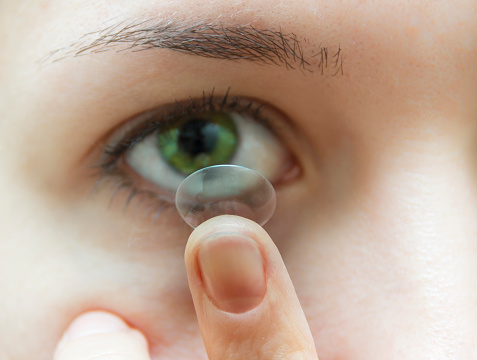
When Are Your Children Ready To Wear Contacts?

August is Children’s Eye Health and Safety Month and Flushing Hospital wants to answer a common question that many parents who have children who wear glasses ask –  When is my child old enough to start wearing contact lenses?

The answer to that question is less about their age and more about their level of maturity. Physically, a child’s eyes can tolerate contacts at a very young age. Before considering contact lenses for your son or daughter, you should consider how they handle other responsibilities. The fact is, there are some eight year old children who are ready and there are some teenagers who are not. Wearing contacts is a major responsibility and children not only need to display that they can apply them, but they also need to exercise proper hygiene and grooming habits to handle wearing and caring for them.

While a child’s ability and maturity to handle contacts might vary from age to age, research has shown that the majority of children (51 %) receive them between ten and 12 years of age, while over 22% receive them between when they are either 13 or 14 years old. Only 12.4 % of kids are prescribed contacts between the ages of eight and nine.

If they can handle the responsibility, most doctors believe that wearing contacts is a good thing for children and teens as they are generally more motivated to get fitted for and adapt better to wearing them than other age groups. They are also less likely to develop dry eyes or other issues that are common in adults who wear contact lenses.  Another reason to have your child consider wearing contact lenses is that in some cases they can actually slow down the progression of nearsightedness. In fact, a number of studies have proven that certain types of contacts offer significant control for many nearsighted children.

Professionals have also noted that there has been great advancement in the production of contact lenses over the years, which has contributed to more and more children now opting for them over glasses.  The progress in the development of disposable contacts makes maintenance easier and improved materials provide more durability and safety.

One of the biggest reasons more and more kids and parents are switching to contact lenses over glasses is the benefits to children who play sports. Even the safest eyeglass frames and lenses can cause injuries if they break. As opposed to sports goggles, contact lenses also offer better peripheral vision and an unobstructed view of the playing field. Contacts also remain stable on an athletes face while they are running, and unlike many sports goggles, they don’t not fog-up during competition.

A less common yet potentially important consideration for switching to contact lenses is how it affects a child’s self-esteem. In a recent poll, 71% of children asked cited self-esteem as a ‘very important” factor when determining whether or not to be fitted for contacts.  Additional research found that wearing contacts “significantly improves” how children and teens feel about themselves.

The best thing about making a decision to switch to contacts is that it isn’t permanent. If you think your child is ready and willing, speak to your eye doctor about getting fitted. If he or she tries it, but isn’t ready, they can always go back to wearing glasses. Together, you, your child and their doctor can decide if the time is right.

All content of this newsletter is intended for general information purposes only and is not intended or implied to be a substitute for professional medical advice, diagnosis or treatment. Please consult a medical professional before adopting any of the suggestions on this page. You must never disregard professional medical advice or delay seeking medical treatment based upon any content of this newsletter. PROMPTLY CONSULT YOUR PHYSICIAN OR CALL 911 IF YOU BELIEVE YOU HAVE A MEDICAL EMERGENCY.