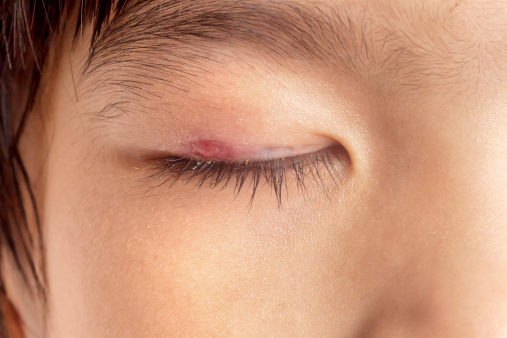
What is a Stye and How Can it be Treated?

A stye is a red bump that develops either on the inside or the outside of your eyelid. Styes can be tender and cause minor irritation, but they are usually not serious.

Similar to how you get a pimple on your face is how you can get a stye on your eye; it is simply the result of the gland along your eyelid becoming clogged.

Signs that you have developed a stye include:

  • Redness and tender feeling near your eyelid
  • You develop a bump with a small pus spot in the center
  • You have a sensation  that there’s something in your eye
  • Your eye feels sensitive to bright light
  • There is crust along your eyelid
  • You have a scratchy or itchy feeling around the eye
  • Your eye produces extra tears

Styes typically burst and go away on their own after a few days. But there are a few tips to treat your stye and minimize some of the symptoms.

  • Soak a clean washcloth in warm water and put it over the stye for approximately five to ten minutes and repeat several times per day.
  • Clean your eyelid with a cotton swab soaked in a mild baby shampoo. Avoid using harsh soaps as they can irritate and burn your eye.
  • Resist the urge to squeeze or pop your stye. This will only make the situation worse.
  • Keep your face and eyes very clean, and get rid of any crust you see around your eye.
  • If you are experiencing soreness around the eye, you can take a pain reliever, such as ibuprofen.
  • Avoid wearing eye make-up
  • If you wear contacts, try switching to glasses. After the stye has healed, make sure you clean and disinfect your contacts or replace them with a new pair.

You shouldn’t have to see your doctor for a stye. But it’s a good idea to make an appointment if your stye doesn’t get better after a few days, if you are in a great deal of pain, or if it affects your vision.

To see a doctor at Flushing Hospital Medical Center’s Ambulatory Care Center, please call 718-670-5486.

All content of this newsletter is intended for general information purposes only and is not intended or implied to be a substitute for professional medical advice, diagnosis or treatment. Please consult a medical professional before adopting any of the suggestions on this page. You must never disregard professional medical advice or delay seeking medical treatment based upon any content of this newsletter. PROMPTLY CONSULT YOUR PHYSICIAN OR CALL 911 IF YOU BELIEVE YOU HAVE A MEDICAL EMERGENCY.


Can Pregnancy Increase Your Chances of Developing Gum Disease?

Hormonal changes during pregnancy can affect a woman’s body in many different ways; one such change occurs inside a woman’s mouth.

It is estimated that forty to fifty percent of all pregnant women will develop what is referred to as “pregnancy gingivitis,” a mild form of gum disease that is caused by increased production levels of the hormone progesterone.  These hormonal changes make it easier for certain gingivitis-causing bacteria to grow in your mouth and it makes your gums more sensitive to the build-up of plaque.

Taking care of your gums during pregnancy is very important. There have been multiple studies that have linked gum disease and premature birth. A study conducted by the Journal of the American Dental Association concluded that women with chronic gum disease were four to seven times more likely to deliver prematurely or have low birth weight babies than mothers with healthy gums.

Symptoms of pregnancy gingivitis can range from a slight reddening of the gums and mild inflammation to severe swelling and bleeding gums, especially after brushing or flossing. Pregnancy gingivitis can occur anytime between the second and eight month of pregnancy.

The best way to avoid pregnancy gingivitis is to maintain proper oral hygiene. It is recommended that women brush twice a day or after every meal with a soft-bristled brush and toothpaste containing fluoride. Flossing as well as using an alcohol-free, antimicrobial mouthwash daily is also suggested. In addition, don’t skip your dental visits just because you are pregnant. In fact, it is more important to see your dentist when you are pregnant. They can provide a professional cleaning and check-up.  Your dentist can also prescribe antibiotics if necessary.

By following these preventative measures, you can reduce your chances of developing pregnancy gingivitis as well as well increasing the probability of delivering a full-term baby.

If you are pregnant and would like to schedule a routine visit at Flushing Hospital’s Dental Center, please call 718-670-5521.

All content of this newsletter is intended for general information purposes only and is not intended or implied to be a substitute for professional medical advice, diagnosis or treatment. Please consult a medical professional before adopting any of the suggestions on this page. You must never disregard professional medical advice or delay seeking medical treatment based upon any content of this newsletter. PROMPTLY CONSULT YOUR PHYSICIAN OR CALL 911 IF YOU BELIEVE YOU HAVE A MEDICAL EMERGENCY.

Flushing Hospital Offers Halloween Safety Tips

Halloween is known as a kid-favorite holiday full of spooky fun and lots of candy.  However, it can also present many opportunities for injury, as children take to the streets in pursuit of trick-or-treat goodies.

Statistics show that roughly four times as many children aged 5-14 are killed while walking on Halloween evening compared with other evenings of the year.  Also, injuries such as falls are a leading cause of injuries among children on Halloween.

Parents can help minimize the risk of children getting injured at Halloween by following these safety tips from the American Academy of Pediatrics, the Centers for Disease Control and Prevention and the National Safety Council.

On Halloween children should:

  • Go only to well-lit houses and remain on porches than entering houses.
  • Travel in small groups accompanied by an adult.
  • Use costume plastic knives and swords that are flexible, not rigid or sharp.
  • When walking through neighborhoods trick or treating, use flashlights, stay on sidewalks, and avoid crossing yards.
  • Cross at the corner, use crosswalks and do not cross between parked cars.
  • Be sure to stop at all corners and stay together in a group before crossing.
  • Wear clothing or costumes that are bright, reflective and flame retardant.
  • Consider using face paint instead of masks which can obstruct a child’s vision.
  • Avoid wearing hats that will slide over children’s eyes.
  • Avoid wearing long, baggy or loose costumes or oversized shoes to prevent tripping.
  • Be reminded to look left, right and left again before crossing a street.

On Halloween parents and adults should:

  • Supervise the trick or treat outing for children under age 12.
  • Avoid giving choking hazards such a gum, peanuts, hard candies, or small toys as treats to young children.
  • Parents and adults should ensure the safety of pedestrian trick or treaters.
  • Make sure children under age 10 are supervised as they cross the street.
  • Drive slowly.
  • Watch for children in the street and on medians.
  • Exit driveways and alleyways slowly and carefully.
  • Have children get out of cars on the curbs side, not on the traffic side.

By following these simple tips, you and your children can have a safe and fun Halloween!

All content of this newsletter is intended for general information purposes only and is not intended or implied to be a substitute for professional medical advice, diagnosis or treatment. Please consult a medical professional before adopting any of the suggestions on this page. You must never disregard professional medical advice or delay seeking medical treatment based upon any content of this newsletter. PROMPTLY CONSULT YOUR PHYSICIAN OR CALL 911 IF YOU BELIEVE YOU HAVE A MEDICAL EMERGENCY.

How Do You Know if Your Child has a Growth Disorder?

When is a lack of growth a cause for concern? All children grow at different rates. The same boy that is the smallest in his class in elementary school might be the tallest at his high school graduation. In most cases lack of height can be attributed to genetic factors or in other instances it could just be that the child is a “late bloomer.”

After years of collecting statistics on childhood development experts have developed a standard growth chart. Pediatricians use this chart as a guideline to monitor the growth of their patients against other children of the same age during a child’s annual well visit.  Children are ranked by percentile (from 1 to 100). If a child is ranked either below the 3rd or above the 97th, a doctor will usually want to investigate potential reasons as to why.

While in most cases there is no need for concern, for some children, a lack of growth could be caused by a growth disorder. The most common reason for a growth disorder is related to the pituitary gland, which is located at the base of the brain. One of the main functions of this gland is to release growth hormones to your body. When the pituitary gland doesn’t make enough growth hormone,  it causes a condition known hypopituitarism, which can slow down a  child’s rate of growth. Special tests can determine if a child isn’t producing enough growth hormone. If not, daily injections of growth hormone can often help them grow at a more conventional rate.

Another gland that produces hormones important for growth is the thyroid. Your thyroid makes a hormone called thyroxine. If it makes too little, the condition is called hypothyroidism. Having too little thyroxine cause a child to grow more slowly. Doctors can do a simple blood test for hypothyroidism. If it’s needed, pills can be prescribed to compensate for the lack of this hormone.

Thankfully, many growth disorders can be successfully treated today. The best advice is to make sure your child sees their pediatrician for their annual visit so any issue can be immediately identified. If you do not have a pediatrician, you can make an appointment to see one in Flushing Hospital’s Ambulatory Care Center.

For more information, or to make an appointment, please call 718-670-3007.

All content of this newsletter is intended for general information purposes only and is not intended or implied to be a substitute for professional medical advice, diagnosis or treatment. Please consult a medical professional before adopting any of the suggestions on this page. You must never disregard professional medical advice or delay seeking medical treatment based upon any content of this newsletter. PROMPTLY CONSULT YOUR PHYSICIAN OR CALL 911 IF YOU BELIEVE YOU HAVE A MEDICAL EMERGENCY.
WHAT IS TMJ SYNDROME?

The temporomandibular joint acts like a sliding hinge, connecting your jawbone to your skull. When this joint is injured or damaged, it can lead to a localized pain disorder called temporomandibular joint (TMJ) syndrome.

The main symptom of TMJ syndrome is pain or stiffness in the jaw joint and in the surrounding areas. Other symptoms can include:

  • Difficulty chewing
  • Ear pain or ringing of the ears (tinnitus)
  • Shoulder or neck pain
  • Popping or clicking sound coming from the jaw
  • Headaches or migraines
  • Blurred vision, dizziness or vertigo

The exact cause for developing TMJ syndrome is difficult to determine. There are many factors that can contribute to this condition. In some cases, pain may be the result of a jaw injury or another medical condition such as arthritis. In other cases, it can be caused by correctable action such as poor posture or excessive gum chewing. In many cases, TMJ syndrome is the result of habitually clenching or grinding of the teeth.  Stress and anxiety can also play a role in the onset of the condition.

TMJ syndrome can occur on one side of the jaw or both. It is usually a temporary condition and in most cases symptoms can be relieved with self–care and home remedies. Taking anti-inflammatory medications and applying ice or cold compresses to the jaw are suggested ways to relieve pain. Eating soft foods and avoiding chewing gum while pain is present is also recommended.  Additionally, practicing relaxation techniques and self-massage or stretching techniques have proven effective to reduce pain associated with TMJ syndrome. If these practices are not effective, your dentist can have you fitted for a dental splint or mouth guard to maintain proper alignment of the teeth and prevent grinding. In extreme cases, surgery may be necessary to treat the condition.

If you are experiencing symptoms associated, you can speak to your doctor or dentist about treating the condition.

To make an appointment at Flushing Hospital’s Dental Department, please call 718-670-5521.

All content of this newsletter is intended for general information purposes only and is not intended or implied to be a substitute for professional medical advice, diagnosis or treatment. Please consult a medical professional before adopting any of the suggestions on this page. You must never disregard professional medical advice or delay seeking medical treatment based upon any content of this newsletter. PROMPTLY CONSULT YOUR PHYSICIAN OR CALL 911 IF YOU BELIEVE YOU HAVE A MEDICAL EMERGENCY.

Flushing Hospital Offers Tips For Successful Aging

September is Successful Aging Month and Flushing Hospital Medical Center recommends creating and following a longevity program for those who want to live a long and healthy life.  Your longevity program should incorporate the following components:


  • Eating a healthy diet is considered the foundation of a healthy lifestyle. By following a balanced diet and eating within your recommended calorie allowance, you can take an important first step in your successful aging plan.
  • Dedication to a daily exercise plan is another foundation of a healthy lifestyle. The US Center for Disease Control recommends daily moderate to intense exercise as part of a longevity program.
  • Pursuing mental challenges is another key when developing a longevity program. You can keep your mind sharp through reading, crossword puzzles, or games like chess or checkers. Mastering any new skill is also beneficial.
  • Staying social is also important. Being involved with other people who depend on you and who you depend on goes a long way in living longer. Interacting with people in different age groups throughout your life cycle will help you feel and be younger.
  • Finding meaning in your life is another important factor in living a long a healthy life. Do something that permits you to see yourself as being part of something larger than simply yourself and you will be filled with greater peace.

Following these tips are easier said than done. Believing in yourself, having self-control against negative impulse and outlining a vision for your future are all necessary for success. Flushing Hospital suggests practicing these tips just a few minutes a day and adding just a few more minutes a day every two weeks you will find that you have become a master of successful aging.

All content of this newsletter is intended for general information purposes only and is not intended or implied to be a substitute for professional medical advice, diagnosis or treatment. Please consult a medical professional before adopting any of the suggestions on this page. You must never disregard professional medical advice or delay seeking medical treatment based upon any content of this newsletter. PROMPTLY CONSULT YOUR PHYSICIAN OR CALL 911 IF YOU BELIEVE YOU HAVE A MEDICAL EMERGENCY.
Remembering 1999 and the West Nile Virus

Just before Labor Day in 1999, Northern Queens became the epicenter of a very serious, and in rare cases, deadly disease – the West Nile Virus.

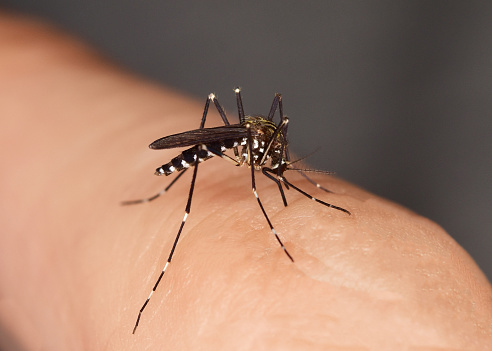
The West Niles Virus is primarily spread through the bite of a mosquito. While the overwhelming majority of those infected with the virus suffer either no or very minor symptoms, people over age 60, or those with a comprised immune system may be at risk of developing serious symptoms. In rare cases (less than 1%), individuals may develop headache, fever, stiff neck, nausea, vomiting, confusion, muscle weakness, or swelling of the brain (encephalitis) or paralysis.  West Nile can even cause permanent neurological damage and death.

The disease was found only in Africa, the Middle East and parts of Asia.  It had never seen in the United States, however, in the summer of 1999, Flushing Hospital doctors noticed a cluster of patients experiencing very mysterious symptoms that could not be explained. The medical staff immediately reached out to their partners at the local health authorities to report their findings. Together, the team identified the virus and alerted the public. The City’s response was immediate as they instituted an aerial assault days before the Labor Day weekend to eradicate the source…the mosquitos. Thanks to the efforts of Flushing Hospital, many New Yorkers who might have otherwise been exposed while enjoying time outdoors were spared from becoming infected.

As we near the anniversary of this event, Flushing Hospital wants to continue to educate the public on how to stay safe and avoid becoming infected by West Nile or any other mosquito-borne diseases by following these tips to reduce your chances of exposure:

  • Wear protective clothing such as long pants and long sleeved shirts, particularly between dusk and dawn when mosquitos are most active
  • Avoid shaded, bushy areas where mosquitos like to rest
  • Remove any places where standing water can collect on your property, such as tires, cans, plastic containers or pots,
  • Make sure your roof gutters drain properly. Clean clogged gutters in the spring and the fall.
  • Clean and chlorinate your swimming pools, outdoor saunas or hot tubs and drain water from pool covers
  • Change the water in your bird baths at least every three to four days.

Flushing Hospital urges everyone to take proper precautions and enjoy the remainder of your summer.

All content of this newsletter is intended for general information purposes only and is not intended or implied to be a substitute for professional medical advice, diagnosis or treatment. Please consult a medical professional before adopting any of the suggestions on this page. You must never disregard professional medical advice or delay seeking medical treatment based upon any content of this newsletter. PROMPTLY CONSULT YOUR PHYSICIAN OR CALL 911 IF YOU BELIEVE YOU HAVE A MEDICAL EMERGENCY.

Have You Ever Heard of Face Blindness?

Prosopagnosia, also known as face blindness or facial agnosia, is a rare neurological disorder characterized by the inability to recognize faces. The condition is often accompanied by other forms of recognition impairments such as a failure to recognize objects or places but sometimes it is just restricted to facial identity.

Depending upon the degree of impairment, some people with prosopagnosia may only have difficulty recognizing a familiar face. Others might be unable to discriminate between unknown faces while others may not be able to distinguish a face as being different from an object. In some cases, people with the disorder are unable to recognize their own face.

Prosopagnosia is not related to memory dysfunction, memory loss, impaired vision or a learning disability. Most of the documented cases of prosopagnosia are linked to an event that resulted in damage to the brain, such as a stroke, head trauma or a degenerative disease. In these cases, the condition is referred to as acquired prosopagnosia. In other cases however, the condition occurs in the absence of brain damage. These cases are considered developmental prosopagnosia and can occur at birth or at a very young age. In most cases, developmental prosopagnosia is genetic in nature.

There is still very little know about prosopagnosia and there is no cure for prosopagnosia. To compensate, those with the disorder are encouraged to develop strategies to help them identify individuals, such as recognizing voice cues or other unique physical attributes.

All content of this newsletter is intended for general information purposes only and is not intended or implied to be a substitute for professional medical advice, diagnosis or treatment. Please consult a medical professional before adopting any of the suggestions on this page. You must never disregard professional medical advice or delay seeking medical treatment based upon any content of this newsletter. PROMPTLY CONSULT YOUR PHYSICIAN OR CALL 911 IF YOU BELIEVE YOU HAVE A MEDICAL EMERGENCY.

What is Mononucleosis?

Your throat aches, and you’re battling a relentless headache. No, you’re not suffering from the common cold. Instead, you’ve been diagnosed with mononucleosis—also called the “kissing disease.” But the disease is leaving you feeling anything but warm and fuzzy all over.

What Is Mono?

Mononucleosis is a disease that usually stems from the Epstein Barr virus. You’ll typically contract this disease as a young adult or teenager. However, children can also contract this infectious disease, although the symptoms tend to be more unnoticeable in them. Over time, children develop antibodies and thus an immunity to mono, so they are less likely to get the disease in adulthood.

What Is Mononucleosis Caused By?

Although you can certainly contract mono through kissing (due to the exchange of saliva), the disease can be transmitted through other bodily fluids, like mucus, as well. Other ways you can get mono include using someone else’s toothbrush, eating utensils, or drinking glass.

Here are a few symptoms that indicate that you may have contracted mono:

  • Having a swollen spleen and/or liver
  • Developing a rash
  • Suffering from headaches
  • Having lymph nodes that have become swollen
  • Experiencing a fever
  • Feeling fatigued

These symptoms can appear up four to six weeks after you have been exposed to someone with mono. Although the majority of the symptoms last no more than four weeks, other symptoms—like swollen liver or spleen, and fatigue—can last months.

What Is Mononucleosis Treated With?

Unfortunately, no vaccine can prevent you from getting mono. In the same way, no medicine can treat the disease. However, you can overcome it simply by getting enough sleep, taking pain medication, and drinking liquids. You can also gargle with salt and water or take a lozenge to experience rapid relief from an achy throat.

When you’re trying to recover from mononucleosis, avoid lifting heavy objects or playing contact sports, as this may cause you to further damage your liver or spleen.

When Should You Contact a Doctor?

If you or your child has experienced the above-mentioned symptoms, and you don’t feel certain about your prognosis, you may want to schedule a doctor’s appointment. The doctor can confirm whether you or your child has mono and show you what to do about it.

If you don’t have a physician, we have a number of committed doctors in our Flushing Hospital Ambulatory Care Center who are ready to help you. Contact us at (718) 670-8939 to schedule an appointment today.

All content of this newsletter is intended for general information purposes only and is not intended or implied to be a substitute for professional medical advice, diagnosis or treatment. Please consult a medical professional before adopting any of the suggestions on this page. You must never disregard professional medical advice or delay seeking medical treatment based upon any content of this newsletter. PROMPTLY CONSULT YOUR PHYSICIAN OR CALL 911 IF YOU BELIEVE YOU HAVE A MEDICAL EMERGENCY.

When Are Your Children Ready To Wear Contacts?

August is Children’s Eye Health and Safety Month and Flushing Hospital wants to answer a common question that many parents who have children who wear glasses ask –  When is my child old enough to start wearing contact lenses?

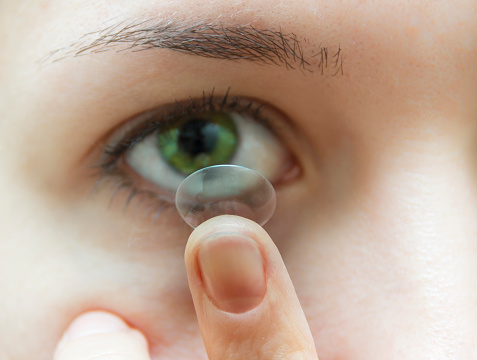
The answer to that question is less about their age and more about their level of maturity. Physically, a child’s eyes can tolerate contacts at a very young age. Before considering contact lenses for your son or daughter, you should consider how they handle other responsibilities. The fact is, there are some eight year old children who are ready and there are some teenagers who are not. Wearing contacts is a major responsibility and children not only need to display that they can apply them, but they also need to exercise proper hygiene and grooming habits to handle wearing and caring for them.

While a child’s ability and maturity to handle contacts might vary from age to age, research has shown that the majority of children (51 %) receive them between ten and 12 years of age, while over 22% receive them between when they are either 13 or 14 years old. Only 12.4 % of kids are prescribed contacts between the ages of eight and nine.

If they can handle the responsibility, most doctors believe that wearing contacts is a good thing for children and teens as they are generally more motivated to get fitted for and adapt better to wearing them than other age groups. They are also less likely to develop dry eyes or other issues that are common in adults who wear contact lenses.  Another reason to have your child consider wearing contact lenses is that in some cases they can actually slow down the progression of nearsightedness. In fact, a number of studies have proven that certain types of contacts offer significant control for many nearsighted children.

Professionals have also noted that there has been great advancement in the production of contact lenses over the years, which has contributed to more and more children now opting for them over glasses.  The progress in the development of disposable contacts makes maintenance easier and improved materials provide more durability and safety.

One of the biggest reasons more and more kids and parents are switching to contact lenses over glasses is the benefits to children who play sports. Even the safest eyeglass frames and lenses can cause injuries if they break. As opposed to sports goggles, contact lenses also offer better peripheral vision and an unobstructed view of the playing field. Contacts also remain stable on an athletes face while they are running, and unlike many sports goggles, they don’t not fog-up during competition.

A less common yet potentially important consideration for switching to contact lenses is how it affects a child’s self-esteem. In a recent poll, 71% of children asked cited self-esteem as a ‘very important” factor when determining whether or not to be fitted for contacts.  Additional research found that wearing contacts “significantly improves” how children and teens feel about themselves.

The best thing about making a decision to switch to contacts is that it isn’t permanent. If you think your child is ready and willing, speak to your eye doctor about getting fitted. If he or she tries it, but isn’t ready, they can always go back to wearing glasses. Together, you, your child and their doctor can decide if the time is right.

All content of this newsletter is intended for general information purposes only and is not intended or implied to be a substitute for professional medical advice, diagnosis or treatment. Please consult a medical professional before adopting any of the suggestions on this page. You must never disregard professional medical advice or delay seeking medical treatment based upon any content of this newsletter. PROMPTLY CONSULT YOUR PHYSICIAN OR CALL 911 IF YOU BELIEVE YOU HAVE A MEDICAL EMERGENCY.