
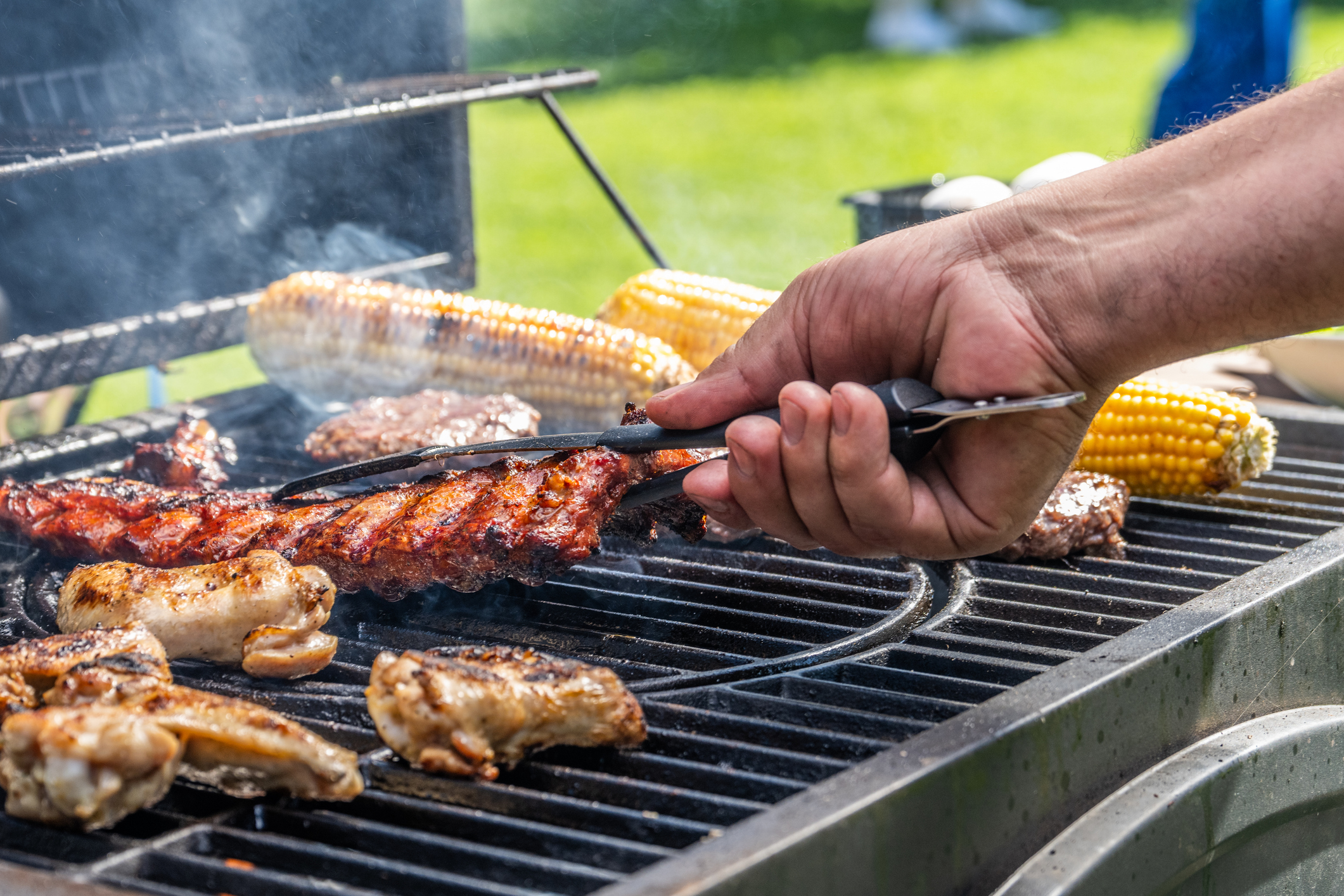
 Summer is a time when we have and/or attend several barbecues or cookouts. However, whether you are hosting or attending, eating outdoors in warm weather can present food safety challenges.
Bacteria in food multiply faster at temperatures between 40°F and 140°F, so the summer heat can create problems. Here are some tips to follow to help keep you and others safe from foodborne illnesses:
- Washing your hands is very important. Wash your hands if you are preparing food, serving food, or after using the bathroom. Wash your hands and forearms with soap and warm water for at least 20 seconds. If you are in an outdoor setting without access to a bathroom, use a bottle of water, some soap, and paper towels, or use hand sanitizer.
- Keep raw food separate from cooked food to avoid cross-contamination.
- Don’t use any plates or utensils that have potentially touched or have been contaminated by raw meat, poultry, or seafood. It is recommended to wash utensils that have touched raw meats if they must also be used to handle cooked meats
- Marinate food in the refrigerator, instead of out on the counter. If you want to use some of the marinade as a sauce on your food after it is cooked, keep a separate portion of it to use later. Do not reuse the marinade that contained raw meat
- Cook food thoroughly to kill any harmful germs and bacteria that may be present. E. coli and Salmonella can still be present in undercooked meats such as hamburger and chicken, and can cause severe illness, even death. Each food should be at a certain temperature for it to be fully cooked:
-
- Chicken 165o F
-
- Hamburgers 160o F
-
- Pork 150o F
-
- Hot dogs 140o F
-
- Leftovers 165o F
-
- Eggs 145o F
Use a food thermometer to check the temperature of the food. Insert the thermometer into the center of the meat, which is the least cooked part. To check the temperature of hot dogs, go from the end of the hot dog to the center. Be careful not to pass through the meat and touch the cooking surface because you will get a false high temperature reading.
- Refrigerate or freeze food immediately, as you shouldn’t leave food out of the refrigerator, cooler, or off the grill for more than two hours. Never leave food out for more than one hour when the outside temperature is above 90°F
- Keep hot food hot and cold food cold. Hot food should be kept at or above 140°F, wrapped well, and placed in an insulated container. Cold food should be held at or below 40°F. Foods such as chicken salads and desserts that are in individual serving dishes should be placed directly on ice or in a shallow container set in a deep pan filled with ice. Drain off any water that pools as the ice melts, and replace the ice frequently
- Wipe surfaces often, especially after using them for food preparation, as germs from undercooked meat can grow on vegetables cut or washed on the same surface as meat. Mix and use a sanitizing solution of one capful of chlorine bleach per gallon of water for cleaning work area surfaces. If possible, use separate cutting boards or surfaces for foods that will not be cooked, such as salad
- Keep flies away by covering trash containers, and not storing meat wrappers and other trash in open cardboard boxes or uncovered containers, even for a short period of time
- Don’t use fly spray or “No-Pest” chemical strips, as they can contaminate your food
- Don’t keep food containers out in the open. Instead, place them in a shaded area
- Keep plates, cups, utensils, and food covered until they are ready to be used
- Handle plates, cups, and utensils where they won’t come in contact with any food
- Don’t prepare and serve food if you have been sick with vomiting or diarrhea within the past 24 hours
- Don’t wear loose finger or wrist jewelry or fake nails while working with food
- Keep plenty of paper towels handy for cleaning your hands and surfaces
If you or a loved one is experiencing symptoms of a foodborne illness, you can receive treatment at Flushing Hospital Medical Center’s Ambulatory Care Center. To schedule an appointment, please call (718) 670-5486.
All content of this newsletter is intended for general information purposes only and is not intended or implied to be a substitute for professional medical advice, diagnosis or treatment. Please consult a medical professional before adopting any of the suggestions on this page. You must never disregard professional medical advice or delay seeking medical treatment based upon any content of this newsletter. PROMPTLY CONSULT YOUR PHYSICIAN OR CALL 911 IF YOU BELIEVE YOU HAVE A MEDICAL EMERGENCY.