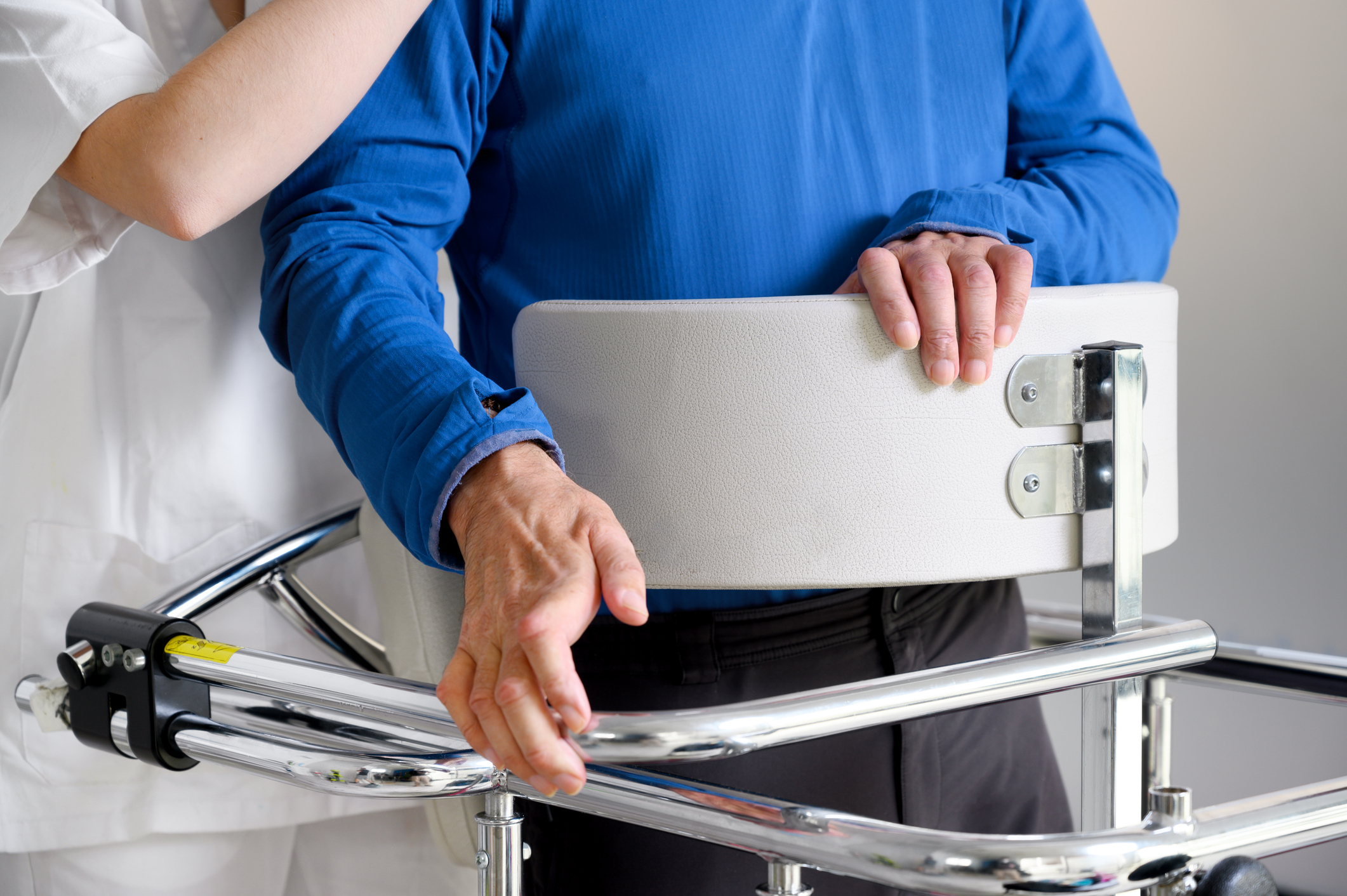
Stiff Person Syndrome

Stiff person syndrome (SPS) is a rare autoimmune neurological disorder that most commonly causes symptoms of muscle stiffness in your trunk and abdomen, with stiffness and painful spasms in the legs and other muscles developing over time.  

Symptoms of stiff person syndrome can develop at any age, but it most often begins in your 30s and 40s. Scientists believe stiff person syndrome can range from just one area of a person’s body to a widespread syndrome that affects multiple parts of the body, and involves the brain, brain stem, and spinal cord. Stiff person syndrome is a progressive disorder, which means symptoms can get worse over time, and can take several months to a few years to develop.  

In most cases of stiff person syndrome, muscle stiffness in the abdomen, chest, or back muscles is the first symptom experienced. This rigidity causes pain and an aching discomfort that can fluctuate in severity without a clear trigger or reason. These symptoms can also affect the arms and legs. As stiffness increases, some people may develop an abnormal posture that can make it difficult to walk or move. Individuals may also experience painful muscle spasms that can involve the entire body, or only a specific area. These spasms can last a few seconds, minutes, or occasionally, a few hours. 

Symptoms of stiff person syndrome, such as muscle spasms, can be triggered after: 

  • Physical touch or stimulation 
  • Unexpected or loud noises 
  • Changes in temperature, including cold environments 
  • Stressful events 

The triggers of stiff person syndrome-related muscle spasms can be unpredictable. This can cause some people with stiff person syndrome to develop anxiety and agoraphobia because it is more difficult to avoid the triggers of muscle spasms in public.  

Researchers don’t know the exact cause of stiff person syndrome, but they believe it is an autoimmune condition. Some studies suggest antibodies may play a role in stiff person syndrome, as many people with the condition make antibodies against glutamic acid decarboxylase (GAD). GAD makes a neurotransmitter called gamma-aminobutyric acid (GABA), which helps control muscle movement. 

Unfortunately, researchers don’t yet understand the exact role that GAD plays in the development and worsening of stiff person syndrome. However, it is important to note that having GAD antibodies doesn’t mean that you have stiff person syndrome. A small portion of the general population has GAD antibodies without any adverse effects. There are other antibodies associated with stiff person syndrome, including: 

  • Glycine receptor 
  • Amphiphysin  
  • Dipeptidyl peptidase-like protein 6 (DPPX) 

Additionally, some people with this condition don’t have any detectable antibodies, but ongoing research is investigating whether other potential antibodies may also cause symptoms.  

Stiff person syndrome is very rare, as about one out of every one million people has this condition. What’s more, it is twice as common in females, and may also occur with other autoimmune conditions, such as: 

  • Type 1 diabetes 
  • Autoimmune thyroid disease 
  • Celiac disease 
  • Vitiligo 
  • Pernicious anemia 

A healthcare provider can diagnose stiff person syndrome by looking for specific signs of the condition through exams and tests. They will ask questions about symptoms during physical and neurological exams. If the healthcare provider suspects stiff person syndrome, they may recommend other tests, including: 

  • Antibody blood test 
  • Lumbar puncture 
  • Electromyography (EMG) 

Stiff person syndrome can be difficult to diagnose, as it is rare and has similar symptoms to other conditions, such as ankylosing spondylitis, multiple sclerosis (MS), or other autoimmune conditions. 

Unfortunately, there isn’t a treatment that cures stiff person syndrome. However, working with a specialist and maintaining symptom control can make it easier to live with the condition. Specialists include: 

  • Neurologists, specifically neuroimmunologists 
  • Physical medicine and rehabilitation specialists 
  • Occupational and physical therapists 
  • Mental health specialists, such as psychologists 
  • Speech therapists 

To treat stiff person syndrome, two main treatment strategies can be used, such as: 

  • Medications and therapies for symptom management 
  • Immunotherapy or disease-modifying treatment 

Treatment for stiff person syndrome varies based on your symptoms. The goal of treatment is to manage how symptoms affect you and improve your mobility and comfort.  

If you or a loved one is experiencing symptoms of stiff person syndrome, you can receive treatment at Flushing Hospital Medical Center’s Ambulatory Care Center. To schedule an appointment, please call (718) 670-5486. 


All content of this newsletter is intended for general information purposes only and is not intended or implied to be a substitute for professional medical advice, diagnosis or treatment. Please consult a medical professional before adopting any of the suggestions on this page. You must never disregard professional medical advice or delay seeking medical treatment based upon any content of this newsletter. PROMPTLY CONSULT YOUR PHYSICIAN OR CALL 911 IF YOU BELIEVE YOU HAVE A MEDICAL EMERGENCY.

Blood Test for Alzheimer’s Disease

Alzheimer’s disease is a degenerative brain disease and the most common type of dementia. It causes a slow decline in memory, thinking, and reasoning skills. 

In May of 2025, the U.S. Food and Drug Administration (FDA) approved the Lumipulse test, the first blood test to help diagnose Alzheimer’s disease.  

The Lumipulse test utilizes a blood sample to measure specific proteins, including a particular form of the tau protein. The tau protein is a protein found in neurons that stabilizes hollow rods called microtubules, which guide the transport of nutrients, signals, and other essential molecules throughout the cell. The tau protein can indicate the presence of amyloid plaques in the brain. An amyloid plaque is a buildup of protein that is considered a hallmark sign of Alzheimer’s disease.  

The Lumipulse test, along with other diagnostic tools such as a PET scan, can aid in the diagnosis of Alzheimer’s disease.  

Although this blood test can detect changes before any memory issues occur, it is recommended that it be used clinically in those who are showing symptoms of Alzheimer’s disease.  

The test is approved for adults 50 years of age and older who are having early memory or thinking problems, such as repeating questions, forgetting names, or misplacing things.  

The test is not recommended for those with no symptoms of Alzheimer’s disease. 

It is important to note that if you can take the Lumipulse test and receive a positive result, it means that there are changes in your brain that may suggest you have Alzheimer’s. However, these results by themselves do not mean that you have Alzheimer’s disease.  

You should consult with your healthcare provider to help further determine if you have Alzheimer’s disease. They may: 

  • Recommend more tests, such as imaging tests or cognitive tests 
  • Suggest lifestyle changes that help support your brain health 
  • Help you plan next steps, such as treatment options or clinical trials 

If you or a loved one is experiencing symptoms associated with Alzheimer’s, you can receive treatment from a neurologist at Flushing Hospital Medical Center’s Ambulatory Care Center. To schedule an appointment, please call (718) 670-5486. 


All content of this newsletter is intended for general information purposes only and is not intended or implied to be a substitute for professional medical advice, diagnosis or treatment. Please consult a medical professional before adopting any of the suggestions on this page. You must never disregard professional medical advice or delay seeking medical treatment based upon any content of this newsletter. PROMPTLY CONSULT YOUR PHYSICIAN OR CALL 911 IF YOU BELIEVE YOU HAVE A MEDICAL EMERGENCY.

Dementia

Dementia is a general term that represents a group of diseases and illnesses that cause the loss of cognitive functioning to the point that it interferes with a person’s daily life and activities.

Cognitive changes they may experience include:

  • Memory loss, usually noticed by someone else
  • Problems communicating or finding words
  • Trouble with visual and spatial abilities, such as getting lost while driving
  • Problems with reasoning or problem-solving
  • Trouble performing complex tasks
  • Trouble with planning and organizing
  • Poor coordination and control of movements
  • Confusion and disorientation

Some people with dementia can’t control their emotions, and they may also have psychological changes, such as:

  • Personality changes
  • Depression
  • Anxiety
  • Agitation
  • Inappropriate behavior
  • Hallucinations

Dementia is caused by damage to your brain, affecting its nerve cells and destroying the brain’s ability to communicate with its various areas. Dementia can also result from blocked blood flow to your brain, depriving it of oxygen and nutrients. Without oxygen and nutrients, brain tissue dies.

Progressive dementias get worse over time. Types of dementias that worsen and aren’t reversible include:

  • Alzheimer’s disease (the most common cause of dementia)
  • Vascular dementia
  • Lewy body dementia
  • Frontotemporal dementia
  • Mixed dementia

Other disorders linked to dementia include:

  • Huntington’s disease
  • Traumatic brain injury (TBI)
  • Creutzfeldt-Jakob disease
  • Parkinson’s disease

Some causes of dementia-like symptoms can be reversed with treatment including:

  • Infections and immune disorders
  • Metabolic or endocrine problems
  • Low levels of certain nutrients
  • Medicine side effects
  • Subdural bleeding
  • Brain tumors
  • Normal-pressure hydrocephalus

Many risk factors can contribute to dementia, including:

  • Age
  • Family history

A healthcare provider must recognize the pattern of loss of skills and function to be able to diagnose the cause of dementia. No single test can diagnose dementia, therefore, a series of tests may be conducted to determine a diagnosis. These tests include:

  • Cognitive and neuropsychological tests
  • Neurological evaluation
  • Brain scans
    • CT or MRI
    • PET scans
  • Laboratory tests
  • Psychiatric evaluation

Most types of dementia can’t be cured, but there are ways to manage your symptoms including:

  • Medications
  • Therapies

If you or a loved one is experiencing symptoms associated with dementia, you can receive treatment from a neurologist at Flushing Hospital Medical Center’s Ambulatory Care Center. To schedule an appointment, please call (718) 670-5486.


All content of this newsletter is intended for general information purposes only and is not intended or implied to be a substitute for professional medical advice, diagnosis or treatment. Please consult a medical professional before adopting any of the suggestions on this page. You must never disregard professional medical advice or delay seeking medical treatment based upon any content of this newsletter. PROMPTLY CONSULT YOUR PHYSICIAN OR CALL 911 IF YOU BELIEVE YOU HAVE A MEDICAL EMERGENCY.

Learning The Facts About Aphasia

Aphasia is a neurological condition that can affect your speech, as well as your ability to write and understand both spoken and written language.

Aphasia typically occurs after a stroke or a head injury, but it can also have a gradual onset as the result of a slow-growing brain tumor or a disease that causes degenerative damage. Sometimes temporary episodes of aphasia can occur. These can be due to migraines, seizures or a transient ischemic attack (TIA). A TIA occurs when blood flow is temporarily blocked to an area of the brain.

The severity of aphasia varies depending on the cause and the extent of the brain damage.

Some of the symptoms of aphasia include:

  • Speaking in short or incomplete sentences
  • Speaking in sentences that don’t make sense
  • Substituting one word for another or one sound for another
  • Using unrecognizable words
  • Not understanding conversations
  • Writing sentences that don’t make sense

Aphasia can create numerous quality-of-life problems because communication is so much a part of your life. Communication difficulty may affect your job, relationships, and general day-to-day functionality.  Communication difficulties can also lead to feelings of shame and depression.

Once the cause has been addressed, the main treatment for aphasia is speech and language therapy. The person with aphasia relearns and practices language skills and learns to use other ways to communicate. Family members often participate in the process, helping the person communicate.

Because aphasia is often a sign of a serious problem, such as a stroke, seek emergency medical care if you suddenly develop any symptoms.

All content of this newsletter is intended for general information purposes only and is not intended or implied to be a substitute for professional medical advice, diagnosis or treatment. Please consult a medical professional before adopting any of the suggestions on this page. You must never disregard professional medical advice or delay seeking medical treatment based upon any content of this newsletter. PROMPTLY CONSULT YOUR PHYSICIAN OR CALL 911 IF YOU BELIEVE YOU HAVE A MEDICAL EMERGENCY.