Transient Ischemic Attack

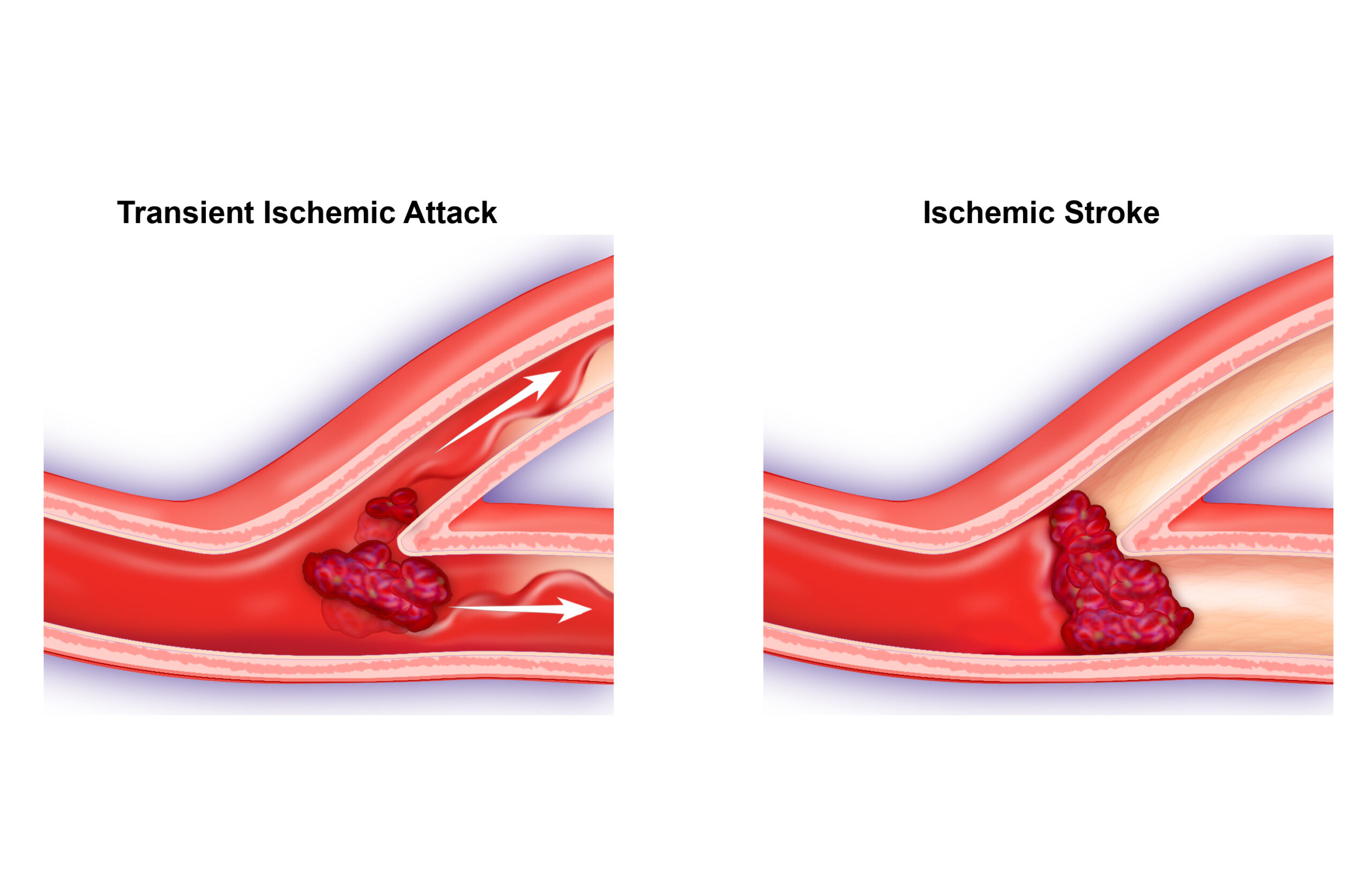
A transient ischemic attack (TIA) is a short period of symptoms like a stroke, caused by a brief blockage of blood flow to the brain. A transient ischemic attack usually only lasts a few minutes and doesn’t cause long-term damage.  

A transient ischemic attack may be a warning. About one in three people who have a TIA will eventually have a stroke, with about half occurring within a year. 

According to the Mayo Clinic, the symptoms of a transient ischemic attack are like the symptoms of an early stroke and happen suddenly. Symptoms may include: 

  • Weakness, numbness, or paralysis in the face, arm, or leg, typically on one side of the body 
  • Slurred speech or trouble understanding others 
  • Dizziness or loss of balance or coordination 
  • Blindness in one or both eyes or double vision 

A person can have more than one transient ischemic attack. Their symptoms may be similar or different depending on which area of the brain is involved. 

Transient ischemic attacks occur when cholesterol-containing fatty deposits build up in an artery. These fatty deposits decrease the blood flow through an artery or lead to the development of a clot.  

Some of the risk factors of a transient ischemic attack can’t be changed, but others can be controlled. 

Risk factors that can’t be changed include: 

  • Prior transient ischemic attack 
  • Family history 
  • Age 
  • Sex 
  • Sickle cell disease 

Risk factors you can control include: 

  • Health conditions 
  • High blood pressure 
  • Cardiovascular disease 
  • Carotid artery disease 
  • High cholesterol 
  • Diabetes 
  • Peripheral artery disease (PAD) 
  • Excess weight 
  • COVID-19 
  • High levels of homocysteine 

Lifestyle choices 

  • Physical inactivity 
  • Poor nutrition 
  • Cigarette smoking 
  • Heavy drinking 
  • Use of illicit drugs 

Knowing your risk factors and living a healthy lifestyle are the best things you can do to prevent a transient ischemic attack. Living a healthy lifestyle includes: 

  • Getting regular checkups 
  • Exercising regularly 
  • Maintaining a healthy weight 
  • Quitting smoking 
  • Controlling diabetes 
  • Lowering cholesterol 
  • Limiting alcohol intake 
  • Eating plenty of fruits and vegetables 
  • Avoiding illicit drug use 

Diagnosing a TIA includes an immediate evaluation, which is essential. An evaluation may include:  

  • Physical exams and tests 
  • Carotid ultrasonography 
  • CT or CTA scans 
  • MRI or MRA scans 
  • Echocardiography 
  • Arteriography 

A diagnosis helps your healthcare provider determine the best treatment for you. Treatment for a transient ischemic attack occurs once your healthcare provider determines its cause. The goal of treatment is to correct the issue and prevent a stroke. Treatments include: 

  • Medicines, such as antiplatelet drugs and anticoagulants 
  • Surgical procedures, such as an angioplasty 

If you or a loved one is experiencing symptoms of a transient ischemic attack, you can receive treatment at Flushing Hospital Medical Center’s Emergency Department. To schedule an appointment, please call (718) 670-5486. 

All content of this newsletter is intended for general information purposes only and is not intended or implied to be a substitute for professional medical advice, diagnosis or treatment. Please consult a medical professional before adopting any of the suggestions on this page. You must never disregard professional medical advice or delay seeking medical treatment based upon any content of this newsletter. PROMPTLY CONSULT YOUR PHYSICIAN OR CALL 911 IF YOU BELIEVE YOU HAVE A MEDICAL EMERGENCY.

“Ministroke” or Transient Ischemic Attack

A transient ischemic attack (TIA), often incorrectly called a ministroke, occurs when there is a temporary blockage of blood supply to the brain. Unlike a full-blown stroke, a TIA resolves within a few minutes or 24 hours and does not cause permanent damage to the brain.

A transient ischemic attack may only last temporarily; however, it should be treated as an emergency, and medical attention should be sought immediately if you are experiencing the following symptoms:

  • Slurred speech
  • Blurred or double vision
  • Dizziness or vertigo
  • Nausea and vomiting
  • Weakness, numbness, or paralysis on one side of the body
  • Severe headache
  • Confusion
  • Loss of balance or coordination

The effects of a TIA, though temporary, are serious and often increase the risk of having a true stroke in the future. It is estimated that 1 in 3 people who experienced a TIA will eventually have a stroke.

Some people are more at risk than others for having a transient ischemic attack and potential stroke.  Risk factors include:

  • Having high blood pressure
  • Having diabetes
  • Having high cholesterol
  • Having a family history of TIA or stroke
  • Having atrial fibrillation
  • Smoking
  • Obesity
  • Age (The risk increases with age for those 55 and older)

The risk of a TIA may be reduced by properly managing conditions and diseases such as diabetes, cholesterol, and high blood pressure through eating a healthy diet, adhering to medications, and routine doctor visits. Other lifestyle changes include quitting smoking and exercising.

A transient ischemic attack is diagnosed after an evaluation of your symptoms. Your healthcare team may perform a series of physical examinations and imaging tests to determine the cause of the TIA. Treatment may consist of medications, angioplasty, or surgery, and is more effective the sooner you receive medical attention.

Flushing Hospital has been awarded Primary Stroke Center Certification from The Joint Commission. This achievement reflects our commitment to providing stroke patients with the highest quality of care. To schedule an appointment at our hospital, please call 718-670-5486.

All content of this newsletter is intended for general information purposes only and is not intended or implied to be a substitute for professional medical advice, diagnosis or treatment. Please consult a medical professional before adopting any of the suggestions on this page. You must never disregard professional medical advice or delay seeking medical treatment based upon any content of this newsletter. PROMPTLY CONSULT YOUR PHYSICIAN OR CALL 911 IF YOU BELIEVE YOU HAVE A MEDICAL EMERGENCY.

Learning The Facts About Aphasia

Aphasia is a neurological condition that can affect your speech, as well as your ability to write and understand both spoken and written language.

Aphasia typically occurs after a stroke or a head injury, but it can also have a gradual onset as the result of a slow-growing brain tumor or a disease that causes degenerative damage. Sometimes temporary episodes of aphasia can occur. These can be due to migraines, seizures or a transient ischemic attack (TIA). A TIA occurs when blood flow is temporarily blocked to an area of the brain.

The severity of aphasia varies depending on the cause and the extent of the brain damage.

Some of the symptoms of aphasia include:

  • Speaking in short or incomplete sentences
  • Speaking in sentences that don’t make sense
  • Substituting one word for another or one sound for another
  • Using unrecognizable words
  • Not understanding conversations
  • Writing sentences that don’t make sense

Aphasia can create numerous quality-of-life problems because communication is so much a part of your life. Communication difficulty may affect your job, relationships, and general day-to-day functionality.  Communication difficulties can also lead to feelings of shame and depression.

Once the cause has been addressed, the main treatment for aphasia is speech and language therapy. The person with aphasia relearns and practices language skills and learns to use other ways to communicate. Family members often participate in the process, helping the person communicate.

Because aphasia is often a sign of a serious problem, such as a stroke, seek emergency medical care if you suddenly develop any symptoms.

All content of this newsletter is intended for general information purposes only and is not intended or implied to be a substitute for professional medical advice, diagnosis or treatment. Please consult a medical professional before adopting any of the suggestions on this page. You must never disregard professional medical advice or delay seeking medical treatment based upon any content of this newsletter. PROMPTLY CONSULT YOUR PHYSICIAN OR CALL 911 IF YOU BELIEVE YOU HAVE A MEDICAL EMERGENCY.