Exocrine Pancreatic Insufficiency

Exocrine pancreatic insufficiency (EPI) occurs when the pancreas doesn’t make enough digestive enzymes. Enzymes are proteins that cause chemical reactions in the body. Digestive enzymes break down food, allowing the body to get nutrients.

When you have EPI, food passes through the intestines in an undigested state, resulting in the body not receiving the needed nutrients. There are different types of pancreatic enzymes, including:

  • Amylase
  • Lipase
  • Protease and elastase

The main cause of EPI in adults is chronic pancreatitis. As many as 8 in 10 adults with this disorder develop EPI. Pancreatitis causes inflammation and swelling of the pancreas. Over time, chronic inflammation can damage the digestive enzyme-making pancreatic cells. Other causes of EPI in adults include:

  • Celiac disease
  • Diabetes
  • Inflammatory bowel disease (IBD)
  • Pancreatic cancer
  • Surgery on the digestive tract, including weight loss surgery

Cystic fibrosis is the top cause of EPI in infants and children. Children inherit cystic fibrosis from a parent. Cystic fibrosis causes thick mucus to build up in the lungs, making breathing hard. Mucus can also collect in the pancreas, keeping digestive enzymes from reaching the small intestines.

Nearly 9 in 10 infants with cystic fibrosis develop EPI within the first year. The rest are at risk of developing EPI during childhood or adulthood.

Shwachman-Diamond syndrome (SDS) is another inherited condition that causes EPI in children. SDS causes the part of the pancreas that makes enzymes not to work properly.

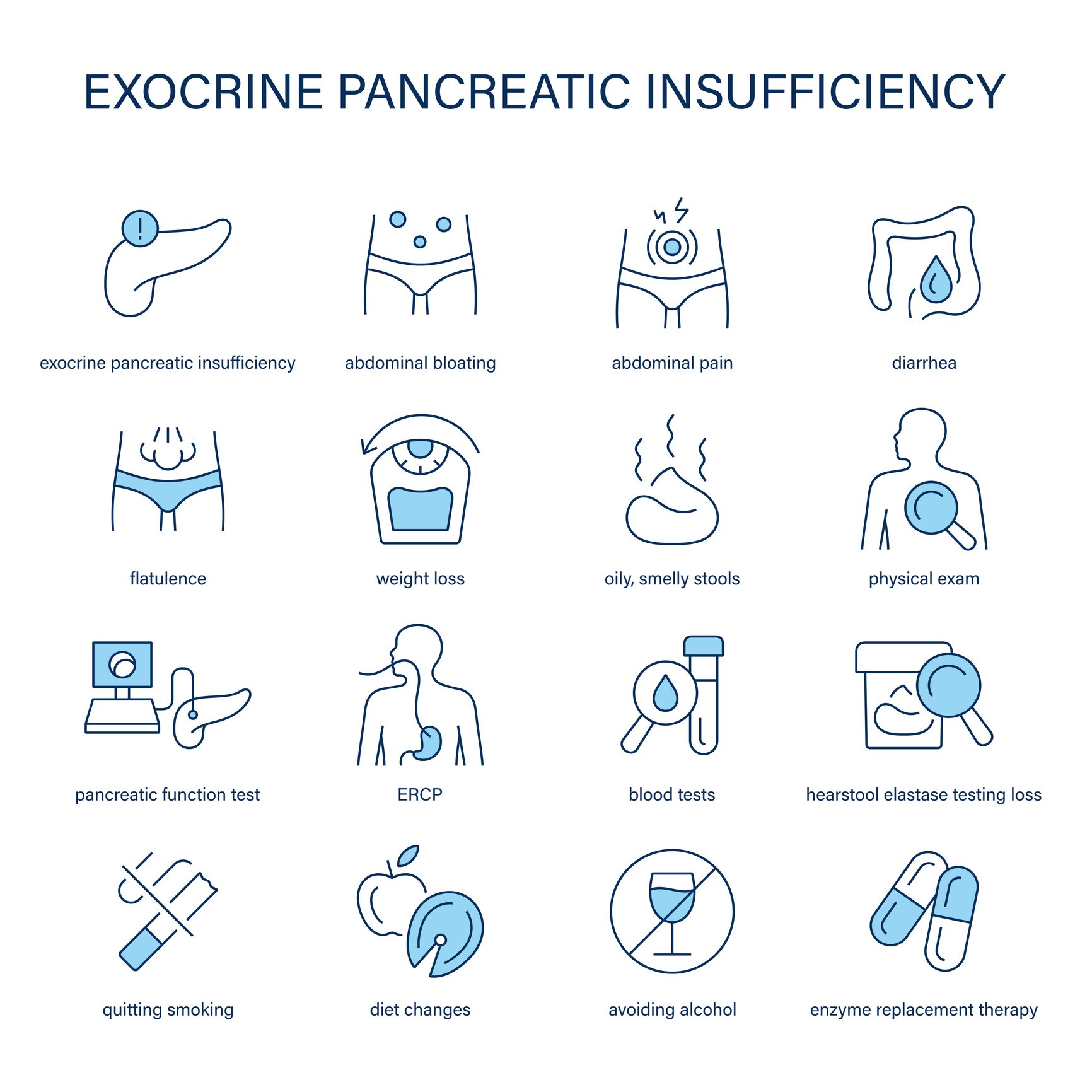
People with EPI have a particularly difficult time absorbing fats from foods, which leads to uncomfortable digestive problems, such as:

  • Abdominal pain, gas, and bloating
  • Constipation
  • Diarrhea
  • Fatty stools
  • Unexplained weight loss or failure to thrive in infants and children

Many digestive problems can cause symptoms similar to EPI. A healthcare provider may suspect EPI if you have a condition that affects your pancreas.

You may get one or more pancreas function tests that include:

  • Fecal elastase test (FE-1)
  • Fecal fat test
  • Secretin pancreatic function test

You may also get a CT scan, abdominal ultrasound, or other imaging tests that can spot problems with the pancreas that lead to EPI.

People with EPI can’t absorb enough fats, proteins, and carbohydrates from the foods they eat. This problem is called malabsorption. Your body needs these nutrients for energy and to maintain organ function. Malabsorption of nutrients can lead to malnutrition. Signs of malnutrition include:

  • Dry skin
  • Depression
  • Edema
  • Fatigue or dizziness
  • Feeling cold all the time
  • Irritability
  • Memory and concentration issues
  • Muscle loss

EPI is a lifelong condition. Treatments for the condition focus on the body receiving the necessary nutrients to maintain good health. Treatments include:

  • Pancreatic enzyme replacement therapy (PERT)
  • High-calorie, high-fat diet
  • Vitamins

To prevent EPI, it is helpful to avoid smoking and alcohol use as they make the pancreas work harder and can contribute to pancreatitis, which leads to EPI.

Unfortunately, cystic fibrosis and SDS are inherited, so they can’t be prevented, and the risk of EPI with these conditions can’t be lowered. Keeping a close eye on symptoms can help identify possible EPI and treat it immediately.

If you are experiencing symptoms of exocrine pancreatic insufficiency, you can schedule an appointment with a gastroenterologist at Flushing Hospital’s Ambulatory Care Center by ca

All content of this newsletter is intended for general information purposes only and is not intended or implied to be a substitute for professional medical advice, diagnosis or treatment. Please consult a medical professional before adopting any of the suggestions on this page. You must never disregard professional medical advice or delay seeking medical treatment based upon any content of this newsletter. PROMPTLY CONSULT YOUR PHYSICIAN OR CALL 911 IF YOU BELIEVE YOU HAVE A MEDICAL EMERGENCY.

What is Exocrine Pancreatic Insufficiency??

Exocrine pancreatic insufficiency (EPI) is a condition affecting the pancreas, an organ located in the abdomen that plays an essential role in converting the food we eat into fuel for the body’s cells. The pancreas has two main functions: it helps with digestion, and it regulates blood sugar.

The pancreas produces enzymes that break down food and keep digestion moving properly. For those with EPI, the pancreas does not make enough of these enzymes, which prevents the absorption of nutrients and disrupts digestion.

There are numerous gastro-intestinal symptoms of EPI, ranging from mild to extreme including:

  • Gas
  • Bloating
  • Diarrhea
  • Abdominal pain
  • Greasy, oily stools
  • Foul-smelling stools
  • Unexplained weight loss

Other symptoms can include fatigue, dizziness, dry skin, brittle nails, hair loss, depression, irritability, and problems with memory and concentration. These can occur when the body does not absorb the necessary fats and nutrients from food.

EPI is often the result of a variety of conditions, such as

  • Pancreatitis
  • Cystic fibrosis
  • Pancreatic cancer
  • Celiac disease
  • Crohn’s disease
  • Ulcerative colitis
  • Diabetes

There are diagnostic tests your doctor can perform if he or she suspects you have EPI. Once EPI is confirmed, the most common form of treatment is pancreatic enzyme replacement therapy (PERT). PERT supplements are capsules that contain a mixture of digestive enzymes that those with EPI cannot produce to help them break down fat and assist with digestion.

It is also recommended that people with EPI eat a healthy diet rich in fruits, vegetables, whole grains, and healthy proteins. It is also important not to avoid foods with fats, as these are essential to maintaining a healthy weight. However, it is best to stick with healthy fats, like salmon, avocado, and nuts rather than unhealthy trans or saturated fats found in red meats, dairy products, and fried foods.

To schedule an appointment with a gastroenterologist at Flushing Hospital’s Ambulatory Care Center, please call 718-670-5486.


All content of this newsletter is intended for general information purposes only and is not intended or implied to be a substitute for professional medical advice, diagnosis or treatment. Please consult a medical professional before adopting any of the suggestions on this page. You must never disregard professional medical advice or delay seeking medical treatment based upon any content of this newsletter. PROMPTLY CONSULT YOUR PHYSICIAN OR CALL 911 IF YOU BELIEVE YOU HAVE A MEDICAL EMERGENCY.

Understanding Exocrine pancreatic insufficiency (EPI)

Exocrine pancreatic insufficiency (EPI) is a condition that affects digestion due to an inability to break down food properly. This occurs when the pancreas doesn’t make enough of the enzymes needed to break down and absorb nutrients.

Enzymes speed up chemical reactions in your body. The enzymes made by your pancreas move into your small intestine, where they help break down the food you eat. When you have EPI, you don’t get the nutrition you need because your body can’t absorb fats and and minerals from foods.

Some of the causes of EPI can include:

  • Chronic pancreatitis – A condition marked by frequent inflammation of the pancreas
  • Previous surgery of your pancreas, stomach, or intestines.
  • Existence of other conditions such as Crohn’s Disease, celiac disease, Cystic fibrosis or Shwachman-Diamond syndrome

Symptoms of EPI can include:

  • Pain or tenderness in the belly
  • Bad-smelling bowel movements
  • Diarrhea
  • Gas
  • Feeling full
  • Weight loss
  • Pain in your bones

Several tests can help diagnose EPI, including: blood tests to determine if you are getting enough vitamins in your diet, fecal tests to check for the amount of fat in your bowel movements and imaging tests to see if your pancreas is inflamed.

The right diet is very important for managing EPI. A dietitian can help you choose the foods that keep your energy level up and give you the nutrition you need.  Some other tips include eating up to six small meals per day, avoiding alcohol, and taking vitamin supplements.

Apart from a healthy diet, the main treatment for EPI is pancreatic enzyme replacement therapy (PERT). You take prescription pills that replace the enzymes your pancreas isn’t making. These enzymes break down your food so you can more easily digest and absorb it. You may also need to take an antacid to keep your stomach from breaking down pancreatic enzymes before they can start to work.

If you are experiencing symptms of EPI and would like to speak with a doctor at Flushing Hospital, please call our Ambulatory Care Center at 718-670-5486

All content of this newsletter is intended for general information purposes only and is not intended or implied to be a substitute for professional medical advice, diagnosis or treatment. Please consult a medical professional before adopting any of the suggestions on this page. You must never disregard professional medical advice or delay seeking medical treatment based upon any content of this newsletter. PROMPTLY CONSULT YOUR PHYSICIAN OR CALL 911 IF YOU BELIEVE YOU HAVE A MEDICAL EMERGENCY.