
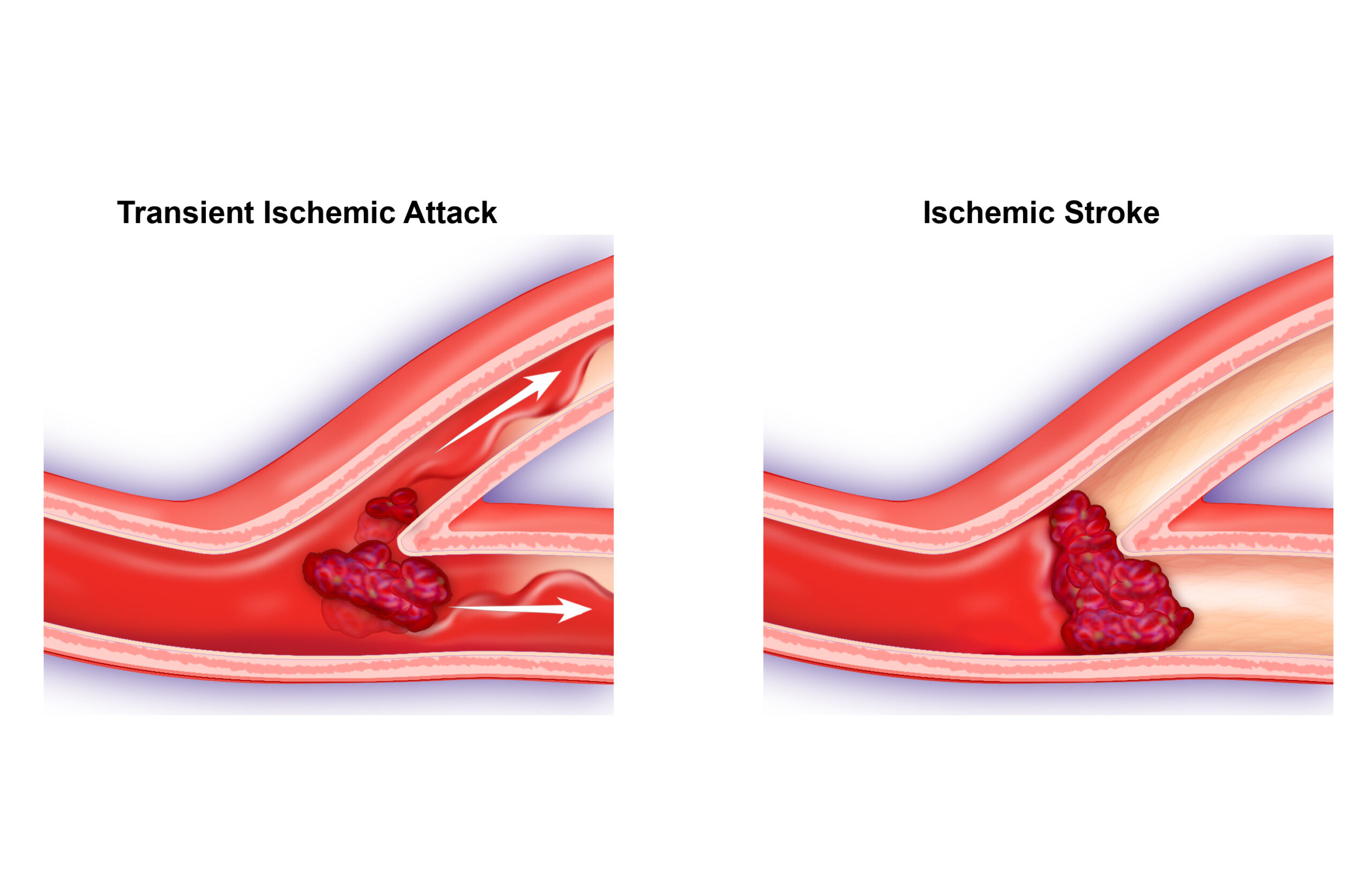
 A transient ischemic attack (TIA) is a short period of symptoms like a stroke, caused by a brief blockage of blood flow to the brain. A transient ischemic attack usually only lasts a few minutes and doesn’t cause long-term damage.
A transient ischemic attack may be a warning. About one in three people who have a TIA will eventually have a stroke, with about half occurring within a year.
According to the Mayo Clinic, the symptoms of a transient ischemic attack are like the symptoms of an early stroke and happen suddenly. Symptoms may include:
- Weakness, numbness, or paralysis in the face, arm, or leg, typically on one side of the body
- Slurred speech or trouble understanding others
- Dizziness or loss of balance or coordination
- Blindness in one or both eyes or double vision
A person can have more than one transient ischemic attack. Their symptoms may be similar or different depending on which area of the brain is involved.
Transient ischemic attacks occur when cholesterol-containing fatty deposits build up in an artery. These fatty deposits decrease the blood flow through an artery or lead to the development of a clot.
Some of the risk factors of a transient ischemic attack can’t be changed, but others can be controlled.
Risk factors that can’t be changed include:
- Prior transient ischemic attack
- Family history
- Age
- Sex
- Sickle cell disease
Risk factors you can control include:
- Health conditions
- High blood pressure
- Cardiovascular disease
- Carotid artery disease
- High cholesterol
- Diabetes
- Peripheral artery disease (PAD)
- Excess weight
- COVID-19
- High levels of homocysteine
Lifestyle choices
- Physical inactivity
- Poor nutrition
- Cigarette smoking
- Heavy drinking
- Use of illicit drugs
Knowing your risk factors and living a healthy lifestyle are the best things you can do to prevent a transient ischemic attack. Living a healthy lifestyle includes:
- Getting regular checkups
- Exercising regularly
- Maintaining a healthy weight
- Quitting smoking
- Controlling diabetes
- Lowering cholesterol
- Limiting alcohol intake
- Eating plenty of fruits and vegetables
- Avoiding illicit drug use
Diagnosing a TIA includes an immediate evaluation, which is essential. An evaluation may include:
- Physical exams and tests
- Carotid ultrasonography
- CT or CTA scans
- MRI or MRA scans
- Echocardiography
- Arteriography
A diagnosis helps your healthcare provider determine the best treatment for you. Treatment for a transient ischemic attack occurs once your healthcare provider determines its cause. The goal of treatment is to correct the issue and prevent a stroke. Treatments include:
- Medicines, such as antiplatelet drugs and anticoagulants
- Surgical procedures, such as an angioplasty
If you or a loved one is experiencing symptoms of a transient ischemic attack, you can receive treatment at Flushing Hospital Medical Center’s Emergency Department. To schedule an appointment, please call (718) 670-5486.
All content of this newsletter is intended for general information purposes only and is not intended or implied to be a substitute for professional medical advice, diagnosis or treatment. Please consult a medical professional before adopting any of the suggestions on this page. You must never disregard professional medical advice or delay seeking medical treatment based upon any content of this newsletter. PROMPTLY CONSULT YOUR PHYSICIAN OR CALL 911 IF YOU BELIEVE YOU HAVE A MEDICAL EMERGENCY.