
National Safe Toys and Gifts Month

December is National Safe Toys and Gifts Month. It is an annual observance dedicated to promoting the safety of toys and gifts for children, particularly during the holiday season. It serves as a reminder to parents, caregivers, and gift-givers to choose age-appropriate and safe toys to ensure the well-being of the children who receive them.

Started by the nonprofit organization, Prevent Blindness, National Safe Toys and Gifts Month focuses on raising awareness about the importance of selecting toys and gifts that meet safety standards and align with a child’s age and developmental stage. The month aims to prevent accidents and injuries caused by inappropriate or hazardous toys, especially when gift-giving is most common.

Too often, accidents involving children and toys occur and may result in eye injuries. Each year, thousands of children ages 14 and younger suffer serious eye injuries, including blindness, from toys, according to the American Academy of Ophthalmology. Approximately one in ten children’s eye injuries caused by toys end up in the ER.

Promoting safe toys and gifts during this month is essential for children’s well-being. Ways to participate and ensure safe gift-giving include:

  • Check labels: always look for age-appropriate labels on toys and gifts, and follow the manufacturer’s recommendations.
  • Avoid small parts: steer clear of toys with small parts or choking hazards for young children.
  • Inspect for hazards: examine toys for sharp edges, loose parts, or any potential dangers that could harm children.
  • Read reviews: research toys and gifts online, read reviews, and ask for recommendations from other parents and caregivers.
  • Consider the child’s age: consider a child’s age, interests, and abilities when selecting gifts for them.
  • Support educational toys: choose toys and gifts that encourage learning, creativity, and development.
  • Spread awareness: share safety tips and information about safe toys and gifts month with your community and on social media.

Taking the proper precautions can avoid many accidents and injuries involving children’s toys. Let’s all do our part to encourage their safety.

To schedule an eye exam for your child at Flushing Hospital Medical Center’s Ambulatory Care Center, call (718) 670-5486. If there is an emergency, please call 911.


All content of this newsletter is intended for general information purposes only and is not intended or implied to be a substitute for professional medical advice, diagnosis or treatment. Please consult a medical professional before adopting any of the suggestions on this page. You must never disregard professional medical advice or delay seeking medical treatment based upon any content of this newsletter. PROMPTLY CONSULT YOUR PHYSICIAN OR CALL 911 IF YOU BELIEVE YOU HAVE A MEDICAL EMERGENCY.
What To Do If Your Toddler Has A Fever

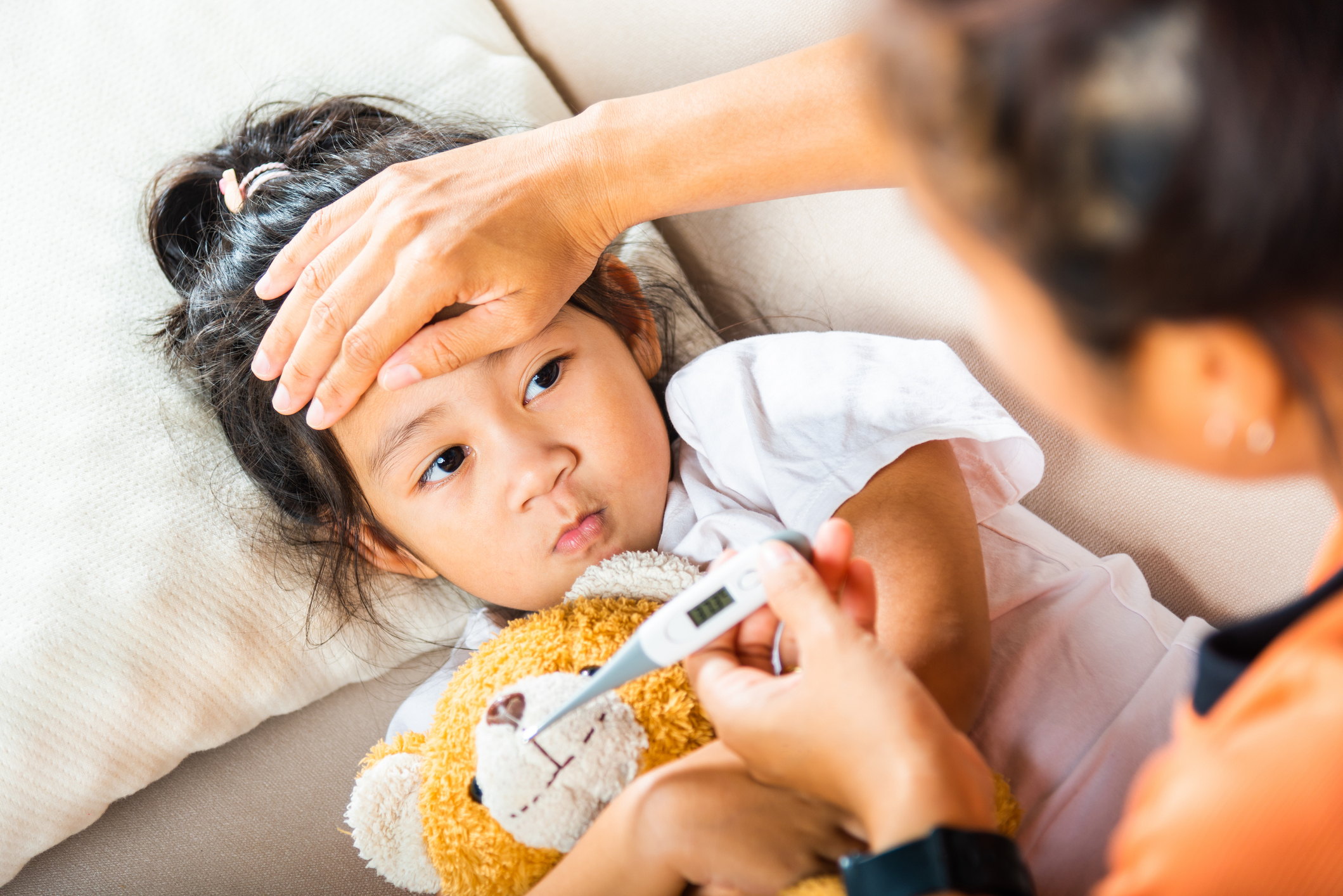
A fever is an above-normal increase in the body’s temperature. A normal body temperature is about 98.6°F. A temperature of 100.4˚ Fahrenheit (38˚ Celsius) or higher is considered a fever for a child. Fevers show the body is fighting off infection from a virus or bacteria. Your child’s body is raising its temperature to kill the germs.

In most cases, fevers are harmless and go away in three days. Signs and symptoms that your child may have a fever include:

  • Feels warmer than usual
  • Shivering
  • Sweating
  • General body aches
  • Loss of appetite
  • Fussiness or irritability

The best way to check your child’s temperature depends on their age. The type of thermometer used to take a temperature may make a difference. Use a digital thermometer. Never use a mercury thermometer. Additionally:

  • Rectal thermometers are the most accurate.
  • Forehead thermometers are the next best choice if used the right way.
  • Oral and ear thermometers can be used if done properly. For oral temperatures, wait 30 minutes after drinking something hot or cold. Wait 15 minutes after coming in from the cold for an ear temperature.
  • An axillary or armpit temperature can be used as a quick check but it isn’t very accurate.

A fever may not need to be treated unless your child is uncomfortable. Even higher temperatures are not usually dangerous unless they have a long-term illness. Here are some ways to provide relief and help reduce your child’s fever:

  • Dress your child in light clothing. Overdressing them can trap the body’s heat, causing the temperature to rise.
  • Make sure they drink lots of fluids. Prolonged fever can lead to dehydration.
    • For babies under a year old, continue to give breast milk and formula. They should not be given water. If they are older than six months, give them rehydration liquids that are rich in electrolytes.
    • For children over a year old, give them extra liquids, like water, diluted 100% juice, popsicles, or rehydration liquids that are rich in electrolytes.
  • Your child may not want to eat much. Give them small amounts of soft foods, but do not force them to eat.
  • Give them sponge baths or let them soak in a tub. Water should be lukewarm, not too hot or cold. Use a washcloth to pour the water over them.
    • Do NOT add alcohol to the water as it can be dangerous.
    • Recheck their temperature 15 minutes after the bath. Repeat the sponge bath if the temperature is 103˚F (39.4˚C) or higher.
  • Over-the-counter medicines can help lower a fever. Read the label on the bottle to know the right dose for your child.
    • Acetaminophen may be used for all children over two months.
    • Ibuprofen may be used for children over six months.
    • Do not give aspirin to children.

Call your child’s healthcare provider right away if your child:

  • Has a temperature of 104 ˚F (40 ˚C) or above.
  • Has a temperature above 102˚F (38.9˚C) for more than 2 days or keeps returning.
  • That has been treated to bring it down, but it has not worked.

To speak with a pediatrician at Flushing Hospital Medical Center about your child’s fever, please call 718-670-5440 to schedule an appointment. Please call 911 if there is an emergency.


All content of this newsletter is intended for general information purposes only and is not intended or implied to be a substitute for professional medical advice, diagnosis or treatment. Please consult a medical professional before adopting any of the suggestions on this page. You must never disregard professional medical advice or delay seeking medical treatment based upon any content of this newsletter. PROMPTLY CONSULT YOUR PHYSICIAN OR CALL 911 IF YOU BELIEVE YOU HAVE A MEDICAL EMERGENCY.

Halloween Safety Tips

Halloween is a time for dressing up, eating candy, and having fun. Unfortunately, there can be several risks when trick or treating. Here are some tips to keep you and your children safe this Halloween:

  • Wear costumes that say “flame resistant” on the label. If you make your costume, use flame-resistant fabrics like polyester or nylon.
  • Wear bright, reflective costumes, or add strips of reflective tape so you’ll be more visible.
  • Wear makeup and hats rather than costume masks that can obscure your vision.
  • Always accompany young children when trick or treating.
  • Cross the street at corners, using traffic signals and crosswalks. Look left, right, and left again when crossing.
  • Stay on well-lit streets and always use the sidewalk.
  • Always walk on sidewalks or paths. If there are no sidewalks, walk facing traffic as far to the left.
  • Put electronic devices down, and keep your head up while you walk.
  • Caution kids never enter a home or a car for a treat.
  • Wait until children are home to sort and check treats before eating them.
  • Don’t eat candy until it has been inspected at home.
  • If a child has a food allergy, check the label to ensure the allergen isn’t present. Tell children not to accept or eat anything that isn’t wrapped correctly.
  • Parents of young children should remove any choking hazards such as gum, peanuts, hard candies, or small toys from their Halloween bags.

Follow these important tips to ensure you and your loved ones stay safe this Halloween. If you experience any problems, visit Flushing Hospital Medical Center’s Ambulatory Care Center. To schedule an appointment, please call (718) 670-5486. If there is an emergency, please call 911.


All content of this newsletter is intended for general information purposes only and is not intended or implied to be a substitute for professional medical advice, diagnosis or treatment. Please consult a medical professional before adopting any of the suggestions on this page. You must never disregard professional medical advice or delay seeking medical treatment based upon any content of this newsletter. PROMPTLY CONSULT YOUR PHYSICIAN OR CALL 911 IF YOU BELIEVE YOU HAVE A MEDICAL EMERGENCY.

National Childhood Obesity Awareness Month

The Centers for Disease Control and Prevention (CDC) recognizes September as National Childhood Obesity Awareness Month, a time to raise awareness about preventing childhood obesity.

Childhood obesity is a critical public health challenge that affects one in three children in the United States. Children with obesity face an increased risk of chronic health conditions, such as type 2 diabetes, high blood pressure, asthma, sleep apnea, and bone and joint problems. Obesity can also impact children beyond physical issues. It affects their emotional and social well-being as well, which leads to challenges like bullying and lower self-esteem.

Many factors impact childhood obesity, including eating and physical activity behaviors, genetics, metabolism, family and home environment, and community and social factors. For some children and families, obesity can be influenced by the following:

  • Too much time spent being inactive
  • Lack of sleep
  • Lack of places to go in the community to be physically active
  • Easy access to inexpensive, high-calorie foods and sugary beverages
  • Lack of access to affordable healthier foods

Here are some tips on how parents can help prevent their child from experiencing obesity:

  • Monitor growth
  • Provide nutritious foods
  • Promote drinking water
  • Encourage physical activity
  • Model healthy behaviors
  • Create a healthy sleep environment

Childhood obesity can be prevented by working together to help children achieve and maintain a healthy weight, improve their overall well-being, and build a foundation for a healthier future.

If you would like to speak with a pediatrician about childhood obesity at Flushing Hospital Medical Center, please call 718-670-5440 to schedule an appointment.

All content of this newsletter is intended for general information purposes only and is not intended or implied to be a substitute for professional medical advice, diagnosis or treatment. Please consult a medical professional before adopting any of the suggestions on this page. You must never disregard professional medical advice or delay seeking medical treatment based upon any content of this newsletter. PROMPTLY CONSULT YOUR PHYSICIAN OR CALL 911 IF YOU BELIEVE YOU HAVE A MEDICAL EMERGENCY.

Back to School Anxiety

A new school year is fast approaching. And with it comes lots of excitement, but it can also cause anxiety for children.

Starting a new school or being away from parents can cause much anxiety in children. That anxiety fades for most children as the year progresses. But for others, it doesn’t. Here are some examples of behaviors that may indicate your child is continuing to struggle with anxiety:

Continually seeking reassurance or asking repeated, worried questions despite receiving an answer

  • Tantrums when separating from parents or caregivers before going to school
  • Increased complaints of experiencing headaches, stomachaches, and fatigue in the absence of an illness
  • A significant change in their sleep pattern, such as taking an hour to fall asleep, or waking you up with worries during the night when they might typically sleep well
  • Difficulty getting along with family members or friends
  • Avoidance of normal activities in and outside of school

Here are some tips to help ease back-to-school anxiety:

  • Approach anxiety instead of avoiding it
  • Practice school routines
  • Model behavior you’d like to see
  • Ensure they are getting enough sleep
  • Check-in with stress levels
  • Talk to school mental health professionals
  • Blend back to school with fun activities so the transition is less sudden

To learn more about our outpatient mental health services or to schedule a virtual appointment, please call (718) 670-5316 to speak with our intake coordinator or (718) 670-5562 to reach the clinic.

All content of this newsletter is intended for general information purposes only and is not intended or implied to be a substitute for professional medical advice, diagnosis or treatment. Please consult a medical professional before adopting any of the suggestions on this page. You must never disregard professional medical advice or delay seeking medical treatment based upon any content of this newsletter. PROMPTLY CONSULT YOUR PHYSICIAN OR CALL 911 IF YOU BELIEVE YOU HAVE A MEDICAL EMERGENCY.

Is Strength Training Safe For Your Child?

For better or worse, children today play sports at a much different level than in previous generations. They start much younger and the level of competition is much higher. This has led some parents and coaches to incorporate strength training programs for children, however many wonder at what age or if this is appropriate or safe.

The answer is, if done properly, strength training can be safe and offer many benefits for young athletes. Strength training is even a good idea for kids who simply want to look and feel better. In fact, strength training might put your child on a lifetime path to better health and fitness.

There is a distinction between strength training and lifting weights, and experts don’t want parents to be confused. According to the Mayo Clinic , “Weightlifting can put too much strain on young muscles, tendons and areas of cartilage that haven’t yet turned to bone (growth plates) — especially when proper technique is sacrificed in favor of lifting larger amounts of weight.” This type of training should not begin until bones are fully-matured, which is after the onset of puberty.

Instead, children should focus on strength training that incorporates using their own body weight to get stronger, by doing push-ups, chin-ups, or planks. Another type of training that can increase not only strength, but also coordination is the use of resistance bands and tubes. Children can begin this type of training when they become interested in sports, usually between ages six and eight.

Strength training can offer children many benefits, including:

  • Increasing muscle strength and endurance
  • Protecting muscles and joints from sports-related injuries
  • Improving performance
  • Developing proper techniques that can continue into adulthood

Even if your child isn’t an athlete, strength training can help promote a healthy lifestyle and bolster self-esteem.

Before having your child begin a strength program, make sure it is under the supervision of a trained professional experienced in youth training.  A good program should not be too intense, include a proper warm-up and cool-down periods, and emphasize technique over results. Lastly, because they are kids, your child’s program should incorporate an element of fun.

All content of this newsletter is intended for general information purposes only and is not intended or implied to be a substitute for professional medical advice, diagnosis or treatment. Please consult a medical professional before adopting any of the suggestions on this page. You must never disregard professional medical advice or delay seeking medical treatment based upon any content of this newsletter. PROMPTLY CONSULT YOUR PHYSICIAN OR CALL 911 IF YOU BELIEVE YOU HAVE A MEDICAL EMERGENCY.
Back To School – Time To Reestablish Your Child’s Sleep Schedule

Summer vacation is an opportunity for children to extend their bedtimes at night and sleep a little later in the morning. While most parents tend to be a bit more flexible with their kid’s sleeping habits during this time of the year, it’s important to remember that back to school is just around the corner and now is the time to reestablish a proper sleeping routine for your children.

After a relaxing summer, children might need some time to adjust to a regular schedule. Here are some tips to help your child ease into his or her school-time sleep pattern and to maintain healthy sleep habits throughout the year:

  • Every night, beginning 1-2 weeks before school begins, set an incrementally earlier bedtime and wake-up time.
  • Once your child’s sleep schedule is established, stick with it! Don’t use the weekend to “catch up on sleep.”
  • Establish a relaxing bedtime routine to allow your child to unwind including a bath and a bed-time story (for young children) or a reading time (for older children).
  • Limit television, video games, and other electronic distractions before and during bedtime.
  • Avoid big meals and caffeinated beverages close to bedtime as they may prevent your child from falling asleep.
  • Maintain a peaceful bedroom environment which includes a comfy bed, appropriate room temperature and lights turned off, or with a night light if your child needs one.
  • Be a role model by setting a good example for your child. Establish your own regular sleep schedulec and maintain a home that promotes healthy sleep.

Getting your child back on track at bedtime will allow for a smooth transition for the first day of school and will help your children reach their full learning potential.

All content of this newsletter is intended for general information purposes only and is not intended or implied to be a substitute for professional medical advice, diagnosis or treatment. Please consult a medical professional before adopting any of the suggestions on this page. You must never disregard professional medical advice or delay seeking medical treatment based upon any content of this newsletter. PROMPTLY CONSULT YOUR PHYSICIAN OR CALL 911 IF YOU BELIEVE YOU HAVE A MEDICAL EMERGENCY.

Flushing Hospital Medical Center Designated Baby-Friendly

Flushing Hospital Medical Center (FHMC) has received the prestigious international recognition as a Designated Baby-Friendly birth facility. Baby-Friendly USA, Inc is the U.S. authority for the implementation of the Baby-Friendly Hospital Initiative, a global program sponsored by the World Health Organization (WHO) and the United Nations Children’s Fund (UNICEF).

The initiative encourages and recognizes hospitals and birthing centers that offer an optimal level of care for breastfeeding mothers and their babies. Based on the Ten Steps to Successful Breastfeeding, this prestigious international award recognizes birth facilities that offer breastfeeding mothers the information, confidence, and skills needed to successfully initiate and continue breastfeeding their babies.

FHMC offers  the following classes free of charge at FHMC:
  • Childbirth education classes on Saturday monthly. Call
  • Infant feeding classes weekly on Tuesday at 10am Ob/Gyn Ambulatory Care Center on the 5th floor
  • Breastfeeding Support Group weekly, Wednesdays, 1pm 5 West conference room, by appointment
  • Free tours of the Perinatal area by calling
  • Women Infants and Children (WIC) office on the 5th floor

Robert Levine, Executive Vice President and Chief Operating Officer at FHMC, congratulated the entire OB/GYN team for their hard work.


All content of this newsletter is intended for general information purposes only and is not intended or implied to be a substitute for professional medical advice, diagnosis or treatment. Please consult a medical professional before adopting any of the suggestions on this page. You must never disregard professional medical advice or delay seeking medical treatment based upon any content of this newsletter. PROMPTLY CONSULT YOUR PHYSICIAN OR CALL 911 IF YOU BELIEVE YOU HAVE A MEDICAL EMERGENCY.

Is Your Child Addicted to Video Games?

It’s often difficult for parents to know how much time their children spend online. Often children play video games, view videos and browse social networking sites. Spending too much time online can lead to the deterioration of your child’s school work and can cause problems with their relationships with family and friends.

Studies have shown that children ages 8 to 18 spend an average of 7 hours and 38 minutes a day consuming media for fun, including TV, music, video games and other content.  About two-thirds of 8 to 18 year olds had no rules on the amount of time spent watching TB, playing video games or using a computer.

The American Academy of Pediatrics recommends that parents limit their child’s screen time for entertainment to less than two hours per day and children under 2 have no TV or internet exposure.

Research shows that academic failure correlates with addictive video game play, and to a higher incidence of attention problems. Conversely, academic achievers spend less time online.  Research has also revealed that child and adolescent video game addiction correlates with functional impairment, emotional problems, poor conduct, hyperactivity and peer problems, as well as with depression and social phobia. In addition, several studies have proven a relationship between excessive video game play and obesity and poor diet among children in grades 4 through 6.

Parents should discuss with their children their expectations for responsible online usage and set limits on how much time can be spent online.  Dr. Gonzalez suggests the following rules for internet use:

  • Regularly determine how much time your kids are online every day.
  • Don’t put a computer or game console in your child’s bedroom—rather put them in the living room.
  • Avoid online activity before bedtime.
  • Charge children’s cell or smart phone or other handheld devices overnight in your bedroom.
  • Be a role model. Set an example with your own internet usage.
  • Use an alarm clock or timer to limit your child’s time online.
  • Provide alternatives to online activity and video games: sports, reading, play dates, time with pets, etc.
  • Set a rule: no handheld devices at the table during meals.

For more information or to schedule an appointment for your child with a Flushing Hospital Medical Center Child Psychiatrist, please call 718-670-5562

All content of this newsletter is intended for general information purposes only and is not intended or implied to be a substitute for professional medical advice, diagnosis or treatment. Please consult a medical professional before adopting any of the suggestions on this page. You must never disregard professional medical advice or delay seeking medical treatment based upon any content of this newsletter. PROMPTLY CONSULT YOUR PHYSICIAN OR CALL 911 IF YOU BELIEVE YOU HAVE A MEDICAL EMERGENCY.

Summer Weight Loss Tips For Kids

Is your child at risk of gaining weight this summer?

We consider summer to be a time when kids run around, go swimming and generally remain active. With all this physical activity, it is a common belief that children keep weight off or maybe even lose a few pounds in the summer, but that is not the case. There are many reasons why parents are now noticing that their children are actually gaining weight during the summer.

The rate of childhood obesity has tripled in America in recent decades. Now, one out of three children in this country is considered overweight or obese. When are children gaining the most weight?  Recent studies have revealed that during the summer, the rate of weight gain in children is double that of the rest of the year. Why?

One of the biggest contributing factors is that children today live a more sedentary lifestyle. During the school year, children participate in fitness programs, both during recess and in physical education classes. Without a regimented exercise program, children opt to spend their free time playing video games or watching television.

Another factor in summer weight gain is the foods children have access to in their home. In an effort to fight obesity and promote healthy eating habits, many schools provide healthy alternatives for lunches and snacks during the year. During the summer, however, kids have access to whatever snacks are in the home. Kids will often choose unhealthy snacks, such as cookies, chips, and soda, if they are available to them.

In an effort to reverse this trend, Jamaica Hospital offers the following summer healthy living tips for your kids:

• Stock your home with healthy food options like yogurt, carrots, or summer fruits like peaches, berries, or melons.

• Make water the beverage of choice. Juices and sodas are high in calories and low in nutrients. To make water more flavorful, consider adding fruit slices or berries.

• Limit TV and video game usage. It will force kids to become more physically active and prevent them from enticing junk food commercials..

• Walk more. Everyone can do it. Incorporate regular family walks to the park or around the neighborhood.

• Be inventive. Not every child is interested in formal team sports, but every kid loves to run around. Encourage activities like hopscotch, jump rope or a simple game of “tag.”

• Be a role mode. Children often take cues from their parent’s eating habits so if you want your kids to eat healthier, you should eat healthier

All content of this newsletter is intended for general information purposes only and is not intended or implied to be a substitute for professional medical advice, diagnosis or treatment. Please consult a medical professional before adopting any of the suggestions on this page. You must never disregard professional medical advice or delay seeking medical treatment based upon any content of this newsletter. PROMPTLY CONSULT YOUR PHYSICIAN OR CALL 911 IF YOU BELIEVE YOU HAVE A MEDICAL EMERGENCY.