Flushing Hospital Recognizes World Sickle Cell Day

June 19 has been designated World Sickle Cell Day to help bring attention to this genetic disease that affects an estimated 100,000 Americans.

ThinkstockPhotos-478180764Sickle cell disease is an inherited form of anemia – a condition in which red blood cells are unable to carry oxygen throughout the body. For most, red blood cells are round and can move easily through blood vessels, but the red blood cells in people with sickle cell disease are crescent, or half-moon shaped. These irregular shaped cells can get stuck in blood vessels, which can slow or block the flow of oxygen to certain parts of the body.

In addition to being irregular in shape, sickle cells are fragile and break apart easily. Normal red blood cells live an average of four months before they die and need to be replaced. Sickle-shaped cells however only live an average of 20 days. The result of this shortage of blood cells is a loss of energy and general sense of fatigue.
Other symptoms of sickle cell disease include:

• Hand-Foot Syndrome – Often the first sign of sickle cell disease. It is caused by a lack of blood flow to the hands and feet

• Episodes of Pain – Referred to as a “crisis”, these episodes of pain occur when blood flow is blocked to the chest, abdomen, and joints. The frequency and duration of the episodes vary from person to person, but in severe cases, they can result in hospitalization.

• Frequent Infections and Fever– Sickle Cell can cause damage to the spleen, an organ that fights infection, making those with sickle cell at greater risk of developing an infection and an accompanying fever.

• Changes in Skin – People with sickle cell disease can develop a yellow tint to their skin or the whites of their eyes. Skin and nail beds can often become pale.

• Delayed growth – By not receiving enough oxygen rich red blood cells, those with sickle cell disease may also not get the necessary nutrients essential for growth.

The risk of inheriting sickle cell disease is a genetic one. For a baby to be born with it, both parents must carry the sickle cell gene. Doctors can diagnose sickle cell disease before a child is born. Couples who are at risk for passing on this disease to their children may want to talk with a genetic counselor about prenatal testing. The sickle cell gene is more common in families that come from Africa, India, Carribbean islands, and Central and South America.

To determine if you have sickle cell disease, your doctor can order a test to check for hemoglobin S, the defective form of hemoglobin that underlies sickle cell anemia. Further tests can confirm the existence of one gene (carrying the sickle cell trait) or two genes (sickle cell anemia). For those who have sickle cell anemia, treatment is aimed at treating the symptoms and avoiding crisis. Regular check-ups to monitor your red blood cell count are important. Medications are available to reduce pain and prevent complications can be prescribed, and blood transfusions, supplemental oxygen and even bone marrow transplants may also be necessary.

Flushing Hospital serves a culturally rich and diverse population. Many members of our community are from the parts of the world most often affected by sickle cell disease. In recognition of National Sickle Cell Awareness Month, Jamaica Hospital’s encourages anyone living with sickle cell disease to carefully manage their condition. The hospital also recommends all potential parents to be tested for the sickle cell trait.

All content of this newsletter is intended for general information purposes only and is not intended or implied to be a substitute for professional medical advice, diagnosis or treatment. Please consult a medical professional before adopting any of the suggestions on this page. You must never disregard professional medical advice or delay seeking medical treatment based upon any content of this newsletter. PROMPTLY CONSULT YOUR PHYSICIAN OR CALL 911 IF YOU BELIEVE YOU HAVE A MEDICAL EMERGENCY.


Breastfeeding While On-The-Go This Summer

For mothers who breastfeed, the warmer weather can mean more opportunities to enjoy the outdoors with their baby, however breastfeeding on the go can present some challenges. No need to worry though, follow these simple tips and you and your baby can enjoy all the outdoor fun that summer brings.

Baby and mom

• Stay Hydrated – One of the most important things to remember is to drink enough water, especially when the temperature rises. Be sure to carry water with you when you are out. As long as you stay hydrated and breastfeed often, your baby will get the fluids he or she needs.

• Take a Dip – Relaxing poolside with your baby can be beneficial since breastfeeding works best when the both of you are relaxed. Taking a quick dip with your baby before breastfeeding will relax and cool off both of you and provide better results. The cuddle time you experience in the pool is also a great bonding experience.

• Dress Accordingly – Summer weather provides more opportunities to breastfeed discreetly, even while in public. In the summer, we tend to wear less layers and our clothing is lighter, which is optimal for breastfeeding. Since we are not confined to crowded indoor areas, mothers can find a shady tree in a park to breastfeed as a more private experience.

• Travel Prepared – Be sure to pack the necessary safeguards while traveling with your baby this summer. To protect your baby from the heat and the sun, use a stroller with a canopy. If your stroller does not have one, try to protect your baby with an umbrella or brimmed hat. Also be sure to apply sunscreen regularly, even when the sun does not seem strong.

By following these summer breastfeeding tips, both you and your baby can enjoy all the fun that summer has to offer.

All content of this newsletter is intended for general information purposes only and is not intended or implied to be a substitute for professional medical advice, diagnosis or treatment. Please consult a medical professional before adopting any of the suggestions on this page. You must never disregard professional medical advice or delay seeking medical treatment based upon any content of this newsletter. PROMPTLY CONSULT YOUR PHYSICIAN OR CALL 911 IF YOU BELIEVE YOU HAVE A MEDICAL EMERGENCY.

Summer Health Risks for the Obese

With the warmer weather upon us, the chances of suffering heat exhaustion or dehydration are high – and for those who are obese, the risks are even greater.

Silhouette of an tired sportsman at sunset

Health officials list obesity as a major risk factor for heat-related illness because fat is a natural insulator that traps core body heat so the extra layers of fat make it more difficult for the body to release heat. The body will attempt to cool itself by circulating blood to dissipate heat through the skin. An overweight or obese person’s heart must pump even harder on a hot day to circulate blood, and when it can’t meet the body’s demands, the person could pass out…or even worse.

Obesity is a serious health risk all year round, but in the summer the condition is especially dangerous. To combat obesity, Flushing Hospital Medical Center offers a Bariatric Weight Loss Program to the community.

Flushing Hospital’s Bariatric Center is comprised of a multi-disciplinary group of health care providers that are compassionate and fully invested in helping you in every step of your weight loss journey. The service is highlighted by our variety of advanced robotic surgery options available to those who qualify. Our surgeons perform procedures with the aid of the da Vinci surgical robot. This method of surgery is minimally invasive; studies report patients experience shorter hospital stays, less scarring, shorter recovery times and less pain. Other services include: physician monitoring, pre and post-surgical evaluations, personalized dietary and nutritional counseling, and ongoing education and support.

To learn more about Flushing Hospital’s Division of Bariatric surgery, please call 718-670- 8908 or visit our website at www.flushinghospital.org

All content of this newsletter is intended for general information purposes only and is not intended or implied to be a substitute for professional medical advice, diagnosis or treatment. Please consult a medical professional before adopting any of the suggestions on this page. You must never disregard professional medical advice or delay seeking medical treatment based upon any content of this newsletter. PROMPTLY CONSULT YOUR PHYSICIAN OR CALL 911 IF YOU BELIEVE YOU HAVE A MEDICAL EMERGENCY.

What is a Brain Freeze?

“SPHENOPALATINE GANGLIONEURALGIA!!!” We’re guessing you have never heard anyone yell that out after licking an ice cream cone or slurping down a frozen beverage. Perhaps you have heard someone scream “Brain Freeze” though, the more common term for this scientific condition.

Man eating ice cream cone

A brain freeze usually occurs after a cold food or beverage touches the roof of the mouth (your palate). This sudden temperature change of the tissue stimulates nerves, causing rapid dilation and swelling of the blood vessels. This response is an attempt to direct blood to the area and warm it back up. The “headache” that follows is triggered when the pain receptors in your mouth signal your brain using the nerves in your face. The end result is a sudden, sharp pain and the usual exclamation that is synonymous with this phenomenon.

A brain freeze, also referred to as an ice cream headache, can last anywhere from a few seconds to a few minutes in duration. Brain freezes can occur as frequently in the summer as they do in the winter because the brain’s response is to the food being consumed, not to the temperature outside.

To avoid getting a brain freeze it is recommended that you eat slowly because this reaction is triggered by an immediate temperature change in the mouth. If you do suffer a brain freeze, try pressing your tongue against the roof of your mouth to warm the blood vessels. Other suggested tricks include holding your head back or breathing in through mouth and out through the nose to pass warmer air through the nasal passages.

With the weather getting warmer and more people indulging in ice cream and other frozen treats, expect to hear someone yelling out “Brain Freeze” soon. When they do, be sure to share your new found knowledge about this common sensation.

All content of this newsletter is intended for general information purposes only and is not intended or implied to be a substitute for professional medical advice, diagnosis or treatment. Please consult a medical professional before adopting any of the suggestions on this page. You must never disregard professional medical advice or delay seeking medical treatment based upon any content of this newsletter. PROMPTLY CONSULT YOUR PHYSICIAN OR CALL 911 IF YOU BELIEVE YOU HAVE A MEDICAL EMERGENCY.

Flushing Hospital Helping to Raise Awareness About Stuttering

The National Stuttering Awareness Week is an observance in the United States for those who stutter. It was established in 1988, by a President’s proclamation as the second week in May in response to the advocacy of the members of the National Stuttering Association.

Stuttering, sometimes called stammering or dysfluency, is a disruption in the normal patterns of speech. It can take many forms, such as:

Message on chalkboard

• Repeating a sound or a syllable, especially at the beginning of the word, such as “li- li- like.”
• Prolongation of a sound such as “ssssss”
• Complete stoppage of speech or the omission of a sound.
• Repeated interruption of speech with sounds such as “uh” or “um.”

Stuttering can begin at any age, but it’s most common among children who are learning to form words into sentences. Boys are more likely than girls to stutter.

Approximately one out of every 20 children will develop stuttering that lasts for more than six months, but this does not necessarily mean that stuttering is going to be a lifelong problem. Knowing what to look for and responding appropriately to your child’s stuttering will go a long way toward preventing it from becoming a more long-term or even permanent condition.

Why does stuttering begin? At one time many people thought that stuttering was the result of either physical or emotional trauma. While there are rare instances of stuttering following traumatic events, this is not the typical factor when determining why stuttering begins. Instead, experts point to other factors that contribute to stuttering:

• Family History – According to research, 60% of all stutterers have someone in the family who also stutters.
• Child Development. – Children who have other language and speech problems are more likely to stutter than children who don’t.
• Neurophysiology – Which part of the brain processes language can contribute in identifying why some children stutter
• Family Dynamics – Some children’s stuttering has been attributed to high family expectations and a fast-paced lifestyle.

Talk with your doctor if you are concerned about your child’s stuttering. Your doctor may refer you to a specialist known as a speech-language pathologist (SLP) who can evaluate your child and determine whether or not there is a risk of a long-term problem. In most cases, treatment primarily focuses on training and working with the parents to develop techniques to help the child cope with and get beyond his or her stuttering.

Parents of children who stutter can also help by creating a relaxing atmosphere at home that encourages speech, even if a stutter is present. Some tips include:

• Create opportunities for talking that are relaxed, fun, and enjoyable.
• When conversing with your child, try to create an environment with limiting distractions, such as the presence of television.
• Don’t be critical of your child’s speech or insist on precise or correct speech. Don’t correct his speech, or complete his sentences.
• Don’t put pressure on your child to verbally interact with others when stuttering becomes a problem.
• Listen attentively to what your child is saying, maintaining normal eye contact without displaying signs of impatience or frustration.
• Model a slow, relaxed way of speaking to help your child slow down his own speech.
• Don’t be afraid to talk with your child about stuttering and answer questions. Explain that disruptions in speech are common.

Flushing Hospital joins the effort to raise awareness about stuttering. Through understanding the factors that lead to stuttering and providing support to those who stutter will help those with this problem.

All content of this newsletter is intended for general information purposes only and is not intended or implied to be a substitute for professional medical advice, diagnosis or treatment. Please consult a medical professional before adopting any of the suggestions on this page. You must never disregard professional medical advice or delay seeking medical treatment based upon any content of this newsletter. PROMPTLY CONSULT YOUR PHYSICIAN OR CALL 911 IF YOU BELIEVE YOU HAVE A MEDICAL EMERGENCY.
Flushing Hospital: Raising Awareness About Food Allergies

May has been designated as Food Allergy Action Month in an effort to educate Americans about food allergies and to support those who suffer from them.

Allergy food and beverages on blackboard

Recent surveys indicate that 15 million Americans now suffer from food allergies. This number indicates that food allergies are much more common than previously believed and the number of people with allergies is steadily growing. It is now estimated that one out of every 13 children has a food allergy.

An allergic reaction occurs when the body’s immune system mistakenly identifies a food component as a hazardous substance and attacks it. The effects of food allergies may appear on the skin, in the respiratory passage, or in the gastrointestinal tract. The symptoms of food allergies may vary from mild to severe, and in extreme cases, they can even be fatal.

Minor reactions include:
• Skin rash
• Eczema
• Diarrhea
• Stomach cramps
• Nausea

Serious Reactions Include:
• Obstructive inflammation of the tongue and respiratory tract
• Panting and wheezing
• Lack of oxygen, leading to blue lips
• Unconsciousness
• Drop in pulse rate

Anaphylaxis is a very serious allergic reaction that can cause death. This type of allergic reaction requires immediate action and medical attention. If you or a loved one has a severe food allergy, you must be prepared for an emergency. Learn the signs and symptoms of anaphylaxis and know what the emergency care plan is. It may include the administration of epinephrine, a life-saving drug.

Over 170 different foods have been reported to cause an allergic reaction, but the food products that cause the most reactions are:
• Soy
• Milk
• Fish / Shellfish
• Peanuts / Tree Nuts
• Eggs
• Wheat

There is currently no cure for food allergies. To prevent an allergic reaction, it is important for the person with the allergy to stay away from foods that cause symptoms. Contact with even the smallest amounts of the allergen can cause serious problems. To avoid an allergic reaction, take the following precautions:
• Learn to carefully read food labels and ask about ingredients in prepared foods
• Wash your hands with soap and warm water before and after touching food
• Use clean, uncontaminated utensils when preparing foods
• Educate others about food allergies.

Every year in the United States, approximately 30,000 individuals are brought to hospital Emergency Departments and 150 people die due to severe allergic reactions. Flushing Hospital joins the effort to raise awareness about food allergies and urges everyone to learn more about this growing, yet manageable issue.

All content of this newsletter is intended for general information purposes only and is not intended or implied to be a substitute for professional medical advice, diagnosis or treatment. Please consult a medical professional before adopting any of the suggestions on this page. You must never disregard professional medical advice or delay seeking medical treatment based upon any content of this newsletter. PROMPTLY CONSULT YOUR PHYSICIAN OR CALL 911 IF YOU BELIEVE YOU HAVE A MEDICAL EMERGENCY.

Flushing Hospital Shares Facts About Meningitis

This Sunday, April 24 in World Meningitis Awareness Day and Flushing Hospital Medical Center wants to share the following facts about meningitis.

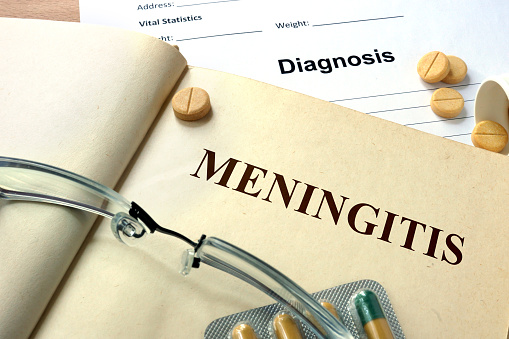
Word Meningitis on a book and pills.

Meningitis is an inflammation of the fluid that covers the brain and spinal cord. It is an extremely serious condition that can result in death. Although anyone can develop meningitis, those most at risk are children under five and adolescents between 15-19 years old.
There are two main kinds of meningitis:

Bacterial meningitis is the more severe form of the disease and requires treatment in a hospital setting. Viral meningitis is more common, and most people with this form of the illness get better in a couple of weeks. With mild cases, you may only need home treatment, including taking medicine for fever and pain and drinking enough fluids to stay hydrated.

Meningitis isn’t as contagious as viruses, such as those that cause the common cold, but it can spread from person to person via coughing, sneezing, kissing, sexual contact, or contact with infected blood or stool. A mother can also pass the germs that cause meningitis to her baby during birth.

Meningitis can be hard to diagnose because many of the early symptoms match those of the flu. The most common symptoms are fever, vomiting, headaches, stiff neck, sensitivity to light, drowsiness, and muscle pain. Babies may also develop a rash, have a lack of appetite and seem more irritable.

The best way to protect your child from meningitis is to make sure he or she gets all the standard immunizations for children, including shots for measles, chickenpox, and pneumococcal infection. When children reach adolescence, it is recommended that they receive two doses of a meningococcal vaccine to prevent bacterial meningitis.

Flushing Hospital encourages everyone to know the symptoms of meningitis and speak to their doctor about the meningitis vaccine.

All content of this newsletter is intended for general information purposes only and is not intended or implied to be a substitute for professional medical advice, diagnosis or treatment. Please consult a medical professional before adopting any of the suggestions on this page. You must never disregard professional medical advice or delay seeking medical treatment based upon any content of this newsletter. PROMPTLY CONSULT YOUR PHYSICIAN OR CALL 911 IF YOU BELIEVE YOU HAVE A MEDICAL EMERGENCY.

Are Allergy Shots an Option for You?

Do you suffer with seasonal allergies and over the counter medications have not helped? Allergy shots may be an option when all other treatment methods have failed.

The diagnosis allergy written on a clipboard

Allergy shots, also known as immunotherapy, are injections given at regular intervals to allergy sufferers over three to five years to stop or reduce the symptoms associated with an allergy attack. Each shot contains a tiny amount of the allergens that trigger an attack; just enough to spark the immune system, but not enough to cause a reaction. Over time, doctors will increase the amount of allergens as your system builds up a tolerance to them and becomes desensitized to their effects.

Allergy shots should be considered if medications to treat your allergies are ineffective, if allergy medications poorly interact with other medications you are taking, if allergy medications cause bothersome side effects, or if you want to reduce the long-term use of allergy medications.

Allergy shots can be used to treat reactions to:

• Seasonal allergens, such as pollens released by trees, grass, and weeds
• Indoor allergens, such as dust mites, pet dander, and mold
• Insect strings from bees, wasps, hornets, or yellow jackets

Unfortunately, allergy shots cannot treat food allergies.

Before you can even consider receiving an allergy shot your doctor must perform a skin test to determine what you are allergic to. During a skin test, a small amount of multiple allergens are scratched into your skin and the area (usually the back) is observed for 15 minutes. Redness or swelling will occur on whatever substances you are allergic to.
Once identified, allergy shots are injected regularly during two different phases of treatment.

• The build-up phase –Typically shots are given one to three times a week over three to six months. During the buildup phase, the allergen dose is gradually increased with each shot.
• The maintenance – This phase generally continues for three to five years or longer with maintenance injections administered approximately once a month.

You will need to remain in the doctor’s office for 30 minutes after each shot, in case you have a reaction, which can include local redness or swelling, sneezing, or nasal congestion. In rare cases, allergy shots can result in low blood pressure or difficulty breathing.

Allergy symptoms won’t stop overnight. They usually improve during the first year of treatment, but the most noticeable improvement often happens during the second year. By the third year, most people are desensitized to the allergens contained in the shots — and no longer have significant allergic reactions to those substances. After a few years of successful treatment, some people don’t have significant allergy problems even after allergy shots are stopped. Other people need ongoing shots to keep symptoms under control.

Speak with your doctor to determine if allergy shots are an option for you. If you do not have a doctor, Flushing Hospital has an allergy clinic. For more information or to schedule an appointment, please call 718-670-5486.

All content of this newsletter is intended for general information purposes only and is not intended or implied to be a substitute for professional medical advice, diagnosis or treatment. Please consult a medical professional before adopting any of the suggestions on this page. You must never disregard professional medical advice or delay seeking medical treatment based upon any content of this newsletter. PROMPTLY CONSULT YOUR PHYSICIAN OR CALL 911 IF YOU BELIEVE YOU HAVE A MEDICAL EMERGENCY.

March is National Colon Cancer Awareness Month

In 2000, President Clinton officially dedicated March as National Colon Cancer Awareness Month. This designation provides patients, survivors, caregivers and advocates throughout the country an opportunity to join together to raise awareness about colon cancer and the importance of early detection.

ThinkstockPhotos-474824404The American Cancer Society recommends that men and women with an average risk of developing colon cancer be tested beginning at age 50. People with certain risk factors, such as a family history of colon cancer or a history of inflammatory bowel disease should be tested earlier.

Early detection can save lives, but unfortunately, less than half of the people age 50 and older get tested for colon cancer. Colorectal cancer is the third most commonly diagnosed cancer and second leading cause of cancer death in the U.S., yet there is a 90 percent cure rate when detected early.

There are a variety of different tests used to diagnose colon cancer. They include:

Standard (or optical) colonoscopy – During this test, the rectum and entire colon are examined using a colonoscope, a flexible lighted tube with a lens for viewing and tool for removing tissue. During a colonoscopy, any abnormal growths in the colon and rectum can be removed.

Sigmoidoscopy – During this test, the rectum and the sigmoid colon are examined using a sigmoidascope. The instrument is inserted through the anus and into the rectum and sigmoid colon as air is passed pumped into the colon to expand it so the doctor can see it more clearly.

High-sensitivity fecal occult blood tests (FOBT) – This exam checks for tiny amounts of blood in feces (stool) that cannot be seen by the naked eye. The stool samples are collected by the patient and the doctor has the samples tested.

Speak with your doctor about when to begin screening for colorectal cancer and what test(s) are best for you. If you do not have a doctor, Flushing Hospital’s Ambulatory Care Center has doctors that can help. For more information, or to schedule an appointment, call 718-670-5486.

All content of this newsletter is intended for general information purposes only and is not intended or implied to be a substitute for professional medical advice, diagnosis or treatment. Please consult a medical professional before adopting any of the suggestions on this page. You must never disregard professional medical advice or delay seeking medical treatment based upon any content of this newsletter. PROMPTLY CONSULT YOUR PHYSICIAN OR CALL 911 IF YOU BELIEVE YOU HAVE A MEDICAL EMERGENCY.

February is National Cancer Prevention Month

February is National Cancer Prevention Month. During this time of month, Flushing Hospital urges everyone to adopt healthy lifestyle practices to reduce the likelihood of developing cancer.

ThinkstockPhotos-159290583According to the American Institute for Cancer Research (AICR) there are three factors that we have control over that affects our risk of developing this terrible disease. They are: What we eat, how active we are and how much we weigh. The AICR states that the best protection against cancer is to control all three.

Let’s look at them one at a time:

What We Eat
Choosing a diet consisting mostly of plant foods and limiting red meat and avoiding processed food is the best defense. Preparing meals focused around vegetables, fruits, whole grains and beans will help you fortify your body against cancer.

How Active We Are
Being physically active for at least 30 minutes each day. Participating in any number of physical activities can lower your risk for colon cancer and possibly several other cancers as well. To fit time in your schedule, try breaking activities into 10-15 minute sessions.

What We Weigh
It is the third key to help protect against as many as six different types of cancer. The good news is that once you start following the first two guidelines about diet and physical activity, you’ll find it easier to accomplish this one.

Flushing Hospital joins the American Institute of Cancer Research to bring awareness to how we can reduce our chances of getting cancer by altering our daily lives.

All content of this newsletter is intended for general information purposes only and is not intended or implied to be a substitute for professional medical advice, diagnosis or treatment. Please consult a medical professional before adopting any of the suggestions on this page. You must never disregard professional medical advice or delay seeking medical treatment based upon any content of this newsletter. PROMPTLY CONSULT YOUR PHYSICIAN OR CALL 911 IF YOU BELIEVE YOU HAVE A MEDICAL EMERGENCY.