
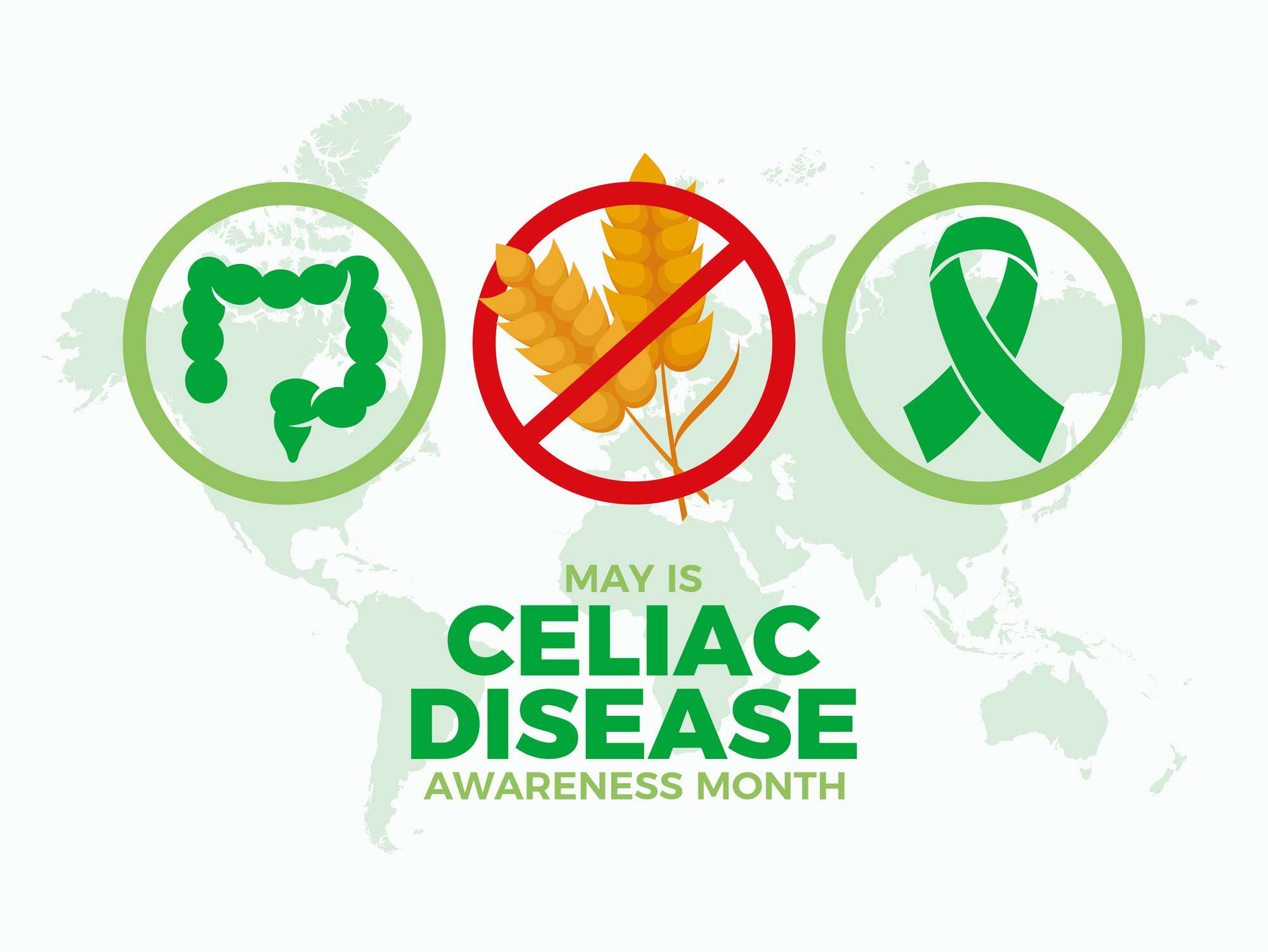
 May is Celiac Awareness Month. It is observed as a time to raise awareness for the more than three million Americans living with celiac disease, an autoimmune condition that causes the immune system to react to gluten, a protein found in foods containing wheat, barley, and rye.
It is estimated that up to 83% of Americans who have celiac disease are undiagnosed or misdiagnosed with other conditions.
When a person has celiac disease, eating gluten triggers an immune response to the gluten protein in the small intestines. The immune system sends inflammatory cells and antibodies to destroy the gluten molecules. Over time, this reaction can damage the lining of the small intestine, which prevents it from absorbing nutrients. This condition is called malabsorption. It can also lead to malnutrition and several other conditions resulting from a lack of nutrients.
The symptoms of celiac disease can vary greatly. They can also be different in children and adults. Digestive symptoms for adults include:
- Diarrhea
- Fatigue
- Weight loss
- Bloating and gas
- Belly pain
- Nausea and vomiting
- Constipation
However, more than half the adults with celiac disease have symptoms that are not related to the digestive system, including:
- Anemia
- Osteoporosis
- Dermatitis herpetiformis
- Mouth ulcers
- Headaches and fatigue
- Nervous system injury, including numbness, tingling in the feet and hands, as well as possible problems with balance, and cognitive impairment
- Joint pain
- Hyposplenism
- Elevated liver enzymes
Children with celiac disease are more likely than adults to have digestive problems, including:
- Nausea and vomiting
- Chronic diarrhea
- Swollen belly
- Constipation
- Gas
- Pale, foul-smelling stools
For children who aren’t able to absorb nutrients, it may cause:
- Failure to thrive in infants
- Damage to tooth enamel
- Weight loss
- Anemia
- Irritability
- Short stature
- Delayed puberty
- Neurological symptoms, including attention-deficit/hyperactivity disorder (ADHD), learning disabilities, headaches, lack of muscle coordination, and seizures
Celiac disease is most commonly found in people of Northern European descent. It is estimated to affect 1% of the populations of Europe and North America. A person has a 10% chance of developing the disease if they have a first-degree relative, such as a parent or child, who has it. About 97% of people diagnosed with celiac disease have a recognizable gene variant associated with it.
A person’s genes, combined with eating foods with gluten and other factors, can contribute to celiac disease. However, the precise cause isn’t known. Sometimes celiac disease becomes active after surgery, pregnancy, childbirth, viral infection, or severe emotional distress.
Several risk factors cause celiac disease to be more common in people who have:
- A family member with celiac disease or dermatitis herpetiformis
- Type 1 diabetes
- Down syndrome, Williams syndrome, or Turner syndrome
- Autoimmune thyroid disease
- Microscopic colitis
- Addison’s disease
Many people with celiac disease don’t know they have it. However, two blood tests can help diagnose it:
- Serology testing
- Genetic testing
It is important to be tested for celiac disease before trying a gluten-free diet. Eliminating gluten from your diet might make the results of the blood tests appear in the standard range.
The first and most important step in treating and the only way to manage celiac disease is to stop eating gluten and adopt a strict, lifelong gluten-free diet. You can’t change the way your body reacts to gluten, but you can prevent gluten from triggering a reaction. Additional treatments may include:
- Nutritional supplements
- Specific medications
- Corticosteroids
- Continuous follow-up care
To schedule an appointment with a gastroenterologist or dietitian at Flushing Hospital Medical Center, please call 718-670-5486.
All content of this newsletter is intended for general information purposes only and is not intended or implied to be a substitute for professional medical advice, diagnosis or treatment. Please consult a medical professional before adopting any of the suggestions on this page. You must never disregard professional medical advice or delay seeking medical treatment based upon any content of this newsletter. PROMPTLY CONSULT YOUR PHYSICIAN OR CALL 911 IF YOU BELIEVE YOU HAVE A MEDICAL EMERGENCY.
