
Employee Spotlight – Gabrielle Medina

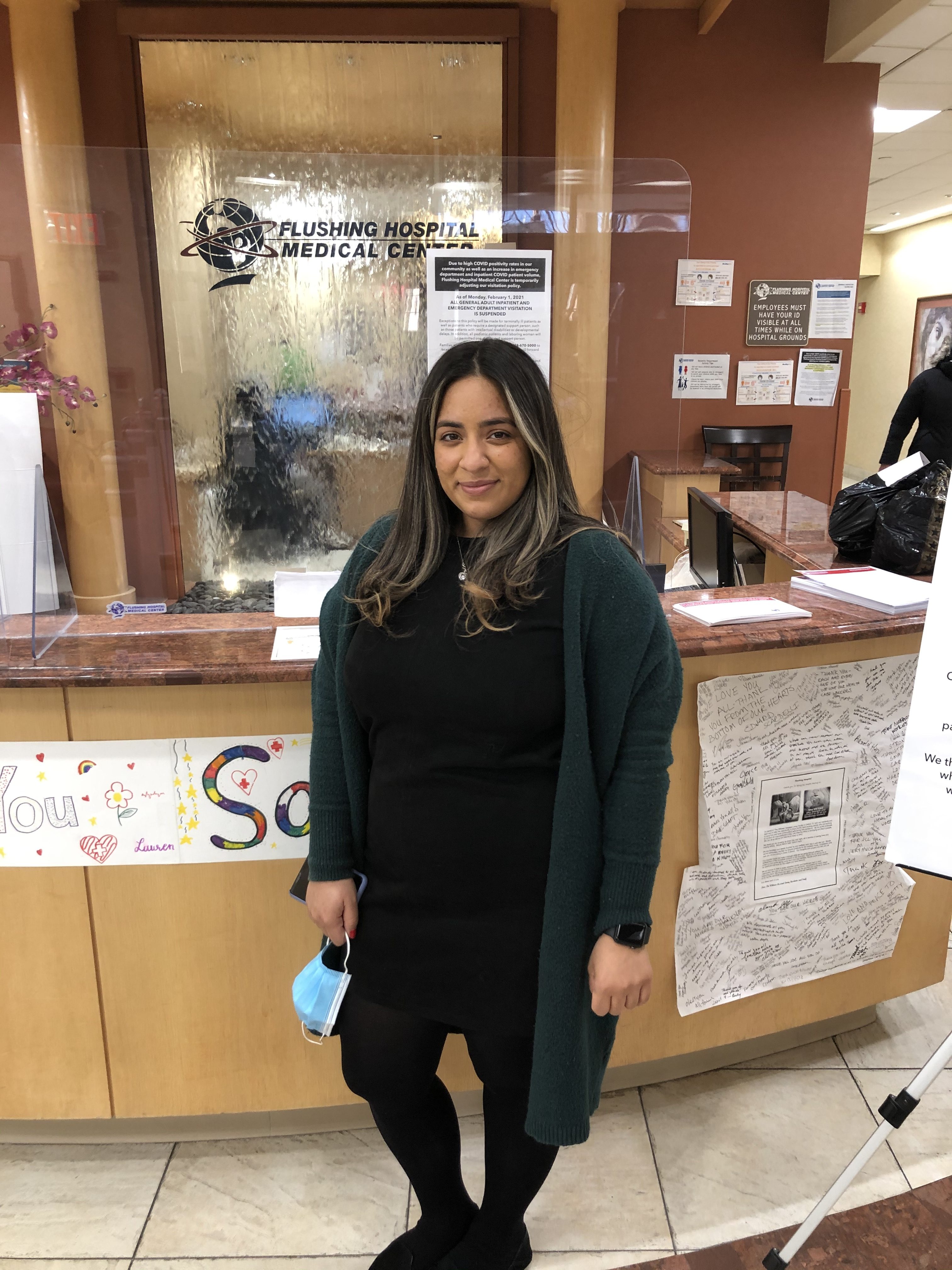
Flushing Hospital Medical Center’s February Employee Spotlight shines on Patient Navigator, Gabrielle Medina.  Ms. Medina is being recognized for her tireless efforts to register fellow employees to receive the COVID-19 vaccine.  Gabrielle Medina registered more than 1000 hospital employees and their eligible family members. Her efforts did not go unnoticed by our hospital administrators and her colleagues. Throughout the entire time, she remained calm, courteous and professional.  For these and so many other reasons, Gabrielle Medina is our February Employee Spotlight.

All content of this newsletter is intended for general information purposes only and is not intended or implied to be a substitute for professional medical advice, diagnosis or treatment. Please consult a medical professional before adopting any of the suggestions on this page. You must never disregard professional medical advice or delay seeking medical treatment based upon any content of this newsletter. PROMPTLY CONSULT YOUR PHYSICIAN OR CALL 911 IF YOU BELIEVE YOU HAVE A MEDICAL EMERGENCY.
Understanding Exocrine pancreatic insufficiency (EPI)

Exocrine pancreatic insufficiency (EPI) is a condition that affects digestion due to an inability to break down food properly. This occurs when the pancreas doesn’t make enough of the enzymes needed to break down and absorb nutrients.

Enzymes speed up chemical reactions in your body. The enzymes made by your pancreas move into your small intestine, where they help break down the food you eat. When you have EPI, you don’t get the nutrition you need because your body can’t absorb fats and and minerals from foods.

Some of the causes of EPI can include:

  • Chronic pancreatitis – A condition marked by frequent inflammation of the pancreas
  • Previous surgery of your pancreas, stomach, or intestines.
  • Existence of other conditions such as Crohn’s Disease, celiac disease, Cystic fibrosis or Shwachman-Diamond syndrome

Symptoms of EPI can include:

  • Pain or tenderness in the belly
  • Bad-smelling bowel movements
  • Diarrhea
  • Gas
  • Feeling full
  • Weight loss
  • Pain in your bones

Several tests can help diagnose EPI, including: blood tests to determine if you are getting enough vitamins in your diet, fecal tests to check for the amount of fat in your bowel movements and imaging tests to see if your pancreas is inflamed.

The right diet is very important for managing EPI. A dietitian can help you choose the foods that keep your energy level up and give you the nutrition you need.  Some other tips include eating up to six small meals per day, avoiding alcohol, and taking vitamin supplements.

Apart from a healthy diet, the main treatment for EPI is pancreatic enzyme replacement therapy (PERT). You take prescription pills that replace the enzymes your pancreas isn’t making. These enzymes break down your food so you can more easily digest and absorb it. You may also need to take an antacid to keep your stomach from breaking down pancreatic enzymes before they can start to work.

If you are experiencing symptms of EPI and would like to speak with a doctor at Flushing Hospital, please call our Ambulatory Care Center at 718-670-5486

All content of this newsletter is intended for general information purposes only and is not intended or implied to be a substitute for professional medical advice, diagnosis or treatment. Please consult a medical professional before adopting any of the suggestions on this page. You must never disregard professional medical advice or delay seeking medical treatment based upon any content of this newsletter. PROMPTLY CONSULT YOUR PHYSICIAN OR CALL 911 IF YOU BELIEVE YOU HAVE A MEDICAL EMERGENCY.

The Health Benefits of Red Wine

Did you know that drinking red wine in moderation may be good for your health? The alcohol and antioxidants in red wine are believed to help prevent heart disease.

The difference between red wine and white wine is that red wine retains the skin of the grapes during the fermentation process and this is where the beneficial chemicals are found.

Red wine contains alcohol and a chemical called polyphenol that helps to protect the lining of the blood vessels in the heart. Reseveratol is the active ingredient in the polyphenol that acts as an antioxidant. The low content of alcohol in red wine may also protect the lining of the blood vessels by preventing blood clots, lowering the bad cholesterol (LDL) and raising the good cholesterol (HDL).

Other potential benefits of red wine include:

  • Improving the healthy bacteria in the intestinal tract
  • Lowering blood pressure
  • Helping the body digest glucose which is important in diabetes control
  • Protecting vision
  • Preventing stroke patients from having recurrences.

Although red wine can provide benefits for heart health, it is important to drink it in moderation. Consuming excessive amounts of alcohol is not good for the body. For those who decide to add red wine to their diet, a moderate amount is considered to be:

  • For women of any age, one 5 ounce glass of wine per day
  • For men 65 years old or older, one 5 ounce glass of wine per day
  • For men up to the age of 65, two 5-ounce glasses of wine per day

One 5 ounce serving of red wine contains 125 calories, 1 gram of sugar, 4 grams of carbohydrates, and a small amount of iron, calcium, some vitamins and minerals.

Please keep in mind that there are risks in consuming alcoholic beverages. Never consume any beverage with alcohol if you have underlying health issues or take certain medications. Never drink and drive or operate any type of equipment while under the influence of an alcoholic beverage.

Consult with your physician if you consume alcoholic beverages on a regular or semi-regular basis to make sure that your body can tolerate it. You may schedule an appointment with a physician at Flushing Hospital Medical Center by calling 718-670-5486.

All content of this newsletter is intended for general information purposes only and is not intended or implied to be a substitute for professional medical advice, diagnosis or treatment. Please consult a medical professional before adopting any of the suggestions on this page. You must never disregard professional medical advice or delay seeking medical treatment based upon any content of this newsletter. PROMPTLY CONSULT YOUR PHYSICIAN OR CALL 911 IF YOU BELIEVE YOU HAVE A MEDICAL EMERGENCY.
Did You Know That Vitamins Can Help Boost Your Immunity ?

The body’s immune system is our primary line of defense against many types of illnesses. Therefore, it is important that we provide it with the nutrients and vitamins needed to help keep it strong.

Here is a list of vitamins that are known to boost immunity, the foods in which they are found, and the benefits they provide for our health:


Vitamin C acts as an antioxidant helps to fight inflammation and is found in:

  • Kale
  • Spinach
  • Papaya
  • Strawberries
  • Bell Peppers
  • Brussel sprouts

Vitamin E acts as an antioxidant and is found in:

  • Peanuts
  • Sunflower seeds
  • Almonds
  • Hazel nuts
  • Soybean oil

Vitamin A helps to fight infections and is found in:

  • Carrots
  • Sweet potatoes
  • Pumpkin
  • Cantaloupe
  • Dark green leafy vegetables

Vitamin D helps the body to absorb and regulate calcium and phosphorous and is found in:

  • Salmon
  • Tuna
  • Mackerel
  • Sardines
  • Milk

Vitamin B6 helps the body perform biochemical reactions and is found in:

  • Salmon
  • Tuna
  • Chicken

While it always best to get your vitamins from the foods that you eat, taking vitamin supplements can also be very effective.

If you would like to schedule an appointment with a doctor at Flushing Hospital Medical Center to discuss your nutrition, please call 718-670-5487.

All content of this newsletter is intended for general information purposes only and is not intended or implied to be a substitute for professional medical advice, diagnosis or treatment. Please consult a medical professional before adopting any of the suggestions on this page. You must never disregard professional medical advice or delay seeking medical treatment based upon any content of this newsletter. PROMPTLY CONSULT YOUR PHYSICIAN OR CALL 911 IF YOU BELIEVE YOU HAVE A MEDICAL EMERGENCY.

How Long Can I Wear The Same Mask?

Nowadays, one of the more frequently asked questions is, “How long can I wear the same mask?”

The answer to that question varies depending on the type of mask you are wearing.

According to the Centers for Disease Control and Prevention (CDC) the best practices for cleansing the more commonly used masks are as follows:

  • Cloth cotton – Wash you cloth mask whenever it gets dirty or at least daily in warm soapy water or in your washing machine.
  • Non-medical disposable – Single use masks should be thrown away after one wearing.
  • Face shields and goggles – Clean and disinfect reusable face shields according to the manufacturer’s instructions.  If disposable, wear it once and discard it according to the manufacturer’s instructions.

To learn more about these and other types of masks and how to care for them, visit:

https://www.cdc.gov/coronavirus/2019-ncov/prevent-getting-sick/how-to-wash-cloth-face-coverings.html

All content of this newsletter is intended for general information purposes only and is not intended or implied to be a substitute for professional medical advice, diagnosis or treatment. Please consult a medical professional before adopting any of the suggestions on this page. You must never disregard professional medical advice or delay seeking medical treatment based upon any content of this newsletter. PROMPTLY CONSULT YOUR PHYSICIAN OR CALL 911 IF YOU BELIEVE YOU HAVE A MEDICAL EMERGENCY.
Big Game Safety Tips

Like so many other events over the past 12 months, this year’s Super Bowl celebrations will be different from previous ones. The “Big Game” is typically one of the largest social events of the year, but because of the COVID pandemic, large gatherings are strongly discouraged.

The fact that we are unable to get together the way we normally would doesn’t mean we still can’t have a fun experience.

One way to enjoy the game with extended friends and family is to host a virtual event.  This is considered the safest way to celebrate the Super Bowl. According to the Centers for Disease Control and Prevention (CDC), some of the ways to make a virtual event fun include:

  • Wear clothing or decorate your home with your favorite team’s logo or colors.
  • Make appetizers or snacks with the people you live with to enjoy while watching the game and share the recipes with your friends and family.
  • Start a text group with other fans to chat about the game while watching.

Another option is to use a projector screen to host an outdoor viewing event.  While not as safe as a virtual event, getting together outdoors is considered less risky than an indoor event.

Normal behavior at Super Bowl gatherings include a lot of shouting, cheering and laughing. When this occurs outdoors, the tiny droplets of saliva that come out of our mouths is better dispersed into the environment and become more diluted, making the risk of infection less likely.

When hosting an outdoor party, some safety tips include spacing guests six feet apart and encouraging everyone bring their own snacks.

Like holiday gathering, Super Bowl parties can be super-spreader events. Following these suggestions will help control the spread of COVID and save lives.

All content of this newsletter is intended for general information purposes only and is not intended or implied to be a substitute for professional medical advice, diagnosis or treatment. Please consult a medical professional before adopting any of the suggestions on this page. You must never disregard professional medical advice or delay seeking medical treatment based upon any content of this newsletter. PROMPTLY CONSULT YOUR PHYSICIAN OR CALL 911 IF YOU BELIEVE YOU HAVE A MEDICAL EMERGENCY.

Employee Spotlight – Anthony Di Preta

January’s Flushing Hospital Medical Center’s (FHMC) Employee Spotlight shines Security Officer Anthony Di Preta. Anthony has been a security officer for the past 12 years and is tasked with securing the hospital premises, directing visitor traffic, observing and reporting suspicious activity, checking for property damage, monitoring the hospitals closed circuit TV (CCTV), and checking that the proper hospital identification is being displayed on each employee.

When not at work, Anthony enjoys watching movies, playing pool and fixing model cars.  He is active in his local chapter of the Knights of Columbus.

“The most rewarding part of my job is making people happy and helping people.  The most challenging part of my job is diffusing possible volatile situations.

Congratulations Anthony Di Preta on being featured on FHMC’S Employee Spotlight!


All content of this newsletter is intended for general information purposes only and is not intended or implied to be a substitute for professional medical advice, diagnosis or treatment. Please consult a medical professional before adopting any of the suggestions on this page. You must never disregard professional medical advice or delay seeking medical treatment based upon any content of this newsletter. PROMPTLY CONSULT YOUR PHYSICIAN OR CALL 911 IF YOU BELIEVE YOU HAVE A MEDICAL EMERGENCY.
This Month’s Home Exercise Tips

This month’s home work out tip is very simple. All exercise routines, whether performed at home or in a gym should include the following elements:

  • Warm-up
  • Cardiovascular workout
  • Strength building
  • Movement to help flexibility
  • Cooling off period

It is always important to get the body ready for exercise by warming up. It is just as important to help the body recover by cooling down. Cardiovascular, strength and flexibility exercises help us to target all the major muscle groups in our bodies, and improve our overall level fitness.

All content of this newsletter is intended for general information purposes only and is not intended or implied to be a substitute for professional medical advice, diagnosis or treatment. Please consult a medical professional before adopting any of the suggestions on this page. You must never disregard professional medical advice or delay seeking medical treatment based upon any content of this newsletter. PROMPTLY CONSULT YOUR PHYSICIAN OR CALL 911 IF YOU BELIEVE YOU HAVE A MEDICAL EMERGENCY.

National Healthy Weight Week

The third week in January is designated as National Healthy Weight Week. In an effort to promote a healthy nutritional lifestyle, Flushing Hospital Medical Center would like to offer the following tips to help you achieve and maintain a healthy weight.

  • Set a Goal – You can’t set out on a mission to lose weight without knowing how you are going to do it. Create a detailed weight-loss plan and set a goal that is specific, measurable and realistic.
  • Be Patient – In most cases if you make modest adjustments in your lifestyle, you can lose the weight gradually, but steadily. Dietary changes are typically easier to follow when you take slow, small steps.
  • Drink Plenty of Water – Water is free of calories, inexpensive and provides your body with a quenching boost. Recommendations are to drink eights cups of water every day, but if that is unrealistic, try slowly increasing your intake by drinking a few ounces more than you did the previous day.
  • Avoid temptations to snack– It is very easy to lose track of how much we eat when we are constantly nibbling on snacks. To avoid constant grazing, try chewing gum or drinking water.  If you must snack, try choosing healthy alternatives.
  • Make a Deal to Indulge – Definitely remove your dietary weakness from your home, but totally banning your favorite foods is bound to backfire. Instead of totally eliminating temptations from your life, allow yourself to modestly indulge once a week.
  • Begin a Manageable Workout Program – Forking over money on an annual gym membership can be helpful, but simply signing up isn’t enough. Instead of setting unrealistic workout goals, create a convenient and realistic workout routine at home.
  • Have a Friend Help You – Starting healthy nutritional lifestyle can be more effective if you have someone to hold you accountable. Teaming up with a weight-loss companion can assist you reach your goal by helping you stick to your diet and accompany you with your workout routine.
  • Weigh yourself – Regular weight check-ins can help you maintain your desired weight. Keep track of your progress and, if you see a trend toward gaining weight, you can revert back to the steps you took to begin your weight loss.

Hopefully, these tips will help you reach and maintain your weight loss goals in 2021. If however, you need professional assistance, Flushing Hospital’s Bariatric Center can help. They offer a variety of non-invasive, medically managed surgical weight loss options for those who qualify.

To make an appointment, please call 718-670-8908.


All content of this newsletter is intended for general information purposes only and is not intended or implied to be a substitute for professional medical advice, diagnosis or treatment. Please consult a medical professional before adopting any of the suggestions on this page. You must never disregard professional medical advice or delay seeking medical treatment based upon any content of this newsletter. PROMPTLY CONSULT YOUR PHYSICIAN OR CALL 911 IF YOU BELIEVE YOU HAVE A MEDICAL EMERGENCY.

Cold Weather and Asthma

People who suffer from asthma definitely know the effects that cold air can have on their ability to breathe.  When very cold and dry air enters the body, and subsequently the lungs it can cause a tightening of the airways. Cold air can cause wheezing, tightness of the chest muscles, shortness of breath, coughing, a sense of dizziness and sometimes difficulty speaking.

Taking some precautions before going outside in very cold weather can help ease the symptoms. It is important to keep asthma under control at all times. It can be helpful to take a dose of an asthma inhalant ten minutes before going outdoors. This will aid in keeping the airways open. People with asthma should carry their medication with them if they know they are going to be outdoors for any period of time. Another good idea is to keep your mouth and nose covered with a scarf when you are outside in cold weather. This will help to warm the air you are breathing. Anyone who has asthma should avoid strenuous outdoor activities. Sometimes the act of just walking on a windy day can bring on symptoms of an asthma attack. Try breathing through your nose more and through your mouth less. This will help to warm the air that enters your lungs.

People with asthma know the effects it can have during the cold days of winter. Taking a few precautions can help minimize the effects of the cold air on the body.

If you would like to schedule an appointment with a physician at Flushing Hospital, please call 718-670-5486.

All content of this newsletter is intended for general information purposes only and is not intended or implied to be a substitute for professional medical advice, diagnosis or treatment. Please consult a medical professional before adopting any of the suggestions on this page. You must never disregard professional medical advice or delay seeking medical treatment based upon any content of this newsletter. PROMPTLY CONSULT YOUR PHYSICIAN OR CALL 911 IF YOU BELIEVE YOU HAVE A MEDICAL EMERGENCY.