Rheumatoid Arthritis: Foods To Avoid

An estimated 1.3 million people living in the United States have been diagnosed with Rheumatoid Arthritis (RA), an autoimmune inflammatory disease that attacks the tissues around the joints.

There are many treatments available to help those diagnosed lead a healthy life. Additionally, eating a balanced diet void of certain inflammatory foods prove beneficial in helping to control RA.

Here is a list of foods that individuals living with RA are advised to avoid or limit:

  • Grilled, broiled, or fried meats
  • Organ meat, such as liver
  • Fried food
  • Foods that include preservatives or flavor enhancers
  • Sugars and refined carbohydrates
  • Fatty foods that are full of omega-6 fatty acids
  • Alcohol
  • Dairy

If you or a loved one either has or is at risk of developing rheumatoid arthritis, please speak to your doctor immediately about treatment options. To make an appointment at Flushing Hospital Medical Center’s Ambulatory Care Center, please call 718-670-5486.

All content of this newsletter is intended for general information purposes only and is not intended or implied to be a substitute for professional medical advice, diagnosis or treatment. Please consult a medical professional before adopting any of the suggestions on this page. You must never disregard professional medical advice or delay seeking medical treatment based upon any content of this newsletter. PROMPTLY CONSULT YOUR PHYSICIAN OR CALL 911 IF YOU BELIEVE YOU HAVE A MEDICAL EMERGENCY.


#WorkoutWednesday How Much Water To Drink While Working Out

Staying hydrated while exercising is very important, especially during the hotter months when we tend to lose more water by sweating. The best way to hydrate our bodies is to drink water, as it helps to prevent dehydration.

While drinking water greatly benefits our bodies, consuming too much can have adverse effects, one of which is hyponatremia.  This condition occurs when the blood becomes excessively diluted from drinking too much water, dangerously reducing sodium levels in our bodies.  Hyponatremia can result in symptoms such as nausea, fatigue, headaches, and in severe but rare cases, death.  It is important to follow proper hydration guidelines to avoid these symptoms.

According to Harvard Health, four to six cups of fluid daily is generally recommended for most people to consume. While exercising, The American Council on Exercise recommends drinking:

  • Seventeen to 20 ounces of fluid, 2 to 3 hours before  working out
  • Another 8 ounces, 20 to 30 minutes before starting your workout
  • Seven to 10 ounces, every 10 to 20 minutes while exercising
  • Eight ounces post workout

General recommendations are based on weight and gender. They may vary with each individual. It is  also important to keep in mind, that individuals with certain health conditions such as kidney or liver disease may retain too much fluid and should consult their physician

If you are uncertain about how much water you should drink per day or while exercising, speak with your doctor.  He or she will be able to provide more specific guidelines.

To speak with a doctor at  Flushing Hospital Medical Center, please call 718-670-5486

All content of this newsletter is intended for general information purposes only and is not intended or implied to be a substitute for professional medical advice, diagnosis or treatment. Please consult a medical professional before adopting any of the suggestions on this page. You must never disregard professional medical advice or delay seeking medical treatment based upon any content of this newsletter. PROMPTLY CONSULT YOUR PHYSICIAN OR CALL 911 IF YOU BELIEVE YOU HAVE A MEDICAL EMERGENCY.

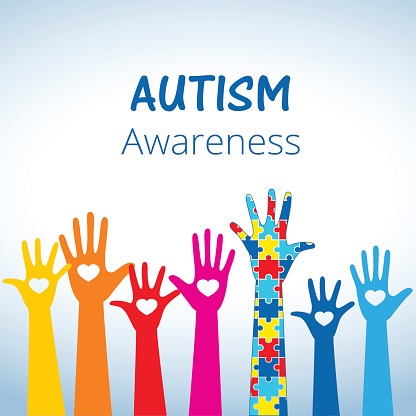
Autism Acceptance Month

Autism or autism spectrum disorder (ASD) is characterized by a range of conditions that can significantly impair behavioral, communication and social skills.

Autism -624530410There are three different types of autism spectrum disorders; they include Classic Autism, Asperger Syndrome and Pervasive Developmental Disorder. Each condition differs by the severity of symptoms.

According to the Centers for Disease Control and Prevention (CDC) children or adults with ASD may display the following symptoms:

  • Having delays in speech and language skills
  • Not responding to their name by 12 months
  • Avoiding eye contact or wanting to be alone
  • Having difficulty understanding the feelings of others
  • Displaying unusual reactions to the way things look, feel, sound or smell
  • Repeating actions over and over
  • Not looking at objects when other people point to them
  • Repeating words or phrases in place of normal language
  • Preferring not to be cuddled or cuddling only when desired
  • Having trouble adapting to changes in daily activities
  • Displaying behaviors such as flapping hands, spinning in circles or rocking the body

The most obvious symptoms of ASD typically emerge between two to three years of age. However, in some cases, they can be identified earlier.

There are no definitive causes of ASD but it has been discovered that there are several factors that can make a child more likely to have the disorder.  The CDC asserts the following findings:

  • Most scientists agree that genes are one of the risk factors that can make a person more likely to develop ASD.
  • Children who have a sibling with ASD are at a higher risk of also having ASD.
  • ASD tends to occur more often in people who have certain genetic or chromosomal conditions, such as fragile X syndrome or tuberous sclerosis.
  • There is some evidence that the critical period for developing ASD occurs before, during, and immediately after birth.
  • Children born to older parents are at greater risk for having ASD.

Diagnosing ASD can be difficult as assessments are primarily based on behavior and development. There are two stages of diagnosis: the developmental screening and the comprehensive diagnostic evaluation.

Currently, there is no cure for ASD but research shows that early intervention services and treatment can improve development in children.

April is National Autism Acceptance Month, during this time, Jamaica Hospital Medical Center hopes to promote autism awareness and acceptance through education.  The hospital proudly supports the nationwide goal of building a greater understanding and acceptance of ASD.

All content of this newsletter is intended for general information purposes only and is not intended or implied to be a substitute for professional medical advice, diagnosis or treatment. Please consult a medical professional before adopting any of the suggestions on this page. You must never disregard professional medical advice or delay seeking medical treatment based upon any content of this newsletter. PROMPTLY CONSULT YOUR PHYSICIAN OR CALL 911 IF YOU BELIEVE YOU HAVE A MEDICAL EMERGENCY.

Anger Management in Children

Children, just as adults, can exhibit different ways of expressing their anger or frustration.  The difference is that adults typically have better ways of coping with and understanding these emotions.  Children, on the other hand lack the maturity to understand why they feel the way that they do.

It is not unusual for a child to experience moments of stress which can lead to anger. Children will tend to respond to these situations by “acting out “. This can be displayed by crying uncontrollably, screaming, clenching their fists, hitting or being difficult to console.

These are a variety of events that can lead a child to displaying their frustration, including:

  • A new person, such as a baby, coming into the home
  • Parents fighting all the time
  • Starting a new school
  • Moving to a new home
  • Having a difficult time in school
  • Being bullied
  • Experiencing a trauma such as the loss of a loved one

What are some of the ways to help a child cope with their anger? Here are a few suggestions:

Children have to understand that there are certain rules and limits that they must live by. Setting a good example as an adult as to what constitutes good behavior is very important. It is also important to be consistent when setting boundaries. Rules can’t change from one situation to another and from one adult to another when dealing with a child.

Additional recommendations include:

  • Rewarding good behavior.
  • Keeping calm, getting angry at the already angry child can make things worse
  • Trying to speak to the child away from others so that they aren’t being embarrassed in front of others
  • Be reassuring to the child, tell them everything will be okay.
  • If the child is old enough, allowing them to verbalize why they feel the way they do.

Some activities that a child can do to relieve stress and lessen anger include having them:

  • Pop bubble wrap
  • Squish playdough
  • Scribble on a piece of paper than crumple it up
  • Do exercises
  • Rip a piece of paper

Most children will respond well to an adult who wants to help them learn how to cope with their anger. However there are some situations where professional intervention may be necessary. Speak to your pediatrician if you think your child is becoming angry too frequently or is overreacting. If you would like to make an appointment with a pediatrician at Flushing Hospital Medical Center, please call 718-670-5486.

All content of this newsletter is intended for general information purposes only and is not intended or implied to be a substitute for professional medical advice, diagnosis or treatment. Please consult a medical professional before adopting any of the suggestions on this page. You must never disregard professional medical advice or delay seeking medical treatment based upon any content of this newsletter. PROMPTLY CONSULT YOUR PHYSICIAN OR CALL 911 IF YOU BELIEVE YOU HAVE A MEDICAL EMERGENCY.

Stop Racism and Xenophobia

Flushing Hospital Medical Center proudly serves one of the most culturally and ethnically diverse communities in the world. It is for this reason among others that we stand against racism and xenophobia of any kind.

Racism (prejudice or discrimination directed toward a person based on their race) and xenophobia (defined as fear, prejudice or hatred against people from other countries) are not only societal concerns but also public health issues.

A public health issue is identified as a problem that greatly hurts or affects the physical, mental or social health of a population. As an institution that is built on the principle of protecting and improving the health of our diverse community, Flushing Hospital joins other organizations in affirming racism and xenophobia as a serious public health crisis. Our hospital condemns violence against Asians, Pacific Islanders, and others who face discrimination or harassment based on their race or ethnicity.

If you have faced harassment or discrimination in housing, at work, or in any public place, contact the NYC Commission on Human Rights by filling out our online form or by calling 212-416-0197. If you are a victim of or witness a hate crime, call 911. There is language support if you need interpretation services.

All content of this newsletter is intended for general information purposes only and is not intended or implied to be a substitute for professional medical advice, diagnosis or treatment. Please consult a medical professional before adopting any of the suggestions on this page. You must never disregard professional medical advice or delay seeking medical treatment based upon any content of this newsletter. PROMPTLY CONSULT YOUR PHYSICIAN OR CALL 911 IF YOU BELIEVE YOU HAVE A MEDICAL EMERGENCY.

Stress Awareness Month

In 1992, the month of April was designated as Stress Awareness Month.  During this time, health professionals join together to increase the public’s awareness about what causes stress and what can help cure the growing stress epidemic.

Flushing Hospital Medical Center is participating by reaching out to our social media community and sharing some helpful techniques that can assist you in managing your daily stress, such as:

  • Meditation – is helpful to the brain’s neural pathways, making you more resilient to stress
  • Breathing Deeply – triggers our parasympathetic nervous system, neutralizes stress and elicits a calming feeling
  • Exercise – all forms of exercise can ease depression and anxiety by helping the brain releasing feel-good chemicals giving your body a chance to practice dealing with stress
  • Eating Healthy – choosing a diet rich in vegetables, fruits, and fiber may reduce the chance that stress can boost the body’s natural defense system

Prolonged, excessive periods of stress is unhealthy for any individual. A change of mindset can bring about a healthier lifestyle.  That positive change can help you manage stress and bring far-reaching improvement to your health and well being.

For more information and to find out ways you can make a difference visit – http://stressawarenessmonth.com/

All content of this newsletter is intended for general information purposes only and is not intended or implied to be a substitute for professional medical advice, diagnosis or treatment. Please consult a medical professional before adopting any of the suggestions on this page. You must never disregard professional medical advice or delay seeking medical treatment based upon any content of this newsletter. PROMPTLY CONSULT YOUR PHYSICIAN OR CALL 911 IF YOU BELIEVE YOU HAVE A MEDICAL EMERGENCY.

April is Alcohol Awareness Month

The National Council on Alcohol and Drug Dependence (NCADD) has designated the month of April as Alcohol Awareness Month. The purpose of this observation is to raise awareness about issues related to alcohol addiction and share helpful resources.

The National Council on Alcohol and Drug Dependence estimates that there are 14.4 million people over the age of 18 who have alcohol abuse problems. Each year, it is estimated that there are 88,000 deaths due to alcohol abuse. Nationally, over 31 % of driving fatalities are alcohol related.

Many people afflicted with alcohol addiction often do not seek help because they are in denial of having the disease. In other instances,  addicts do reach out to family members and loved ones for support; however, they do not know how to provide the assistance that is needed.  It is important for all who are affected by alcoholism to know there are many programs available to help with this type of addiction. Information and resources can be found on The Substance Abuse and Mental Health Services Administration (SAMHSA) website www.samhsa.gov.

At Flushing Hospital Medical Center, our Psychiatry Department features a Division of Addiction Services where your loved one can receive comprehensive assessments and treatment for alcohol and chemical dependency. These services are offered through our inpatient through Chemical Dependence Unit and our outpatient Reflections Treatment Program. Both services are staffed with highly skilled professionals who understand the process of treating addiction.

If you would like to speak with someone in our program, please call (718) 670-5693 or (718) 670-5540.

All content of this newsletter is intended for general information purposes only and is not intended or implied to be a substitute for professional medical advice, diagnosis or treatment. Please consult a medical professional before adopting any of the suggestions on this page. You must never disregard professional medical advice or delay seeking medical treatment based upon any content of this newsletter. PROMPTLY CONSULT YOUR PHYSICIAN OR CALL 911 IF YOU BELIEVE YOU HAVE A MEDICAL EMERGENCY.

Alcohol Awareness Month

The National Council on Alcohol and Drug Dependence (NCADD) has designated the month of April as Alcohol Awareness Month. The purpose of this is raise awareness about the dangers of alcoholism and the issues related to alcohol and to help people get help by giving them resources available to them.

Many people who are afflicted with alcohol abuse are in denial and therefore do not seek help. Often times family members and friends of people who are alcoholics don’t know how to get them help. The National Council on Alcohol and Drug Dependence estimates that there are 14.4 million people over the age of 18 who have alcohol abuse problems. Each year it is estimated that there are 88,000 deaths due to alcohol abuse. Nationally the over 31 % of driving fatalities are alcohol related.

There are many resources that are available to help those who struggle with alcohol abuse. If you would like to speak with a physician at Flushing Hospital Medical Center, please call 718-670-5487

All content of this newsletter is intended for general information purposes only and is not intended or implied to be a substitute for professional medical advice, diagnosis or treatment. Please consult a medical professional before adopting any of the suggestions on this page. You must never disregard professional medical advice or delay seeking medical treatment based upon any content of this newsletter. PROMPTLY CONSULT YOUR PHYSICIAN OR CALL 911 IF YOU BELIEVE YOU HAVE A MEDICAL EMERGENCY.

Strep vs. Sore Throat

We all develop a sore throat from time to time. There are many reasons for this. It might be due to a viral infection, an allergic reaction, or hoarseness from overuse.  In some cases, however, a sore throat can be a symptom of strep throat, which is a bacteria that if left untreated can lead to serious complications.

Strep throat is an infection of the throat and tonsils. You can get the infection from someone who is sick with it or is a carrier of it. Like other infections, it spreads from person to person or by touching objects that are contaminated and then touching your own eyes, mouth or nose. Strep throat is most common in children, but anyone can get it.

In addition to a sore throat some other symptoms of strep throat include:

  • A fever of 101 F or higher
  • Red, swollen tonsils
  • White patches in the throat
  • Tiny red spots on the roof of the mouth
  • Appetite loss
  • Headache
  • Stomach pain, nausea, or vomiting
  • Rash

Your doctor will ask about your symptoms and can administer a test to confirm if you have strep. There are two ways to test:

  • A rapid strep test can identify a case in just a few minutes. The doctor will gently hold down your tongue with a depressor. Then, use a cotton swab to take a little bit of mucous from the back of the throat.
  • A throat culture is performed by rubbing the sample from the throat swab onto a special dish. If you have strep throat, the streptococci bacteria will grow in it. It usually takes about two days to get results from a throat culture.

If you have strep, your doctor will prescribe antibiotics to kill the bacteria that caused the infection. Most treatments last for about ten days. The medicine can make your symptoms go away faster and help prevent complications. It is important to take the full the dose of antibiotics. Stopping the medicine too early can leave some bacteria alive, which can make you sick again.

Other things you can take to treat the symptoms of strep throat include:

  • Ibuprofen or acetaminophen to bring down a fever and ease pain.
  • Throat lozenges or piece of hard candy to soothe a sore throat.
  • Liquids such as tea and broth or something cold such as an ice pop.

The best way to prevent getting strep is to practice good hygiene. Don’t share cups, dishes, forks, or other personal items with someone who’s sick and wash your hands or use an alcohol-based hand sanitizer many times daily.

If untreated, strep can lead to scarlet fever, inflammation of the kidney, and rheumatic fever; a serious inflammatory condition that can affect the heart, joints, nervous system and skin.

Make an appointment with your doctor if you suspect that you or your child has strep throat. If you do not have a doctor, please call Flushing Hospital Medical Center’s Ambulatory Care Center at 718-670-5486 to schedule an appointment.

All content of this newsletter is intended for general information purposes only and is not intended or implied to be a substitute for professional medical advice, diagnosis or treatment. Please consult a medical professional before adopting any of the suggestions on this page. You must never disregard professional medical advice or delay seeking medical treatment based upon any content of this newsletter. PROMPTLY CONSULT YOUR PHYSICIAN OR CALL 911 IF YOU BELIEVE YOU HAVE A MEDICAL EMERGENCY.

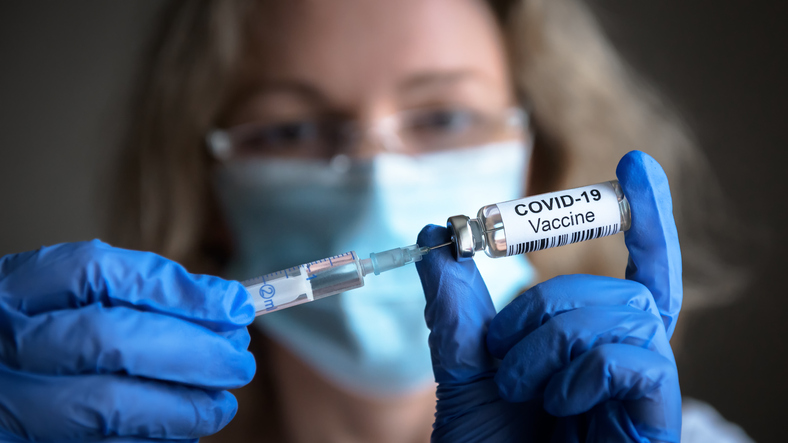
What Not to do After Receiving the Covid-19 Vaccine

People who are fully vaccinated sometimes assume that they no longer have to be as vigilant about taking safety precautions because they are “protected”.

While the vaccine does provide protection from COVID-19. Medical experts advise that you follow these recommendations to avoid complications and reduce risks:

  • Do not get any other vaccines within 14 days of getting the Covid vaccine.
  • Do not leave the vaccine site prior to the 15 minute waiting period is up.
  • Do not assume that you cannot get the virus even if you have been fully vaccinated.
  • Do not stop taking precautions when going out just because you have been vaccinated.

Until more information about the vaccine becomes available it is always wise to speak to your medical doctor about what you can and cannot do once you are fully vaccinated. If you would like to schedule an appointment with a physician at Flushing Hospital Medical Center, please call 718-670-5486.

All content of this newsletter is intended for general information purposes only and is not intended or implied to be a substitute for professional medical advice, diagnosis or treatment. Please consult a medical professional before adopting any of the suggestions on this page. You must never disregard professional medical advice or delay seeking medical treatment based upon any content of this newsletter. PROMPTLY CONSULT YOUR PHYSICIAN OR CALL 911 IF YOU BELIEVE YOU HAVE A MEDICAL EMERGENCY.