Artificial Sweetners

Anyone who has ever tried to watch their weight, protect their teeth, or has been told that they have diabetes, has probably tried something made with an artificial sweetener. The concept of using sugar substitutes has been around for a very long time.  A researcher at Johns Hopkins University accidently discovered a product that would be developed into what we now know as saccharin in 1879. The use of artificial sweeteners as part of our daily lives became more prevalent in the mid 20th century.

There are six sugar substitutes that have been approved by the U.S. Food and Drug Administration for use in foods and beverages. These are aspartame, sucralose, stevia, neotame, saccharin, and acesulfame potassium. These products are very sweet and therefore only very small quantities need to be added to food and beverages to make them taste good.  For as long as these products made with artificial sweeteners have been available there has been controversy over any harmful side effects that they may pose. So far the FDA has not been able to substantiate any claims of harmful effects from their use.

As people in the United States have become more health conscious, the use of products made with artificial sweeteners has increased.  More and more products are being produced each year that are labeled “Sugar Free”, “Diet”, “Low-Cal”, “Light”, or “Artificially Sweetened”. People are naturally attracted to foods that taste sweet. It has been stated that the taste of sugar may even be addictive. While limiting the intake of sugar may be seen as a good trend, people seem to be consuming more of the artificially sweetened products which may not be beneficial in the long term. Over indulgence in products that are made with these artificial sweeteners can still cause weight gain.

All content of this newsletter is intended for general information purposes only and is not intended or implied to be a substitute for professional medical advice, diagnosis or treatment. Please consult a medical professional before adopting any of the suggestions on this page. You must never disregard professional medical advice or delay seeking medical treatment based upon any content of this newsletter. PROMPTLY CONSULT YOUR PHYSICIAN OR CALL 911 IF YOU BELIEVE YOU HAVE A MEDICAL EMERGENCY.
Five Best Tips for Putting Your Best Fork Forward to Shed the Winter Pounds

Did you know that March is National Nutrition Month?  Every year, the Academy of Nutrition and Dietetics generates a nutrition, education and information campaign.  This year’s message is “Put Your Best Fork Forward.”

Each person has the tools to make healthy dietary choices.  Now  that winter is coming to an end, and spring is approaching, it is a wonderful time to reflect on our current habits and lifestyle and decide which tools we will use to shed some excess weight gained over the winter months.

Tool #1 – Balance

  • Visit Choose My Plate at – Use the “my plate” method of ½ plate non starchy veggies, ¼ plate protein, ¼ plate fiber rich carbohydrate to balance your nutrients throughout the day.
  • Drink water or mild instead of sweetened beverages (soda or juice).
  • Eat healthy snacks, such as fruits/nuts with yogurt or crackers with peanut butter.
  • Substitute processed or artificially flavored food items with natural unprocessed foods. By skipping the cookies and having a piece of fruit, you will get more vitamins and fiber allowing your body to feel more energized throughout the day.

Tool #2 – Let’s get Physical

Physical activity, in any form, is imperative for managing weight. Some ways to get more active are:

  • Consider non weight bearing exercises such as using resistance bands for building muscle and increasing flexibility, stationary bike or water aerobics.
  • Walking 10,000 steps per day is equivalent to walking five miles! Aim to achieve as many steps as possible throughout the day such as parking your car a little further from your destination, taking the stairs instead of the elevator and partaking in walking breaks, especially if you are sitting for most of the day.
  • March gives us extra daylight, so the best way to utilize this extra time is by being active. Activities such as walking, jogging, gardening, swimming and yoga are perfect ways to spend 30 minutes doing an outside activity.

Tool #3 – Reduce Stress

  • Everyone has stress which can obstruct weight loss. Stress increased the hormone called cortisol, which can contribute to weight gain.  Stress also contributes to emotional eating and other damaging behaviors.
  • It is important to ask for help and have support to get through the daily stressors of life. Consider support groups, meditation, coloring, knitting or spending time with a loved one to relieve the stressors in your daily life and help you stay focused and on track of your goals and progress.

Tool #4 – Be SMART About Your Goals

By setting SMART goals, results are greater!  SMART goals encompass five parameters to make the goal more productive:

S          is the SPECIFICS of the goal.  Is the goal definable?

M         is the MEASURABILITY of the goal. Is it possible to track/measure progress?

A          is ATTAINABILITY of the goal.  Is the goal a reasonable one ?

R          is RELEVENCY of the goal.  Is the goal worthwhile and will it meet your needs?

T          is TIMELINESS of the goal.  How much time can you give to accomplishing goals?

Tool #5 – Track Your Progress

  • Keep a diary or journal and record your progress and shortcomings.
  • Keep a food log and track your dietary intake.
  • “There’s an App for that” – There are so many wonderful Apps for goal setting and tracking caloric intake, physical activity, etc., utilize the technology on your smart phone or tablet to monitor your progress.

This article was submitted by Sadia Tahir Khan MS, RD and Michelle Hill, RD, CDN, CDE, Food and Nutrition Department of Flushing Hospital Medical Center


All content of this newsletter is intended for general information purposes only and is not intended or implied to be a substitute for professional medical advice, diagnosis or treatment. Please consult a medical professional before adopting any of the suggestions on this page. You must never disregard professional medical advice or delay seeking medical treatment based upon any content of this newsletter. PROMPTLY CONSULT YOUR PHYSICIAN OR CALL 911 IF YOU BELIEVE YOU HAVE A MEDICAL EMERGENCY.
Colorectal Cancer Risk factors and Prevention

colonoscopy-524701836Colorectal cancer is a disease that causes abnormal cells or tumors to develop in the colon or rectum.  It is the third most commonly diagnosed type of cancer found in men and women in the United States.

Although colorectal cancer causes the deaths of approximately 50,000 people each year; the rate of survival is improving due to education, early detection and treatment.

Learning the risk factors of colorectal cancer is essential as there are risk factors you can control and some you cannot. The risk factors you can control include:

  • Smoking
  • Being overweight or obese
  • Lack of physical activity
  • Poor diet – a diet rich in red meats and processed meats can increase your risk
  • Heavy alcohol consumption

These factors can be addressed by quitting smoking, exercising, eating a healthy and balanced diet and moderating your consumption of alcoholic beverages.

The factors that you cannot control that may contribute to colorectal cancer are:

  • Age- people over the  age of 50  have a higher risk in developing the disease
  • A family history of colorectal cancer or adenomatous polyps
  • A personal history of colorectal polyps, colorectal cancer or inflammatory bowel disease
  • Having an inherited gene defect  that can cause family cancer syndromes such as familial adenomatous polyposis (FAP), Gardner syndrome, Turcot syndrome or Lynch syndrome
  • Race or ethnicity
  • Having type 2 diabetes

Knowing your risk factors and taking appropriate actions can help you to reduce the probability of developing the disease.

Although it is not completely clear what causes colorectal cancer; it can be prevented by receiving regular screenings. With regular screenings, polyps or colon cancer can be found and treated early before advancing.

There are several testing methods your doctor may use to screen for colorectal cancer. Screening tests may include a colonoscopy or other testing methods such as fecal occult blood test,   flexible sigmoidoscopy, CT colonography or double-contrast barium enema. The American Cancer Society recommends that men and women should receive screenings beginning at the age of 50.

For a complete guide to the American Cancer Society’s recommendations for colorectal cancer early detection, please visit https://www.cancer.org/cancer/colon-rectal-cancer/early-detection/acs-recommendations.html

All content of this newsletter is intended for general information purposes only and is not intended or implied to be a substitute for professional medical advice, diagnosis or treatment. Please consult a medical professional before adopting any of the suggestions on this page. You must never disregard professional medical advice or delay seeking medical treatment based upon any content of this newsletter. PROMPTLY CONSULT YOUR PHYSICIAN OR CALL 911 IF YOU BELIEVE YOU HAVE A MEDICAL EMERGENCY.

National Save Your Vision Month

The month of March has been designated as “National Save Your Vision Month” by the American Optometric Association as a way to promote good eye health. This year, the campaign wants to bring attention to eye problems that can occur at work. More people are using electronic devices for both work and for pleasure than ever before and this can lead to eye problems for some people. This year the campaign wants to bring attention to eye problems that can occur at work.
People who use computers all the time, especially at work, should be aware of developing dry eyes, blurred vision and eye strain. This is because the eyes are focused for long periods of time on an object that is at a fixed distance rather than seeing objects that are moving or at varying distances which allow the muscles of the eyes to constantly move. Also, people who use computer screens for long periods of time don’t blink as frequently and this can lead to dry eyes. To alleviate some of these problems it is important to take a break from time to time and look out a window or at least look around the room.
Some tips for good eye health include keeping the computer monitor about twenty inches from your eyes, keeping the top of the screen tilted a little below eye level, the screen should be kept clean to avoid anything that can blur the images. It is also important to eat a healthy diet which will keep the eyes well nourished.
Regular eye exams can detect problems before they become serious. Correcting faulty vision early this can prevent the problem from becoming serious later on. If you would like to schedule an appointment with an eye doctor at Flushing Hospital, please call 718-670-5486.

All content of this newsletter is intended for general information purposes only and is not intended or implied to be a substitute for professional medical advice, diagnosis or treatment. Please consult a medical professional before adopting any of the suggestions on this page. You must never disregard professional medical advice or delay seeking medical treatment based upon any content of this newsletter. PROMPTLY CONSULT YOUR PHYSICIAN OR CALL 911 IF YOU BELIEVE YOU HAVE A MEDICAL EMERGENCY.

National Registered Dietitian Day!

March 8, 2017, is Registered Dietitian Day. Every year, on the second Wednesday of the month is set aside to honor and highlight the efforts of Registered Dietitians nationwide. Dietitian-Nutritionists work in many sectors of the health field. Here at Flushing Hospital Medical Center (FHMC) Dietitian-Nutritionists work to improve the health of patients, as well as staff. “Registered Dietitian-Nutrition Day is a way for us to continue to spread the word about Dietitian-Nutritionists and the work we do throughout the communities.” stated Michelle Hill, Chief Clinical Dietitian at Flushing Hospital.

In honor of the big day, New York City Council Member Peter Koo awarded a Certificate of Recognition to the hospital’s nutrition team for the commitment they have to the health of others.

Other events at Flushing Hospital included a Healthy Recipe Makeover contest. The first place winner of the contest was Fran Goulston, Coordinator, Performance Improvement, who submitted a recipe using vegetables as an alternative to using red meat in meat balls.

There are approximately 6,600 Registered-Nutritionists in New York State. Each has undergone rigorous academic coursework and training. Dietitian- Nutritionists at FHMC collectively hold bachelors, masters, and PhDs not only in the field of dietetics, but at times in other fields such as business, finance, journalism, and psychology earning them the title of “The Nutrition Experts.”

Flushing Hospital Medical Center urges everyone to make a healthy choice a day to reach your health goals.

All content of this newsletter is intended for general information purposes only and is not intended or implied to be a substitute for professional medical advice, diagnosis or treatment. Please consult a medical professional before adopting any of the suggestions on this page. You must never disregard professional medical advice or delay seeking medical treatment based upon any content of this newsletter. PROMPTLY CONSULT YOUR PHYSICIAN OR CALL 911 IF YOU BELIEVE YOU HAVE A MEDICAL EMERGENCY.

Home Remedies for Foot Odor

feet -450795759The medical term for foot odor is bromodosis.  The main cause for this common condition is excessive perspiration. Sweaty feet create the perfect environment for odor-causing bacteria to develop.  Additional causes for foot odor may include stress, medication, hormonal changes, alcohol and drug use, fungal infections or poor hygiene.

Foot odor can be embarrassing and can affect anyone; however, there are simple and inexpensive remedies that can be used at home to help eliminate the smell.  Here are a few:

  • Wash your feet twice a  day with antibacterial soap
  • After a bath, use a cotton swab to dab between the toes with rubbing alcohol
  • Soak your feet in salt water or baking soda
  • Bathe  your feet in vinegar
  • Clean and scrub feet with a pumice stone
  • Sprinkle corn starch into your socks
  • Wear fresh socks and change them regularly (moisture absorbing socks are best)
  • Change your shoes regularly to allow them to dry and air properly. Podiatrist recommend that you do not wear the same shoes for two consecutive days

If an odor persists after trying these remedies, it is recommended that you see a podiatrist.   There are several courses of treatment your doctor may recommend. Depending on the severity of your case, prescription–strength products, the use of electrical devices to eliminate perspiration or a surgical procedure that helps to control sweating are a few of the options your podiatrist may explore.

All content of this newsletter is intended for general information purposes only and is not intended or implied to be a substitute for professional medical advice, diagnosis or treatment. Please consult a medical professional before adopting any of the suggestions on this page. You must never disregard professional medical advice or delay seeking medical treatment based upon any content of this newsletter. PROMPTLY CONSULT YOUR PHYSICIAN OR CALL 911 IF YOU BELIEVE YOU HAVE A MEDICAL EMERGENCY.

Why is the cesarean rate so high, and how can I increase my chance of a natural birth?

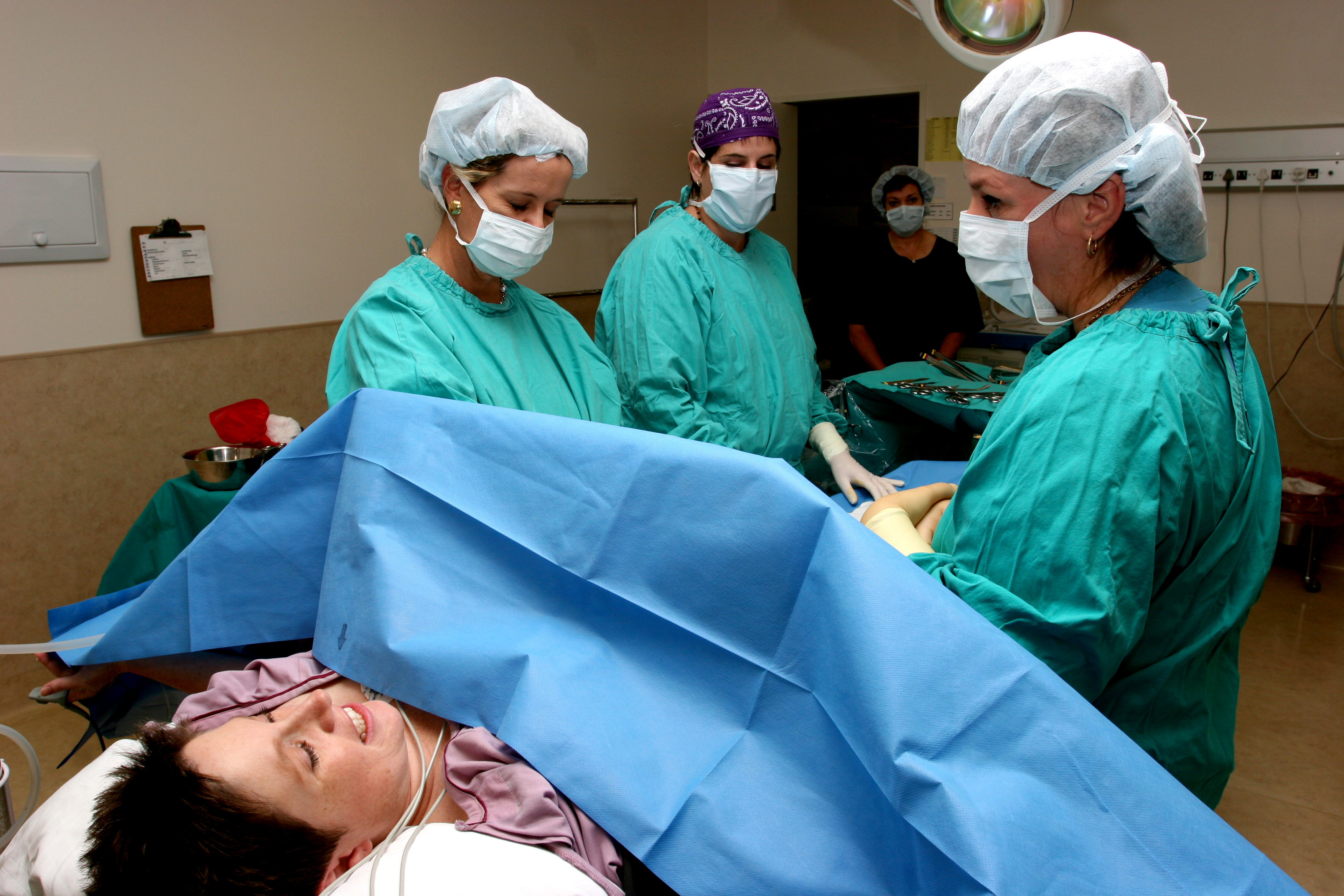
Woman in the operating room before a delivery

In the field of obstetrics and gynecology, there is no more debatable topic than the increased rate of cesarean (C-section) deliveries. The C-section rate is the percentage of all births that take place surgically, whereby a baby is delivered via an incision on the abdomen. Over the last few decades, this rate has increased tremendously. Up to the 1970’s, the rate of cesarean in the U.S. was less than 5% but in the subsequent few years, it climbed to 33%.

While the cesarean delivery has become a safer operation than it used to be, it is still a major abdominal surgery which should be avoided when a vaginal delivery is an option for both baby and mother. Sadly, rates of complications such as cerebral palsy have not decreased much despite the 600% increase of cesarean deliveries in the last three decades. So why then, has the cesarean rate climbed so much?

There are several factors explaining the increase the cesarean rates and there is no single answer. because so much has changed in the last two of three decades, in terms of medical, social and legal aspects. Let’s look at a few factors:

  • Breech babies: Few doctors deliver breech babies vaginally because recent studies suggested that C-section births are less risky for them.
  • Fewer patients attempt a VBAC (vaginal birth after cesarean): Women with a previous C-section are either not interested or not encouraged in having a vaginal birth after cesarean. There are risks involved in attempting a VBAC, but very often, they can be minimized by close fetal surveillance in labor.
  • Less patience for prolonged labor: Although 24-48 hour labors are often ultimately rewarded by a natural birth, many women prefer to have a cesarean now as opposed to waiting several more hours for a possible natural birth. Sometimes, it’s best to let nature do its work and wait, but physicians and women are often impatient, not tolerant of long (but natural) labor.
  • C-section delivery has become a much safer operation than it used to be decades ago: Long-term complications or serious short- term complications remain rare. This is mainly attributed to proper use of antibiotics, better and safer anesthesia techniques, and safe blood banking.
  • Women wait longer to have children: Increasing age is linked to a higher risk of developing complications such as high blood pressure, placenta previa and diabetes, just to name a few. These conditions increase the risk of cesarean.
  • More multiple births: The rates of twins and triplets have increased by 200-300%. 3-5% of all pregnancies are now twins (or triplets) as opposed to 1% years ago. These high risk pregnancies are associated with a much higher risk of cesarean. The majority of twin pregnancies and nearly all triplets are born via cesarean.
  • Cesarean delivery on maternal request: Some women feel that women should be entitled to make decisions about their body, and about how they want to deliver and at times, women ask for a cesarean delivery In the absence of a medical indication.,

The WHO (World Health Organization) has been advocating since 1985 to reduce the C-section to10-15 percent since 1985. Here are some tips for women who want to achieve this goal and reduce their chances of having a C-section.

  • Don’t be tempted to have a “scheduled” induction: while sometimes, labor inductions are medically necessary to prevent an adverse maternal or fetal outcome, many physicians and patients are tempted to “schedule” a delivery at a set time, without a medical reason.
  • If your baby is breech (babys bottom is down instead of the head): attempt an external version. A simple procedure called External Cephalic Version may turn the baby from breech position to head down, simply by turning the baby externally, by an experiences obstetrician.
  • Be patient. Labors can be long, sometimes very long, so be prepared for it and be patient. Bring a good book, movies, music and try to rest when you can (this is especially possible when you have a well working epidural).
  • Bring a coach: Having a supportive person during your labor (your spouse, your mother or a trained labor coach, called a Doula) has been shown to decrease the risk of cesarean and also to improve your perception of labor. They will keep you distracted during the often very long process.
  • Good life habits: women who are physically fit and are within their ideal body weight are less likely to develop diabetes, high blood pressure and excessively large babies during their pregnancy. So if you have healthy life habits, keep up with them! There is no reason to stop exercising during your pregnancy.
  • Don’t eat excessively: your baby is a magnet for the calories you ingest, so there’s no reason to eat excessively to feed your baby. Don’t believe your mother, aunts or anyone else who force you to eat in order to have a big baby and tell you that “a big baby is healthier”. It simply isn’t true. Six pounds babies are just as healthy as a ten pound ones.

All content of this newsletter is intended for general information purposes only and is not intended or implied to be a substitute for professional medical advice, diagnosis or treatment. Please consult a medical professional before adopting any of the suggestions on this page. You must never disregard professional medical advice or delay seeking medical treatment based upon any content of this newsletter. PROMPTLY CONSULT YOUR PHYSICIAN OR CALL 911 IF YOU BELIEVE YOU HAVE A MEDICAL EMERGENCY.

Pneumonia

Examining chest x-ray

Pneumonia is an infection of the lungs that can be caused by bacteria, a virus or fungi. It is characterized by the air sacs in the lungs becoming inflamed and filling up with fluid or pus.  Pneumonia can vary in severity from very mild to life threatening and it is most serious in infants, young children, people who are older than 65 and people who have weakened immune systems. There are two ways it can affect the lungs: Lobar pneumonia is when only one lobe is affected and bronchial pneumonia is when both lungs are affected.
Since pneumonia affects the lungs, it can severely limit the ability of oxygen to reach the blood stream, affecting other organs’ ability to function properly.
Signs and symptoms of pneumonia include:
• Difficulty breathing that causes chest pain
• Fatigue
• Cough with phlegm
• Fever, chills, sweating
• Nausea, vomiting, or diarrhea
• Rapid heartbeat
• Confusion
Risk factors for pneumonia include:
• Cigarette smoking
• Chronic lung disease (COPD, cystic fibrosis, bronchiectasis)
• Diabetes
• Cerebral Palsy
• Immunosuppression
• After surgery
There are a few ways to proactively prevent pneumonia. Anyone can develop pneumonia but those who are at high risk can ask their physician about getting a pneumonia vaccine. Practicing good hygiene and washing your hands frequently with soap and water and also using a hand sanitizer can be useful. It is also important to keep the body healthy by getting enough rest, proper nutrition, and exercise.
Pneumonia is diagnosed through a physical exam which will include listening to the lungs with a stethoscope and also may include a chest x-ray. Additional testing may include a blood test to check the white blood cell count, a sputum test, pulse oximetry or a bronchoscopy.
The treatment of simple pneumonia depends on the agent that is causing it. Many cases can be treated with antibiotics, cough medicine and fever reducer/pain reliever. More complex cases may require hospitalization and IV antibiotics. If you are having difficulty breathing it is important to get checked by a physician to diagnose the reason why. To schedule an appointment with a physician at Flushing Hospital, please call 718-670-5486.

All content of this newsletter is intended for general information purposes only and is not intended or implied to be a substitute for professional medical advice, diagnosis or treatment. Please consult a medical professional before adopting any of the suggestions on this page. You must never disregard professional medical advice or delay seeking medical treatment based upon any content of this newsletter. PROMPTLY CONSULT YOUR PHYSICIAN OR CALL 911 IF YOU BELIEVE YOU HAVE A MEDICAL EMERGENCY.

Staph Infection on the Skin

You notice what looks like pimples on your skin, but these “pimples” are nothing like any pimples you’ve ever seen. They’re red, painful, and swollen. You even notice pus draining from them, and they start to crust over. What you may be experiencing is a staph infection on your skin—a health condition that might require professional medical attention.

What Is a Staph Infection?

A staph infection is caused by Staphylococcus aureus, a type of bacteria that has the potential to cause a variety of diseases. You can find this bacterium on your skin, but it typically won’t cause an infection unless it enters your body through a break in your skin. The bacterium may cause either a severe staph infection or a mild staph infection.

When you have a staph infection on your skin, your wound might be either superficial (for example, an abscess, or boils) or deep (for instance, cellulitis). If the infection goes into your blood, this can lead to sepsis, signs of which include shock, low blood pressure, chills, and fever.

Who Is Susceptible to Staph Infections?

A staph infection is contagious, especially if a person who has a wound that is infected directly contacts another person’s skin. However, you may also receive this infection from contaminated materials, like bandages, socks, razors, needles, and gloves. For this reason, it is critical that you wash your hands frequently and cleanse cuts quickly.

You’re especially at risk for receiving this type of infection if you fall into one of the following categories:

  • Your immune system is weak.
  • You use intravenous drugs.
  • You are battling vascular disease, cancer, or lung disease.
  • You are diabetic.

Newborn babies are also susceptible to staph infections.

What Should You Do If You Have a Staph Infection?

If you have a minor lesion, you can simply wash the area with water and soap to restore health to the area. However, if you suspect that you have contracted a more serious staph infection, you should contact a doctor right away.

Your doctor may prescribe a topical antibiotic for you if you have a milder case of staph infection. Meanwhile, if your wound is more severe, you may need to take an intravenous antibiotic, take an oral antibiotic, or undergo surgery to keep the infection from spreading and ultimately resolve it.

Call us at (718) 670-5486 to schedule a doctor’s appointment and get your or your child’s lesion checked out by a family doctor, internist, or pediatrician today.

All content of this newsletter is intended for general information purposes only and is not intended or implied to be a substitute for professional medical advice, diagnosis or treatment. Please consult a medical professional before adopting any of the suggestions on this page. You must never disregard professional medical advice or delay seeking medical treatment based upon any content of this newsletter. PROMPTLY CONSULT YOUR PHYSICIAN OR CALL 911 IF YOU BELIEVE YOU HAVE A MEDICAL EMERGENCY.

Power of Positive Thinking

According to the Mayo Clinic, positive thinking helps with stress management and can even improve your health.

Try these morning affirmations and get your day started right:

  • Today, I will think pure and positive thoughts
  • Today, I release the past and move into the present
  • Today, I choose to have joy
  • Today, I choose peace
  • Today, I realize that I am worthy of good things
  • Today, I begin to make healthy choices for my body, mind and soul
  • Today, I claim that the healthier I live my life, the better my life will be
  • Today, I like who I am


All content of this newsletter is intended for general information purposes only and is not intended or implied to be a substitute for professional medical advice, diagnosis or treatment. Please consult a medical professional before adopting any of the suggestions on this page. You must never disregard professional medical advice or delay seeking medical treatment based upon any content of this newsletter. PROMPTLY CONSULT YOUR PHYSICIAN OR CALL 911 IF YOU BELIEVE YOU HAVE A MEDICAL EMERGENCY.