Meet Our Doctors- Dr. Megan Deyarmond

We are pleased to introduce Dr. Megan Deyarmond, the newest member of the obstetrics and gynecology team at Flushing Hospital Medical Center. 

Dr. Deyarmond was born and raised in Colorado, where she attended the University of Denver for her undergraduate degree. She then moved to Washington, D.C., where she attended Georgetown University School of Medicine for her medical degree, and later completed her residency at Inova Fairfax Medical Center in nearby Virginia. 

Dr. Deyarmond always wanted to pursue a career in medicine, but as a veterinarian. It wasn’t until she was 10 years old that her grandfather, who was not a physician but knew she had an interest in medicine, started to expose her to the work that Doctors Without Borders was doing. This exposure made her want to work with the organization someday and prompted her to change her career plan from veterinary medicine to human medicine. “I have since had an interest in global health and addressing the barriers to care that exist in the healthcare system. I love the human aspect of medicine and feel like each interaction with providers, staff, patients, etc. presents such a unique opportunity to connect and learn”, she explained. This thought process is why she chose obstetrics and gynecology as her specialty. “I felt that OBGYN had the best mix of continuity of patient care, surgical experiences, etc. I also like the fact that you have the opportunity to follow a patient throughout different periods of their life”, she added. As an OBGYN, Dr. Deyarmond helps her patients with preconception counseling, pregnancy, routine gynecological care, contraception, and treats conditions such as abnormal uterine bleeding.  

Although she wasn’t born or raised in Queens, Dr. Deyarmond and her partner always planned to eventually move to New York because of the diversity of individuals, ideas, and cultures that exist here, especially in Queens, more than anywhere else. “When I was interviewing for jobs, I was looking for a place where the emphasis was on providing equitable, quality care that meets individual patient needs, understanding that every patient comes from a different background and situation. I wanted a place where the diversity of the community was celebrated and where every effort was made to ensure that each patient has a positive and supportive interaction with the healthcare system”, she said. This sentiment is what drew her to the community, specifically Flushing Hospital. She is excited to join the Flushing Hospital team and practice in the community and work with patients from diverse backgrounds, and learn how to best support them as they navigate the healthcare system.  

Flushing Hospital’s emphasis on providing the highest quality of care to all patients is important to Dr. Deyarmond. “I think providing the highest quality of care comes from really getting to know the people in the community and understanding what is important to them when interacting with healthcare providers (e.g., what makes them feel more comfortable and supported). Dr. Deyarmond hopes to be a provider who listens to and learns from patients and the community regarding how to not only treat their medical needs, but also to understand how to support them in navigating and engaging with the healthcare system.  

All content of this newsletter is intended for general information purposes only and is not intended or implied to be a substitute for professional medical advice, diagnosis or treatment. Please consult a medical professional before adopting any of the suggestions on this page. You must never disregard professional medical advice or delay seeking medical treatment based upon any content of this newsletter. PROMPTLY CONSULT YOUR PHYSICIAN OR CALL 911 IF YOU BELIEVE YOU HAVE A MEDICAL EMERGENCY.
Why is the cesarean rate so high, and how can I increase my chance of a natural birth?

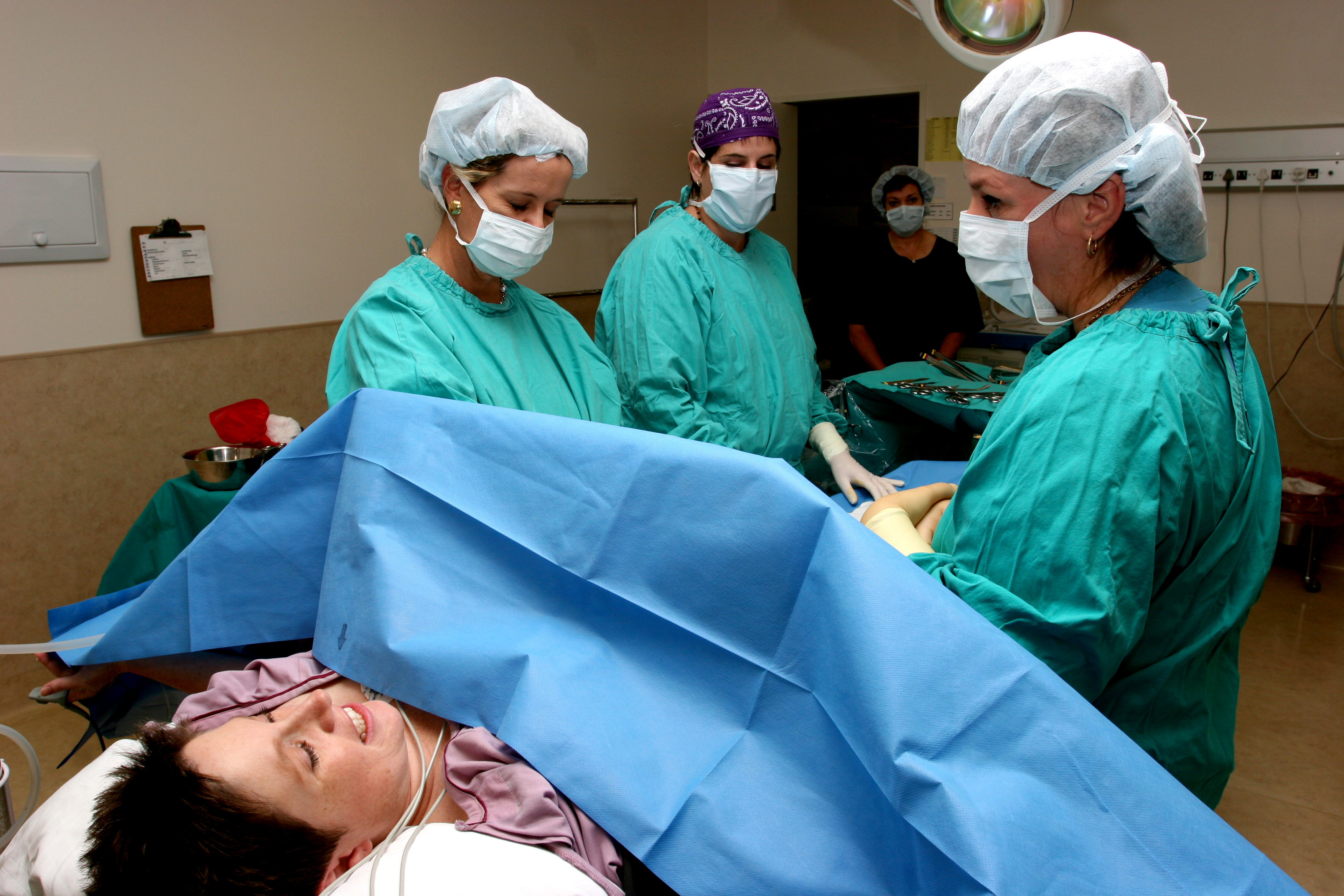
Woman in the operating room before a delivery

In the field of obstetrics and gynecology, there is no more debatable topic than the increased rate of cesarean (C-section) deliveries. The C-section rate is the percentage of all births that take place surgically, whereby a baby is delivered via an incision on the abdomen. Over the last few decades, this rate has increased tremendously. Up to the 1970’s, the rate of cesarean in the U.S. was less than 5% but in the subsequent few years, it climbed to 33%.

While the cesarean delivery has become a safer operation than it used to be, it is still a major abdominal surgery which should be avoided when a vaginal delivery is an option for both baby and mother. Sadly, rates of complications such as cerebral palsy have not decreased much despite the 600% increase of cesarean deliveries in the last three decades. So why then, has the cesarean rate climbed so much?

There are several factors explaining the increase the cesarean rates and there is no single answer. because so much has changed in the last two of three decades, in terms of medical, social and legal aspects. Let’s look at a few factors:

  • Breech babies: Few doctors deliver breech babies vaginally because recent studies suggested that C-section births are less risky for them.
  • Fewer patients attempt a VBAC (vaginal birth after cesarean): Women with a previous C-section are either not interested or not encouraged in having a vaginal birth after cesarean. There are risks involved in attempting a VBAC, but very often, they can be minimized by close fetal surveillance in labor.
  • Less patience for prolonged labor: Although 24-48 hour labors are often ultimately rewarded by a natural birth, many women prefer to have a cesarean now as opposed to waiting several more hours for a possible natural birth. Sometimes, it’s best to let nature do its work and wait, but physicians and women are often impatient, not tolerant of long (but natural) labor.
  • C-section delivery has become a much safer operation than it used to be decades ago: Long-term complications or serious short- term complications remain rare. This is mainly attributed to proper use of antibiotics, better and safer anesthesia techniques, and safe blood banking.
  • Women wait longer to have children: Increasing age is linked to a higher risk of developing complications such as high blood pressure, placenta previa and diabetes, just to name a few. These conditions increase the risk of cesarean.
  • More multiple births: The rates of twins and triplets have increased by 200-300%. 3-5% of all pregnancies are now twins (or triplets) as opposed to 1% years ago. These high risk pregnancies are associated with a much higher risk of cesarean. The majority of twin pregnancies and nearly all triplets are born via cesarean.
  • Cesarean delivery on maternal request: Some women feel that women should be entitled to make decisions about their body, and about how they want to deliver and at times, women ask for a cesarean delivery In the absence of a medical indication.,

The WHO (World Health Organization) has been advocating since 1985 to reduce the C-section to10-15 percent since 1985. Here are some tips for women who want to achieve this goal and reduce their chances of having a C-section.

  • Don’t be tempted to have a “scheduled” induction: while sometimes, labor inductions are medically necessary to prevent an adverse maternal or fetal outcome, many physicians and patients are tempted to “schedule” a delivery at a set time, without a medical reason.
  • If your baby is breech (babys bottom is down instead of the head): attempt an external version. A simple procedure called External Cephalic Version may turn the baby from breech position to head down, simply by turning the baby externally, by an experiences obstetrician.
  • Be patient. Labors can be long, sometimes very long, so be prepared for it and be patient. Bring a good book, movies, music and try to rest when you can (this is especially possible when you have a well working epidural).
  • Bring a coach: Having a supportive person during your labor (your spouse, your mother or a trained labor coach, called a Doula) has been shown to decrease the risk of cesarean and also to improve your perception of labor. They will keep you distracted during the often very long process.
  • Good life habits: women who are physically fit and are within their ideal body weight are less likely to develop diabetes, high blood pressure and excessively large babies during their pregnancy. So if you have healthy life habits, keep up with them! There is no reason to stop exercising during your pregnancy.
  • Don’t eat excessively: your baby is a magnet for the calories you ingest, so there’s no reason to eat excessively to feed your baby. Don’t believe your mother, aunts or anyone else who force you to eat in order to have a big baby and tell you that “a big baby is healthier”. It simply isn’t true. Six pounds babies are just as healthy as a ten pound ones.

All content of this newsletter is intended for general information purposes only and is not intended or implied to be a substitute for professional medical advice, diagnosis or treatment. Please consult a medical professional before adopting any of the suggestions on this page. You must never disregard professional medical advice or delay seeking medical treatment based upon any content of this newsletter. PROMPTLY CONSULT YOUR PHYSICIAN OR CALL 911 IF YOU BELIEVE YOU HAVE A MEDICAL EMERGENCY.

OB/GYN or Midwife: Which Is Right For You?

When you decide to try to conceive, it is important to start looking for a practitioner to care for you during pregnancy and the birth of your baby. Deciding between an OB/GYN doctor and Midwife depends on what kind of experience you want, where you plan to give birth, what your insurance covers and the risk level of your pregnancy. Here are a few factors to consider in making your decision:

  1. If you have a medical condition such as high blood pressure, epilepsy, heart disease, or diabetes, or had certain serious complications in a previous pregnancy, your pregnancy will probably be considered high risk. In this case, you will need to see an obstetrician who will monitor your body as it adapts to pregnancy along with monitoring the development of your baby.
  2. If you’re looking for a practitioner who is more likely to take a holistic approach to your care – and to see birth as a normal process, intervening only when necessary and not routinely – you may prefer a midwife.
  3. If you have no health problems or pregnancy complications and you have your heart set on giving birth in a birth center or at home, you’ll want to find a midwife who practices in these settings. In the event you want the option for an epidural, or are anxious about any possible complications then you’ll want to be in a hospital. For a hospital birth, you can choose an ob-gyn, a family physician, or a certified nurse-midwife as your primary caregiver.

Obstetricians are by far the most chosen option for expecting mothers in the United States, although certified nurse-midwives are becoming more popular. Some women choose practices that have both ob-gyns and midwives. The most important thing to consider when choosing a delivery option is your comfort.

Flushing Hospital Medical Center’s Department of Obstetrics and Gynecology has a full program to provide total health care to women. For more information about the many services offered by the Department of Obstetrics and Gynecology at Flushing Hospital, please call 718-670-8994.

All content of this newsletter is intended for general information purposes only and is not intended or implied to be a substitute for professional medical advice, diagnosis or treatment. Please consult a medical professional before adopting any of the suggestions on this page. You must never disregard professional medical advice or delay seeking medical treatment based upon any content of this newsletter. PROMPTLY CONSULT YOUR PHYSICIAN OR CALL 911 IF YOU BELIEVE YOU HAVE A MEDICAL EMERGENCY.