November is COPD Awareness Month

The month of November is recognized as COPD Awareness Month. The purpose of this designation is to bring awareness to the severity of this disease and show how many people are affected by it.

Chronic Obstructive Pulmonary Disease (COPD) is a term used to describe different diseases that are related and that affect a person’s ability to breath. There are an estimated 15 million adults that have been diagnosed with the disease and approximately the same number who have the disease but who haven’t been formally diagnosed. It is the third leading cause of death in the United States. Some factors that contribute to developing COPD are smoking, inhaling second hand smoke, genetic factors, breathing in occupational dust and chemicals and spending long periods of time in areas with high amounts of air pollution.

  • Symptoms of COPD include:
  • Breathlessness
  • Chronic coughing
  • Wheezing

There is no cure for the disease. Presently treatment consists of alleviating some of the symptoms. If you would like to schedule an appointment with a pulmonologist at Flushing Hospital, please call 718-670-5486.

All content of this newsletter is intended for general information purposes only and is not intended or implied to be a substitute for professional medical advice, diagnosis or treatment. Please consult a medical professional before adopting any of the suggestions on this page. You must never disregard professional medical advice or delay seeking medical treatment based upon any content of this newsletter. PROMPTLY CONSULT YOUR PHYSICIAN OR CALL 911 IF YOU BELIEVE YOU HAVE A MEDICAL EMERGENCY.
November is Diabetes Awareness Month

The month of November has been designated American Diabetes Awareness Month by the American Diabetes Association (ADA). Diabetes affects nearly 30 million people in the United States which is ten percent of the total population. There are 86 million more people who have pre-diabetes and are at risk of developing type II diabetes during their lifetime.

 There is no cure for diabetes but there are many ways for people who have been diagnosed with the disease to live long, healthy lives if it is controlled properly. Learning to live with diabetes is one of the most important components for managing the disease. Proper nutrition, regular physical activity, monitoring blood sugar daily and taking medication to control diabetes are some of the ways that complications can be prevented. Uncontrolled diabetes can lead to many complications. It is the leading cause of blindness, non traumatic amputations, kidney disease and also increases the risk for heart attacks.


During the month of November the ADA sponsors events around the country that serve to make people aware of the risk factors and the warning signs of diabetes. For more information on events taking place, please see the American Diabetes Association’s website at . It is important to have regular medical exams to manage diabetes successfully. To schedule an appointment with a physician at Flushing Hospital please call 718-670-5486.


All content of this newsletter is intended for general information purposes only and is not intended or implied to be a substitute for professional medical advice, diagnosis or treatment. Please consult a medical professional before adopting any of the suggestions on this page. You must never disregard professional medical advice or delay seeking medical treatment based upon any content of this newsletter. PROMPTLY CONSULT YOUR PHYSICIAN OR CALL 911 IF YOU BELIEVE YOU HAVE A MEDICAL EMERGENCY.
Metastatic Breast Cancer Awareness Day

October 13 is observed as Metastatic Breast Cancer Awareness Day. The purpose of this observance is to spread awareness about the disease and the need for developing new and targeted treatments that will improve the rate of survival.

Metastatic breast cancer also called stage four or advanced breast cancer is cancer that has spread beyond the breast to other organs in the body (most often the bones, lungs, liver or brain). Although metastatic breast cancer has spread to another part of the body, it is considered and treated as breast cancer. For example, breast cancer that has spread to the bones is still breast cancer (not bone cancer) and is treated with breast cancer drugs, rather than treatments for a cancer that began in the bones.

Currently there is no cure for MBC; however, individuals are able to live longer due to treatment that focuses on length and quality of life. While living with the disease is not easy you can face its many challenges with proper knowledge, tips, and support, you can be well equipped to face the challenges of MBC. Although today MBC cannot be cured, this does not mean it cannot be treated. Treatment focuses on length and quality of life. Together with your doctor, you can find the balance of treatment and quality of life that is right for you. Your treatment plan is guided by many factors, including:

  • Characteristics of the cancer cells
  • Where the cancer has spread
  • Your current symptoms
  • Age and health
  • Past cancer treatments

The types of treatments available for MBC are chemotherapy, hormone therapy and targeted therapies through drugs that target genes spreading cancerous cells. Clinical trials also offer the exploration of new treatment options that may be beneficial to you. Talk to your doctor about treatment options they suggest in order to find what works best for you.

Survival for metastatic breast cancer varies greatly from person to person but modern treatments for both early-stage and metastatic breast cancer have improved survival for women diagnosed today.

All content of this newsletter is intended for general information purposes only and is not intended or implied to be a substitute for professional medical advice, diagnosis or treatment. Please consult a medical professional before adopting any of the suggestions on this page. You must never disregard professional medical advice or delay seeking medical treatment based upon any content of this newsletter. PROMPTLY CONSULT YOUR PHYSICIAN OR CALL 911 IF YOU BELIEVE YOU HAVE A MEDICAL EMERGENCY.

National Depression Screening Day

Thursday October 6th has been designated as National Depression Screening day, an annual event held during Mental Illness Awareness Week. This event was started 26 years ago as an effort to provide people with mental health education materials and give them resources for support services. National Depression Screening Day was also created with the hope of removing the stigma from mental illness.

The World Health Organization estimates that 350 million people worldwide suffer from depression. The organization states that early recognition and treatment of the disease offer the best opportunity for successful outcomes. If depression is left untreated it can lead to destructive behaviors and possibly suicide.

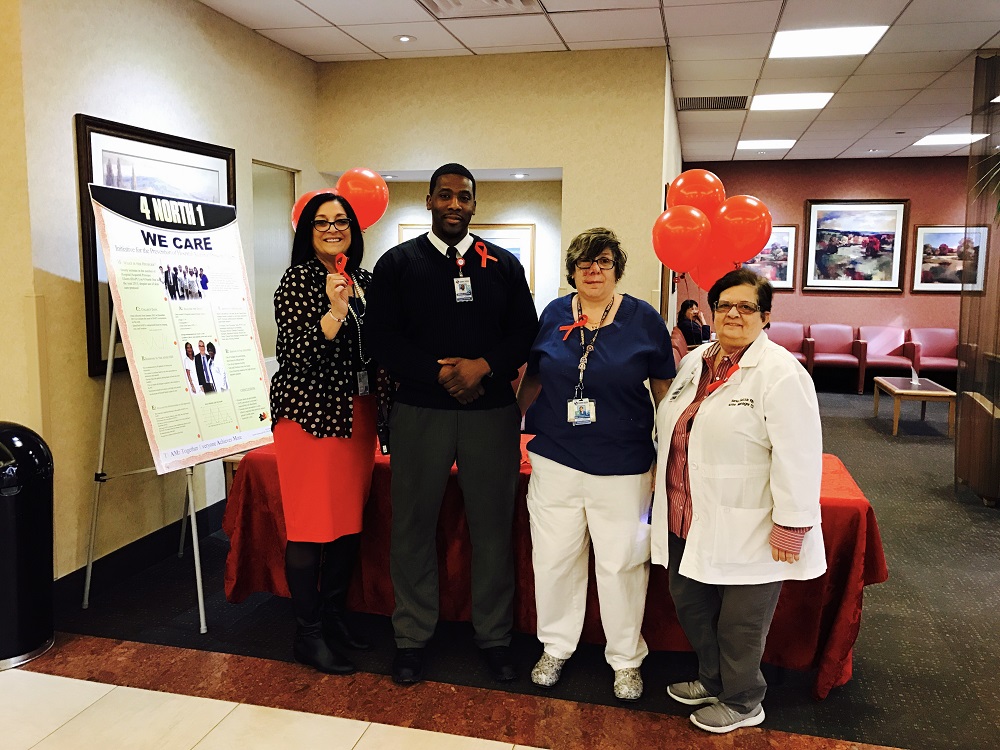
In an effort to raise awareness,Flushing Hospital Medical Center’s Department of Psychiatry observed National Depression Screening Day by providing free depression screenings to the community. The community outreach initiative took place in the hospital’s main lobby, where members of the department educated guests about symptoms of depression and when to seek help. The group reminded everyone that mental illness is nothing to be ashamed of and they should not delay getting help for that reason.

Depression screenings help to distinguish between short-term feelings of sadness and stress due to transient life episodes and more severe cases that can go on for months and years. The tests usually last between two to five minutes and the scores will indicate whether a further evaluation by a mental health professional is needed. It is important for people to know that help is available.

To schedule an appointment with the Mental Health Department of Flushing Hospital, please call 718-670-5486.

All content of this newsletter is intended for general information purposes only and is not intended or implied to be a substitute for professional medical advice, diagnosis or treatment. Please consult a medical professional before adopting any of the suggestions on this page. You must never disregard professional medical advice or delay seeking medical treatment based upon any content of this newsletter. PROMPTLY CONSULT YOUR PHYSICIAN OR CALL 911 IF YOU BELIEVE YOU HAVE A MEDICAL EMERGENCY.

National Falls Prevention Awareness Day

September 22nd is designated as National Falls Prevention Awareness Day. This observance serves to increase awareness and to educate the public about the risks of falls and how to prevent them from happening. According to the National Council on Aging, falls are the leading cause of fatal and nonfatal injuries for older Americans.
A fall, with or without serious injury, can impact a person’s quality of life. Older people have a significant fear of falling and will often limit their activities because of it. This can lead to physical decline, depression, social isolation and feeling helpless. However, if they exercise caution and follow these steps, they can reduce the risk of an accident and continue on with routine activities:
• Speak to a doctor about performing a risk of falling assessment
• Build up balance, strength and flexibility
• Have vision and hearing checked
• Remove tripping hazards in the home and make sure that there is adequate lighting
• Install grab bars in the bathroom
• Make sure that there are secure rails on all stairs
• Review  medications to make sure they don’t affect  balance
If you would like to schedule an appointment with a physician at Flushing Hospital Medical Center to discuss fall risk prevention, please call 718-670-5486.

All content of this newsletter is intended for general information purposes only and is not intended or implied to be a substitute for professional medical advice, diagnosis or treatment. Please consult a medical professional before adopting any of the suggestions on this page. You must never disregard professional medical advice or delay seeking medical treatment based upon any content of this newsletter. PROMPTLY CONSULT YOUR PHYSICIAN OR CALL 911 IF YOU BELIEVE YOU HAVE A MEDICAL EMERGENCY.

What to Expect After Your Celiac Disease Diagnosis

gluten-free-476393521If you have received a diagnosis from your doctor that confirms you have celiac disease; it is natural to wonder what comes next.  Many doctors will offer guidelines which may include tips to live gluten-free. While these guidelines are essential, it is also very important that you truly understand your medical condition.

According to the Celiac Disease Foundation, celiac disease is defined as, “a genetic autoimmune disorder where the ingestion of gluten leads to damage in the small intestine.” It is estimated that the disease affects one in every one hundred people worldwide.  If left untreated, celiac disease can cause long-term health conditions such as gall bladder malfunction, infertility or miscarriage, pancreatic insufficiency, early onset osteoporosis or osteopenia as well as vitamin and mineral deficiencies.

In addition to having a better understanding of celiac disease, educating yourself about the changes to expect in your lifestyle, will prove helpful. Some of the changes include:

  • Discarding of any food that contains gluten. This means sticking to a strict diet that excludes wheat, barley, farina, oats, rye and other items that are known to have gluten.
  • Excluding certain items from your diet may deprive you of some nutrients; it is recommended that you speak to your doctor about which vitamins and dietary supplements you should take.
  • Evaluating the ingredients in medications; some may have small amounts of gluten.
  • Taking care of your body by exercising and implementing more fruits and fresh vegetables into your diet.
  • Following up with your physician or dietitian as recommended. This is important as it will help them to monitor your nutritional intake and check for deficiencies.

Finding resources that can help you transition or stick to new your lifestyle, such as your doctor, support groups, organizations such as the Celiac Disease Foundation or a local hospital can help make life after your celiac diagnosis a little easier.

Flushing Hospital Medical Center supports National Celiac Awareness Day. This observance falls on September 13 of each year and was created to help people learn more about celiac disease and how it impacts lives.

All content of this newsletter is intended for general information purposes only and is not intended or implied to be a substitute for professional medical advice, diagnosis or treatment. Please consult a medical professional before adopting any of the suggestions on this page. You must never disregard professional medical advice or delay seeking medical treatment based upon any content of this newsletter. PROMPTLY CONSULT YOUR PHYSICIAN OR CALL 911 IF YOU BELIEVE YOU HAVE A MEDICAL EMERGENCY.

Flushing Hospital Supports World Suicide Prevention Day

Suicide affects millions; over 800,000 people take their lives each year, and the number of people who attempt suicide is twenty five times that amount. In addition to the lives lost, suicide also affects the many friends and family members devastated by the loss of their loved one.

Suicide is largely preventable though. Through education and awareness, we can get those people who are contemplating suicide the help they need.

Educational and Creative composition with the message Stop Suicide

One of the best tools in preventing suicide is to know the risk factors. Over 90% of people who attempt suicide live with depression or another mental disorder. Alcohol or substance abuse is often a contributing factor. Adverse reactions to traumatic events or stress can also lead to someone wanting to take their own life.

Other risk factors for suicide include:
• Family history of mental disorder or substance abuse
• Family history of suicide
• Family violence
• Physical or sexual abuse
• Keeping firearms in the home
• Chronic physical illness, including chronic pain
• Exposure to the suicidal behavior of others

Someone who is considering suicide usually displays certain behaviors. Loved ones should look for the following warning signs:

Always talking or thinking about death
Trouble sleeping and eating — that gets worse over time
Displaying reckless behavior that could result in death, such as driving fast or running red lights
Losing interest in things one used to care about
Making comments about being hopeless, helpless, or worthless
Talking about suicide or killing one’s self
Visiting or calling people to say goodbye

If someone you know appears to be contemplating suicide, take the issue seriously. Let the person know that you care and understand and are listening and attempt to get them immediate help from a health care professional.

If your loved one appears to be in imminent danger of committing suicide, do not leave him or her alone. Remove any weapons or drugs he or she could use. Accompany him or her to the nearest emergency room or call 911.

September 10 has been designated World Suicide Prevention Day. Many organizations from around the world have joined this cause. Flushing Hospital’s supports their efforts and the hospital’s Department of Psychiatry offers many inpatient and outpatient services to help those in need.

All content of this newsletter is intended for general information purposes only and is not intended or implied to be a substitute for professional medical advice, diagnosis or treatment. Please consult a medical professional before adopting any of the suggestions on this page. You must never disregard professional medical advice or delay seeking medical treatment based upon any content of this newsletter. PROMPTLY CONSULT YOUR PHYSICIAN OR CALL 911 IF YOU BELIEVE YOU HAVE A MEDICAL EMERGENCY.

National Immunization Awareness Month

August is National Immunization Month. The importance of this designation is to make people aware about the different types of vaccines they should get throughout their lifetime. Vaccines are important to keep the body healthy by building up an immunity to serious diseases. If you would like to make an appointment with a physician at Flushing

Hospital, please call 718-670-5486.

All content of this newsletter is intended for general information purposes only and is not intended or implied to be a substitute for professional medical advice, diagnosis or treatment. Please consult a medical professional before adopting any of the suggestions on this page. You must never disregard professional medical advice or delay seeking medical treatment based upon any content of this newsletter. PROMPTLY CONSULT YOUR PHYSICIAN OR CALL 911 IF YOU BELIEVE YOU HAVE A MEDICAL EMERGENCY.

Tips for Breastfeeding Babies Who are Teething

breastfeeding -455257461Most babies do not bite while breastfeeding but some might while teething. This can be painful or uncomfortable and may cause some mothers to consider weaning. Although teething raises some challenges, mothers are encouraged to continue breastfeeding as best they can. Organizations such as the World Health Organization and the American Academy of Pediatrics highly recommend breastfeeding until babies are ages one to two.

If you decide to continue breastfeeding throughout teething, following these tips can help you alleviate some pain and discomfort:
• Make certain that your baby is latched on properly. When babies are latched properly it is difficult for them to bite as their tongues are covering the lower gums or teeth.
• Massage the baby’s gums before feeding. This can decrease the level of discomfort or pain your baby may be experiencing.
• Discourage the baby each time he bites by either removing him from the nipple bite or by pulling him closer to you. Then calmly say “no biting”.
• Give baby something cold to chew before feeding. A chilled, age-appropriate teething toy or cloth can ease soreness. Rubbing an ice cube on gums works just as well.
• Stick a finger in the corner of the baby’s mouth as he or she clamps down. This will serve as a barrier between your nipples and baby’s teeth.

The good news is biting caused by teething is only a phase; it is temporary. Continuing to breastfeed can provide countless benefits for your baby. If your baby still bites after trying these tips, do not hesitate to contact a lactation consultant or your pediatrician for direction and support

All content of this newsletter is intended for general information purposes only and is not intended or implied to be a substitute for professional medical advice, diagnosis or treatment. Please consult a medical professional before adopting any of the suggestions on this page. You must never disregard professional medical advice or delay seeking medical treatment based upon any content of this newsletter. PROMPTLY CONSULT YOUR PHYSICIAN OR CALL 911 IF YOU BELIEVE YOU HAVE A MEDICAL EMERGENCY.

Today is World Hepatitis Awareness Day

Liver Protected Against Hepatitis Virus

In 2010 the World Health Organization ( W.H.O. ) designated July 28th as World Hepatitis Day. This serves to increase awareness about viral hepatitis and to influence change in disease prevention, testing and treatment. The goal for 2016 is to adopt a plan that will eliminate hepatitis as a public threat by 2030.
Hepatitis is a virus that causes an inflammation of the liver. The liver is an organ in the body that processes nutrients, filters the blood and fights infections. The most common forms of hepatitis are A, B, and C. Hepatitis B and C kill close to 1.4 million people each year and cause almost 80 percent of all liver cancer cases. Many people have the hepatitis virus and are unaware of it.
Symptoms of acute hepatitis B include:
• Fever
• Nausea
• Loss of appetite
• Jaundice
• Abdominal pain
• Fatigue
Hepatitis is spread from person to person through contact with bodily fluids. It is possible that people remain without symptoms for many years but during this time the disease is slowly destroying the liver. It can take many years for the symptoms to appear. Blood tests are available that can detect the virus at an early stage.
Ways to reduce infection:
• Use only sterile equipment for injections
• Test all donated blood for hepatitis
• Practice safe sex
• Encourage people to get hepatitis B vaccine
Medication exists that can cure hepatitis C and can control hepatitis B infection. When given properly, people are less likely to die from liver cancer and cirrhosis and also are less likely to transmit the disease to others. The hepatitis B vaccine is given in three doses over a 6 month period and it is recommended that it be initiated right after birth if possible.
To make an appointment with a physician at Flushing Hospital to discuss the vaccine, please call 718-670-5486.

All content of this newsletter is intended for general information purposes only and is not intended or implied to be a substitute for professional medical advice, diagnosis or treatment. Please consult a medical professional before adopting any of the suggestions on this page. You must never disregard professional medical advice or delay seeking medical treatment based upon any content of this newsletter. PROMPTLY CONSULT YOUR PHYSICIAN OR CALL 911 IF YOU BELIEVE YOU HAVE A MEDICAL EMERGENCY.