What is Athlete’s Foot ?

Athlete’s Foot, also called tinea pedis, is a fungal infection of the foot. This It is a type of fungus that thrives in an environment that is warm, dark, and moist, similar to the inside of a shoe. It is commonly seen in athletes who walk barefoot in locker rooms but it can affect anyone. Even though it isn’t a serious disease, it can be quite uncomfortable and can be difficult to cure.

Athlete’s foot is spread by coming into direct contact with someone who already has it (wearing shoes or socks of an infected person), or indirectly (by walking on surfaces in a locker room, around a pool, or in a shower where someone with the infection has been).

Symptoms of athlete’s foot include:

  • Blisters on the feet that itch
  • Burning, itching, and stinging in the areas between the toes or on the soles of the feet
  • Discolored toe nails
  • Raw skin on the bottom of the feet
  • Peeling skin on the bottom of the feet
  • Having bad foot odor

Prevention of athlete’s foot is very important, especially if using public locker rooms or showers. Some of the methods of prevention include:

  • Wearing water slippers in public showers and locker rooms
  • Never walking barefoot
  • Never wearing someone else’s shoes, socks, or towels
  • Changing socks frequently especially if you sweat a lot
  • Using antifungal powder every day
  • Washing your feet with soap and water every day and drying them well, especially between the toes
  • Disinfecting the inside of your shoes with disinfectant wipes
  • Never wearing shoes that are damp on the inside

Athlete’s foot is diagnosed by taking a skin scraping form the infected area and placing it in a solution of potassium hydroxide. It is then examined under a microscope. If the sample is positive the normal cells will have dissolved and the infected cells will remain.

Treatment of athlete’s foot requires medication which can either be a topical over the counter medication or a stronger topical agent that will be prescribed by a physician. Sometimes an oral medication may be necessary if the infection is very serious.

If you are experiencing any of the symptoms of athlete’s foot you should seek medical care right away. If you would like to schedule an appointment with a foot doctor at Flushing Hospital Medical Center, please call .

All content of this newsletter is intended for general information purposes only and is not intended or implied to be a substitute for professional medical advice, diagnosis or treatment. Please consult a medical professional before adopting any of the suggestions on this page. You must never disregard professional medical advice or delay seeking medical treatment based upon any content of this newsletter. PROMPTLY CONSULT YOUR PHYSICIAN OR CALL 911 IF YOU BELIEVE YOU HAVE A MEDICAL EMERGENCY.

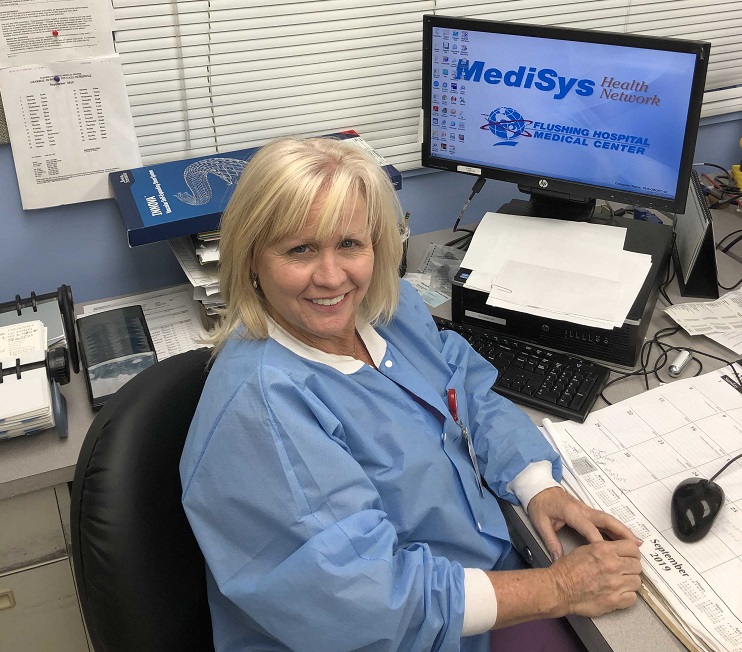
August Employee Spotlight – Michael Saavedra

August’s Employee Spotlight shines on Michael A. Saavedra, Lead Material Handler at Flushing Hospital Medical Center (FHMC).

Michael has been a valued employee at FHMC for the past 32 years.  First, as a Material Handler and currently as Lead Material Handler, Michael supervises the day to day operations of the store room and receiving.

Michael Saavedra attended New York University, is a motor cycle enthusiast, and through the motorcycle community, raises money for various charitable organizations.

“Working with my great team and supply chain makes my job so much easier.” stated Michael.  “I make it my duty to ensure that all departments are accommodated with the items to help them better serve the patients and the hospital.”

He prides himself on making sure that the inventories are at optimal stock, continually checks expiration dates and cycles out any expired items from being brought to the departments he serves.

Flushing Hospital Medical Center congratulates Michael A. Saavedra for receiving August’s Employee Spotlight!

All content of this newsletter is intended for general information purposes only and is not intended or implied to be a substitute for professional medical advice, diagnosis or treatment. Please consult a medical professional before adopting any of the suggestions on this page. You must never disregard professional medical advice or delay seeking medical treatment based upon any content of this newsletter. PROMPTLY CONSULT YOUR PHYSICIAN OR CALL 911 IF YOU BELIEVE YOU HAVE A MEDICAL EMERGENCY.
How Is Water Good For Your Health?


Drinking water is often touted as a way to clear the body’s system of unnecessary waste, but it actually has many more benefits.

Studies show that water can:

  1. Lubricate the joints of the body
  2. Help form saliva and mucous
  3. Deliver oxygen throughout the body
  4. Boost skin health and beauty
  5. Cushion the brain, spinal cord and other sensitive tissues
  6. Regulate body temperature
  7. Aid the digestive track
  8. Help maintain blood pressure
  9. Help keep  airways open
  10. Makes minerals and nutrients accessible throughout the body
  11. Prevent kidney damage
  12. Boost performance during exercise
  13. Promote weight loss
  14. Helps prevent hangover

According to the Mayo Clinic, an adequate daily fluid intake is about 15.5 cups (3.7 liters) of fluids for men and about 11.5 cups (2.7 liters) of fluids for women.

All content of this newsletter is intended for general information purposes only and is not intended or implied to be a substitute for professional medical advice, diagnosis or treatment. Please consult a medical professional before adopting any of the suggestions on this page. You must never disregard professional medical advice or delay seeking medical treatment based upon any content of this newsletter. PROMPTLY CONSULT YOUR PHYSICIAN OR CALL 911 IF YOU BELIEVE YOU HAVE A MEDICAL EMERGENCY.

Tips for Traveling With Medication

Tips for traveling with medication Preparing for a flight often requires careful planning and packing. When traveling with medication, knowing airport rules ahead of time can help you to pack correctly and minimize setbacks on your trip.

It is important that you follow these tips provided by the Transportation Security Administration (TSA) to avoid delays in your travel time or confiscation of your medication:

  • Confirm that your prescription is legal at your destination; some medications that are allowed in the United States are prohibited in other countries.
  • Learn state requirements for the labeling of prescription medication. States have individual laws of which travelers must comply.
  • You can bring unlimited amounts of your medication in pill or solid form, as long as it is screened. Medications are typically screened by X-ray; however, if you do want them X-rayed you may ask to have them inspected instead. This request must be made before your medication enters the X-ray tunnel.
  • You are allowed to bring liquid medication in carry-on bags in excess of 3.4 ounces in reasonable quantities.
  • If traveling with liquid medication, you must inform the inspecting officer at the start of the screening checkpoint process. Additional screening will be required and you may be asked to open the container.
  • Supplies associated with medication such as syringes, pumps, IV bags or needles must undergo screening.

Packing appropriately for your trip can make traveling with medication less complicated. It is highly recommended that you check the TSA’s website, www.tsa.gov, for updates as the current rules can change.

All content of this newsletter is intended for general information purposes only and is not intended or implied to be a substitute for professional medical advice, diagnosis or treatment. Please consult a medical professional before adopting any of the suggestions on this page. You must never disregard professional medical advice or delay seeking medical treatment based upon any content of this newsletter. PROMPTLY CONSULT YOUR PHYSICIAN OR CALL 911 IF YOU BELIEVE YOU HAVE A MEDICAL EMERGENCY.

Do You Ever Have Sweaty Palms ?

Having your palms sweat as a nervous response to a stressful situation is something that most people have experienced at some point in their lives, but for some, sweaty palms (or palmar hyperhidrosis), is a chronic condition that can cause great embarrassment and interfere with their day to day existence.

Palmer hyperhidrosis affects approximately 1 and 3 percent of Americans, but researchers believe that this number is low because many are unaware that it is a medical condition and never report it to their doctor.

This condition is part of a family of disorders called primary focal hyperhidrosis, which can affect other parts of the body including the armpits, scalp and feet. These conditions are usually not caused by an underlying medical issue and are unlike secondary hyperhidrosis, which is characterized by excessive sweating that isn’t isolated to one area of the body and is usually the result of another medical problem.

While the exact cause of palmer hyperhidrosis is still unknown, many believe there is a genetic predisposition as many who have it also report a family history of the condition.

There are many treatment options for palmer hyperhidrosis, including:

  • Topical aluminum chloride – One of the most common treatments for palmer hyperhidrosis. This solution is applied to the palms nightly until the condition improves and then used as needed.
  • Botox injections – This has proven to be an effective treatment for many forms of localized sweating, including the palms. The treatment is FDA approved, but it can result in temporary weakness in the hands.
  • Iontophoresis – A treatment that involves placing your hands in a shallow bath of water that contains a mild electrical current. This medical device can cost over $500 and may not be covered by all insurers.
  • Medications – Oral prescriptions called anticholinergics are sometimes prescribed if other treatment options aren’t successful, but these medications sometimes cause uncomfortable side effects.
  • Surgery – If all other measures fail, there are procedures where a surgeon can go into the chest and clip the nerves that are responsible for producing sweat. This can be a permanent solution, but only used in extreme cases.

Speak to your doctor about what type of treatment option is best for you. If you would like to schedule an appointment with a doctor at Flushing Hospital Medical Center, please call .

All content of this newsletter is intended for general information purposes only and is not intended or implied to be a substitute for professional medical advice, diagnosis or treatment. Please consult a medical professional before adopting any of the suggestions on this page. You must never disregard professional medical advice or delay seeking medical treatment based upon any content of this newsletter. PROMPTLY CONSULT YOUR PHYSICIAN OR CALL 911 IF YOU BELIEVE YOU HAVE A MEDICAL EMERGENCY.

Department Spotlight – Flushing Hospital Gift Shop

Anne Marie Dinicola, Manager, Flushing Hospital Gift Shop

When you enter the at you will be met by the ever smiling, ever accomodating Anne Marie Denicola, Manager.  The plays an important function by providing a variety of gifts, greeting cards, floral arrangements and toiletries. They also provide carry gift bags, balloons, candy, newspapers, magazines, books, seasonal items, toys and much more.

We thank Anne Marie Denicola for being such a wonderful “Ambassador of Cheer” to our patients, visitors and employees.

All content of this newsletter is intended for general information purposes only and is not intended or implied to be a substitute for professional medical advice, diagnosis or treatment. Please consult a medical professional before adopting any of the suggestions on this page. You must never disregard professional medical advice or delay seeking medical treatment based upon any content of this newsletter. PROMPTLY CONSULT YOUR PHYSICIAN OR CALL 911 IF YOU BELIEVE YOU HAVE A MEDICAL EMERGENCY.

Is it Possible to Get the Flu in the Summer ?

Most people associate flu season with the late fall and winter months but it is also possible to get the flu during the summer. While the colder weather can help the flu virus to flourish, it is important to remember that it is not the temperature that causes the flu. The virus is spread by coming in to contact with someone who already has it.

Summer flu symptoms are the same as they would be during any other time of the year and can include:

  • High fever
  • Chills
  • Body aches and pains
  • Headache
  • Fatigue
  • Dizziness

People who are at high risk for developing complications from the flu include:

  • Women who are pregnant
  • People over the age of 65
  • People who have a weakened immune system
  • Children under the age of two
  • People who have diabetes, heart disease, or lung disease

Ways to avoid the flu include practicing good hand-washing hygiene, eating healthy, getting enough rest, and avoiding people who are ill.

If you think that you are experiencing flu-like symptoms you should see your medical provider to get diagnosed and start treatment. If you would like to schedule an appointment with a physician at Flushing Hospital Medical Center please call .

All content of this newsletter is intended for general information purposes only and is not intended or implied to be a substitute for professional medical advice, diagnosis or treatment. Please consult a medical professional before adopting any of the suggestions on this page. You must never disregard professional medical advice or delay seeking medical treatment based upon any content of this newsletter. PROMPTLY CONSULT YOUR PHYSICIAN OR CALL 911 IF YOU BELIEVE YOU HAVE A MEDICAL EMERGENCY.

Lung Cancer and Treatment Options

Lung cancer is a form of cancer that starts in the lungs. In the early stages, there may not be any signs or symptoms. A history of smoking definitely contributes to a higher risk of being diagnosed with the disease, though non-smokers also can develop lung cancer. Smoking causes cancer by irritating the lining of the lungs. This causes changes in the lung tissue. It is believed that the effects of smoking may be reversible in the very early phases but repeated exposure to the chemicals found in smoke will eventually be irreversible.

Signs and Symptoms of Lung Cancer include:

  • A cough that doesn’t get better
  • Coughing up blood
  • Shortness of breath
  • Chest pain
  • Wheezing
  • Hoarseness
  • Headache
  • Weight loss that isn’t intentional

There are two types of lung cancer based on their appearance under the microscope:

  • Small cell is the most common type of lung cancer and is found in heavy smokers.
  • Non-small cell is a group of other types of lung cancers that act similarly. This group includes squamous cell carcinoma, adenocarcinoma, and large cell carcinoma.

Lung cancer staging

Stage 1

  • The cancer is limited to the lung.
  • Tumor is smaller than 2 inches
  • has not spread to lymph nodes

Stage 2

  • Usually larger than 2 inches
  • Spread to lymph nodes
  • Possible spread to pleura, chest wall and diaphragm

Stage 3

  • Involves spread to other organs
  • Found in distant lymph nodes

Stage 4

  • Spread from one lung to another
  • Spread to distant parts of the body

If lung cancer is suspected, a few tests to make the diagnosis definitive will be ordered. A chest x-ray will be performed and if there are any lesions found on the lung a CT scan will be performed to get a better view of the lungs. An exam of the sputum can sometimes reveal lung cancer cells and to complete the diagnosis a lung biopsy will be done to examine the cells to see if they are cancerous.

Depending on the stage of cancer, treatment options vary and can include chemotherapy, radiation and / or surgery. A common surgical option is called a lobectomy, removing one of the lobes of the lung.

If you would like to discuss lung cancer and treatment options with a physician at Flushing Hospital, please call 718-670-5486.

All content of this newsletter is intended for general information purposes only and is not intended or implied to be a substitute for professional medical advice, diagnosis or treatment. Please consult a medical professional before adopting any of the suggestions on this page. You must never disregard professional medical advice or delay seeking medical treatment based upon any content of this newsletter. PROMPTLY CONSULT YOUR PHYSICIAN OR CALL 911 IF YOU BELIEVE YOU HAVE A MEDICAL EMERGENCY.

Social Anixety and Alcohol Abuse

According to the Anxiety and Depression Society of America, about 20 percent of people with social anxiety disorder (SAD) also suffer from alcohol abuse or dependence.

Social anxiety is defined as a disorder that is triggered by social situations where your emotions may arise causing you to have difficulty talking to others, fear being unjustly judged by others, become self-conscious while in the company of others or get physically ill at the thought of attending a social event.

By consuming alcohol, you could possibly experience the illusion of reducing the symptoms of SAD, but it can also lead to an additional issue with alcohol dependence and abuse.

For some, alcohol and SAD are a dangerous combination; since alcohol may give you a false sense of calm when in social situations.  Additionally,  it can also you to delay your decision to seek treatment.  It may also interfere with an existing treatment.  While seeming to help quell the anxiety, alcohol can actually worsen the symptoms of SAD.

If you have been diagnosed with SAD and consume alcohol to ease the symptoms, you may experience the following:

  • Drinking more or longer than you intended
  • Have difficulty limiting your consumption of alcohol
  • Experience strong urges to drink
  • Continuing to drink even though your anxiety is increasing

When alcohol is over consumed, it can lead to worsening the symptoms of social anxiety as well as causing:

  • Morning hangovers
  • Dizziness
  • Nausea
  • Dehydration
  • Low blood sugar

Most anxiety disorders can be treated in similar ways.  Some effective ways to calm your social anxiety are to sleep regularly, limit the amount of caffeine and alcohol consumed, eat a healthy diet, and implement relaxation methods such as taking deep breaths, keeping a journal, thinking positive thoughts, yoga, painting or listening to soothing music until the anxiety begins to dissipate.

If these methods are not effective, you may want to seek professional help.  If you have uncontrolled social anxiety disorder and are compensating with alcohol, you may want to speak with a mental health and addiction specialist at .  Call to schedule an appointment.

All content of this newsletter is intended for general information purposes only and is not intended or implied to be a substitute for professional medical advice, diagnosis or treatment. Please consult a medical professional before adopting any of the suggestions on this page. You must never disregard professional medical advice or delay seeking medical treatment based upon any content of this newsletter. PROMPTLY CONSULT YOUR PHYSICIAN OR CALL 911 IF YOU BELIEVE YOU HAVE A MEDICAL EMERGENCY.

Have You Ever Experienced Heart Palpitations?

Experiencing heart palpitations can be a very frightening experience. Palpitations have been described as feeling like the heart is fluttering, beating too fast, too hard, or like you are skipping a beat.

Palpitations are often benign. In most instances they may be caused by::

  • Too much stress
  • Too much anxiety
  • Too much vigorous activity
  • Too much caffeine
  • Too much alcohol
  • Too much nicotine
  • Thyroid disease
  • Anemia
  • Pregnancy
  • Depression
  • High fever
  • Taking too much of certain types of medications such as stimulants found in cold and cough medications , asthma inhalers, and some herbal supplements.

However, there are other situations in which they can indicate the presence of a very serious problem, like a heart attack or a stroke.

Sometimes heart palpitations can be due to heart disease, especially in people who have had prior heart attacks, have heart valve problems, heart muscle problems, and coronary artery disease. When palpitations are accompanied by chest pain, fainting, shortness of breath, or dizziness, it is important to seek emergency care right away.

There are a few tests that your doctor may order to find the cause of the palpitations. These include blood tests, EKG, Holter Monitoring, chest x-ray, and an echocardiogram.

Depending on the cause, you may be able to reduce the risk of palpitations by limiting stress, the consumption of nicotine, alcohol or caffeine.  Medications such as beta-blockers and calcium channel blockers can also be helpful.

Speak to your physician if you are experiencing palpitations to see if they can understand why this is occurring. You may also schedule an appointment with a physician at Flushing Hospital Medical Center by calling

All content of this newsletter is intended for general information purposes only and is not intended or implied to be a substitute for professional medical advice, diagnosis or treatment. Please consult a medical professional before adopting any of the suggestions on this page. You must never disregard professional medical advice or delay seeking medical treatment based upon any content of this newsletter. PROMPTLY CONSULT YOUR PHYSICIAN OR CALL 911 IF YOU BELIEVE YOU HAVE A MEDICAL EMERGENCY.