Foods That Are Good For Your Kidneys

The kidneys are two bean shaped organs in the body that help to filter waste products from the blood. They also help to regulate blood pressure.

People who have kidney disease should follow a diet that prevents the kidneys from losing their ability to function properly. It is important to maintain a diet low in sodium. This usually means less than 2,300 milligrams of sodium per day. Eating fresh foods is usually a healthier option due to a lower sodium content.  Eat small portions of protein, 2 to 3 ounces, is a good amount.

Protein can come from fish, skinless chicken, lean meat, eggs, or dairy. Avoiding alcohol is also important. Heart healthy meals are a good choice. Avoid deep fried foods. Broiled or baked is a better option. Eat foods lower in phosphorous include vegetables, bread, pasta, rice, corn, and foods low in potassium apples, carrots, green beans, white bread, apple, grape, cranberries. It is also important to drink six to eight glasses of water a day.

Things to avoid when you have kidney disease are:

  • Sodium
  • Potassium
  • Excess Protein
  • Fast food

There a certain foods that help to keep the kidneys functioning well. These include:

  • Cauliflower
  • Blueberries
  • Sea Bass
  • Red Grapes
  • Garlic
  • Buckwheat
  • Olive Oil
  • Cabbage
  • Bell peppers
  • Arugula
  • Macademia nuts
  • Radish
  • Turnips
  • Pineapple
  • Shiitake mushrooms

Speak to your physician if you are having kidney problems about the best choice of foods for you. You can schedule an appointment with a physician at Flushing Hospital Medical Center by calling 718-670-5486.

All content of this newsletter is intended for general information purposes only and is not intended or implied to be a substitute for professional medical advice, diagnosis or treatment. Please consult a medical professional before adopting any of the suggestions on this page. You must never disregard professional medical advice or delay seeking medical treatment based upon any content of this newsletter. PROMPTLY CONSULT YOUR PHYSICIAN OR CALL 911 IF YOU BELIEVE YOU HAVE A MEDICAL EMERGENCY.


Employee Spotlight – Diana Garcia

September’s Employee Spotlight shines on Diana Garcia, Newborn Nursery RN, AHN, CLC at (FHMC).

Diana is tasked with overseeing the Newborn Nursery Unit, performing newborn assessments and educating mothers and families on how to care for their newborns.

Diana joined the FHMC team in November of 2010.  She is a graduate of Long Island University Brooklyn and proud alum of St. Agnes Academic H.S.

When asked why she is so passionate about her work, Diana responded, “I was looking forward to breastfeeding my first child.  No one taught me how to breastfeed. I thought I was breastfeeding properly, but I wasn’t.” It was that lack of information which caused her son to become jaundiced and placed under phototherapy. This incident caused Diana to be discharged from the hospital before her infant.

That unsettling experience gave birth to why Diana Garcia is so committed to teaching mothers about the benefits of exclusive breastfeeding.

Throughout Diana’s day, she encounters a few challenges.  One of her “personal” challenges is getting mothers who relied on formula to try to breastfeed.  “So many mothers do not have the knowledge on how to breastfeed or the benefits that breastfeeding brings.” This was something Diana wanted to change and has dedicated her professional career to education and encouragement.

Although the breastfeeding journey begins in the hospital, Diana realizes that it is a challenge to maintain exclusivity in breastfeeding, especially when the mother is physically exhausted.  That is why she spends time reinforcing education and reminding the mothers of the benefits

In closing, Diana stated that she is “Honored to work at Flushing Hospital Medical Center because it is a Baby Friendly Hospital.”

For these and so many other reasons, we congratulate Diana Garcia for being September’s Employee Spotlight!

All content of this newsletter is intended for general information purposes only and is not intended or implied to be a substitute for professional medical advice, diagnosis or treatment. Please consult a medical professional before adopting any of the suggestions on this page. You must never disregard professional medical advice or delay seeking medical treatment based upon any content of this newsletter. PROMPTLY CONSULT YOUR PHYSICIAN OR CALL 911 IF YOU BELIEVE YOU HAVE A MEDICAL EMERGENCY.
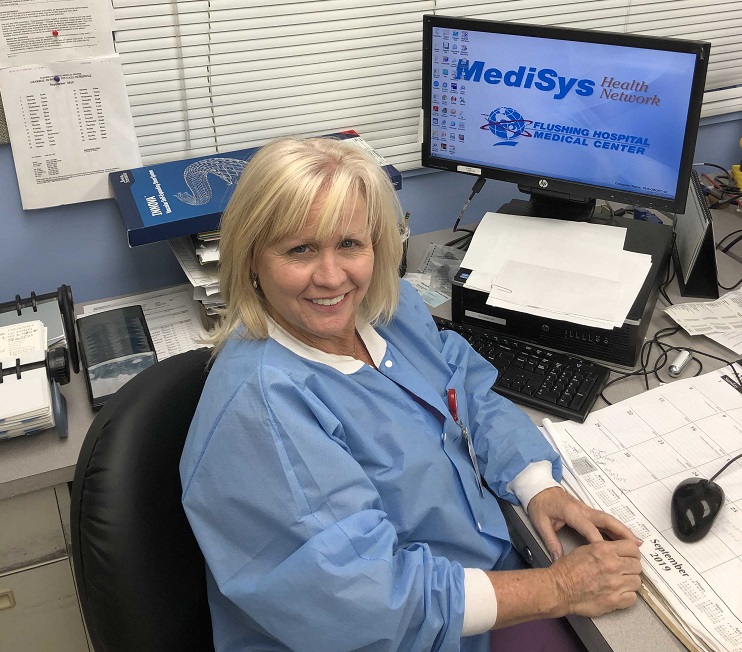
Flushing Hospital’s Nurse of The Month

Our nurses are the pillars of our community. In addition to meeting the demands of being a caregiver, they wear several hats including that of an educator, nurturer,  and comforter.

Not only do nurses care for patients; they provide support to families and loved ones during difficult times.

Our nurses pour their hearts into all aspects of their job, and this is one of the many reasons why we celebrate their accomplishments.

Join us in congratulating Patricia Czyzak, RN for receiving Flushing Hospital Medical Center’s Nurse of the Month.

Meet Patricia:

Patricia Czyzak - Nurse of the MonthQ&A:

Q: How long have you been working for FHMC?
A: I’ve worked at Flushing Hospital for the past 42 years after graduating from the Flushing Hospital School of Nursing

Q: On which unit do you currently work?
A:  I’ve worked in the Operating Room for my entire career here.

Q: Why did you want to become a nurse?
A:  My decision to become a nurse was due to my sister Mary Ellin, who is also a Flushing Hospital OR nurse for the past 49 years (  She’s still here).

QWhat is the best part of your job?
A: The best part of my job is the people that I work with and the satisfaction at the end of the day that the patients are happy with the care we provide.

All content of this newsletter is intended for general information purposes only and is not intended or implied to be a substitute for professional medical advice, diagnosis or treatment. Please consult a medical professional before adopting any of the suggestions on this page. You must never disregard professional medical advice or delay seeking medical treatment based upon any content of this newsletter. PROMPTLY CONSULT YOUR PHYSICIAN OR CALL 911 IF YOU BELIEVE YOU HAVE A MEDICAL EMERGENCY.

Fatty Liver Disease

Liver conditions are usually attributed to the excessive consumption of alcohol, viruses or morbid obesity.  However, there is a condition that affects the liver that is caused by none of the aforementioned risk factors.  It is nonalcoholic fatty liver disease (NAFLD).

NAFLD is diagnosed when the patient has too much fat stored in their liver cells.  Typically, NAFLD causes no noticeable signs or symptoms other than, in some cases, fatigue, pain or tenderness in the upper right portion of the abdomen.

People at risk for NAFLD include those with:

  • High cholesterol
  • High levels of triglycerides in the blood
  • Metabolic syndrome
  • Obesity when it is concentrated in the abdomen
  • Polycystic ovary syndrome
  • Sleep apnea
  • Type 2 diabetes
  • Hypothyroidism (underactive thyroid)
  • Hypopituitarism (underactive pituitary gland)

If you have NAFLD, you are at greater risk of developing a more serious condition called nonalcoholic steatohepatitis (NASH).

NASH is a more aggressive form of fatty liver disease that may progress into cirrhosis (scaring of the liver) and ultimately liver failure.

The signs and symptoms of NASH are:

  • Abdominal swelling
  • Enlarged blood vessels beneath the skin’s surface
  • Enlarged spleen
  • Red palms
  • Jaundice (yellowing of the skin and eyes)

Although experts do not know exactly what causes NFLD and NASH, for some  it is believed the combination of the health issues listed above may cause excess fat to become toxic to the cells in the liver.  The risk factors cause the liver to inflame and develop scar tissue or cirrhosis.  The treatment for this condition varies.

The best way to reduce your risk of NAFLD is to implement a healthy plant based diet that includes fruits, vegetables, whole grains and healthy fats, maintain a healthy weight and, after conferring with your physician, choose an exercise plan that is right for you.

If you are experiencing the signs and symptoms of NAFLD or NASH and the symptoms persist, it is important you seek the advice of a doctor.  If you would like to make an appointment at the , call CTA

All content of this newsletter is intended for general information purposes only and is not intended or implied to be a substitute for professional medical advice, diagnosis or treatment. Please consult a medical professional before adopting any of the suggestions on this page. You must never disregard professional medical advice or delay seeking medical treatment based upon any content of this newsletter. PROMPTLY CONSULT YOUR PHYSICIAN OR CALL 911 IF YOU BELIEVE YOU HAVE A MEDICAL EMERGENCY.

An Abdominal Burning Sensation Could be a Stomach Ulcer

A stomach ulcer, sometimes referred to as a gastric ulcer, occurs when the acids in the stomach slowly eat away at the lining of the stomach resulting in sores. They can be very painful in some cases, and at other times some people will have no symptoms at all.

There are two main causes of stomach ulcers. One is taking too many pain relievers over a long period of time. This slowly destroys the mucosa lining found in the stomach. The other main cause of a stomach ulcer is caused by a bacteria called Heliobacter pylori ( H. pylori) . This bacteria increases the amount of acid in the stomach which eats away at the stomach lining. Other causes of stomach ulcers are smoking, alcoholic beverages, stress, and spicy food.

Symptoms of a stomach ulcer include:

  • Burping
  • Feeling bloated
  • Nausea
  • Blood in stool
  • Vomiting
  • Heartburn
  • Unexplained weight loss
  • Change in appetite

Having an empty stomach may increase the symptoms.

A stomach ulcer may be accompanied by complications. These can include internal bleeding and infection.

Diagnosing a stomach ulcer is done by taking a thorough medical history and then drawing blood, breathing into a special device, and stool samples.

Treating a stomach ulcer depends on what is causing it. If it is a pain medication issue, then you may have to cut back or reduce the dosage. If it is H. pylori related an antibiotic may be prescribed and then medication to reduce the production of excess stomach acids. Some people get relief by taking antacids or medications that protect the lining of the stomach. Reducing stress may help the symptoms as can eating a healthy diet full of fruits, nuts, and whole grains, eating aged cheese, yogurt, and taking probiotics.

If you are experiencing pain in your abdomen, speak to your physician about possible causes. You can also schedule an appointment with a gastroenterologist at Flushing Hospital Medical Center by calling 718-670-5486.

All content of this newsletter is intended for general information purposes only and is not intended or implied to be a substitute for professional medical advice, diagnosis or treatment. Please consult a medical professional before adopting any of the suggestions on this page. You must never disregard professional medical advice or delay seeking medical treatment based upon any content of this newsletter. PROMPTLY CONSULT YOUR PHYSICIAN OR CALL 911 IF YOU BELIEVE YOU HAVE A MEDICAL EMERGENCY.

Flushing Hospital Receives Healthgrades 2019 Women’s Care Excellence Awards

Healthgrades, a leading online resource for information about physicians and hospitals, recently revealed its list of recipients for their 2019 Women’s Care Excellence Awards – and Flushing Hospital Medical Center is among the privileged and few recipients.

These awards recognize hospitals across the nation that demonstrate exceptional outcomes and excel in women’s healthcare services. The awards were broken down into three separate categories, including:

  • Obstetrics and Gynecology Excellence Award – This award highlights hospitals for exceptional clinical outcomes while caring for women in childbirth, as well as during and after gynecologic surgeries and procedures.
  • Labor and Delivery Excellence Award – This distinction recognizes the top 10 % of all hospitals evaluated for the exceptional care provided to mothers during and after labor and delivery.
  • Gynecologic Surgery Excellence Award – This award recognizes the top 10% of hospitals evaluated that provided outstanding performance in gynecologic surgery, including hysterectomy and surgery related to the female reproductive system.

Flushing Hospital received all three awards and was the only hospital in Queens to receive the Gynecologic Surgery and Obstetrics and Gynecology Excellence awards.

According to Maria Smilios, Director of Nursing, “Flushing Hospital has done many things that have contributed to earning these awards, including creating standards to prevent inducing labor before 39 weeks gestation to reduce the chances of complications at birth.” Maria added that “providing our patients with continuity of care throughout their pregnancy and stressing the importance of maintaining proper prenatal care have also been major factors in our success.”  Other reasons to cite the hospital receiving these accolades include having dedicated gynecologists and gyn specialists on staff, as well as the addition of the daVinci robotic surgical system,  which has improved gynecological surgical outcomes for Flushing Hospital patients.

Approximately 3,000 babies are delivered at Flushing Hospital every year. The gynecology division performed over 1,500 procedures in 2018 and the hospital’s Women’s Health Center had nearly 14,000 outpatient visits last year.

“We are honored to receive these awards” stated Dr. Hajoon Chun, Chairman of Ob/Gyn at Flushing Hospital Medical Center. “It signifies the hospital’s dedication to providing the highest quality care to women in our community and is another example of why Flushing Hospital is the hospital of choice for so many seeking obstetrical and gynecological care.”


All content of this newsletter is intended for general information purposes only and is not intended or implied to be a substitute for professional medical advice, diagnosis or treatment. Please consult a medical professional before adopting any of the suggestions on this page. You must never disregard professional medical advice or delay seeking medical treatment based upon any content of this newsletter. PROMPTLY CONSULT YOUR PHYSICIAN OR CALL 911 IF YOU BELIEVE YOU HAVE A MEDICAL EMERGENCY.

Why is a Vitamin K Deficiency Dangerous ?

Vitamin K is a fat soluble vitamin that is responsible for the production of the components needed for blood clotting. It also may play a role in bone production. Without sufficient vitamin K we would potentially bleed too much.

There are two types of vitamin K: K1 which comes from leafy greens,  spinach, asparagus, broccoli, green beans and some other vegetables and K2 which comes from meats, cheeses, and eggs.

People who are at risk of vitamin K deficiency include those :

  • Taking certain antibiotics
  • Taking blood thinners including Coumadin
  • Having poor absorption by the intestines due to celiac disease
  • Having a diet poor in vitamin K
  • Drinking large amounts of alcohol frequently

Vitamin K does not transfer well with breast milk and for this reason many infants are given an injection of vitamin K at birth to help them get the necessary amount that the body requires.

To determine if a person has an adequate amount in the body, a prothrombin test is performed to check blood clotting time.

If you are experiencing blood clotting issues, you should speak to your physician about the possible causes. You can schedule an appointment with a physician at Flushing Hospital Medical Center by calling 718-670-5486.

All content of this newsletter is intended for general information purposes only and is not intended or implied to be a substitute for professional medical advice, diagnosis or treatment. Please consult a medical professional before adopting any of the suggestions on this page. You must never disregard professional medical advice or delay seeking medical treatment based upon any content of this newsletter. PROMPTLY CONSULT YOUR PHYSICIAN OR CALL 911 IF YOU BELIEVE YOU HAVE A MEDICAL EMERGENCY.

Signs Your Child May Be A Victim of Bullying

Signs of  BullyingMany children will not tell parents they are being bullied until the situation escalates, but there a few changes in their behavior that can alert you.

Signs that your child may be a victim of bullying include refusing to speak about their day at school, not wanting to go to school, unexplained marks and bruises, asking for more lunch money, complaining of frequent headaches and stomach aches, sudden loss of friends and frequent nightmares.

Bullying has profound effects on children. For some, it affects them for life. Psychological responses can range from depression, anxiety, post-traumatic stress disorder to severe reactive rage leading to the victim being the perpetrator of cruelty to others. In some instances, children have responded to bullying and cyber-bullying by committing suicide.

If you find that your child is being bullied, you will need to document the dates, times and places of the action. If the bullying is taking place on school grounds, call the school and schedule a face to face meeting with a teacher or principal. If not on school grounds, notify the police.

Most schools have adopted an anti-bullying policy. Obtain a copy to determine if the bully violated school law. Bullying is best handled when you work together, with the proper authorities.

After notification, be sure to follow up with your child, and the school, to make sure that the bullying has stopped.

All content of this newsletter is intended for general information purposes only and is not intended or implied to be a substitute for professional medical advice, diagnosis or treatment. Please consult a medical professional before adopting any of the suggestions on this page. You must never disregard professional medical advice or delay seeking medical treatment based upon any content of this newsletter. PROMPTLY CONSULT YOUR PHYSICIAN OR CALL 911 IF YOU BELIEVE YOU HAVE A MEDICAL EMERGENCY.

Pulmonary Fibrosis

According to the Mayo Clinic, pulmonary fibrosis is a lung disease that occurs when lung tissue becomes thickened, damaged and scarred. This thickened, stiff tissue makes it more difficult for your lungs to work properly. As pulmonary fibrosis worsens, you become progressively more short of breath.


Some symptoms of pulmonary fibrosis are:

  • Shortness of breath
  • Dry cough
  • Fatigue
  • Unexplained weight loss
  • Aching muscles and joints
  • Widening and rounding of the tips of the fingers or toes

Pulmonary fibrosis can be caused by certain medical conditions, radiation therapy impurities and contaminants such as:

  • Silica dust
  • Asbestos fibers
  • Hard metal dusts
  • Coal dust
  • Grain dust
  • Bird and animal droppings

Unfortunately, pulmonary fibrosis cannot be cured.  There are medications that can help ease symptoms.  In severe cases, a lung transplant may be suggested.


If you have the symptoms of pulmonary fibrosis and would like to schedule an appointment with a at, please call

For this and additional information regarding pulmonary fibrosis visit –


All content of this newsletter is intended for general information purposes only and is not intended or implied to be a substitute for professional medical advice, diagnosis or treatment. Please consult a medical professional before adopting any of the suggestions on this page. You must never disregard professional medical advice or delay seeking medical treatment based upon any content of this newsletter. PROMPTLY CONSULT YOUR PHYSICIAN OR CALL 911 IF YOU BELIEVE YOU HAVE A MEDICAL EMERGENCY.

Flushing Hospital’s Nurse of The Month

Our nurses are the pillars of our community. In addition to meeting the demands of being a caregiver, they wear several hats including that of an educator, nurturer,  and comforter.

Not only do nurses care for patients; they provide support to families and loved ones during difficult times.

Our nurses pour their hearts into all aspects of their job, and this is one of the many reasons why we celebrate their accomplishments.

Join us in congratulating Helen Santos, RN for receiving Flushing Hospital Medical Center’s Nurse of the Month.

Meet Helen:

Q&A:

Q: How long have you been working for FHMC?
A:  I have been working at Flushing Hospital since 1993.

Q: On which unit do you currently work?
A: Currently, I work in the Emergency Department but I used to work in ICU.

Q: Why did you want to become a nurse?
A:  Being a nurse is a family tradition. It is an occupation in which I take great pride.

QWhat is the best part of your job?
A:  I love my job!  What I enjoy most is interacting with my patients and helping them through what can be a frightening time.  I work hard to make them feel comfortable.  I want them to know they are well cared for.  I am grateful that I am part of a team that feels the same way I do.

All content of this newsletter is intended for general information purposes only and is not intended or implied to be a substitute for professional medical advice, diagnosis or treatment. Please consult a medical professional before adopting any of the suggestions on this page. You must never disregard professional medical advice or delay seeking medical treatment based upon any content of this newsletter. PROMPTLY CONSULT YOUR PHYSICIAN OR CALL 911 IF YOU BELIEVE YOU HAVE A MEDICAL EMERGENCY.