
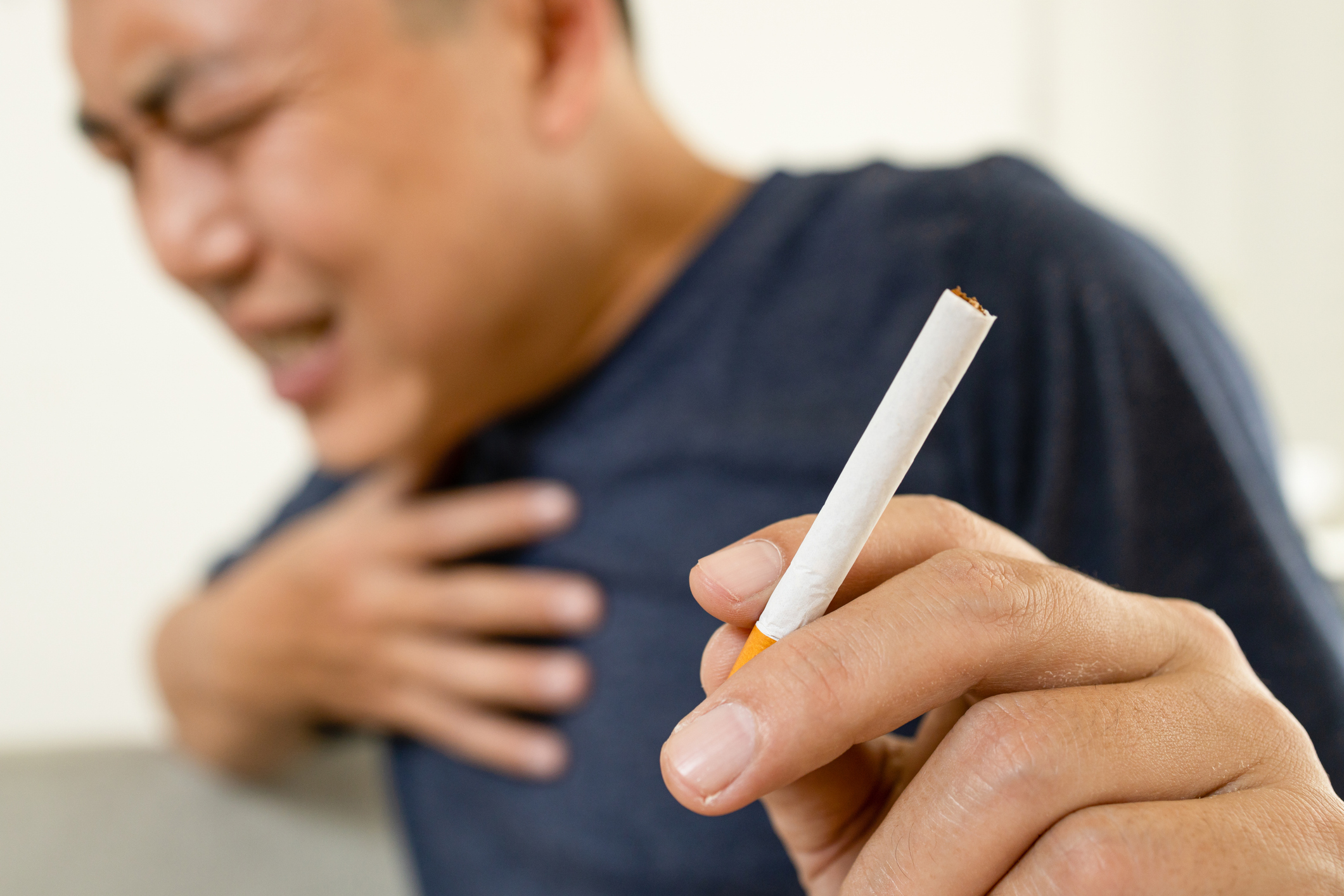
 Smoking tobacco products, such as cigarettes, is the leading preventable cause of disease and death in the United States. According to the American Cancer Society, an estimated 480,000 people die from cigarette smoking in the U.S. each year, with many of them dying from cancer. What’s more, people who smoke die about ten years earlier than those who have never smoked.
Smoking doesn’t just cause cancer. It can also cause several other diseases and can damage nearly every organ in the body, including the lungs, blood vessels, reproductive organs, bones, mouth, eyes, and skin.
Smoking tobacco can also damage the heart, as it can increase a person’s risk of developing heart disease.
According to a study conducted by researchers at Johns Hopkins University, who looked at the smoking habits of more than 300,000 adults for almost twenty years, it was discovered that men and women who smoked as few as two cigarettes daily had a 60 percent increased risk of death from any cause compared to those who never smoked.
Additionally, the study also found that the group of smokers participating in the study had a 50 percent risk of heart disease.
According to Dr. Jennifer Miao, a cardiologist at Yale University, “tobacco use is a very well-established risk factor for heart disease. It really damages the blood vessel lining and accelerates the development of plaques and coronary disease.”
Smoking can also cause heart rhythm issues, such as atrial fibrillation and stroke.
Unfortunately, the study found that cutting back on cigarette smoking may not be enough to undo the harm it causes. Despite current smokers having a higher risk of death than former smokers, former smokers still had an increased risk of heart disease more than twenty years after they had stopped smoking, according to the study.
According to the Centers for Disease Control and Prevention, quitting smoking is the most important action a person could take to improve their health, as it reduces the risk of premature death and smoking-related diseases, such as heart disease, cancer, and chronic obstructive pulmonary disease (COPD).
Treatments such as smoking cessation counseling and nicotine replacement therapy medications, including over-the-counter patches, gum, lozenges, and prescribed inhalers and nasal sprays, can help manage nicotine withdrawal symptoms and cravings, and help you quit smoking.
Flushing Hospital Medical Center provides extensive assistance for people willing to quit smoking. It offers a free smoking cessation support group and one-on-one sessions, both in person and by phone. For more information, please call 718-206-8494.
All content of this newsletter is intended for general information purposes only and is not intended or implied to be a substitute for professional medical advice, diagnosis or treatment. Please consult a medical professional before adopting any of the suggestions on this page. You must never disregard professional medical advice or delay seeking medical treatment based upon any content of this newsletter. PROMPTLY CONSULT YOUR PHYSICIAN OR CALL 911 IF YOU BELIEVE YOU HAVE A MEDICAL EMERGENCY.