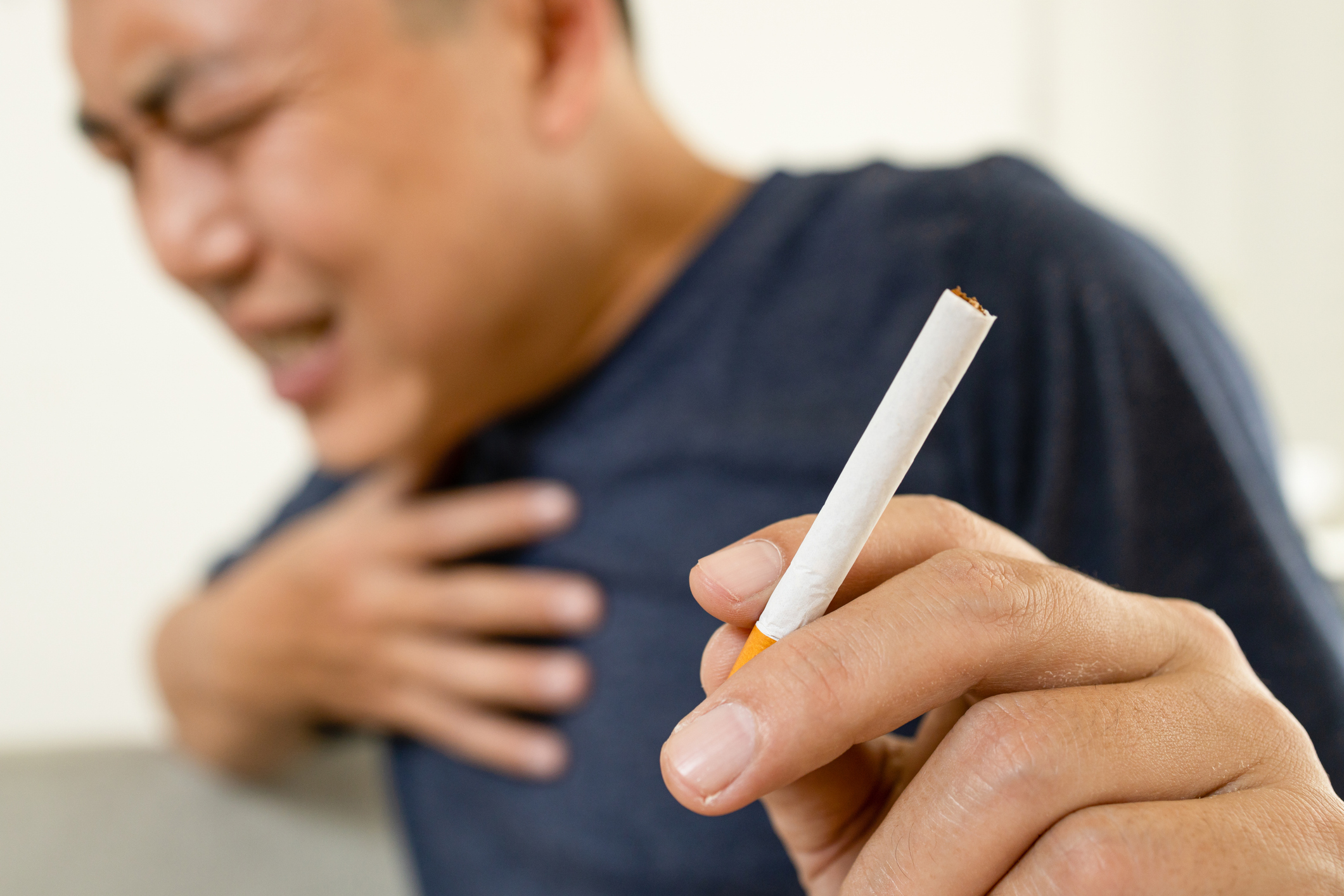
What is Smoker’s Flu?

Smoker’s flu is a term used to describe the set of symptoms people can develop when they stop smoking tobacco. It is the direct result of nicotine withdrawal, which causes cold and flu-like symptoms.

About 80-90% of people who smoke have a nicotine addiction and may experience some form of withdrawal after they quit. Symptoms are worse if the person quits cold turkey, however, most symptoms tend to subside within two weeks. Symptoms of smoker’s flu include:

  • Coughing
  • Sore throat
  • Sneezing
  • Chest tightness
  • Body aches
  • Headache
  • Fatigue

Smoker’s flu can occur on its own, but it is more likely to accompany classic physical and mental symptoms of nicotine withdrawal, including:

  • Slowed heart rate
  • Upset stomach
  • Constipation
  • Gas and bloating
  • Diarrhea
  • Increased hunger
  • Anxiety
  • Depression
  • Apathy or general unhappiness
  • Irritability
  • Difficulty concentrating
  • Nicotine craving

One study showed that 61.1% of smokers who quit experience symptoms of nicotine withdrawal when they stop. Some symptoms, especially affective ones like anxiety, can start as early as four hours after their last cigarette. Smoker’s flu can be unpleasant, but it isn’t dangerous. Unlike withdrawal from alcohol or opioid drugs, nicotine withdrawal won’t cause harm to your health.

Smoker’s flu is not a diagnosis and there are no specific guidelines on treatment, however, its symptoms will resolve over time. Until they do, several things can help manage the symptoms of smoker’s flu, including:

  • Treating the cough
  • Using over-the-counter pain relievers
  • Exercising
  • Practicing mind-body therapies

Nicotine replacement therapy can also help ease or prevent nicotine withdrawal symptoms.

Flushing Hospital Medical Center provides extensive assistance for people who want to quit smoking. It offers a free smoking cessation support group and one-on-one sessions, both in person and by phone. For more information, please call 718-206-8494.

All content of this newsletter is intended for general information purposes only and is not intended or implied to be a substitute for professional medical advice, diagnosis or treatment. Please consult a medical professional before adopting any of the suggestions on this page. You must never disregard professional medical advice or delay seeking medical treatment based upon any content of this newsletter. PROMPTLY CONSULT YOUR PHYSICIAN OR CALL 911 IF YOU BELIEVE YOU HAVE A MEDICAL EMERGENCY.
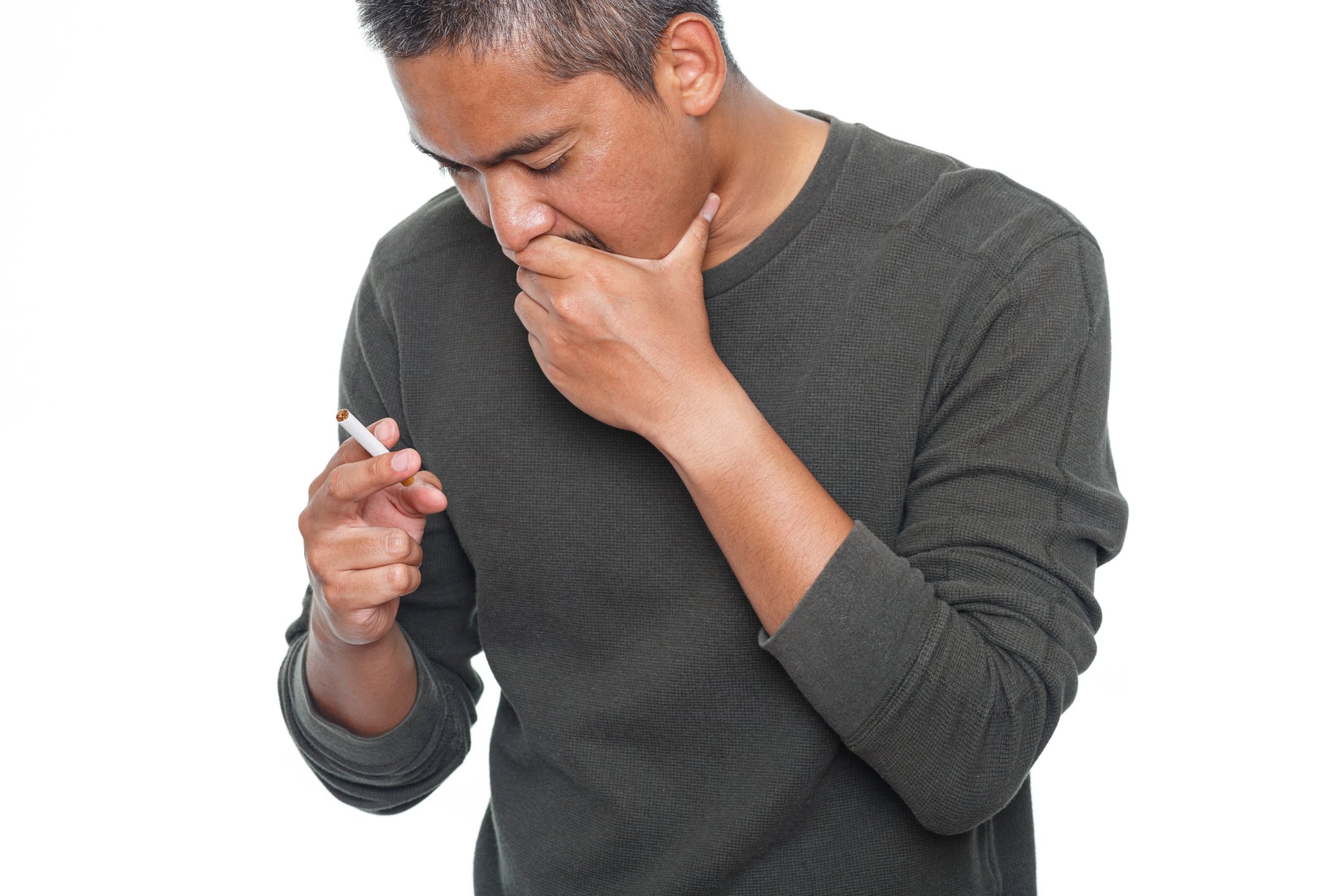
Smoking and Oral Health

Most people know that smoking is bad for their health. It causes many different health problems and fatal diseases. However, many people don’t realize the damage that smoking does to their mouths, gums, and teeth.

Smoking can lead to tooth staining, gum disease, tooth decay, tooth loss, and in more severe cases oral cancer. Smoking can also lead to other dental problems, including:

  • Bad breath
  • Cavities
  • Inflammation of the salivary gland openings on the roof of the mouth
  • Increased buildup of plaque and tartar on the teeth
  • Increased loss of bone within the jaw
  • Increased risk of white patches inside the mouth called leukoplakia
  • Delayed healing process following tooth extraction, periodontal treatment, or oral surgery
  • Lower success rate of dental implant procedures

If you smoke cigarettes or use other types of tobacco products, quitting is an important health decision to make for many reasons. Here are some tips to help you quit smoking:

  • Set a quit date
  • Seek support
  • Find healthy alternatives
  • Remove triggers
  • Consider nicotine replacement theory (NRT)
  • Stay positive
  • Reward yourself

Enrolling in a smoking cessation program can greatly improve your chances of quitting successfully.

For more information about smoking cessation programs or to register for our program, call: (718) 206-8494.

If you’re experiencing dental health problems, it is important to visit a dentist to ensure you’re receiving the most effective treatment possible. To schedule an appointment at Flushing Hospital Medical Center’s Department of Dental Medicine, please call (718) 670-5521.

All content of this newsletter is intended for general information purposes only and is not intended or implied to be a substitute for professional medical advice, diagnosis or treatment. Please consult a medical professional before adopting any of the suggestions on this page. You must never disregard professional medical advice or delay seeking medical treatment based upon any content of this newsletter. PROMPTLY CONSULT YOUR PHYSICIAN OR CALL 911 IF YOU BELIEVE YOU HAVE A MEDICAL EMERGENCY.
Great American Smokeout

On November 16, 2017, the Flushing Hospital Medical Center’s Smoking Cessation Team joined with the American Cancer Society and participated in The Great American Smokeout. The Smoking Cessation Team hosted an informational table in the hospital’s lobby.

The Great American Smokeout is designed for you to have a chance for you to make a plan to quit smoking.  Did you know that by quitting for even one day, you will be taking an important step toward a healthier life and can reduce your risk of getting Cancer? Well, you can!

Tobacco is the single greatest cause of multiple diseases and premature deaths in the USA today.  It kills more Americans each year than alcohol, crack, heroin, homicide, suicide, car accidents, fire and AIDS combined. There are an estimated 480,000 deaths in the United States annually that are due to tobacco use. It is the only legal consumer product that is lethal when used exactly as recommended by the manufacturer.

Smoking cigarettes affects many aspects of health. Tobacco smoke contains about 7000 chemicals, including low concentrations of such strong poisons as ammonia, cyanide, arsenic and formaldehyde.  It also contains 69 carcinogens – substances that are known to cause cancers in humans. Direct association has been established between smoking and cancers of the lung, mouth, nose, throat, larynx, esophagus, colon and rectum, stomach, pancreas, cervix, bladder, kidney and blood.
In the United States, Illnesses caused by smoking cost more than 300 billion dollars per year in direct medical care and lost productivity. Smokers pay twice as much for life insurance and will die on average of 13-14 years earlier than non-smokers. It costs tobacco companies approximately 5 cents to produce a pack of cigarettes.

Many lung conditions are either caused or aggravated by cigarette smoke. It irritates bronchial airways and stimulates mucous production leading eventually to decreased elasticity and functional failure. Patients suffering from COPD, Asthma, Chronic Bronchitis or Emphysema have a much higher risk of dying when repeatedly exposed to smoke.
Smokers are also at greater risk for cardiovascular disease. Smoking damages blood vessels making them stiff and narrow, obstructing blood flow which results with elevated blood pressure, heart attacks, strokes, kidney failure or chronic skin changes.

Pregnant women exposed to tobacco smoke have increased risk of complications like miscarriage, premature birth, and brain and lung damage in developing baby. Sudden infant death syndrome is three times more likely if mother smoked during pregnancy.
Secondhand smoke is the smoke exhaled by smokers or given off by a burning cigarette or pipe. Inhaling secondhand smoke is as hazardous as smoking a cigarette. There is no safe level for secondhand smoke exposure established. People can inhale it at work, homes, cars or public spaces and have all the complications mentioned above.

Smoking tobacco is an addiction similar to heroin and cocaine. It can be successfully treated but the majority of cases require three or more attempts. Quitting smoking offers a chance of feeling better and living longer.  Studies have shown that five, common sense steps, provide the best chance for quitting smoking for good:

  1. Get ready: set a quit date and throw out all cigarettes and ashtrays from your home.
  2. Get support: tell your family, friends and doctor about quitting plans; search the internet for advice.
  3. Learn new behaviors: distract yourself from the urge to smoke; exercise or go for a walk.
  4. Get medication: combining medication like nicotine patches or Zyban with behavioral adaptation and family support quadruples your chances of success.
  5. Be prepared for relapse and difficult situations– most people try to quit a few times before   succeeding.

If you would like to learn more about quitting smoking call the Flushing Hospital Medical Center’s Smoking Cessation Team at 718-670-3146.

All content of this newsletter is intended for general information purposes only and is not intended or implied to be a substitute for professional medical advice, diagnosis or treatment. Please consult a medical professional before adopting any of the suggestions on this page. You must never disregard professional medical advice or delay seeking medical treatment based upon any content of this newsletter. PROMPTLY CONSULT YOUR PHYSICIAN OR CALL 911 IF YOU BELIEVE YOU HAVE A MEDICAL EMERGENCY.

World No Tobacco Day at FHMC

May 31, 2017, is World No Tobacco Day.  On this day, the World Health Organization (WHO) asks that healthcare providers highlight the negative effects that smoking can have on a person’s health.  This year’s theme is “Tobacco – a threat to development.”

Flushing Hospital Medical Center (FHMC) is participating in World No Tobacco Day by hosting an educational forum on how to quit smoking and the negative effects smoking has on your health.  The informational forum was provided for employees, hospital visitors and community members.

To further help those who want to quit, the FHMC Smoking Cessation Team can host classes in both English and Spanish and work out an individualized quit plan the Asian Community to help make the transition from smoker to non-smoker easier.

If you are interested in quitting, you can contact the Flushing Hospital Medical Center’s Smoking Cessation Navigators. Call 718-670-3146 for more information.


All content of this newsletter is intended for general information purposes only and is not intended or implied to be a substitute for professional medical advice, diagnosis or treatment. Please consult a medical professional before adopting any of the suggestions on this page. You must never disregard professional medical advice or delay seeking medical treatment based upon any content of this newsletter. PROMPTLY CONSULT YOUR PHYSICIAN OR CALL 911 IF YOU BELIEVE YOU HAVE A MEDICAL EMERGENCY.

Smokeless Tobacco and Cancer

We all know the dangers and health risks involved with cigarette smoking, but what about smokeless tobacco?

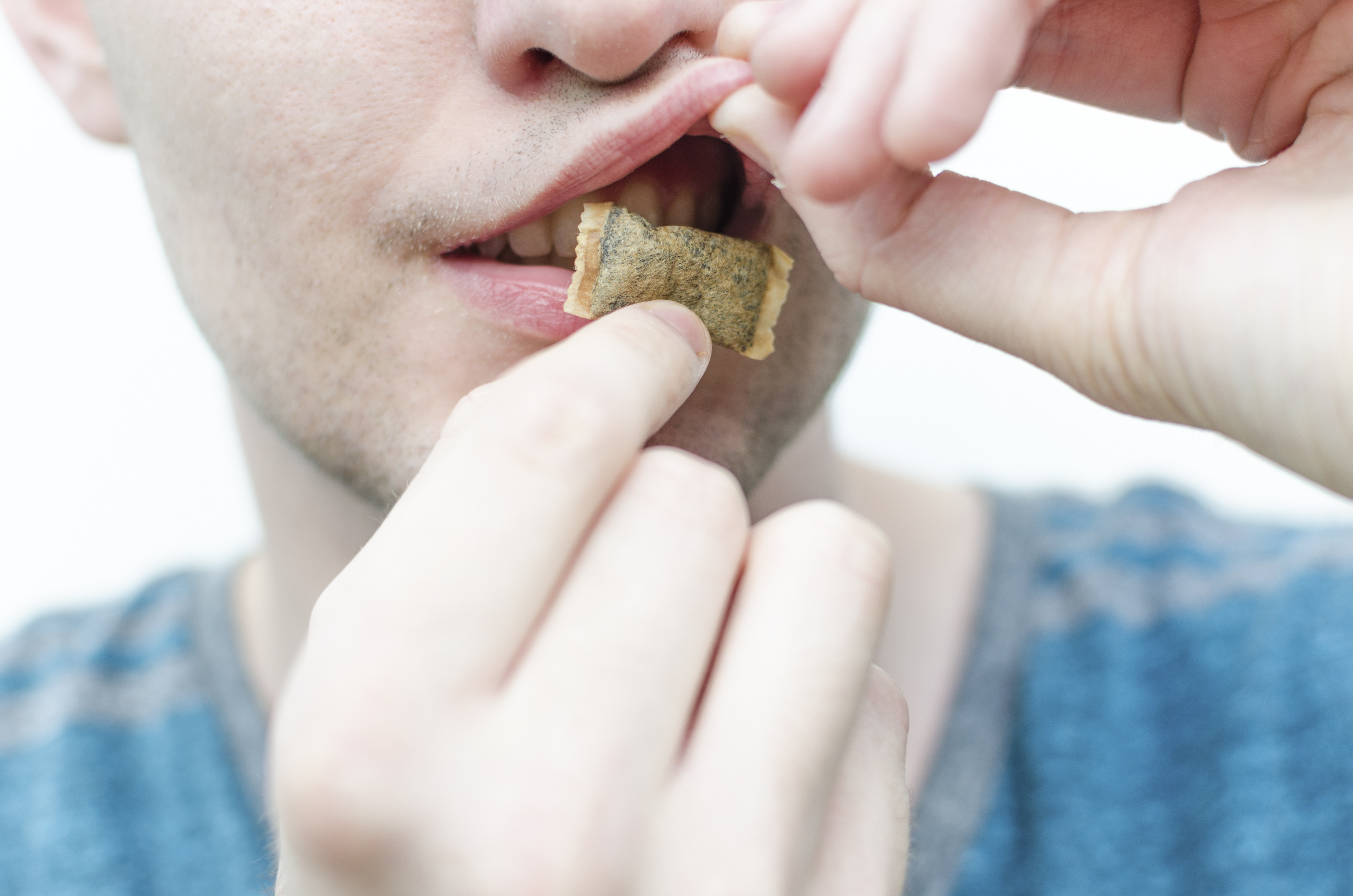
ThinkstockPhotos-484034579

Smokeless tobacco, or chewing tobacco, also known as dip, chew, snuff or snus, is tobacco that is not burned, but instead chewed or sucked in the mouth then the tobacco juices are spit out.  Nicotine in the tobacco is absorbed through the lining of the mouth.

People on many continents, including North America, northern Europe, Asia, and parts of Africa, have a long history of using smokeless tobacco products.

According to the National Cancer Institute, at least 28 chemicals in smokeless tobacco have been found to cause cancer, especially nitrosamines, which are formed during the growing, curing, fermenting, and aging of tobacco, polonium–210 (a radioactive element found in tobacco fertilizer) and polynuclear aromatic hydrocarbons.

Users of smokeless tobacco absorb the addictive ingredient nicotine through the mouth tissues directly into the blood and brain. Nicotine continues to be absorbed into the bloodstream for much longer than for smokers

Smokeless tobacco causes oral cancer, esophageal cancer, and pancreatic cancer, and puts the user at risk for heart disease, gum disease, and oral lesions. There is no safe form of tobacco. Flushing Hospital Medical Center encourages you to quit today. For help with smoking cessation visit www.cdc.gov/tobacco for a list of resources near you.


All content of this newsletter is intended for general information purposes only and is not intended or implied to be a substitute for professional medical advice, diagnosis or treatment. Please consult a medical professional before adopting any of the suggestions on this page. You must never disregard professional medical advice or delay seeking medical treatment based upon any content of this newsletter. PROMPTLY CONSULT YOUR PHYSICIAN OR CALL 911 IF YOU BELIEVE YOU HAVE A MEDICAL EMERGENCY.