Try a Summer Mocktail! Strawberry-Kiwi Sangria

Nothing says summer more than fancy, fruity drinks, and nothing is more festive than a Strawberry-Kiwi Sangria mocktail! Recipe courtesy of Epicurious.

Peddlers-Village-Strawberry-Festival

STRAWBERRY-KIWI SANGRIA WITH ROSÉ GERANIUM

YIELD: Serves 12

INGREDIENTS

  • 8 cups water
  • 8 wild-berry tea bags
  • 2 cups sugar
  • 4 1-pint baskets strawberries, hulled
  • 2 25.4-ounce (750-ml) bottles chilled sparkling apple cider
  • 6 kiwis, peeled, cut into 1/2-inch cubes
  • 16 fresh rose geranium leaves, crushed slightly, or 3/4 teaspoon rose water*
  • 4 cups ice cubes
 

PREPARATION

Bring 4 cups water to boil in large saucepan. Add tea bags; cover and let steep 10 minutes. Discard tea bags. Add sugar to hot tea; stir until dissolved. Stir in remaining 4 cups water. Chill tea until cold, about 3 hours. (Can be made 1 day ahead. Cover; keep chilled.)

Puree 2 baskets strawberries in processor. Slice remaining 2 baskets strawberries. Place pureed and sliced berries in large pitcher (or divide between 2 pitchers). Add tea and all remaining ingredients. Stir and serve.

*Rose water is available at Middle Eastern markets and specialty foods stores.

market tip:Unless you already grow them, you’ll most likely have to visit a nursery to find rose geraniums. They make great potted plants and, of course, smell wonderful, too. The aromatic, rose-scented leaves are used to infuse their flavor in sorbets, ices, and beverages.

All content of this newsletter is intended for general information purposes only and is not intended or implied to be a substitute for professional medical advice, diagnosis or treatment. Please consult a medical professional before adopting any of the suggestions on this page. You must never disregard professional medical advice or delay seeking medical treatment based upon any content of this newsletter. PROMPTLY CONSULT YOUR PHYSICIAN OR CALL 911 IF YOU BELIEVE YOU HAVE A MEDICAL EMERGENCY.

The Relationship Between Obesity and Sleep Disorders

America’s expanding waistline may be responsible for another growing problem in our country – sleep apnea. Approximately 18 million Americans suffer from sleep apnea and many of them are overweight or obese. In fact, the most common cause of Obstructive Sleep Apnea in adults is obesity.


Obstructive sleep apnea is a common and serious disorder in which breathing repeatedly stops for 10 seconds or more during sleep. People with this condition often have trouble staying in a deep sleep because their throats close, blocking their airways. As a result, they partially awaken to start breathing properly. They don’t realize they’re waking up and may become very sleepy during the day.

Obstructive sleep apnea can lead to high blood pressure, heart disease, stroke, and even death. People with sleep apnea are also at an increased risk of work and driving-related accidents, due to inadequate sleep at night.  It’s important that anyone with signs and symptoms of obstructive sleep apnea — especially loud snoring, repeated nighttime awakenings and daytime sleepiness speak with a physician.

Fortunately, sleep apnea is treatable. Making an effort to lose weight is the best way to help people sleep better. Recent studies have proven that weight loss can significantly improve and potentially eliminate obstructive sleep apnea symptoms in obese individuals. If, however, weight loss attempts are not successful, a common and effective treatment for sleep apnea is continuous positive airway pressure (CPAP), where patients wear a mask connected to a machine that blows air into the throat, keeping it open while they sleep at night.

If you believe that you have sleep apnea, it is imperative that you get tested. Speak with your doctor and request a referral to a sleep center so experts can perform an overnight sleep study.

For more health and fitness tips, Like us on Facebook or follow us on Twitter.

twitter iconFacebooklike -178742843 (1)

All content of this newsletter is intended for general information purposes only and is not intended or implied to be a substitute for professional medical advice, diagnosis or treatment. Please consult a medical professional before adopting any of the suggestions on this page. You must never disregard professional medical advice or delay seeking medical treatment based upon any content of this newsletter. PROMPTLY CONSULT YOUR PHYSICIAN OR CALL 911 IF YOU BELIEVE YOU HAVE A MEDICAL EMERGENCY.

Jumping for Joy!


Looking for an inexpensive way for you and your family to stay fit this summer? Try jumping rope! For as little as $12 and 10 minutes, you can get a high intensity cardio workout. And best of all, it’s portable.

ThinkstockPhotos-505472377

Jumping rope can help everyone, of any age, achieve a range of fitness goals, including cardiovascular benefits, It can also aid in building bone-mineral density, improving coordination, and increasing muscle endurance, as well as toning and shaping. According to the Compendium of Physical Studies, jumping rope for 10 minutes can burn as many calories as jogging at an eight-minute-per-mile pace.

Jump rope basics:

. To find a rope length that fits you, place one foot in the center of the rope and lift the handles — they shouldn’t go past your armpits.

. Keep elbows close to sides as you turn the rope. The movement comes from the wrists and forearms, not the shoulders.

. Jump only 1 to 1 ½ inches off the floor, giving the rope just enough space to slip under feet — only the balls of feet should touch the floor. Stay high on your toes and use your body’s natural shock absorbers.

Before starting a jump rope workout, check with your doctor. Shoes and jumping surface are important as to how jumping will impact your body. Rope-jumping is considered lower impact than jogging or running if done properly.

All content of this newsletter is intended for general information purposes only and is not intended or implied to be a substitute for professional medical advice, diagnosis or treatment. Please consult a medical professional before adopting any of the suggestions on this page. You must never disregard professional medical advice or delay seeking medical treatment based upon any content of this newsletter. PROMPTLY CONSULT YOUR PHYSICIAN OR CALL 911 IF YOU BELIEVE YOU HAVE A MEDICAL EMERGENCY.

Home Remedy: Apple Cider Vinegar for Eczema

ThinkstockPhotos-180934156If you are prone to eczema, the summer months, bringing high humidity, perspiration from exercise and chlorinated pools, can exacerbate your symptoms.

The symptoms of eczema are different for each person and may look different depending on what part of your body it affects. They can include mild, moderate or severe red, inflamed skin, rough leathery patches, oozing or crusting, and scaling.

Eczema is also known for its intense itch. The itch may be so bad that you scratch your skin until it bleeds, which can make your rash and itching even worse, or lead to infection.

There are a number of over-the-counter and prescription medications used to treat eczema, but have you ever tried a warm apple cider vinegar bath? The National Eczema Association recommends adding a cup of apple cider vinegar (ACV) to five gallons of warm bathwater to help soothe the itch and inflammation of eczema.

Why apple cider vinegar?

Vinegars have a long history of medicinal use, and certain vinegars like apple cider vinegar, contain acetic acid which is both anti-bacterial and anti-fungal, helping to fight the eczema infection. The potassium present in vinegar acts as an astringent which balances the pH levels of the skin and provides faster eczema healing in affected areas.

ACV also contains beta-carotene, an anti-oxidant that promotes the growth of new skin cells, as well as mineral salts, vitamin B1 and riboflavin, providing relief from dryness and itching.

The next time your eczema flares, try a little apple cider vinegar and let us know how it works for you!

For more health and lifestyle tips follow us on Twitter @FlushingHospital and like us on Facebook www.facebook.com/FlushingHospital

All content of this newsletter is intended for general information purposes only and is not intended or implied to be a substitute for professional medical advice, diagnosis or treatment. Please consult a medical professional before adopting any of the suggestions on this page. You must never disregard professional medical advice or delay seeking medical treatment based upon any content of this newsletter. PROMPTLY CONSULT YOUR PHYSICIAN OR CALL 911 IF YOU BELIEVE YOU HAVE A MEDICAL EMERGENCY.

Is Your Child An Internet Addict?

It’s often difficult for parents to know how much time their children spend online.Often children play video games, view videos and browse social networking sites.

Spending too much time online can lead to the deterioration of your child’s school work and can cause problems with their relationships with family and friends.

According to a recent study by the Kaiser Family Foundation, children ages 8 to 18 spend an average of 7 hours and 38 minutes a day consuming media for fun, including TV, music, video games and other content. About two-thirds of 8 to 18 year-olds had no rules on the amount of time spent watching TV, playing video games, or using a computer.

The American Academy of Pediatrics recommends that parents limit their kids screen time for entertainment to less than two hours per day and children under 2 have no TV or Internet exposure.

Research shows that academic failure correlates with addictive video game play, and to a higher incidence of attention problems. Conversely, academic achievers spend less time online.  Research has also revealed that child and adolescent video game addiction correlates with functional impairment, emotional problems, poor conduct, hyperactivity and peer problems, as well as with depression and social phobia. In addition, several studies have proven a relationship between excessive video game play and obesity and poor diet among children in grades 4 through 6.

Parents should discuss with their children their expectations for responsible online usage and set limits on how much time can be spent online.  Here are some guidelines for Internet use:

  • Regularly determine how much time your kids are online every day.
  • Don’t put a computer or game console in your child’s bedroom—rather put them in the living room.
  • Avoid online activity before bedtime.
  • Charge children’s cell or smart phone or other handheld devices overnight in your bedroom.
  • Be a role model. Set an example with your own Internet usage.
  • Use an alarm clock or timer to limit your child’s time online.
  • Provide alternatives to online activity and video games: sports, reading, play dates, time with pets, etc.
  • Set a rule: no handheld devices at the table during meals.

For more health and fitness tips find us on Facebook.com/FlushingHospital and follow us on twitter @FlushingHospital

All content of this newsletter is intended for general information purposes only and is not intended or implied to be a substitute for professional medical advice, diagnosis or treatment. Please consult a medical professional before adopting any of the suggestions on this page. You must never disregard professional medical advice or delay seeking medical treatment based upon any content of this newsletter. PROMPTLY CONSULT YOUR PHYSICIAN OR CALL 911 IF YOU BELIEVE YOU HAVE A MEDICAL EMERGENCY.

No-Cook Mango Almond Refrigerator Oatmeal

Love oatmeal, but think it’s only for cold winter days? Try this healthy and delicious no-cook “summer porridge,” recipe courtesy of The Yummy Life.

5992


All content of this newsletter is intended for general information purposes only and is not intended or implied to be a substitute for professional medical advice, diagnosis or treatment. Please consult a medical professional before adopting any of the suggestions on this page. You must never disregard professional medical advice or delay seeking medical treatment based upon any content of this newsletter. PROMPTLY CONSULT YOUR PHYSICIAN OR CALL 911 IF YOU BELIEVE YOU HAVE A MEDICAL EMERGENCY.

Diabetes: Using a Blood Glucose Meter

If you have been diagnosed with diabetes you know the importance of controlling your blood glucose levels or “sugar.”

Using a glucose meter to check your blood sugar levels after eating, exercising or taking your diabetes medication, can help determine how your lifestyle affects your diabetes. It may even help you to better plan and implement changes that will assist you in managing your diabetes, helping to reduce the risk of complications related to kidneys, eyes, skin, feet and the nervous system.

The blood glucose meter is an electronic device that uses a disposable test strip with a small drop of blood and reads your level of blood glucose on a digital display. A blood glucose test is performed by pricking the skin (typically, on the finger) to draw blood, then applying the blood to the test-strip.  The test is usually referred to as capillary blood glucose.

Healthcare professionals advise patients on how often they should monitor their levels based on their diagnosis.  Most people with Type 2 diabetes test at least once per day. Diabetics who use insulin (everyone with Type 1 diabetes and some with Type 2) usually test their blood sugar more often (3 to 10 times per day), both to assess the effectiveness of their prior insulin dose and to help determine their next insulin dose.

Glucose meters are available at a variety of price points. Though the cost of monitoring may be expensive or time consuming, the benefits are worth it if you can avoid the medical costs of diabetes complications.

All content of this newsletter is intended for general information purposes only and is not intended or implied to be a substitute for professional medical advice, diagnosis or treatment. Please consult a medical professional before adopting any of the suggestions on this page. You must never disregard professional medical advice or delay seeking medical treatment based upon any content of this newsletter. PROMPTLY CONSULT YOUR PHYSICIAN OR CALL 911 IF YOU BELIEVE YOU HAVE A MEDICAL EMERGENCY.

Electronic Cigarettes – are they safe ?

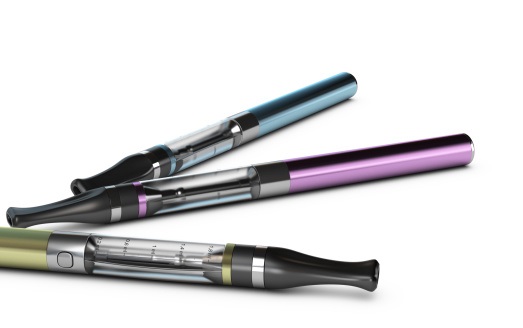
e cigs 465449923Electronic cigarettes, or as they are more popularly called, e-cigarettes, are designed to look like traditional tobacco cigarettes. Though the e-cigarettes contain no tobacco, they can be harmful because they contain nicotine which is a cancer causing chemical. Their manufacturers would like the public to believe that they are a safer alternative to cigarettes, but this may not be the case.

How they work – The user inhales through a mouthpiece similar to traditional cigarettes. This flow of air triggers a sensor that turns on a small battery operated heater. The heater warms up a capsule that contains nicotine and propylene glycol. The vapor that is created gives the user the sensation of smoking a traditional cigarette. The vapor from these e-cigarettes also contains formaldehyde and acetaldehyde which can also cause cancer.

The U. S. Food and Drug Administration has done a preliminary analysis of these devices and concluded that the vapors that they emit contain other carcinogens, such as  nitrosamines and diethylene glycol. It is presumed that the effects of smoking these e-cigarettes would have similar second hand effects as regular tobacco products and their use should be regulated in a similar manner.

Though they have been marketed as an aid to stop smoking for those trying to quit, there is no evidence that proves that these e-cigarettes accomplish that goal. If you smoke, or know someone who does, and are interested in quitting we recommend speaking with your physician or joining a smoking cessation program such as Jamaica Hospital Medical Center’s Freedom from Smoking Program. A representative can be reached at 718 206 8494. Additional resources can also be found at www.nysmokefree.com.

For more health and fitness tips, Like us on Facebook or follow us on Twitter.

twitter iconFacebooklike -178742843 (1)

All content of this newsletter is intended for general information purposes only and is not intended or implied to be a substitute for professional medical advice, diagnosis or treatment. Please consult a medical professional before adopting any of the suggestions on this page. You must never disregard professional medical advice or delay seeking medical treatment based upon any content of this newsletter. PROMPTLY CONSULT YOUR PHYSICIAN OR CALL 911 IF YOU BELIEVE YOU HAVE A MEDICAL EMERGENCY.

Is Prenatal Yoga Right For You?


Keeping active while pregnant is good for you and for your baby.  Research suggests that practicing prenatal yoga offers many benefits, including helping you relax and prepare for labor.

ThinkstockPhotos-181707869

Many childbirth-preparation classes encourage stretching, mental centering and focused breathing. Taking prenatal yoga classes in a yoga studio or using an exercise DVD can:

.Improve sleep and balance

.Reduce stress and anxiety by calming the nervous system

.Increase strength, stamina, flexibility and endurance needed for childbirth

.Ease lower back pain, nausea, headaches and shortness of breath

.Decrease the risk of preterm labor, pregnancy-induced hypertension and intrauterine growth restriction

. Helps with breathwork in preparation for labor

. Increase circulation

Check with your doctor before starting any exercise program.  Listen to your body and do what feels right for you. Prenatal yoga can be a great way to prepare for childbirth. Namaste!

For more health and lifestyle tips, follow us on Twitter @FHMC_NYC and like us on Facebook www.facebook.com/FlushingHospital 

All content of this newsletter is intended for general information purposes only and is not intended or implied to be a substitute for professional medical advice, diagnosis or treatment. Please consult a medical professional before adopting any of the suggestions on this page. You must never disregard professional medical advice or delay seeking medical treatment based upon any content of this newsletter. PROMPTLY CONSULT YOUR PHYSICIAN OR CALL 911 IF YOU BELIEVE YOU HAVE A MEDICAL EMERGENCY.

The Natural Solution to Spring Cleaning


Spring is finally here, and springtime means spring cleaning! If you’re looking for an alternative to store bought cleaners, check out these low-cost, non-toxic, environmentally friendly cleaning solutions for a fresh smelling home:

ThinkstockPhotos-467249269.Baking Soda – cleans, softens water, and scours. You can also use baking soda to deodorize food storage containers and sprinkle on your carpet to absorb smells before vacuuming.

.White Vinegar – cuts grease, removes mildew, odors, some stains and wax build-up. Use equal parts white vinegar and water to wash both the interior and exterior of your fridge.

.Lemons  – effective against most household bacteria. Use lemon peels in your garbage disposal to help deodorize it.

You can also try these combinations:

.All-Purpose Cleaner: Mix 1/2 cup vinegar and 1/4 cup baking soda into 1/2 gallon (2 liters) water. Store and keep. Use for removal of water deposit stains on shower stall panels, bathroom chrome fixtures, windows, and bathroom mirrors.

.Mold and Mildew cleaner: Use white vinegar or lemon juice full strength. Apply with a sponge or scrubby.

.Window Cleaner: Mix 2 teaspoons of white vinegar with 1 liter warm water. Use crumpled newspaper or cotton cloth to clean. Only use the black and white newspapers, not the colored ones. Don’t clean windows if the sun is on them, or if they are warm, or streaks will show on drying.

.Furniture Polish: For varnished wood, add a few drops of lemon oil into a 1/2 cup warm water. Mix well and spray onto a soft, slightly damp, cotton cloth.  Wipe furniture with the cloth, and finish by wiping once more using a dry soft cotton cloth.

One more tip: Whenever you clean your home, save the floor or carpet for last. Clean window blinds and shelves first and then work downwards.  This allows time for the dust to settle before vacuuming.

For more lifestyle and health tips, follow us on Twitter @FHMC_NYC and like us on Facebook at www.facebook.com/flushinghospital

All content of this newsletter is intended for general information purposes only and is not intended or implied to be a substitute for professional medical advice, diagnosis or treatment. Please consult a medical professional before adopting any of the suggestions on this page. You must never disregard professional medical advice or delay seeking medical treatment based upon any content of this newsletter. PROMPTLY CONSULT YOUR PHYSICIAN OR CALL 911 IF YOU BELIEVE YOU HAVE A MEDICAL EMERGENCY.