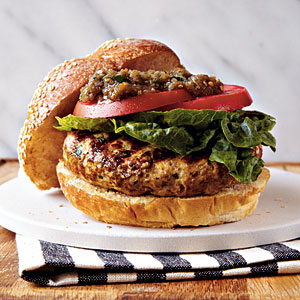
Mother’s Day Delight: Asian Turkey Lettuce Wraps

Why not give Mom a break this Mother’s Day and make her some delicious, healthy and low calorie Asian Turkey Lettuce Wraps? Recipe courtesy of Weight Watchers.

download (4)

  • 1 tsp canola oil   
  •   3 medium uncooked scallion(s), thinly sliced   
  •   1 medium yellow pepper(s), seeded and diced   
  • 1/2 tsp ginger root, fresh, peeled and grated   
  •   1 pound(s) uncooked ground turkey breast, lean   
  • 1/2 tsp chili powder   
  • 3 Tbsp low sodium soy sauce   
  •   8 leaf/leaves (large) lettuce, Iceberg variety   

Instructions

  • Heat the oil in a large nonstick skillet over medium-high heat. Add the scallions, bell pepper, and ginger; cook, stirring constantly, about 1 minute.
  • Add the turkey and chili powder; cook, breaking it up with a wooden spoon, until browned and cooked through, about 5 minutes. Stir in the soy sauce.
  • Divide the turkey mixture evenly among the lettuce leaves; roll up tightly and serve at once. Yields 2 wraps per serving.

Notes

  • We think ground turkey, with its rich flavor, is best suited to this dish, but you can use ground skinless lean chicken breast, if you prefer. For a heartier meal, try using 2 (10-inch) flour tortillas for the wrappers instead of the 4 lettuce leaves, making half a tortilla per serving and increasing your PointsPlus value by 2.

All content of this newsletter is intended for general information purposes only and is not intended or implied to be a substitute for professional medical advice, diagnosis or treatment. Please consult a medical professional before adopting any of the suggestions on this page. You must never disregard professional medical advice or delay seeking medical treatment based upon any content of this newsletter. PROMPTLY CONSULT YOUR PHYSICIAN OR CALL 911 IF YOU BELIEVE YOU HAVE A MEDICAL EMERGENCY.


Are you at Risk for Stroke?

May is National Stroke Awareness Month. A stroke or a CVA (cerebrovascular accident) is an attack on the brain that can occur very quickly and with little warning.  Every year, more than 795,000 people in the United States suffer a stroke and one death from stroke happens every four minutes, making it the fifth leading cause of death in the U.S.

stroke_infographic_webThe risk of having a stroke varies with race and ethnicity. Though stroke risk increases with age, strokes can occur at any time. Prevent or reduce your risk of stroke by:

. Keeping your blood pressure, blood glucose and cholesterol levels in normal range

. Quitting smoking

. Staying active and maintaining a healthy diet and weight

. Treating heart disease

You may be having a stroke if you experience:

. Sudden, severe headache with no known cause

. Trouble seeing out of one or both eyes

. Confusion or trouble speaking

. Dizziness or trouble walking

. Numbness or weakness in the arm, face or legs, especially on one side of the body

If you suspect you or someone you know is having a stroke, act F.A.S.T:

F   Facial Weakness

A  Arm Weakness

  Slurred speech

  Time to call 911

Remember, the quicker you get medical help, the less damage to your brain and body and the better your chances are of surviving or avoiding long-term disability.

All content of this newsletter is intended for general information purposes only and is not intended or implied to be a substitute for professional medical advice, diagnosis or treatment. Please consult a medical professional before adopting any of the suggestions on this page. You must never disregard professional medical advice or delay seeking medical treatment based upon any content of this newsletter. PROMPTLY CONSULT YOUR PHYSICIAN OR CALL 911 IF YOU BELIEVE YOU HAVE A MEDICAL EMERGENCY.

Three Foods That Help Heal Wounds

ThinkstockPhotos-177708238Along with the proper wound dressings, immune function plays an important role in the body’s ability to heal.  Foods containing protein, vitamins A and C, as well as zinc, keep your immune system functioning and help promote wound healing.

If you’ve been recently injured or are having trouble healing, try adding the following foods to your diet:

.Fruits and vegetables rich in vitamin A and C: Green leafy vegetables, cruciferous vegetables, and fruits like pineapple, cantaloupe, citrus fruits and juices, as well as tomato juice help heal.

.Yogurt:  Especially Greek yogurt, is a good source of protein, which is essential to the development of healthy new tissue.  If you are lactose intolerant, you can try soy and tofu based yogurts which will also add protein to your diet.

.Oats and barley: Grains like oats and barley contain protein and zinc, as well as beta-glucan, a fiber that has strong antioxidizing and antimicrobial properties.

If you have a wound that isn’t healing properly, please contact the Wound Care Center at Flushing Hospital Medical Center. Call 718-670-4542 to make an appointment.

All content of this newsletter is intended for general information purposes only and is not intended or implied to be a substitute for professional medical advice, diagnosis or treatment. Please consult a medical professional before adopting any of the suggestions on this page. You must never disregard professional medical advice or delay seeking medical treatment based upon any content of this newsletter. PROMPTLY CONSULT YOUR PHYSICIAN OR CALL 911 IF YOU BELIEVE YOU HAVE A MEDICAL EMERGENCY.

Do Fitness Trackers Really Work?

Fitness trackers are more popular than ever. With a variety of wristbands and clip-on sensors you can measure your steps throughout the day, like a high-tech pedometer, and input your exercise program information and synch your progress on your smartphone or computer. These gadgets allow you to set personal fitness and health goals by tracking health behaviors such as how many calories you consume or burn, how many miles you’ve walked or run, and even telling you how well and long you’ve slept.  You can even set an alarm that will buzz or beep if you’ve been idle too long to remind you to get up and move. The fancier models can also tabulate other metrics, including heart rate, blood oxygen level, skin temperature, perspiration, body weight and body mass.  ThinkstockPhotos-459880391

But how effective are they at tracking exercise? Most studies agree that if you wore all of the most popular trackers at once, you’d get different results from each one.

Fitness trackers are most effective as a motivational tool.  They help to increase physical activity among wearers, and studies have shown that they are associated with significant decreases in BMI and blood pressure, as well as a consistent pattern of weight loss.  Even a simple, low-cost, digital pedometer seems to be effective at just getting people to move, regardless of calories burned or other personal health measurements.

So while some trackers are more accurate than others, the point is to keep us aware of what we do or don’t do during the course of a day.  If it helps you stay motivated toward healthy behaviors, that’s never a bad thing.

For more health and lifestyle tips follow us on Twitter @FHMC_NYC and like us on Facebook www.facebook.com/flushinghospital

All content of this newsletter is intended for general information purposes only and is not intended or implied to be a substitute for professional medical advice, diagnosis or treatment. Please consult a medical professional before adopting any of the suggestions on this page. You must never disregard professional medical advice or delay seeking medical treatment based upon any content of this newsletter. PROMPTLY CONSULT YOUR PHYSICIAN OR CALL 911 IF YOU BELIEVE YOU HAVE A MEDICAL EMERGENCY.

Diabetes and Your Kidneys

The kidneys serve an important function – to filter waste products from the blood.  For people with diabetes, however, the small blood vessels in the kidneys can become injured and fail to clean the blood properly.

Waste products are created when our bodies digest food. In the kidneys, millions of tiny blood vessels act as filters for this waste. As blood flows through the blood vessels, small molecules, such as waste products, squeeze through these holes and produce urine. Useful substances, such as protein, are too big to be filtered and remain in the blood.

A high level of blood sugar can damage the kidneys and after many years of strain, they start to leak and these useful proteins are lost into the urine. This overwork to compensate for a failing filtering system is the reason why there are no early symptoms of kidney disease. In fact, kidney damage can begin 5 to 10 years before symptoms start.

SYMPTOMS
The first symptom of kidney disease is often weight gain due to fluid buildup. Other symptoms include swelling of the ankles and legs, frequent urination, nausea, poor appetite, loss of sleep, and fatigue.

“Not everyone with diabetes develops kidney problems, but it is still important for anyone with diabetes to have their kidney function checked on a yearly basis” states Dr. Alan Roth, Chairman of Family Medicine at Jamaica Hospital, “A doctor can check blood pressure, urine (for protein), blood (for waste products), and other organs for related complications. When kidney disease is diagnosed early, there are several treatments available to prevent kidney disease from getting worse.”

Diabetics can also manage of their condition by keeping their blood sugar and blood pressure under control. Eating a low fat and low sodium diet, taking proper medications, and getting regular exercise can also help prevent or slow kidney damage.
Failure to diagnose and take proper action to slow or prevent kidney disease can result in the kidneys completely failing. At this point, the only options are dialysis or a kidney transplant.

For more health and fitness tips, Like us on Facebook or follow us on Twitter.

twitter iconFacebooklike -178742843 (1)

All content of this newsletter is intended for general information purposes only and is not intended or implied to be a substitute for professional medical advice, diagnosis or treatment. Please consult a medical professional before adopting any of the suggestions on this page. You must never disregard professional medical advice or delay seeking medical treatment based upon any content of this newsletter. PROMPTLY CONSULT YOUR PHYSICIAN OR CALL 911 IF YOU BELIEVE YOU HAVE A MEDICAL EMERGENCY.

The Benefits of Walking for 20 Minutes A Day

walking -86502289Recent studies show that taking a brisk 20 minute walk each day could lead to considerable health benefits.  Researchers have found that even a modest amount of exercise can help counter the effects of a sedentary lifestyle as long as it’s performed regularly.  A daily 20-minute walk will burn between 90 and 110 calories and cause immediate changes in muscle tissue DNA.

The benefits of daily, low intensity exercise can:

. Help lower blood pressure and the risk of diabetes, cancer, and other chronic diseases.

. Relieve the symptoms of arthritis.

. Help reduce the chance of premature death by between 16 and 30 percent.

. Reduce the risk of osteoporosis and loss of bone density.

. Strengthen and help keep muscles healthy.

. Boost your mood by raising endorphin levels and relieving stress.

Try taking a walk at lunch time or after dinner, or get off the bus or subway a stop before your usual one.  Walking is cheap, easy on the joints, and a great way to burn off a few calories after sitting at a desk all day.

All content of this newsletter is intended for general information purposes only and is not intended or implied to be a substitute for professional medical advice, diagnosis or treatment. Please consult a medical professional before adopting any of the suggestions on this page. You must never disregard professional medical advice or delay seeking medical treatment based upon any content of this newsletter. PROMPTLY CONSULT YOUR PHYSICIAN OR CALL 911 IF YOU BELIEVE YOU HAVE A MEDICAL EMERGENCY.

What are the Risk Factors and Symptoms of Childhood Asthma?

Did you know that asthma is the most common, chronic,childhood disease?  It’s more commonly found in children who live in urban areas and more prevalent in African Americans than Caucasians, and in males more than females.

Asthma often runs in families. Children who have brothers, sisters or parents with asthma often will have asthma themselves. Asthma can also be caused by certain types of allergens.

Risk factors for childhood asthma include:asthma-childhood-200x300

• Allergies – environmental or food
• Family history
• Frequent respiratory infections
• Secondhand smoke
• Living in an urban versus suburban area
• African American
• Low birth weight baby

Signs and symptoms:

• Rapid breathing
• Dark circles under the eyes
• Shortness of breath
• Wheezing
• Feeling tired or weak
• Chest pain on exertion

The Ambulatory Care Center at Flushing Hospital Medical Center offers a full range of pediatric allergy and asthma services. Please call 718-670-5486 for an appointment.

All content of this newsletter is intended for general information purposes only and is not intended or implied to be a substitute for professional medical advice, diagnosis or treatment. Please consult a medical professional before adopting any of the suggestions on this page. You must never disregard professional medical advice or delay seeking medical treatment based upon any content of this newsletter. PROMPTLY CONSULT YOUR PHYSICIAN OR CALL 911 IF YOU BELIEVE YOU HAVE A MEDICAL EMERGENCY.

Obesity and Arthritis: What is the Relationship?

200249480-001When asked what health problems are directly attributed to obesity, the most common answers are hypertension, heart health, and diabetes, but obesity has a large affect on another condition – arthritis.

May is Arthritis Awareness Month, and according to the Centers for Disease Control and Prevention (CDC), one out of five Americans has been diagnosed with arthritis, but that number nearly doubles among those considered obese. Obesity not only raises the risk of getting a certain type of arthritis; but for those who already have arthritis, obesity makes the condition worse.

Here’s a look at what fat does to arthritis, as well as some tips to put you on the road to losing weight.

Osteoarthritis (OA) is the most common type of arthritis, affecting approximately 27 million Americans. It is characterized by the breakdown of cartilage – the flexible but tough connective tissue that covers the ends of bones at joints. Age, injury, heredity and lifestyle factors all affect the risk of OA.

OA has a logical link to obesity: The more weight that’s placed on a joint, the more stressed the joint becomes, and the more likely it will wear down and be damaged.
Every pound of excess weight exerts about 4 pounds of extra pressure on the knees. So a person who is 10 pounds overweight has 40 pounds of extra pressure on his knees. If a person is 100 pounds overweight, that is 400 pounds of extra pressure on the knees, causing those who are overweight to be at greater risk of developing arthritis in the first place. Once a person has arthritis, the additional weight causes even more problems on already damaged joints.

Flushing Hospital Medical Center offers nutritional clinics to help those looking to loose weight and avoid developing osteoarthritis, as well as full range of barriatric surgery options performed by doctors using the minimally invasive da Vinci robotic system. Barriatric surgery performed using the robot allows for faster healing time, less scarring, and shorter hospital stays. For more information call 718-670-8908.

For more health and lifestyle tips, please “like” us on Facebook www.facebook.com/flushinghospital and follow us on twitter @FHMC_NYC


All content of this newsletter is intended for general information purposes only and is not intended or implied to be a substitute for professional medical advice, diagnosis or treatment. Please consult a medical professional before adopting any of the suggestions on this page. You must never disregard professional medical advice or delay seeking medical treatment based upon any content of this newsletter. PROMPTLY CONSULT YOUR PHYSICIAN OR CALL 911 IF YOU BELIEVE YOU HAVE A MEDICAL EMERGENCY.

Can You Guess How Far A Sneeze Travels?

sneeze480536339

The spray from a sneeze can travel distances of up to five feet and speeds of 100 miles per hour.  To prevent the spread of germs always cover your nose when you sneeze.

All content of this newsletter is intended for general information purposes only and is not intended or implied to be a substitute for professional medical advice, diagnosis or treatment. Please consult a medical professional before adopting any of the suggestions on this page. You must never disregard professional medical advice or delay seeking medical treatment based upon any content of this newsletter. PROMPTLY CONSULT YOUR PHYSICIAN OR CALL 911 IF YOU BELIEVE YOU HAVE A MEDICAL EMERGENCY.

The Surprising Benefits of Hot Water and Lemon

ThinkstockPhotos-153630948Have you tried hot water and lemon? Nutritionists and celebrities alike are raving about the benefits of drinking a single glass of hot lemon water 15-30 minutes before breakfast.  Use the juice of half a lemon per 8 oz. cup, or adjust the lemon for your personal taste.  It will not only help you stay hydrated, but it may also improve digestion and relieve symptoms of indigestion.

Additional benefits to drinking hot water and lemon:

. Gives your immune system a boost – Lemons are packed with nutrients including vitamin C, B-complex vitamins, calcium, iron, magnesium, potassium, and fiber. The vitamin C in lemons can help alleviate stress and fight viral infections and sore throats. Potassium is beneficial to heart health, as well as brain and nerve function.

. Reduces inflammation and cleanses the system – Drinking lemon water regularly decreases acidity in your body and removes uric acid from joints. It enhances enzyme function, stimulating your liver and activating bile flow, which helps emulsify and flush out fat soluble toxins.

. Keeps your skin blemish-free — The antioxidants in lemon juice help decrease blemishes and wrinkles.

. Helps you lose weight — Lemons contain pectin fiber, which assists in fighting hunger cravings.

A potential drawback is that the citric acid in lemon juice could erode the enamel on your teeth. To prevent damage make sure the water is lukewarm, not steaming hot. You can also drink through a straw so it bypasses your teeth, and rinse your mouth with water immediately after drinking. Wait 60 minutes after drinking to brush your teeth.

There are myriad benefits to drinking more water. Adding a cup of hot water and lemon to your morning routine will help you do that.

For more health and lifestyle tips follow us on Twitter @FHMC_NYC and on Facebook at www.facebook.com/Flushing Hospital

All content of this newsletter is intended for general information purposes only and is not intended or implied to be a substitute for professional medical advice, diagnosis or treatment. Please consult a medical professional before adopting any of the suggestions on this page. You must never disregard professional medical advice or delay seeking medical treatment based upon any content of this newsletter. PROMPTLY CONSULT YOUR PHYSICIAN OR CALL 911 IF YOU BELIEVE YOU HAVE A MEDICAL EMERGENCY.