
Mental Health Issues Affecting Young Adults

Mental health services Flushing New York

Mental health issues are on the rise in adolescents and young adults (12-25 years of age) living in the United States. In research published by the American Psychological Association, it was reported that, “More U.S. adolescents and young adults in the late 2010s, versus the mid-2000s, experienced serious psychological distress, major depression or suicidal thoughts, and more attempted suicide.”

Experts believe the reason for the increase in mental health problems in young adults is due in part to an increase of digital media and electronic communication.  Studies show that young adults are having less face-to face interactions and are spending less time with friends, neither of which are advantageous for mental health. Additionally, many young adults are feeling pressured to present a flawless physical appearance or a perfect life online. They often measure themselves against unrealistic and often fabricated ideals which can affect self-esteem. 

It was also found that young adults are getting less sleep because too much time of their time is spent on electronic devices such as smartphones.  Young adults tend to be late night screen addicts, as there is always a need to feel connected to electronic devices due to a fear of missing out. A study published in the Journal of Youth Studies showed that “1 in 5 young people regularly wake up in the night to send or check messages on social media.” 

Sleep deprivation in young adults can take a toll on their mental health. A lack of sleep over time can affect mood and lead to mental health disorders such as depression.

There are steps that can be taken to minimize the negative effects digital media and electronic communication can have on mental health.  They include:

  • Minimizing  or setting time limits on screen time
  • Encouraging face-to-face social interactions
  • Taking breaks from social media
  • Putting devices on a “ Do Not Disturb” mode before going to bed
  • Monitoring and customizing social media feeds to minimize exposure to negative or harmful content
  • Building self-esteem

If someone you know is experiencing mental health problems, please encourage them to seek the assistance of mental health professional.

To schedule an appointment with a Mental Health Professional at Flushing Hospital Medical Center, call 718-670-5562.

All content of this newsletter is intended for general information purposes only and is not intended or implied to be a substitute for professional medical advice, diagnosis or treatment. Please consult a medical professional before adopting any of the suggestions on this page. You must never disregard professional medical advice or delay seeking medical treatment based upon any content of this newsletter. PROMPTLY CONSULT YOUR PHYSICIAN OR CALL 911 IF YOU BELIEVE YOU HAVE A MEDICAL EMERGENCY.

New Year’s Weight Loss Goals

One of the most common New Year’s resolutions is losing weight.  For some, this goal can be accomplished through diet and exercise; however, for others losing weight may require more intensive approaches.

Losing a significant amount of weight can be very challenging, especially for people who are overweight or obese. Weight loss (bariatric surgery) has been proven to be a safe and effective way to overcome this challenge.

Bariatric surgery is performed on the stomach or intestines to reduce food intake or absorption, and induce weight loss. Weight loss surgery can also help those who are at risk of diabetes and hypertension to reduce their chances of developing these or other obesity-related diseases.

If you are interested in surgery, one of the first steps you should take is finding out if you are a good candidate.  Surgery may be appropriate for people who:

  • Have a body mass index  (BMI) over 40
  • Are 100 lbs. over their ideal body weight
  • Are experiencing disabling pain in weight-bearing joints
  • Have a BMI of 35 along with obesity-related disorders such as high blood pressure, diabetes, sleep apnea or degenerative joint disease.
  • Have tried to lose weight through diet and exercise but  have been unsuccessful

Choosing a weight loss surgery provider that is accredited by programs such as the Metabolic and Bariatric Surgery Accreditation and Quality Improvement Program (MBSAQIP®) is highly recommended. This accreditation ensures that your provider follows a high standard of care.

Flushing Hospital’s Bariatric Surgical Center is the first Bariatric Center of Excellence accredited by the MBSAQIP. The center provides care from a multi-disciplinary group of health care practitioners who are compassionate and fully invested in helping you in every step of your weight loss journey.

To learn more about Flushing Hospital’s Bariatric Surgical Center, please call 718-408-6977or 718-670-8908.

All content of this newsletter is intended for general information purposes only and is not intended or implied to be a substitute for professional medical advice, diagnosis or treatment. Please consult a medical professional before adopting any of the suggestions on this page. You must never disregard professional medical advice or delay seeking medical treatment based upon any content of this newsletter. PROMPTLY CONSULT YOUR PHYSICIAN OR CALL 911 IF YOU BELIEVE YOU HAVE A MEDICAL EMERGENCY.

What to Expect After Robotic-Assisted Hysterectomy

Robotic-assisted hysterectomy in Flushing New York

A hysterectomy is the surgical removal of the uterus and in some instances the cervix.  

Hysterectomies are performed by surgeons to treat several gynecological conditions such as endometriosis, fibroids, uterine collapse or cervical cancer. The operation can be done vaginally or through the abdomen.

Depending on the reason for surgery, you may be a candidate for robotic-assisted laparoscopic hysterectomy.  During this minimally invasive procedure, surgeons operate by making small incisions into the abdomen; utilizing the aid and precision of a robot to control tiny surgical instruments.  Surgery may last between three to four hours.  Times can vary as each patient’s case is unique. After surgery, your doctor may recommend that you stay at least one night in the hospital for observation.

A complete recovery post-surgery can take anywhere between six to eight weeks. During this time you may experience:

  • Vaginal bleeding  or a dark-brown discharge for a few days  or weeks 
  • Little or no pain  
  • Tiredness
  • A poor appetite
  • A swollen or puffy belly
  • Discomfort at the incision site
  • Burning or itching around the incision
  • A sense of loss ( It is not unusual for some women  to temporarily feel a sense of loss or depression)

It is highly recommended that you seek medical attention if you are experiencing a fever over 100 degrees Fahrenheit, swelling or drainage of the incision,  bright red vaginal bleeding, severe pain, vomiting or nausea, frequent urination, difficulty urinating or a burning sensation during urination.

As your body heals it is important to follow self-care guidelines your doctor provides. This may include refraining from lifting objects greater than 20lbs for up to six weeks after surgery, keeping the incision site clean and dry, waiting at least four weeks before submerging in the tub, refraining from vaginal intercourse or inserting objects into the vagina for eight weeks.

Flushing Hospital Medical Center’s expert team of surgeons is highly trained in performing hysterectomies with the assistance of the da Vinci robotic surgery system. This highly advanced, minimally invasive technology can offer patients several benefits including minimal bleeding, shorter hospital stays and recovery periods.

To schedule an appointment with a surgeon at Flushing Hospital who specializes in minimally invasive robotic surgery, please call 718-670-3135.

All content of this newsletter is intended for general information purposes only and is not intended or implied to be a substitute for professional medical advice, diagnosis or treatment. Please consult a medical professional before adopting any of the suggestions on this page. You must never disregard professional medical advice or delay seeking medical treatment based upon any content of this newsletter. PROMPTLY CONSULT YOUR PHYSICIAN OR CALL 911 IF YOU BELIEVE YOU HAVE A MEDICAL EMERGENCY.

Early Signs of The Flu

Early signs of the flu

Flu season peaks between December and February.   As flu activity increases, so will your chances of getting sick.

If you do get the flu, knowing the early signs and symptoms can help you to treat the illness before it becomes severe. This can also help you to prevent spreading the virus to others.

Here are a few early signs and symptoms of the flu you should pay attention to:

  • Body aches and chills
  • Sudden fever
  • Weakness
  • Loss of appetite
  • Sore, scratchy throat
  • Excessive fatigue
  • Dry cough

Symptoms of the flu will get worse over time if treatment is not received in a timely manner.  Therefore, it is recommended that you see your doctor as soon as possible. Your doctor may recommend that you get plenty of rest and stay hydrated.  Antiviral medications may also be prescribed in severe cases to fight the virus.

It is important to keep in mind that the best defense against the flu is vaccination.  The flu vaccine can reduce your risk of getting the flu virus.  The Centers for Disease Control and Prevention recommends that everyone six months of age and older should get vaccinated. 

To schedule an appointment with a doctor at Flushing Hospital Medical Center, please call 718-670-5486.

All content of this newsletter is intended for general information purposes only and is not intended or implied to be a substitute for professional medical advice, diagnosis or treatment. Please consult a medical professional before adopting any of the suggestions on this page. You must never disregard professional medical advice or delay seeking medical treatment based upon any content of this newsletter. PROMPTLY CONSULT YOUR PHYSICIAN OR CALL 911 IF YOU BELIEVE YOU HAVE A MEDICAL EMERGENCY.

Hoarding Disorder

Living area of someone with Hoarding Disorder

Hoarding disorder (HD) is a mental health condition characterized by the inability to part with or throw away items due to a perceived need to save them.

People diagnosed with HD accumulate an excessive amount of possessions regardless of value. Unlike collectors who collect specific types of items such as model cars, those who hoard acquire random items that are often useless or of little value to most people such as paper bags. This acquisition often results in disorganized piles of objects overcrowding living spaces. Some people who hoard may also begin to acquire living things such as animals, resulting in unsanitary living conditions.

Common reasons why people who hoard accumulate these possessions include:

  • Not wanting to be wasteful and believing  items will be needed in the future
  • Feeling safe when surrounded by items
  • Holding on to items perceived to have emotional significance
  • Believing  their items are unique

Symptoms of hoarding typically begin to present during an individual’s early teenage years, the average onset is 13 years old.  As a person ages, symptoms often become more severe. According to the Anxiety and Depression Association of America, symptoms can include:

  • Severe anxiety when attempting to discard items
  • Great difficulty categorizing or organizing possessions
  • Distress, such as feeling overwhelmed or embarrassed by possessions
  • Suspicion of other people touching items
  • Obsessive thoughts and actions: fear of running out of an item or of needing it in the future; checking the trash for accidentally discarded objects
  • Functional impairments, including loss of living space, social isolation, family or marital discord, financial difficulties, health hazards

Although the cause of hoarding disorder is unknown,   there are several factors that put some at risk of developing this condition more than others.  The risk factors include having a family history of HD, encountering stressful or traumatic life events, having an indecisive personality, receiving brain injuries or experiencing material deprivation such as childhood poverty.

Those living with hoarding disorder are often likely to have other mental health conditions such as depression, anxiety, obsessive-compulsive disorder (OCD), attention deficit /hyperactivity disorder (ADHD) or alcohol use disorder.

People with hoarding disorder typically do not recognize hoarding as a problem; therefore, many do not seek the help they need.  Hoarding disorder is often identified when individuals seek treatment for other mental health conditions or when loved ones or local health departments intervene.   

Hoarding disorder is diagnosed by performing a psychological examination. The most common form of therapy used to treat hoarding disorder is cognitive behavioral therapy.  This kind of therapy helps individuals to become aware of harmful thought and behavioral patterns, and develop new strategies to engage in healthier ways of thinking and behaving. Treatment of HD may also involve learning organizational and decision making skills, as well as medication therapy.

If you or someone you know are experiencing symptoms of hoarding disorder and would like to receive assistance from a mental health professional at Flushing Hospital Medical Center, please call 718-670-5562.

All content of this newsletter is intended for general information purposes only and is not intended or implied to be a substitute for professional medical advice, diagnosis or treatment. Please consult a medical professional before adopting any of the suggestions on this page. You must never disregard professional medical advice or delay seeking medical treatment based upon any content of this newsletter. PROMPTLY CONSULT YOUR PHYSICIAN OR CALL 911 IF YOU BELIEVE YOU HAVE A MEDICAL EMERGENCY.
Down Syndrome Awareness Month

Down Syndrome Awareness Month

October is Down Syndrome Awareness Month and Flushing Hospital Medical Center is spreading awareness by sharing important facts about the disorder with our community.

Down syndrome, also called Trisomy 21, is the most common chromosomal condition in the United States. According to the Centers for Disease Control and Prevention (CDC), approximately one in every 700 babies in the U.S.  is born with Down syndrome.  

Typically, at the time of conception, a fetus receives genetic information from both parents in the form of 46 chromosomes.  Down syndrome occurs when the fetus receives an extra copy of a chromosome; resulting in 47 chromosomes.  This extra chromosome affects the way a baby develops physically and mentally.   Some of the physical features and developmental problems associated with Down syndrome include:

  • Flattened face
  • Small head
  • Upward slanting eyelids
  • Unusually shaped or small ears
  • Protruding tongue
  • Short height
  • Language delay
  • Mild to moderate cognitive impairment

Every baby born with Down syndrome is different.  Each child will have physical or intellectual disabilities that are unique to their condition.  Parents of babies born with Down syndrome are advised to enroll their children into early- intervention services such as speech therapy or occupational therapy as soon as possible.  These services can help to encourage or accelerate the child’s development.

The most commonly known risk factor linked to Down syndrome is a mother’s age.  Women over the age of 35 have a significantly higher risk of having a child with this condition.  Those with an increased risk are encouraged to consult a genetic counselor to discuss screening options.

To speak with a doctor a Flushing Hospital about your risk of having a baby with Down syndrome, please call  718-670-5486

All content of this newsletter is intended for general information purposes only and is not intended or implied to be a substitute for professional medical advice, diagnosis or treatment. Please consult a medical professional before adopting any of the suggestions on this page. You must never disregard professional medical advice or delay seeking medical treatment based upon any content of this newsletter. PROMPTLY CONSULT YOUR PHYSICIAN OR CALL 911 IF YOU BELIEVE YOU HAVE A MEDICAL EMERGENCY.

Folliculitis

folliculitis Folliculitis is a common skin condition that occurs when our hair follicles become inflamed.   This inflammation is often caused by:

  • Bacteria
  • A fungus
  • Blockages from skin products
  • Hair removal (shaving, waxing, plucking)
  • Ingrown hairs
  • Friction ( tight clothing rubbing against areas of the skin where hair is present)

The most common symptom of folliculitis is an outbreak of tiny, white-headed or red bumps on the skin. Other symptoms may include:

  • Tender, painful skin
  • Itchy skin
  • A large, swollen mass
  • Pus-filled blisters

Folliculitis can affect anyone; however, the risk increases if you have acne or dermatitis, regularly wear tight clothing, are taking certain medications, are a person who shaves often or soaks in hot tubs that are poorly maintained.

Treatment of folliculitis may vary based on severity.  If symptoms are mild, it is recommended that you keep the area clean and apply a warm compress. If you are itchy, topical solutions such as oatmeal lotion or hydrocortisone cream might help.  In severe cases or instances where symptoms last more than a few days, it is strongly advised that you see a doctor.  Your doctor may prescribe antifungal shampoos, antibiotics or antifungal creams or pills to help control symptoms.  In the event that a large, pus-filled boil has formed your doctor may perform minor surgery to drain the pus and relieve the pain.

All content of this newsletter is intended for general information purposes only and is not intended or implied to be a substitute for professional medical advice, diagnosis or treatment. Please consult a medical professional before adopting any of the suggestions on this page. You must never disregard professional medical advice or delay seeking medical treatment based upon any content of this newsletter. PROMPTLY CONSULT YOUR PHYSICIAN OR CALL 911 IF YOU BELIEVE YOU HAVE A MEDICAL EMERGENCY.

Rotator Cuff Injury

The rotator cuff is a group of four muscles and tendons that keep your arm in the shoulder socket.  Damage or injury caused to the rotator cuff can result in limited mobility or permanent loss of motion of the shoulder joint.

Rotator cuff injuries are very common; in fact, it is estimated that close to 2 million people living in the United States seek treatment for rotator cuff problems every year.

Injuries occur most often in people who repeatedly perform overhead motions in their daily activities.  However, an injury can also be sustained due to an accident or the degeneration of tendons. These factors put some at risk of injury more than others.  Those who have an increased risk of injury include:

  • Individuals who play certain sports that involve the use of repetitive arm motions such as baseball or tennis
  • Individuals employed in occupations that require the use of constant overhead motion such as a house painting
  • Individuals over the age of 40

Injury to the rotator cuff can range from microscopic tears to large irreparable tears.  According to the American Academy of Orthopedic Surgeons, symptoms can vary depending on the severity of these tears and may include:

  • Pain at rest and at night, particularly if lying on the affected shoulder
  • Pain when lifting and lowering your arm or with specific movements
  • Weakness when lifting or rotating your arm
  • Crepitus or crackling sensation when moving your shoulder in certain positions

If you are experiencing these symptoms, it is recommended that you schedule an appointment to see a doctor as soon as possible.  Prolonging a doctor’s visit can result in more damage.

Your doctor may conduct a physical examination and (or) imaging tests such as x-rays or an MRI to determine if you have received an injury. Treatment for a rotator cuff injury may include rest, physical therapy or surgery.

To schedule an appointment with a doctor at Jamaica Hospital Medical, please call 718-206-6923

All content of this newsletter is intended for general information purposes only and is not intended or implied to be a substitute for professional medical advice, diagnosis or treatment. Please consult a medical professional before adopting any of the suggestions on this page. You must never disregard professional medical advice or delay seeking medical treatment based upon any content of this newsletter. PROMPTLY CONSULT YOUR PHYSICIAN OR CALL 911 IF YOU BELIEVE YOU HAVE A MEDICAL EMERGENCY.
Dental Implants

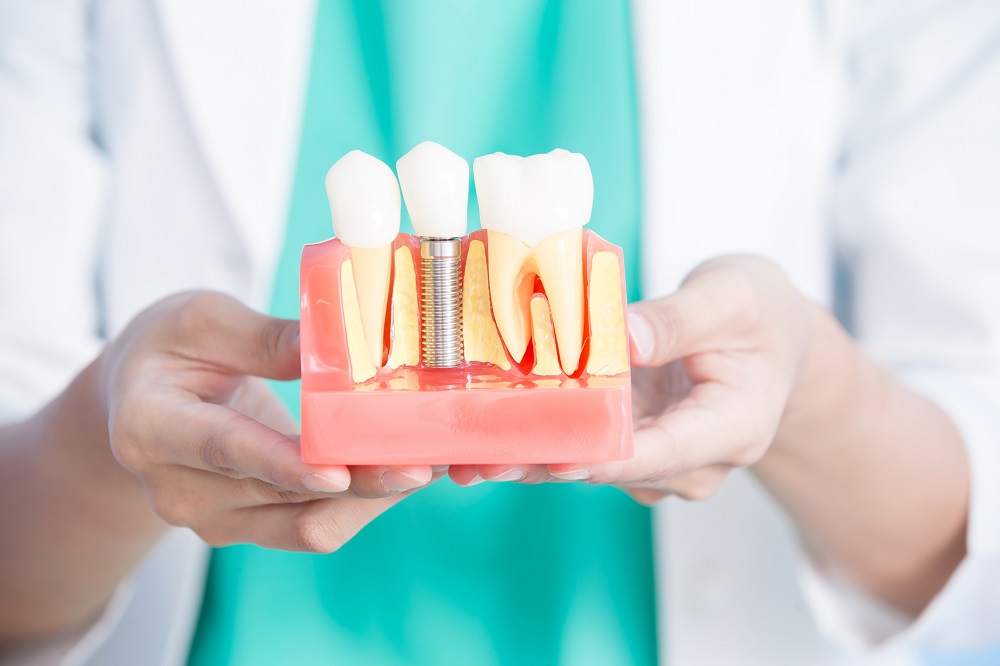
Dentist in Flushing QueensAccording to the American College of Prosthodontists, “it is estimated that 178 million Americans are missing at least one tooth and about 40 million Americans are missing all of their teeth.” Tooth loss in adults is often the result of tooth decay, injury or periodontal disease.

There are several devices utilized by dentists to replace missing teeth; however, one of the most natural feeling and looking is a dental implant. Dental implants are metal frames or posts that are surgically placed in the jawbone. They serve as roots for missing teeth and support permanent tooth prosthetics such as crowns that are custom made to match your teeth.  Dental implants are often a safe and permanent solution.

Although dental implants are a favorable choice for many, implant surgery may not be for everyone.   Depending on the status of their health, patients with certain conditions such as diabetes, cardiac problems, unhealthy gums or those with significant bone loss of the jaw may not be suitable candidates for this procedure.

As with any surgical procedure, there are risks associated with dental implant surgery.  Risks are rare but may include:

  • Infection at the implant site
  • Dental implants protruding into sinus cavities causing sinus problems
  • Damage to other teeth or blood vessels
  • Nerve damage at the implant site

The procedure is typically performed in an outpatient setting by a highly trained dental specialist. Your dentist will most likely prescribe medications or antibiotics to help relieve pain and reduce the risk of infection post-surgery.  After the procedure, it is highly recommended that you practice excellent oral hygiene, avoid habits that may damage teeth such as chewing on ice and keep up with routine checkups.

To schedule an appointment with a dentist at Flushing Hospital, please call 718-670-5521.


All content of this newsletter is intended for general information purposes only and is not intended or implied to be a substitute for professional medical advice, diagnosis or treatment. Please consult a medical professional before adopting any of the suggestions on this page. You must never disregard professional medical advice or delay seeking medical treatment based upon any content of this newsletter. PROMPTLY CONSULT YOUR PHYSICIAN OR CALL 911 IF YOU BELIEVE YOU HAVE A MEDICAL EMERGENCY.

Tips for Traveling With Medication

Tips for traveling with medication Preparing for a flight often requires careful planning and packing. When traveling with medication, knowing airport rules ahead of time can help you to pack correctly and minimize setbacks on your trip.

It is important that you follow these tips provided by the Transportation Security Administration (TSA) to avoid delays in your travel time or confiscation of your medication:

  • Confirm that your prescription is legal at your destination; some medications that are allowed in the United States are prohibited in other countries.
  • Learn state requirements for the labeling of prescription medication. States have individual laws of which travelers must comply.
  • You can bring unlimited amounts of your medication in pill or solid form, as long as it is screened. Medications are typically screened by X-ray; however, if you do want them X-rayed you may ask to have them inspected instead. This request must be made before your medication enters the X-ray tunnel.
  • You are allowed to bring liquid medication in carry-on bags in excess of 3.4 ounces in reasonable quantities.
  • If traveling with liquid medication, you must inform the inspecting officer at the start of the screening checkpoint process. Additional screening will be required and you may be asked to open the container.
  • Supplies associated with medication such as syringes, pumps, IV bags or needles must undergo screening.

Packing appropriately for your trip can make traveling with medication less complicated. It is highly recommended that you check the TSA’s website, www.tsa.gov, for updates as the current rules can change.

All content of this newsletter is intended for general information purposes only and is not intended or implied to be a substitute for professional medical advice, diagnosis or treatment. Please consult a medical professional before adopting any of the suggestions on this page. You must never disregard professional medical advice or delay seeking medical treatment based upon any content of this newsletter. PROMPTLY CONSULT YOUR PHYSICIAN OR CALL 911 IF YOU BELIEVE YOU HAVE A MEDICAL EMERGENCY.