Robot-Assisted Hysterectomy

A hysterectomy is a surgical procedure that removes the uterus. Depending on the reason for the surgery, a hysterectomy can involve removing surrounding organs and tissues, such as the fallopian tubes and ovaries. 

Your healthcare provider will discuss the type of hysterectomy you need depending on your condition. This will determine if your fallopian tubes and/or ovaries will be removed. 

The different types of hysterectomy surgeries include: 

  • A total hysterectomy removes the uterus and cervix but leaves the ovaries. Since you still have ovaries, you won’t enter menopause immediately after surgery. 
  • A supracervical hysterectomy removes just the upper part of the uterus while leaving the cervix. You can also have your fallopian tubes and ovaries removed at the same time. Since you still have a cervix, you will still need Pap smears. 
  • A total hysterectomy with bilateral salpingo-oophorectomy removes the uterus, cervix, fallopian tubes, and ovaries. Since your ovaries are removed, menopause will start immediately if you haven’t already completed it. 
  • A radical hysterectomy with bilateral salpingo-oophorectomy removes the uterus, cervix, fallopian tubes, ovaries, the upper portion of the vagina, and some surrounding tissue and lymph nodes. Healthcare providers use this procedure when cancer is involved. Since your ovaries are removed, you will enter menopause. 

A healthcare provider may suggest alternative treatments before recommending a hysterectomy, depending on the reason for needing one. Sometimes, those treatments don’t help, or surgery is the only option to treat the condition. 

Surgeons perform hysterectomies to treat the following: 

  • Abnormal or heavy vaginal bleeding 
  • Severe pelvic pain 
  • Uterine fibroids and other noncancerous tumors 
  • Severe endometriosis 
  • Uterine prolapse that can lead to urinary incontinence or fecal incontinence 
  • Cervical, ovarian, or uterine cancer 
  • Conditions with the lining of your uterus, such as hyperplasia or adenomyosis 
  • Serious complications of childbirth such as uterine rupture 

Many people have a hysterectomy to prevent cancer. For people at high risk for certain types of cancer, removing the uterus and/or surrounding reproductive organs can reduce the chances of developing cancer. 

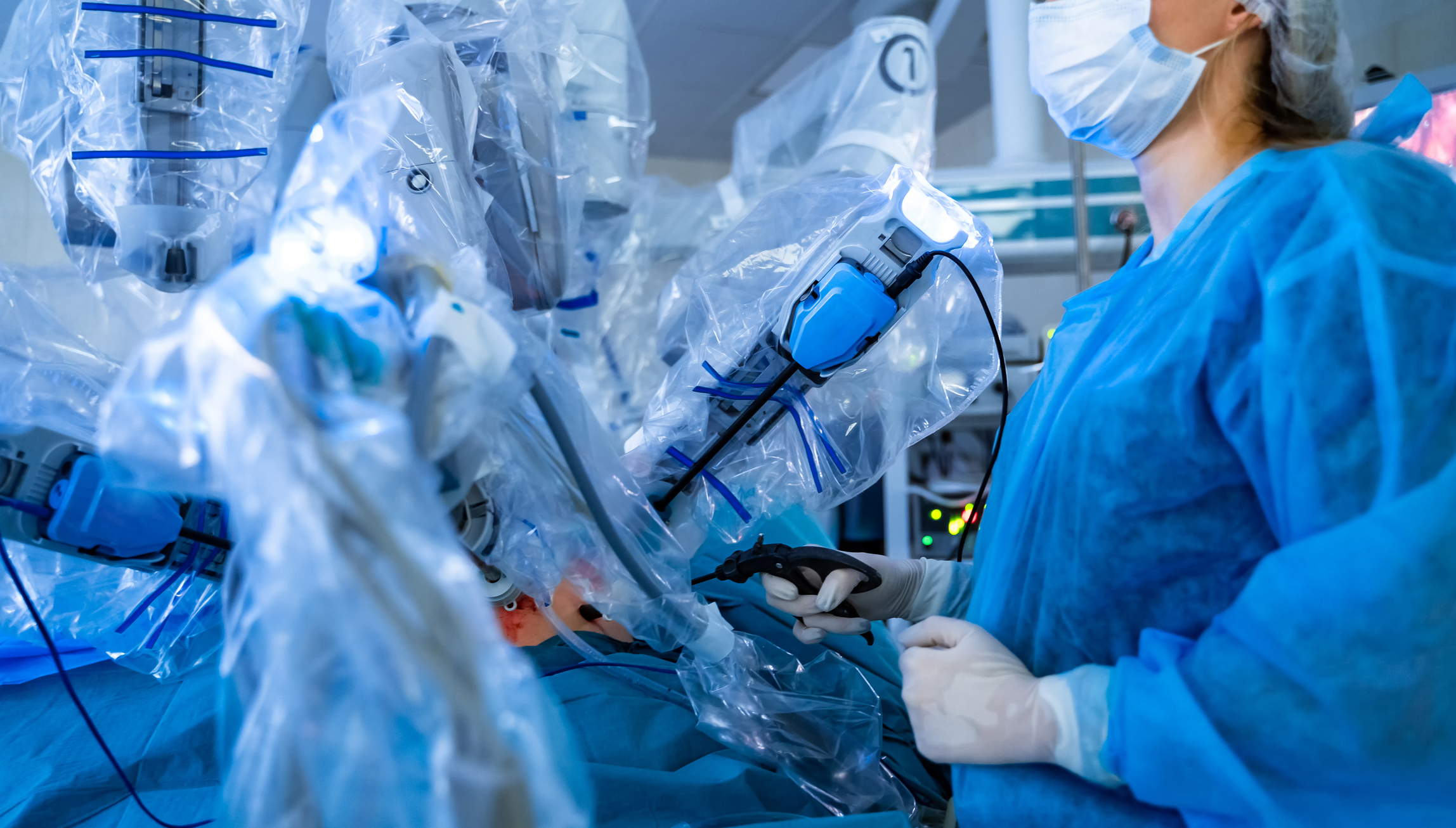
Healthcare providers can use several different surgical approaches to perform a hysterectomy, including a robot-assisted laparoscopic hysterectomy. 

A robot-assisted laparoscopic hysterectomy is like an abdominal laparoscopy; however, a surgeon performs the procedure with the help of a robotic machine. 

A surgeon inserts a laparoscope through the abdominal incisions. They insert small, thin surgical tools through three to five other small incisions around your belly button. The surgeon controls robotic arms and instruments. 

The recovery is similar to laparoscopic hysterectomy. 

There are many potential advantages of robotic-assisted laparoscopic hysterectomy, including: 

  • Robot-assisted surgery provides the surgeon with 3D images of inside your abdomen and pelvis that create a clearer picture for them to reference as they operate 
  • Under the surgeon’s direction, the robot can move more freely and with more versatility than a human hand 
  • Minimal scarring 
  • Less pain 
  • Faster recovery times 
  • Less risk of wound infection 
  • Shorter hospital stays 
  • Less blood loss 

To learn more about our robotic surgical procedures or schedule an appointment, contact Flushing Hospital Medical Center at (718) 670-5000. 

All content of this newsletter is intended for general information purposes only and is not intended or implied to be a substitute for professional medical advice, diagnosis or treatment. Please consult a medical professional before adopting any of the suggestions on this page. You must never disregard professional medical advice or delay seeking medical treatment based upon any content of this newsletter. PROMPTLY CONSULT YOUR PHYSICIAN OR CALL 911 IF YOU BELIEVE YOU HAVE A MEDICAL EMERGENCY.

What to Expect After Robotic-Assisted Hysterectomy

Robotic-assisted hysterectomy in Flushing New York

A hysterectomy is the surgical removal of the uterus and in some instances the cervix.  

Hysterectomies are performed by surgeons to treat several gynecological conditions such as endometriosis, fibroids, uterine collapse or cervical cancer. The operation can be done vaginally or through the abdomen.

Depending on the reason for surgery, you may be a candidate for robotic-assisted laparoscopic hysterectomy.  During this minimally invasive procedure, surgeons operate by making small incisions into the abdomen; utilizing the aid and precision of a robot to control tiny surgical instruments.  Surgery may last between three to four hours.  Times can vary as each patient’s case is unique. After surgery, your doctor may recommend that you stay at least one night in the hospital for observation.

A complete recovery post-surgery can take anywhere between six to eight weeks. During this time you may experience:

  • Vaginal bleeding  or a dark-brown discharge for a few days  or weeks 
  • Little or no pain  
  • Tiredness
  • A poor appetite
  • A swollen or puffy belly
  • Discomfort at the incision site
  • Burning or itching around the incision
  • A sense of loss ( It is not unusual for some women  to temporarily feel a sense of loss or depression)

It is highly recommended that you seek medical attention if you are experiencing a fever over 100 degrees Fahrenheit, swelling or drainage of the incision,  bright red vaginal bleeding, severe pain, vomiting or nausea, frequent urination, difficulty urinating or a burning sensation during urination.

As your body heals it is important to follow self-care guidelines your doctor provides. This may include refraining from lifting objects greater than 20lbs for up to six weeks after surgery, keeping the incision site clean and dry, waiting at least four weeks before submerging in the tub, refraining from vaginal intercourse or inserting objects into the vagina for eight weeks.

Flushing Hospital Medical Center’s expert team of surgeons is highly trained in performing hysterectomies with the assistance of the da Vinci robotic surgery system. This highly advanced, minimally invasive technology can offer patients several benefits including minimal bleeding, shorter hospital stays and recovery periods.

To schedule an appointment with a surgeon at Flushing Hospital who specializes in minimally invasive robotic surgery, please call 718-670-3135.

All content of this newsletter is intended for general information purposes only and is not intended or implied to be a substitute for professional medical advice, diagnosis or treatment. Please consult a medical professional before adopting any of the suggestions on this page. You must never disregard professional medical advice or delay seeking medical treatment based upon any content of this newsletter. PROMPTLY CONSULT YOUR PHYSICIAN OR CALL 911 IF YOU BELIEVE YOU HAVE A MEDICAL EMERGENCY.

Fibroids- Causes, Symptoms and Treatments

Patient with doctorUterine fibroids are abnormal growths that develop in or just outside the uterus.   They form when the smooth muscle cells of the uterus (myometrium) begin to grow rapidly and advance into tumors, which are typically non-cancerous. These tumors vary in size and can be as small as a pumpkin seed or as large as a grapefruit and in unusual cases, much larger.

Fibroids are very common. It is estimated that 70 to 80 % of women will develop tumors by the age of 50. Although the causes are unknown, there are factors that put some at a greater risk than others-they are:

  • Family history
  • Pregnancy
  • Being overweight
  • Having African American ancestry
  • Being over the age of 30

The symptoms of fibroids depend on the size, location and the number of tumors present.  Symptoms include:

  • Pelvic pain
  • Heavy bleeding and blood clots between and during periods
  • Increased urination
  • Pain during intercourse
  • Enlargement of the lower abdomen
  • Increased time of menstruation
  • Pressure or a feeling of fullness in the lower abdomen

Women who have very small tumors or are going through menopause may experience very little or no symptoms at all.

Fibroids are diagnosed by gynecologists by way of pelvic exams and ultrasound or MRI.   Your doctor will create a treatment plan based on symptoms and the advancement of the growth.  Treatment may consist of medication to regulate hormone levels, assist in shrinking the tumor or alleviate pain. Surgery may be performed laparoscopically to remove tumors, however, if your condition is extreme, your physician may recommend a hysterectomy.

Robotic surgeons at Flushing Hospital are board certified or board approved and have performed countless gynecologic procedures resulting in high rates of success.Procedures performed robotically by Flushing Hospital’s team of surgeons include hysterectomies, tubal re-anastomosis, dermoid cystectomy and more.

For more information about robotic surgery or procedures performed by our surgeons, please contact Flushing Hospital’s, Department of Obstetric and Gynecology at 718-670-8994.

All content of this newsletter is intended for general information purposes only and is not intended or implied to be a substitute for professional medical advice, diagnosis or treatment. Please consult a medical professional before adopting any of the suggestions on this page. You must never disregard professional medical advice or delay seeking medical treatment based upon any content of this newsletter. PROMPTLY CONSULT YOUR PHYSICIAN OR CALL 911 IF YOU BELIEVE YOU HAVE A MEDICAL EMERGENCY.