Summer Weight Loss Tips For Kids

Is your child at risk of gaining weight this summer?

We consider summer to be a time when kids run around, go swimming and generally remain active. With all this physical activity, it is a common belief that children keep weight off or maybe even lose a few pounds in the summer, but that is not the case. There are many reasons why parents are now noticing that their children are actually gaining weight during the summer.

The rate of childhood obesity has tripled in America in recent decades. Now, one out of three children in this country is considered overweight or obese. When are children gaining the most weight?  Recent studies have revealed that during the summer, the rate of weight gain in children is double that of the rest of the year. Why?

One of the biggest contributing factors is that children today live a more sedentary lifestyle. During the school year, children participate in fitness programs, both during recess and in physical education classes. Without a regimented exercise program, children opt to spend their free time playing video games or watching television.

Another factor in summer weight gain is the foods children have access to in their home. In an effort to fight obesity and promote healthy eating habits, many schools provide healthy alternatives for lunches and snacks during the year. During the summer, however, kids have access to whatever snacks are in the home. Kids will often choose unhealthy snacks, such as cookies, chips, and soda, if they are available to them.

In an effort to reverse this trend, Jamaica Hospital offers the following summer healthy living tips for your kids:

• Stock your home with healthy food options like yogurt, carrots, or summer fruits like peaches, berries, or melons.

• Make water the beverage of choice. Juices and sodas are high in calories and low in nutrients. To make water more flavorful, consider adding fruit slices or berries.

• Limit TV and video game usage. It will force kids to become more physically active and prevent them from enticing junk food commercials..

• Walk more. Everyone can do it. Incorporate regular family walks to the park or around the neighborhood.

• Be inventive. Not every child is interested in formal team sports, but every kid loves to run around. Encourage activities like hopscotch, jump rope or a simple game of “tag.”

• Be a role mode. Children often take cues from their parent’s eating habits so if you want your kids to eat healthier, you should eat healthier

All content of this newsletter is intended for general information purposes only and is not intended or implied to be a substitute for professional medical advice, diagnosis or treatment. Please consult a medical professional before adopting any of the suggestions on this page. You must never disregard professional medical advice or delay seeking medical treatment based upon any content of this newsletter. PROMPTLY CONSULT YOUR PHYSICIAN OR CALL 911 IF YOU BELIEVE YOU HAVE A MEDICAL EMERGENCY.

Don’t Let Fireworks BURN Your Summer


Summer is synonymous with barbecues, parades and fireworks displays.  However, along with these activities are increased visits to the hospital emergency room, especially over the July 4th holiday.

Fireworks are ILLEGAL in New York State, including the five boroughs and are extremely dangerous when they are not being used by a professional.  Fireworks burn at extremely high temperatures and can rapidly burn through clothing and skin.  Items such as sparklers are mistakenly thought to be safe when they are actually quite dangerous.

If fireworks ARE LEGAL to buy where you live and you choose to use them, be sure to follow the following safety tips:

  • Never allow young children to handle fireworks
  • Older children should use them only under the close supervision of an adult
  • Never light fireworks indoors
  • Only use them away from people, houses and flammable material
  • Do not try to re-light or handle malfunctioning fireworks
  • Soak unused fireworks in water for a few hours before discarding
  • Keep a bucket of water nearby to fully extinguish fireworks in case of fire

This year, have a safe Fourth of July and leave the firework displays to the trained professionals. If you have questions about fireworks displays and safety, you can visit The National Council on Firework Safety webpage at http://www.fireworksafety.org.  Take the test and learn just how much you know about fireworks safety.

All content of this newsletter is intended for general information purposes only and is not intended or implied to be a substitute for professional medical advice, diagnosis or treatment. Please consult a medical professional before adopting any of the suggestions on this page. You must never disregard professional medical advice or delay seeking medical treatment based upon any content of this newsletter. PROMPTLY CONSULT YOUR PHYSICIAN OR CALL 911 IF YOU BELIEVE YOU HAVE A MEDICAL EMERGENCY.

Breastfeeding While On-The-Go This Summer

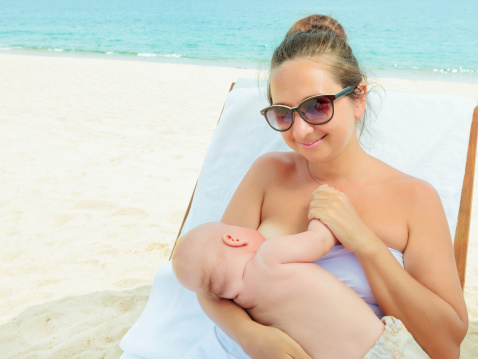
For mothers who breastfeed, the warmer weather can mean more opportunities to enjoy the outdoors with their baby, however breastfeeding on the go can present some challenges. No need to worry though, follow these simple tips and you and your baby can enjoy all the outdoor fun that summer brings.

Baby and mom

• Stay Hydrated – One of the most important things to remember is to drink enough water, especially when the temperature rises. Be sure to carry water with you when you are out. As long as you stay hydrated and breastfeed often, your baby will get the fluids he or she needs.

• Take a Dip – Relaxing poolside with your baby can be beneficial since breastfeeding works best when the both of you are relaxed. Taking a quick dip with your baby before breastfeeding will relax and cool off both of you and provide better results. The cuddle time you experience in the pool is also a great bonding experience.

• Dress Accordingly – Summer weather provides more opportunities to breastfeed discreetly, even while in public. In the summer, we tend to wear less layers and our clothing is lighter, which is optimal for breastfeeding. Since we are not confined to crowded indoor areas, mothers can find a shady tree in a park to breastfeed as a more private experience.

• Travel Prepared – Be sure to pack the necessary safeguards while traveling with your baby this summer. To protect your baby from the heat and the sun, use a stroller with a canopy. If your stroller does not have one, try to protect your baby with an umbrella or brimmed hat. Also be sure to apply sunscreen regularly, even when the sun does not seem strong.

By following these summer breastfeeding tips, both you and your baby can enjoy all the fun that summer has to offer.

All content of this newsletter is intended for general information purposes only and is not intended or implied to be a substitute for professional medical advice, diagnosis or treatment. Please consult a medical professional before adopting any of the suggestions on this page. You must never disregard professional medical advice or delay seeking medical treatment based upon any content of this newsletter. PROMPTLY CONSULT YOUR PHYSICIAN OR CALL 911 IF YOU BELIEVE YOU HAVE A MEDICAL EMERGENCY.

How safe is the water in your public swimming pool?

Last week the Centers for Disease Control (CDC) warned the public about a parasite that can live up to ten days in chlorinated pool water and possibly cause severe gastrointestinal issues like diarrhea.  One of the main causes of outbreaks in treated water, including hot tubs and swimming pools, is a resistant parasite called Cryptosporidium. Cryptosporidium is spread through contaminated food or feces. Experts suggest you try not to swallow water in recreational waters, including lakes and water parks, and refrain from swimming for at least a week if you have recently had any gastrointestinal problems to avoid passing an infection to others.   There is no treatment for infection except to just stay hydrated and let it run its course.

ThinkstockPhotos-84591545

The CDC recommends that swimmers shower before getting in the pool to prevent them from carrying infectious bacteria into the water. Young children, pregnant women and people with compromised immune systems are most susceptible to infection.


For more information, check out the CDC fact sheet about Cryptosporidium and swimming pools.

All content of this newsletter is intended for general information purposes only and is not intended or implied to be a substitute for professional medical advice, diagnosis or treatment. Please consult a medical professional before adopting any of the suggestions on this page. You must never disregard professional medical advice or delay seeking medical treatment based upon any content of this newsletter. PROMPTLY CONSULT YOUR PHYSICIAN OR CALL 911 IF YOU BELIEVE YOU HAVE A MEDICAL EMERGENCY.