 A prostatectomy is a surgical procedure that is performed to remove all or part of the prostate gland. It is used to treat prostate cancer and other prostate conditions.
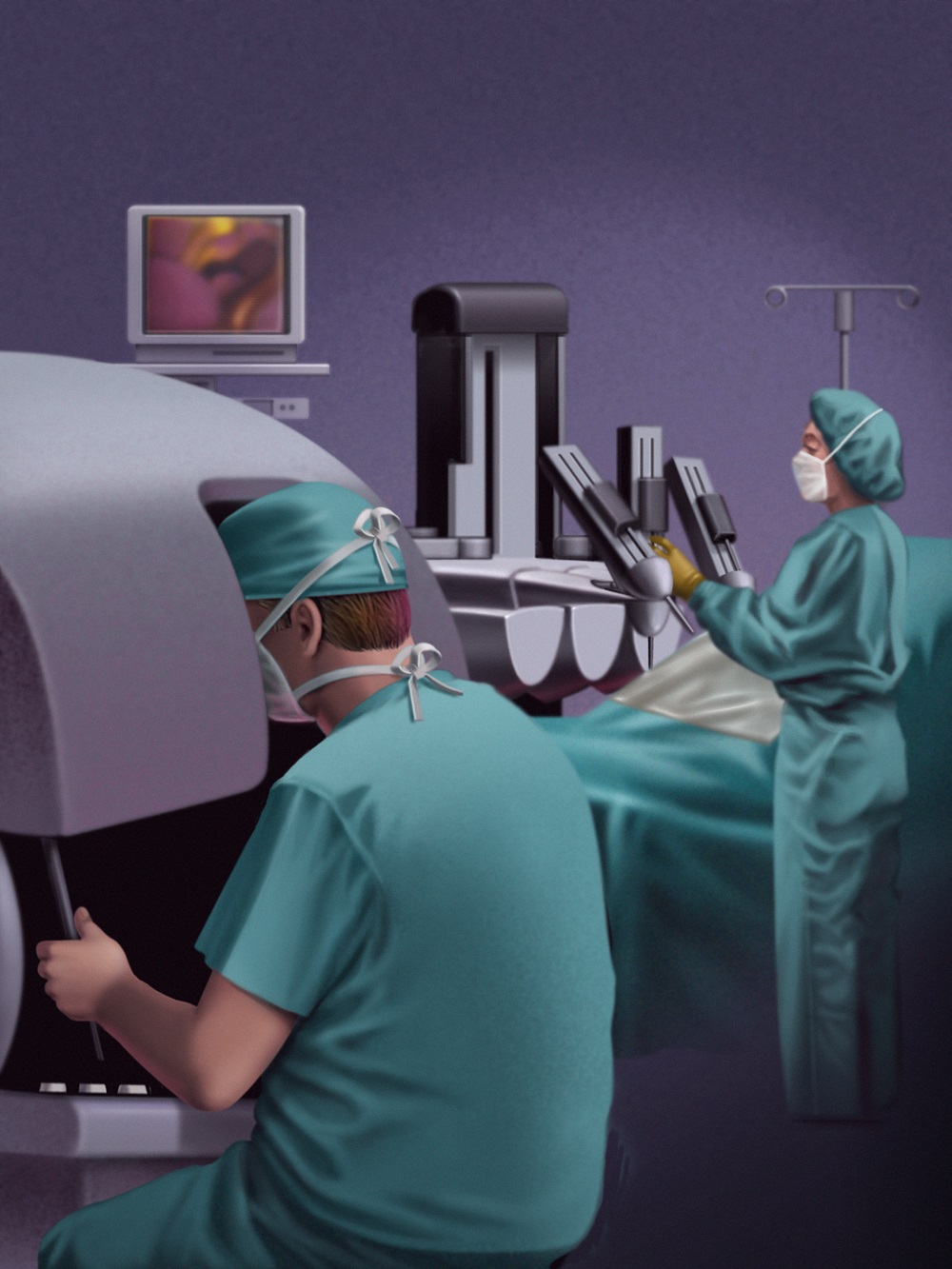
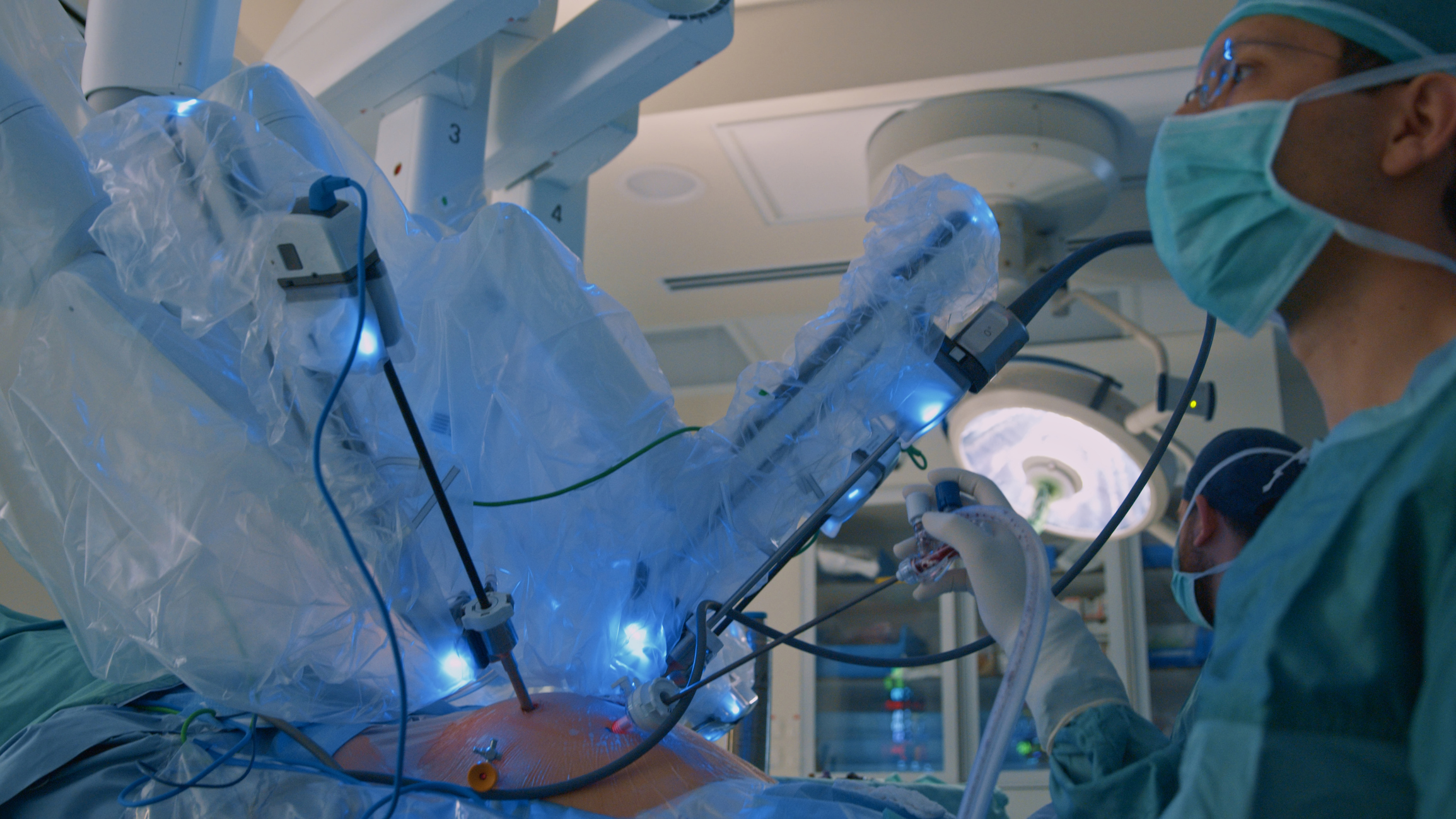
A robotic prostatectomy is a type of prostatectomy performed by a surgeon using surgical tools attached to robotic arms that assist in removing the prostate gland during the procedure.
A robotic prostatectomy differs from a traditional open prostatectomy, which requires a large eight-to-ten-inch incision. Instead, a minimally invasive approach called laparoscopy allows the surgeon to operate with precise movements and allows the surgeon to operate by way of a one-to-two-inch incision and five much smaller incisions in the lower stomach.
Although it is less invasive than open surgery, robotic prostatectomy is considered a major surgery.
A robotic prostatectomy can be performed by using different approaches, depending on the condition that needs treatment, including:
- Robot-assisted radical laparoscopic prostatectomy (RALP) is used to treat prostate cancer by removing the entire prostate gland, surrounding tissues, and sometimes nearby lymph nodes
- Nerve-sparing prostatectomy is a surgical approach that takes the prostate gland while not trying to injure the nerves that play a role in erections. However, this may not be possible if there is cancer very close to the nerves. A non-nerve-sparing prostatectomy may be needed
- Simple robotic prostatectomy or partial prostatectomy only removes the inner part of the prostate, leaving the outer part intact. This procedure is performed to ease symptoms of benign prostatic hyperplasia (BPH), which is an enlarged prostate
A partial prostatectomy eases urinary symptoms and complications resulting from blocked urine flow, such as:
- Urinary tract infections
- Trouble starting urination
- Stopping and starting while urinating
- An urgent need to urinate often
- Prolonged urination
- Urinating more than usual at night
- The feeling of not being able to fully empty the bladder
- Not being able to urinate
It is possible to survive or live without a prostate. And like any surgery, robotic prostatectomy comes with some risks and side effects, and your healthcare team will work to lower these risks.
A robotic prostatectomy has several benefits, as it can cause less pain and bleeding than traditional open surgery and allow for a shorter recovery time.
To learn more about our robotic surgical procedures or schedule an appointment, contact Flushing Hospital Medical Center at (718) 670-5000.
All content of this newsletter is intended for general information purposes only and is not intended or implied to be a substitute for professional medical advice, diagnosis or treatment. Please consult a medical professional before adopting any of the suggestions on this page. You must never disregard professional medical advice or delay seeking medical treatment based upon any content of this newsletter. PROMPTLY CONSULT YOUR PHYSICIAN OR CALL 911 IF YOU BELIEVE YOU HAVE A MEDICAL EMERGENCY.