
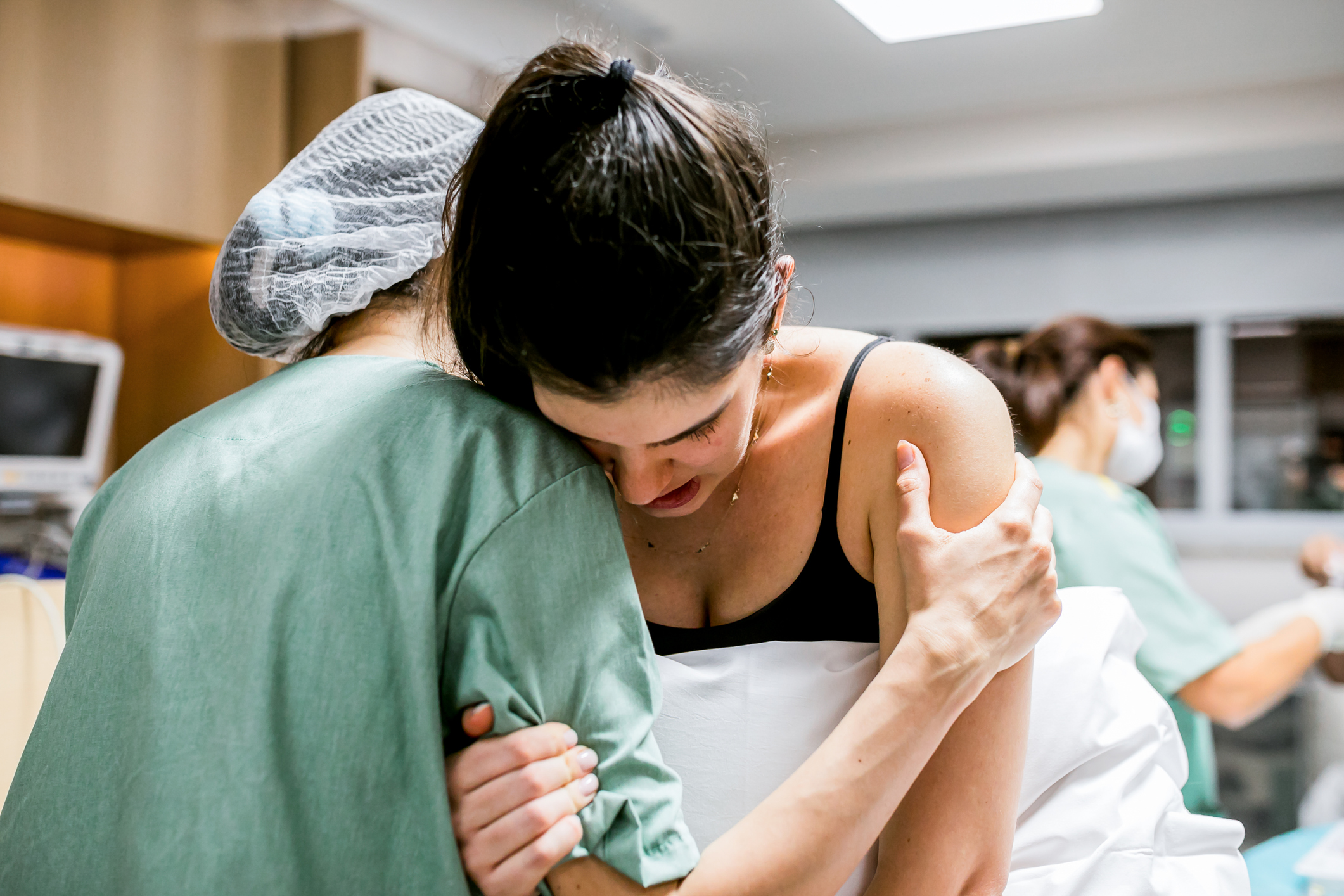
 Nurse midwives and certified doulas serve as members of a birthing team. Both have different training and education and provide various means of support and care during pregnancy, labor, and beyond.
Certified nurse midwives have master’s degrees in midwifery and often have experience working as labor and delivery nurses. Similarly to OB/GYNs, they support gynecological health and pregnancy care from a medical perspective.
Certified nurse midwives are trained to perform the following healthcare services:
- Perform annual wellness exams
- Perform gynecological exams
- Provide prenatal care
- Prescribe medications
- Give labor-inducing drugs
- Monitor the fetus using electronic equipment
- Order pain medications during labor
- Order an epidural
- Perform an episiotomy
- Deliver a baby vaginally
- Assist with C-sections
- Resuscitate a baby
- Stitch tears
- Provide STI testing and care
- Postpartum checkups and breastfeeding support
If you are having a baby outside of your home, you’ll need either an OB/GYN or a certified nurse midwife to deliver your baby.
Certified doulas are trained care professionals, not medical caregivers. Certified doulas don’t necessarily have degrees in healthcare. They earn credentials and accreditations from dedicated training agencies or programs. Their focus is on providing physical and emotional support throughout your pregnancy, delivery, and the postpartum period. Doulas can provide support and education that’s on the periphery of your medical well-being as well.
Different doulas provide different kinds of services. Some may specialize in pregnancy and delivery, while others may provide a full spectrum of services, including supporting you after your baby arrives. Services they offer can include:
- Birth coaching, such as teaching you different birthing positions and techniques for reducing labor discomforts
- Healthy pregnancy advice such as nutritional counseling
- Helping draft your birth plan and advocating for your wishes during labor and delivery
- Providing mental health check-ins and advice for self-care
- Continuing to support you after your baby arrives with advice on breastfeeding and helping around the house with meal preparation and housework
- Education for your support people, like a partner or friend who’ll be in the delivery room or will be caring for your baby with you
Researchers have suggested that using a birthing doula can lead to better birth outcomes, including:
- Shorter labors
- Less reliance on medications and epidurals
- Lowered risk of C-section
- More satisfaction with the experience of labor
Certified doulas may be most helpful for people who:
- Are giving birth for the first time
- Are from underrepresented groups, including people of color and members of the LGBTQIA+ community
- Have experienced trauma in prior births
- Wish to have an unmedicated, natural labor, and delivery
The most important consideration when choosing a midwife or a doula is finding someone you like, trust, and feel comfortable around. Someone who respects your opinions and viewpoints on pregnancy and the birthing process can be beneficial.
Experience can be another important factor. Doulas and midwives with more years of experience will bring different skills and perspectives than someone more recently trained.
For more information about Flushing Hospital Medical Center’s Women’s Health Center, please call 718 670-5702.
All content of this newsletter is intended for general information purposes only and is not intended or implied to be a substitute for professional medical advice, diagnosis or treatment. Please consult a medical professional before adopting any of the suggestions on this page. You must never disregard professional medical advice or delay seeking medical treatment based upon any content of this newsletter. PROMPTLY CONSULT YOUR PHYSICIAN OR CALL 911 IF YOU BELIEVE YOU HAVE A MEDICAL EMERGENCY.