

National Dental Health Hygiene Month

October is National Dental Hygiene Month and (FHMC) would like to bring awareness to a dental hygiene condition that affects most people, gum disease or gingivitis.

According to the Centers for Disease Control (CDC), approximately half of the American population has gum disease or symptoms of it. Affecting women and men alike, no one is excluded from this possible diagnosis- even child are susceptible.

Gum disease, also known as periodontal disease, is a contagious bacterial infection that affects the gum tissues and bone that supports the teeth.  Many factors can increase the chances of developing gum disease, such as tobacco use, stress, poor diet, or even genetics.  Hardened plaque, called tartar or calculus, that builds up by the gum line can bring about gingivitis and spread into the underlying bone.  It can start slowly without any pain and may go unnoticed until there is pain.

Some of the symptoms of gum disease can include:

  • Red, swollen or tender gums
  • Gums that bleed when brushing or flossing
  • Receding gums
  • Tooth sensitivity
  • Metallic taste
  • Chronic bad breath
  • Deep pockets (the space between gums and the teeth)

While practicing good dental hygiene, such as regular flossing and brushing after meals, can help slow the progression of such a disease, it is important to schedule regular dental check-ups to prevent gum disease or its progression.

Unfortunately, many people go to the dentist only when they experience some sort of pain or symptom. Don’t let this happen to you.  Keep on top of your oral health and make an appointment with your dentist every six months for a dental check- up and deep cleaning.  If you would like to make an appointment with a Board Certified Dentist at, call  to schedule an appointment.

All content of this newsletter is intended for general information purposes only and is not intended or implied to be a substitute for professional medical advice, diagnosis or treatment. Please consult a medical professional before adopting any of the suggestions on this page. You must never disregard professional medical advice or delay seeking medical treatment based upon any content of this newsletter. PROMPTLY CONSULT YOUR PHYSICIAN OR CALL 911 IF YOU BELIEVE YOU HAVE A MEDICAL EMERGENCY.

Rotator Cuff Injury

The rotator cuff is a group of four muscles and tendons that keep your arm in the shoulder socket.  Damage or injury caused to the rotator cuff can result in limited mobility or permanent loss of motion of the shoulder joint.

Rotator cuff injuries are very common; in fact, it is estimated that close to 2 million people living in the United States seek treatment for rotator cuff problems every year.

Injuries occur most often in people who repeatedly perform overhead motions in their daily activities.  However, an injury can also be sustained due to an accident or the degeneration of tendons. These factors put some at risk of injury more than others.  Those who have an increased risk of injury include:

  • Individuals who play certain sports that involve the use of repetitive arm motions such as baseball or tennis
  • Individuals employed in occupations that require the use of constant overhead motion such as a house painting
  • Individuals over the age of 40

Injury to the rotator cuff can range from microscopic tears to large irreparable tears.  According to the American Academy of Orthopedic Surgeons, symptoms can vary depending on the severity of these tears and may include:

  • Pain at rest and at night, particularly if lying on the affected shoulder
  • Pain when lifting and lowering your arm or with specific movements
  • Weakness when lifting or rotating your arm
  • Crepitus or crackling sensation when moving your shoulder in certain positions

If you are experiencing these symptoms, it is recommended that you schedule an appointment to see a doctor as soon as possible.  Prolonging a doctor’s visit can result in more damage.

Your doctor may conduct a physical examination and (or) imaging tests such as x-rays or an MRI to determine if you have received an injury. Treatment for a rotator cuff injury may include rest, physical therapy or surgery.

To schedule an appointment with a doctor at Jamaica Hospital Medical, please call 718-206-6923

All content of this newsletter is intended for general information purposes only and is not intended or implied to be a substitute for professional medical advice, diagnosis or treatment. Please consult a medical professional before adopting any of the suggestions on this page. You must never disregard professional medical advice or delay seeking medical treatment based upon any content of this newsletter. PROMPTLY CONSULT YOUR PHYSICIAN OR CALL 911 IF YOU BELIEVE YOU HAVE A MEDICAL EMERGENCY.
Foods That Are Good For Your Kidneys

The kidneys are two bean shaped organs in the body that help to filter waste products from the blood. They also help to regulate blood pressure.

People who have kidney disease should follow a diet that prevents the kidneys from losing their ability to function properly. It is important to maintain a diet low in sodium. This usually means less than 2,300 milligrams of sodium per day. Eating fresh foods is usually a healthier option due to a lower sodium content.  Eat small portions of protein, 2 to 3 ounces, is a good amount.

Protein can come from fish, skinless chicken, lean meat, eggs, or dairy. Avoiding alcohol is also important. Heart healthy meals are a good choice. Avoid deep fried foods. Broiled or baked is a better option. Eat foods lower in phosphorous include vegetables, bread, pasta, rice, corn, and foods low in potassium apples, carrots, green beans, white bread, apple, grape, cranberries. It is also important to drink six to eight glasses of water a day.

Things to avoid when you have kidney disease are:

  • Sodium
  • Potassium
  • Excess Protein
  • Fast food

There a certain foods that help to keep the kidneys functioning well. These include:

  • Cauliflower
  • Blueberries
  • Sea Bass
  • Red Grapes
  • Garlic
  • Buckwheat
  • Olive Oil
  • Cabbage
  • Bell peppers
  • Arugula
  • Macademia nuts
  • Radish
  • Turnips
  • Pineapple
  • Shiitake mushrooms

Speak to your physician if you are having kidney problems about the best choice of foods for you. You can schedule an appointment with a physician at Flushing Hospital Medical Center by calling 718-670-5486.

All content of this newsletter is intended for general information purposes only and is not intended or implied to be a substitute for professional medical advice, diagnosis or treatment. Please consult a medical professional before adopting any of the suggestions on this page. You must never disregard professional medical advice or delay seeking medical treatment based upon any content of this newsletter. PROMPTLY CONSULT YOUR PHYSICIAN OR CALL 911 IF YOU BELIEVE YOU HAVE A MEDICAL EMERGENCY.

Understanding The Symptoms Of Guillain-Barre Syndrome

Guillain-Barre syndrome is a rare disorder that develops when the body’s immune system attacks its own nerves.

Flushing Hospital Provides Information About Guillain-Barre Syndrome

The initial symptoms of Guillain-Barre syndrome are weakness that usually begins in the lower extremities and spreads to the upper body and arms. This is accompanied by a tingling or prickling sensation in the extremities. These symptoms can rapidly intensify, eventually paralyzing the entire body.

Other signs and symptoms of Guillain-Barre syndrome may include:

  • Unsteady walking or inability to walk or climb stairs
  • Difficulty with eye or facial movements, including speaking, chewing or swallowing
  • Severe pain that may feel achy or cramp-like and may be worse at night
  • Difficulty with bladder control or bowel function
  • Rapid heart rate
  • Low or high blood pressure
  • Difficulty breathing

The cause of Guillain-Barre syndrome is unknown, but it is often preceded by an infectious illness such as a respiratory infection or the stomach flu.  It can also be triggered by certain viruses, such as influenza, Epstein-Barr, or Zika.  Anyone can get Guillain-Barre syndrome, but it is slightly more common in men and typically affects younger adults.

There is no known cure for Guillain-Barre syndrome, but several treatments can ease symptoms and reduce the duration of the illness. Most people recover from Guillain-Barre syndrome, though some may experience lingering effects from it, such as weakness, numbness or fatigue.

Call your doctor if you have mild tingling in your toes or fingers that doesn’t seem to be spreading or getting worse. If you do not have a doctor and would like to make an appointment at Flushing Hospital’s Ambulatory Care Center, please call 718-670-

wn nerves.

The initial symptoms of Guillain-Barre syndrome are weakness that usually begins in the lower extremities and spreads to the upper body and arms. This is accompanied by a tingling or prickling sensation in the extremities. These symptoms can rapidly intensify, eventually paralyzing the entire body.

Other signs and symptoms of Guillain-Barre syndrome may include:

  • Unsteady walking or inability to walk or climb stairs
  • Difficulty with eye or facial movements, including speaking, chewing or swallowing
  • Severe pain that may feel achy or cramp-like and may be worse at night
  • Difficulty with bladder control or bowel function
  • Rapid heart rate
  • Low or high blood pressure
  • Difficulty breathing

The cause of Guillain-Barre syndrome is unknown, but it is often preceded by an infectious illness such as a respiratory infection or the stomach flu.  It can also be triggered by certain viruses, such as influenza, Epstein-Barr, or Zika.  Anyone can get Guillain-Barre syndrome, but it is slightly more common in men and typically affects younger adults.

There is no known cure for Guillain-Barre syndrome, but several treatments can ease symptoms and reduce the duration of the illness. Most people recover from Guillain-Barre syndrome, though some may experience lingering effects from it, such as weakness, numbness or fatigue.

Call your doctor if you have mild tingling in your toes or fingers that doesn’t seem to be spreading or getting worse. If you do not have a doctor and would like to make an appointment at Flushing Hospital’s Ambulatory Care Center, please call 718-670-5486.

All content of this newsletter is intended for general information purposes only and is not intended or implied to be a substitute for professional medical advice, diagnosis or treatment. Please consult a medical professional before adopting any of the suggestions on this page. You must never disregard professional medical advice or delay seeking medical treatment based upon any content of this newsletter. PROMPTLY CONSULT YOUR PHYSICIAN OR CALL 911 IF YOU BELIEVE YOU HAVE A MEDICAL EMERGENCY.
Employee Spotlight – Diana Garcia

September’s Employee Spotlight shines on Diana Garcia, Newborn Nursery RN, AHN, CLC at (FHMC).

Diana is tasked with overseeing the Newborn Nursery Unit, performing newborn assessments and educating mothers and families on how to care for their newborns.

Diana joined the FHMC team in November of 2010.  She is a graduate of Long Island University Brooklyn and proud alum of St. Agnes Academic H.S.

When asked why she is so passionate about her work, Diana responded, “I was looking forward to breastfeeding my first child.  No one taught me how to breastfeed. I thought I was breastfeeding properly, but I wasn’t.” It was that lack of information which caused her son to become jaundiced and placed under phototherapy. This incident caused Diana to be discharged from the hospital before her infant.

That unsettling experience gave birth to why Diana Garcia is so committed to teaching mothers about the benefits of exclusive breastfeeding.

Throughout Diana’s day, she encounters a few challenges.  One of her “personal” challenges is getting mothers who relied on formula to try to breastfeed.  “So many mothers do not have the knowledge on how to breastfeed or the benefits that breastfeeding brings.” This was something Diana wanted to change and has dedicated her professional career to education and encouragement.

Although the breastfeeding journey begins in the hospital, Diana realizes that it is a challenge to maintain exclusivity in breastfeeding, especially when the mother is physically exhausted.  That is why she spends time reinforcing education and reminding the mothers of the benefits

In closing, Diana stated that she is “Honored to work at Flushing Hospital Medical Center because it is a Baby Friendly Hospital.”

For these and so many other reasons, we congratulate Diana Garcia for being September’s Employee Spotlight!

All content of this newsletter is intended for general information purposes only and is not intended or implied to be a substitute for professional medical advice, diagnosis or treatment. Please consult a medical professional before adopting any of the suggestions on this page. You must never disregard professional medical advice or delay seeking medical treatment based upon any content of this newsletter. PROMPTLY CONSULT YOUR PHYSICIAN OR CALL 911 IF YOU BELIEVE YOU HAVE A MEDICAL EMERGENCY.
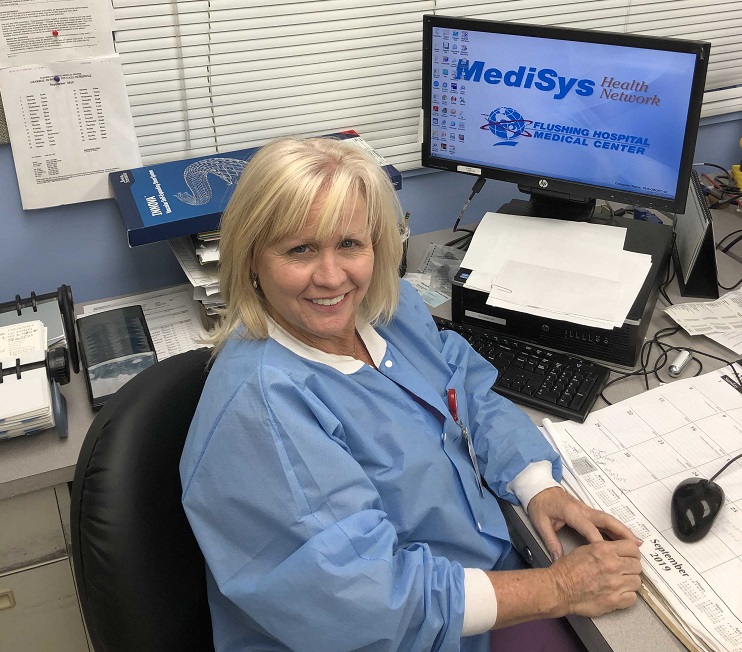
Flushing Hospital’s Nurse of The Month

Our nurses are the pillars of our community. In addition to meeting the demands of being a caregiver, they wear several hats including that of an educator, nurturer,  and comforter.

Not only do nurses care for patients; they provide support to families and loved ones during difficult times.

Our nurses pour their hearts into all aspects of their job, and this is one of the many reasons why we celebrate their accomplishments.

Join us in congratulating Patricia Czyzak, RN for receiving Flushing Hospital Medical Center’s Nurse of the Month.

Meet Patricia:

Patricia Czyzak - Nurse of the MonthQ&A:

Q: How long have you been working for FHMC?
A: I’ve worked at Flushing Hospital for the past 42 years after graduating from the Flushing Hospital School of Nursing

Q: On which unit do you currently work?
A:  I’ve worked in the Operating Room for my entire career here.

Q: Why did you want to become a nurse?
A:  My decision to become a nurse was due to my sister Mary Ellin, who is also a Flushing Hospital OR nurse for the past 49 years (  She’s still here).

QWhat is the best part of your job?
A: The best part of my job is the people that I work with and the satisfaction at the end of the day that the patients are happy with the care we provide.

All content of this newsletter is intended for general information purposes only and is not intended or implied to be a substitute for professional medical advice, diagnosis or treatment. Please consult a medical professional before adopting any of the suggestions on this page. You must never disregard professional medical advice or delay seeking medical treatment based upon any content of this newsletter. PROMPTLY CONSULT YOUR PHYSICIAN OR CALL 911 IF YOU BELIEVE YOU HAVE A MEDICAL EMERGENCY.

Fatty Liver Disease

Liver conditions are usually attributed to the excessive consumption of alcohol, viruses or morbid obesity.  However, there is a condition that affects the liver that is caused by none of the aforementioned risk factors.  It is nonalcoholic fatty liver disease (NAFLD).

NAFLD is diagnosed when the patient has too much fat stored in their liver cells.  Typically, NAFLD causes no noticeable signs or symptoms other than, in some cases, fatigue, pain or tenderness in the upper right portion of the abdomen.

People at risk for NAFLD include those with:

  • High cholesterol
  • High levels of triglycerides in the blood
  • Metabolic syndrome
  • Obesity when it is concentrated in the abdomen
  • Polycystic ovary syndrome
  • Sleep apnea
  • Type 2 diabetes
  • Hypothyroidism (underactive thyroid)
  • Hypopituitarism (underactive pituitary gland)

If you have NAFLD, you are at greater risk of developing a more serious condition called nonalcoholic steatohepatitis (NASH).

NASH is a more aggressive form of fatty liver disease that may progress into cirrhosis (scaring of the liver) and ultimately liver failure.

The signs and symptoms of NASH are:

  • Abdominal swelling
  • Enlarged blood vessels beneath the skin’s surface
  • Enlarged spleen
  • Red palms
  • Jaundice (yellowing of the skin and eyes)

Although experts do not know exactly what causes NFLD and NASH, for some  it is believed the combination of the health issues listed above may cause excess fat to become toxic to the cells in the liver.  The risk factors cause the liver to inflame and develop scar tissue or cirrhosis.  The treatment for this condition varies.

The best way to reduce your risk of NAFLD is to implement a healthy plant based diet that includes fruits, vegetables, whole grains and healthy fats, maintain a healthy weight and, after conferring with your physician, choose an exercise plan that is right for you.

If you are experiencing the signs and symptoms of NAFLD or NASH and the symptoms persist, it is important you seek the advice of a doctor.  If you would like to make an appointment at the , call CTA

All content of this newsletter is intended for general information purposes only and is not intended or implied to be a substitute for professional medical advice, diagnosis or treatment. Please consult a medical professional before adopting any of the suggestions on this page. You must never disregard professional medical advice or delay seeking medical treatment based upon any content of this newsletter. PROMPTLY CONSULT YOUR PHYSICIAN OR CALL 911 IF YOU BELIEVE YOU HAVE A MEDICAL EMERGENCY.

An Abdominal Burning Sensation Could be a Stomach Ulcer

A stomach ulcer, sometimes referred to as a gastric ulcer, occurs when the acids in the stomach slowly eat away at the lining of the stomach resulting in sores. They can be very painful in some cases, and at other times some people will have no symptoms at all.

There are two main causes of stomach ulcers. One is taking too many pain relievers over a long period of time. This slowly destroys the mucosa lining found in the stomach. The other main cause of a stomach ulcer is caused by a bacteria called Heliobacter pylori ( H. pylori) . This bacteria increases the amount of acid in the stomach which eats away at the stomach lining. Other causes of stomach ulcers are smoking, alcoholic beverages, stress, and spicy food.

Symptoms of a stomach ulcer include:

  • Burping
  • Feeling bloated
  • Nausea
  • Blood in stool
  • Vomiting
  • Heartburn
  • Unexplained weight loss
  • Change in appetite

Having an empty stomach may increase the symptoms.

A stomach ulcer may be accompanied by complications. These can include internal bleeding and infection.

Diagnosing a stomach ulcer is done by taking a thorough medical history and then drawing blood, breathing into a special device, and stool samples.

Treating a stomach ulcer depends on what is causing it. If it is a pain medication issue, then you may have to cut back or reduce the dosage. If it is H. pylori related an antibiotic may be prescribed and then medication to reduce the production of excess stomach acids. Some people get relief by taking antacids or medications that protect the lining of the stomach. Reducing stress may help the symptoms as can eating a healthy diet full of fruits, nuts, and whole grains, eating aged cheese, yogurt, and taking probiotics.

If you are experiencing pain in your abdomen, speak to your physician about possible causes. You can also schedule an appointment with a gastroenterologist at Flushing Hospital Medical Center by calling 718-670-5486.

All content of this newsletter is intended for general information purposes only and is not intended or implied to be a substitute for professional medical advice, diagnosis or treatment. Please consult a medical professional before adopting any of the suggestions on this page. You must never disregard professional medical advice or delay seeking medical treatment based upon any content of this newsletter. PROMPTLY CONSULT YOUR PHYSICIAN OR CALL 911 IF YOU BELIEVE YOU HAVE A MEDICAL EMERGENCY.

Dental Implants

Dentist in Flushing QueensAccording to the American College of Prosthodontists, “it is estimated that 178 million Americans are missing at least one tooth and about 40 million Americans are missing all of their teeth.” Tooth loss in adults is often the result of tooth decay, injury or periodontal disease.

There are several devices utilized by dentists to replace missing teeth; however, one of the most natural feeling and looking is a dental implant. Dental implants are metal frames or posts that are surgically placed in the jawbone. They serve as roots for missing teeth and support permanent tooth prosthetics such as crowns that are custom made to match your teeth.  Dental implants are often a safe and permanent solution.

Although dental implants are a favorable choice for many, implant surgery may not be for everyone.   Depending on the status of their health, patients with certain conditions such as diabetes, cardiac problems, unhealthy gums or those with significant bone loss of the jaw may not be suitable candidates for this procedure.

As with any surgical procedure, there are risks associated with dental implant surgery.  Risks are rare but may include:

  • Infection at the implant site
  • Dental implants protruding into sinus cavities causing sinus problems
  • Damage to other teeth or blood vessels
  • Nerve damage at the implant site

The procedure is typically performed in an outpatient setting by a highly trained dental specialist. Your dentist will most likely prescribe medications or antibiotics to help relieve pain and reduce the risk of infection post-surgery.  After the procedure, it is highly recommended that you practice excellent oral hygiene, avoid habits that may damage teeth such as chewing on ice and keep up with routine checkups.

To schedule an appointment with a dentist at Flushing Hospital, please call 718-670-5521.


All content of this newsletter is intended for general information purposes only and is not intended or implied to be a substitute for professional medical advice, diagnosis or treatment. Please consult a medical professional before adopting any of the suggestions on this page. You must never disregard professional medical advice or delay seeking medical treatment based upon any content of this newsletter. PROMPTLY CONSULT YOUR PHYSICIAN OR CALL 911 IF YOU BELIEVE YOU HAVE A MEDICAL EMERGENCY.

Flushing Hospital Receives Healthgrades 2019 Women’s Care Excellence Awards

Healthgrades, a leading online resource for information about physicians and hospitals, recently revealed its list of recipients for their 2019 Women’s Care Excellence Awards – and Flushing Hospital Medical Center is among the privileged and few recipients.

These awards recognize hospitals across the nation that demonstrate exceptional outcomes and excel in women’s healthcare services. The awards were broken down into three separate categories, including:

  • Obstetrics and Gynecology Excellence Award – This award highlights hospitals for exceptional clinical outcomes while caring for women in childbirth, as well as during and after gynecologic surgeries and procedures.
  • Labor and Delivery Excellence Award – This distinction recognizes the top 10 % of all hospitals evaluated for the exceptional care provided to mothers during and after labor and delivery.
  • Gynecologic Surgery Excellence Award – This award recognizes the top 10% of hospitals evaluated that provided outstanding performance in gynecologic surgery, including hysterectomy and surgery related to the female reproductive system.

Flushing Hospital received all three awards and was the only hospital in Queens to receive the Gynecologic Surgery and Obstetrics and Gynecology Excellence awards.

According to Maria Smilios, Director of Nursing, “Flushing Hospital has done many things that have contributed to earning these awards, including creating standards to prevent inducing labor before 39 weeks gestation to reduce the chances of complications at birth.” Maria added that “providing our patients with continuity of care throughout their pregnancy and stressing the importance of maintaining proper prenatal care have also been major factors in our success.”  Other reasons to cite the hospital receiving these accolades include having dedicated gynecologists and gyn specialists on staff, as well as the addition of the daVinci robotic surgical system,  which has improved gynecological surgical outcomes for Flushing Hospital patients.

Approximately 3,000 babies are delivered at Flushing Hospital every year. The gynecology division performed over 1,500 procedures in 2018 and the hospital’s Women’s Health Center had nearly 14,000 outpatient visits last year.

“We are honored to receive these awards” stated Dr. Hajoon Chun, Chairman of Ob/Gyn at Flushing Hospital Medical Center. “It signifies the hospital’s dedication to providing the highest quality care to women in our community and is another example of why Flushing Hospital is the hospital of choice for so many seeking obstetrical and gynecological care.”


All content of this newsletter is intended for general information purposes only and is not intended or implied to be a substitute for professional medical advice, diagnosis or treatment. Please consult a medical professional before adopting any of the suggestions on this page. You must never disregard professional medical advice or delay seeking medical treatment based upon any content of this newsletter. PROMPTLY CONSULT YOUR PHYSICIAN OR CALL 911 IF YOU BELIEVE YOU HAVE A MEDICAL EMERGENCY.