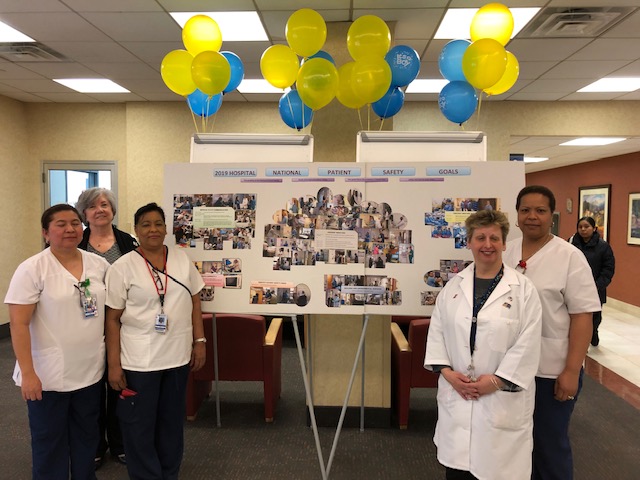
Flushing Hospital’s Nurse of The Month

Our nurses are the pillars of our community. In addition to meeting the demands of being a caregiver, they wear several hats including that of an educator, nurturer,  and comforter.

Not only to do nurses care for patients; they provide support to families and loved ones during difficult times.

Our nurses pour their hearts into all aspects of their job, and this is one of the many reasons why we celebrate their accomplishments.

Join us in congratulating  Adrienne Diaz, RN for receiving Flushing Hospital Medical Center’s Nurse of the Month,

Meet Adrienne:

Q&A:

Q: How long have you been working for FHMC?
A: I have been working at Flushing for 4 years since 2014.
Q: On which unit do you currently work?
A: I work in the Med-Surg unit 4N1.
Q: Why did you want to become a nurse?
A: Growing up in a community that lacked healthcare resources and had a language barrier I always knew I wanted to contribute and give back to my community. As a nurse at Flushing Hospital, which is so diverse and part of the community I grew up in, I am able to fulfill that goal of giving back.
QWhat is the best part of your job?
A: The best part of my job is being able to impact someone’s life in a positive way even by a small gesture such as, when a patient tells me how happy they are that I am their nurse for the day or a simple thank you from a patient when I’m having a stressful day.

All content of this newsletter is intended for general information purposes only and is not intended or implied to be a substitute for professional medical advice, diagnosis or treatment. Please consult a medical professional before adopting any of the suggestions on this page. You must never disregard professional medical advice or delay seeking medical treatment based upon any content of this newsletter. PROMPTLY CONSULT YOUR PHYSICIAN OR CALL 911 IF YOU BELIEVE YOU HAVE A MEDICAL EMERGENCY.

Flushing Hospital Provides Information About Addiction to Valium

There are many highly –addictive substances that have caught the nation’s attention in recent years. Some of these drugs are illegal, but many are prescription medications that when taken inappropriately, can be very dangerous. Flushing Hospital’s Department of Addiction Services would like to educate the community about one of these drugs, Valium.

Valium is the trade name for diazepam, a popular tranquilizing medication or sedative prescribed by both medical doctors and psychiatrists to treat a variety of conditions.  It is most commonly used to relieve the symptoms of anxiety and panic attacks, but it can also be prescribed to help people sleep, prevent seizures, and sooth of muscle spasms.

Valium is intended to strengthen certain neurotransmitters in the brain. These neurotransmitters work to slow down activity in the central nervous system, resulting in pleasurable feelings of relaxation and sedation for the user. While it can be effective when taken correctly, if taken in large doses, for an extended period of time or for reasons other than prescribed, Valium can become very addictive.  Even people who take Valium as prescribed can develop a dependence on the drug.

Valium addiction rarely develops overnight. In many cases, it can take a few weeks to several months for someone to display signs of Valium abuse.
Some of the symptoms of Valium abuse include:

  • Shaking
  • A change in appearance / hygiene
  • Slow movements and speech
  • Lack of coordination
  • Loss of appetite
  • Excessive sleepiness

If not treated, Valium addiction can lead to many serious physical and mental health issues, including:

  • Mood swings
  • Loss of memory
  • Violent or aggressive tendencies
  • Poor motor function
  • Problems with digestion and urination
  • Slowed respiration
  • Low blood pressure

Taking excess amounts of Valium increases the risk of an accidental overdose. This could end in a coma or even death, especially if it is paired with other drugs like alcohol, which also produces depressant effects on the body.

It is important to seek treatment for a Valium addiction because attempting to quit on your own can be dangerous and in extreme cases, unsupervised withdrawal can lead to seizures and death. It is recommended that withdrawal be overseen by qualified specialists to ensure the safety and comfort of the patient.

To speak to someone at Flushing Hospital’s Addiction Services Department, please call 718-670-5078.

All content of this newsletter is intended for general information purposes only and is not intended or implied to be a substitute for professional medical advice, diagnosis or treatment. Please consult a medical professional before adopting any of the suggestions on this page. You must never disregard professional medical advice or delay seeking medical treatment based upon any content of this newsletter. PROMPTLY CONSULT YOUR PHYSICIAN OR CALL 911 IF YOU BELIEVE YOU HAVE A MEDICAL EMERGENCY.

National Poison Prevention Week Tips

poison prevention-154210048This week is  National Poison Prevention Week. Did you know that every year more than 2 million poison-related injuries and deaths are reported in the United States and more than 90 percent of these cases occur in the home?

The majority of poison-related accidents occurs among children but can be prevented by taking the proper precautions to store, dispose or conceal items that contribute to these incidents.

The following safety tips are recommended by The American Association of Poison Control Centers and can help you reduce the risk of an accident your home:

  1. Place the Poison Help number in a place that is easily accessible or viewable. That number is 1 (800) 222-1222. Calls are free, confidential, and answered by experts at all times.
  2. Safely store these substances in cabinets with childproof locks or in child-resistant containers:
  • Medications
  • Vitamins
  • Tobacco products, especially liquid nicotine
  • Laundry and cleaning supplies
  • Alcohol
  • Pesticides or insect repellants
  • Hand sanitizers
  • Small batteries
  1. Read medication labels properly before administering.
  2. Never call medication “candy” to encourage children to take it.
  3. Avoid taking medications in front of young children.
  4. Do not use food storage containers to store harmful products such as detergents or pesticides.

While practicing these guidelines should be routine, we invite you to use Poison Prevention Awareness Week as a reminder to ensure that your home is poison safe.

All content of this newsletter is intended for general information purposes only and is not intended or implied to be a substitute for professional medical advice, diagnosis or treatment. Please consult a medical professional before adopting any of the suggestions on this page. You must never disregard professional medical advice or delay seeking medical treatment based upon any content of this newsletter. PROMPTLY CONSULT YOUR PHYSICIAN OR CALL 911 IF YOU BELIEVE YOU HAVE A MEDICAL EMERGENCY.

The MediSys Health Network Recognizes The Accomplishments Dr. Sabiha Raoof During Women’s History Month

March is Women’s History Month.  In recognition of this special observance, the MediSys Health Network would like to honor a woman who is very important to Jamaica Hospital Medical Center and Flushing Hospital Medical Center, Dr. Sabiha Raoof.
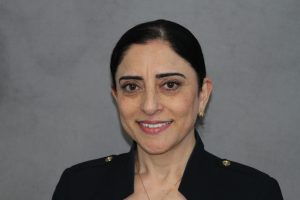
Dr. Raoof began her career at MediSys as an attending physician in 1997 after completing her radiology fellowship training. According to Dr. Raoof, “I was young and full of energy, but I was also a mother of two young children, and that aspect of my life has always been very important to me. Working for MediSys allowed me to maintain a balance between my professional goals and my role as a mother.  I never had to compromise my priorities and that gave me the opportunity to grow and thrive professionally. “

After working for a few years as an attending physician, Dr. Raoof was appointed as the Chairperson of Radiology at Jamaica Hospital in 2000 and then at Flushing Hospital in 2001.  Dr. Raoof added “I am so happy that I was given the opportunity to build the department and I am so proud of what we have been able to achieve together.” Under her guidance, the Radiology Departments at both hospitals have earned the Diagnostic Centers of Excellence designation from the American College of Radiology.

Through the years, Dr. Raoof has taken on many additional roles in the healthcare industry that has brought a great deal of positive visibility to the network.  She currently serves as the Vice Chair for the American College of Radiology’s Quality Experience Committee and is a member of their Commission on Clinical Decision Support. She has also been working with CMS for the last four years, initially serving as a national faculty member for the Transforming Clinical Practices Initiative and now serves as one of the Clinical Champions for the Quality Payment Program.

Providing the highest quality care to our patients has always been a major focus for Dr. Raoof, so when she was appointed as the Chief Medical Officer for MediSys in 2017, her main goal was to use the position to improve the quality of care throughout the organization and to do so in a patient and family centered approach to keep patient safety in focus. AS CMO, she has been the driving force behind many initiatives designed to improve the patient experience.

 While Dr. Raoof appreciates the opportunities she has been given in the MediSys Health Network, she realizes that many other women are not as fortunate. “Even today, we have under-representation of female physicians in leadership positions in the healthcare industry. I feel lucky to work for this organization and I commend our administration for being so forward thinking and allowing the most qualified people to progress to leadership roles throughout the organization without any bias against gender, culture, religion or ethnicity.”

Women’s History Month is very important to Dr. Raoof. It not only allows her to thank the many women in her personal and professional life who have supported and been an inspiration to her, but it also serves as an opportunity for her to encourage her female colleagues to step up and be willing to lead.  According to Dr. Raoof, “Women’s History Month is a time to celebrate the tireless half of our population. Women are our future leaders, innovators, and peace-makers. This is a month to celebrate our progress in the face of historic challenge and to dream of our future. “

All content of this newsletter is intended for general information purposes only and is not intended or implied to be a substitute for professional medical advice, diagnosis or treatment. Please consult a medical professional before adopting any of the suggestions on this page. You must never disregard professional medical advice or delay seeking medical treatment based upon any content of this newsletter. PROMPTLY CONSULT YOUR PHYSICIAN OR CALL 911 IF YOU BELIEVE YOU HAVE A MEDICAL EMERGENCY.

What you should know about Type 1 (T1D) Diabetes

Diabetes is on the rise and what has significantly increased is the rate of type 1 diabetes (T1D), formerly known as “juvenile” or “juvenile onset” diabetes. The Centers for Disease Control and Prevention (CDC) has found that more than 13,000 children and young people are diagnosed with type 1 diabetes each year.

T1D is often first diagnosed in children, teenagers, or young adults. However, people may develop T1D at any age. The exact cause of T1D is unknown, there is no cure and it cannot be outgrown. In most cases of T1D, the body’s own immune system, which normally fights harmful bacteria and viruses, mistakenly destroys the insulin-producing cells in the pancreas. Doctors believe genetics may play a role in this process, and exposure to certain environmental factors, such as viruses, may trigger the disease.

Symptoms for T1D include:
• Increased thirst
• Frequent urination
• Bedwetting in children who previously didn’t wet the bed during the night
• Extreme hunger
• Unintended weight loss
• Irritability and other mood changes
• Fatigue and weakness
• Blurred vision
• In females, frequent vaginal yeast infections

The good news is that it can be controlled with insulin therapy, exercise and diet. A simple blood test can identify type 1 diabetes. Be sure to consult with a physician if you or a family member is experiencing any of the above symptoms by contacting Flushing Hospital Medical Center’s Ambulatory Care Center at 718-670-5486.


All content of this newsletter is intended for general information purposes only and is not intended or implied to be a substitute for professional medical advice, diagnosis or treatment. Please consult a medical professional before adopting any of the suggestions on this page. You must never disregard professional medical advice or delay seeking medical treatment based upon any content of this newsletter. PROMPTLY CONSULT YOUR PHYSICIAN OR CALL 911 IF YOU BELIEVE YOU HAVE A MEDICAL EMERGENCY.
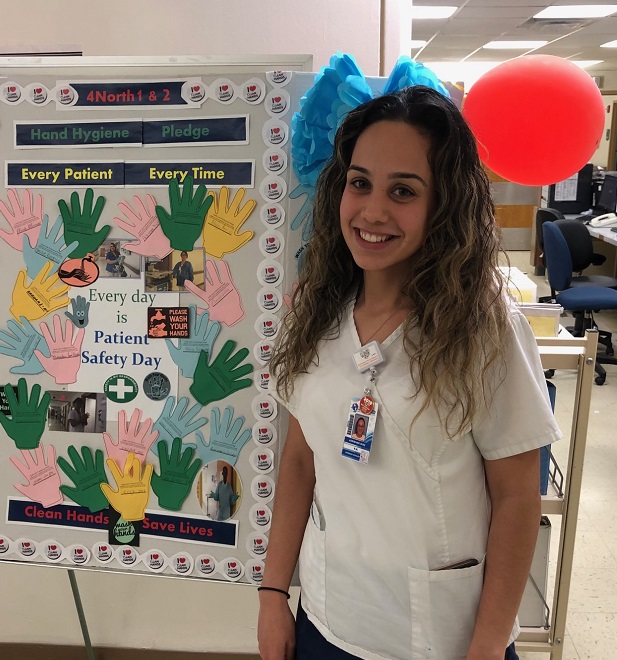
Flushing Hospital Medical Center Celebrates Registered Dietitian Nutritionist Day

Flushing Hospital Medical Center (FHMC) joins the Academy of Nutrition and Dietetics in celebrating National Dietitian Nutritionist Day, today, Wednesday, March 13th.  As the nation’s food and nutrition experts, registered dietitian nutritionists are committed  to improving the health of their patients, clients and communities.  We applaud their great work!

All content of this newsletter is intended for general information purposes only and is not intended or implied to be a substitute for professional medical advice, diagnosis or treatment. Please consult a medical professional before adopting any of the suggestions on this page. You must never disregard professional medical advice or delay seeking medical treatment based upon any content of this newsletter. PROMPTLY CONSULT YOUR PHYSICIAN OR CALL 911 IF YOU BELIEVE YOU HAVE A MEDICAL EMERGENCY.

How Does Weight Loss Surgery Affect Diabetes?

Type 2 diabetes mellitus (T2DM) is the most common form of diabetes.  Complications from this disease can lead to more serious health conditions such as hypertension and stroke.  Type 2 diabetes can also lead to premature death; in fact, studies show that the risk of premature death can be increased by as much as 80% in patients with T2DM.

According to the American Society for Metabolic and Bariatric Surgery, “Obesity is the primary cause for type 2 diabetes.” Therefore, most patients diagnosed with T2DM can improve their health by losing weight.

One of the most effective forms of weight loss treatments for obesity is bariatric surgery.  It has been found that undergoing bariatric surgery and adhering to a prescribed diabetes treatment plan can improve blood sugar levels and cause remission of the disease in most patients. The American Society for Metabolic and Bariatric Surgery reports that “Nearly all individuals who have bariatric surgery show improvement in their diabetic state.” Surgery may improve type 2 diabetes in approximately 90% of patients by either lowering blood sugar, reducing the dosage of medication needed or improving health problems associated with diabetes.

The two most popular bariatric surgeries are the sleeve gastrectomy and gastric bypass procedures. In the sleeve gastrectomy procedure, a large portion of the stomach is removed and a smaller, new stomach in the shape of a tube or “sleeve” is created.  During bypass surgery, a new small stomach pouch is created, and a section of the small bowel is bypassed. Both surgeries can offer excellent long-term results and positive outcomes in most patients. They are typically performed laparoscopically, utilizing a minimally invasive approach.   Laparoscopic surgery can offer patients several benefits including shorter hospital stays, shorter recovery time and less scarring.

Although bariatric surgery is considered safe, it is important that patients understand the risks of surgery. As with most major surgical procedures, the risks can include bleeding or other complications.

At Flushing Hospital’s Bariatric Surgical Center, procedures are performed utilizing minimally invasive techniques including robotic surgery. The Center also provides many compassionately delivered services to help patients succeed in every step of their weight loss journey including close physician monitoring, pre and post-surgical psychological evaluations, personalized diet and nutritional counseling as well as ongoing education and support groups.

For more information about the Bariatric Surgery Services at Flushing Hospital or procedures performed by our doctors, please call 718-670-8908

All content of this newsletter is intended for general information purposes only and is not intended or implied to be a substitute for professional medical advice, diagnosis or treatment. Please consult a medical professional before adopting any of the suggestions on this page. You must never disregard professional medical advice or delay seeking medical treatment based upon any content of this newsletter. PROMPTLY CONSULT YOUR PHYSICIAN OR CALL 911 IF YOU BELIEVE YOU HAVE A MEDICAL EMERGENCY.

March is Problem Gambling Awareness Month

Problem gambling is a serious issue that affects millions of people in the United States. An estimated two million people can be classified as having a gambling addiction and an additional four to six million people can be said to have a problem with gambling. Uncontrolled gambling can ruin families, finances, and careers.

The National Council on Problem Gambling began a campaign 16 years ago in order to raise awareness and to suggest ways that these people can be helped. There are three main goals of this campaign:

  • Increase public awareness of problem gambling
  • Increase awareness of the resources to aid with problem gambling
  • Encourage medical providers to screen for gambling problems

Some of the criteria for defining problem gambling include:

  • Patterns that compromise, disrupt or damage family or work
  • Preoccupation with gambling and the need to bet money
  • Restlessness or becoming irritable when attempting to quit
  • Continuing to chase the big payoff

Compulsive gambling can be described as having the same effect on certain people as using drugs or alcohol. They build up a tolerance to it and are always in need of more in order to satisfy their urges.

A person who feels that they have a gambling issue should contact their physician to see about getting help. You can also go to the website of Gamblers Anonymous for referrals in your community.

All content of this newsletter is intended for general information purposes only and is not intended or implied to be a substitute for professional medical advice, diagnosis or treatment. Please consult a medical professional before adopting any of the suggestions on this page. You must never disregard professional medical advice or delay seeking medical treatment based upon any content of this newsletter. PROMPTLY CONSULT YOUR PHYSICIAN OR CALL 911 IF YOU BELIEVE YOU HAVE A MEDICAL EMERGENCY.

Flushing Hospital Celebrates Patient Safety Week

March 10th through the 16th has been designated National Patient Safety Awareness Week. In recognition of this observance, Flushing Hospital Medical Center has scheduled a full week of fun and educational activities.

To kick-off the week, the Patient Education Department is holding a special all-day event in the hospital lobby to test everyone’s safety knowledge by playing various games where participants have the opportunity to answer questions and win prizes.

Throughout the week, Flushing Hospital will ask everyone to take the ‘Hand Hygiene Pledge” and hospital staff will also demonstrate proper donning and doffing of personal protective equipment (PPE), which can eliminate the transmission of infectious disease.

The theme of this year’s Patient Safety Awareness week is  “See, Say, Do & Thank You”, which asks patients to not only notice and identify good safety practices, but also do something by thanking those individuals when these practices are witnessed.

One of the most important factors in improving patient safety is practicing proper hand hygiene and Flushing Hospital’s hand hygiene compliance rates are above national averages.

Congratulations to all involved in making Flushing Hospital a safe environment for our patients.

All content of this newsletter is intended for general information purposes only and is not intended or implied to be a substitute for professional medical advice, diagnosis or treatment. Please consult a medical professional before adopting any of the suggestions on this page. You must never disregard professional medical advice or delay seeking medical treatment based upon any content of this newsletter. PROMPTLY CONSULT YOUR PHYSICIAN OR CALL 911 IF YOU BELIEVE YOU HAVE A MEDICAL EMERGENCY.

Flushing Hospital Recognizes National Kidney Month

March is National Kidney Month and the National Kidney Foundation is urging all Americans to give their kidneys a well-deserved checkup.

The kidneys are two, fist-sized organs in your lower back. They maintain overall health by serving following functions:

  • Filtering waste out of 200 liters of blood each day
  • Regulating of the body’s salt, potassium and acid content
  • Removing toxins from the body.
  • Balancing the body’s fluids
  • Releasing hormones that regulate blood pressure
  • Producing an active form of vitamin D that promotes strong, healthy bones
  • Controlling the production of red blood cells

According to the U.S. Centers for Disease and Control, some quick facts on Kidney Disease are:

  • Kidney disease is the 9th  leading cause of death in the country.
  • More than 26 million Americans have kidney disease, and most don’t know it.
  • There are over 95,000 people waiting for kidney transplants.
  • Currently, more than 590,000 people have kidney failure in the U.S. today.

Often times, kidney failure can be prevented or delayed through early detection and proper treatment of underlying disease such as diabetes and high blood pressure which can slow additional damage to the kidneys.

If you are 18 years or older with diabetes, high blood pressure, cardiovascular disease or a family history of kidney disease, you should schedule an appointment with your doctor and ask that you be screened for kidney disease.

If you would like to make an appointment to have your Kidney’s checked, you can call Flushing Hospital Medical Center’s Ambulatory Care Center at 718-670-5486 for an appointment

All content of this newsletter is intended for general information purposes only and is not intended or implied to be a substitute for professional medical advice, diagnosis or treatment. Please consult a medical professional before adopting any of the suggestions on this page. You must never disregard professional medical advice or delay seeking medical treatment based upon any content of this newsletter. PROMPTLY CONSULT YOUR PHYSICIAN OR CALL 911 IF YOU BELIEVE YOU HAVE A MEDICAL EMERGENCY.