Department Spotlight – FHMC SECURITY DEPARTMENT

April’s Flushing Hospital Medical Center’s (FHMC) Department Spotlight shines on the Security Department.

Under the leadership of Carmen Altieri, Director, the FHMC security force is tasked with securing the hospital premises, protecting its personnel, patients, and visitors, as well as monitoring the hospital’s closed circuit TV (CCTV), and checking that the proper hospital identification is being displayed on each employee.

“The department creates an environment of safety at FHMC and we are proud of the work we do.”  stated Ms. Altieri.

Congratulations of being April’s Department Spotlight!

All content of this newsletter is intended for general information purposes only and is not intended or implied to be a substitute for professional medical advice, diagnosis or treatment. Please consult a medical professional before adopting any of the suggestions on this page. You must never disregard professional medical advice or delay seeking medical treatment based upon any content of this newsletter. PROMPTLY CONSULT YOUR PHYSICIAN OR CALL 911 IF YOU BELIEVE YOU HAVE A MEDICAL EMERGENCY.

Why is it Important to Keep the Brain Active ?


Why is it important to exercise your brain? Just like we exercise our bodies to keep it in good working order, research has shown that it is equally important to exercise our brain to keep it sharp and potentially to lower the risk of developing dementia.

A few of the activities that can help exercise the brain are:

  • Working on puzzles
  • Socializing with others
  • Reading books and newspapers
  • Playing board games or cards
  • Volunteering or joining a club
  • Learning how to play an instrument
  • Visiting a museum or going to the movies


It is normal for the brain to slow down with age. We tend to be less active physically and this can affect our brain activity. Therefore in addition to keeping our brains active we should exercise regularly and eat a healthy diet. Maintaining our physical health helps the process of neurogenesis which is the creation of new brain cells. Exercise also helps the flow of blood to the brain

If you would like to discuss with a physician any issues concerning the brain functioning, please call 718-670-5486.

All content of this newsletter is intended for general information purposes only and is not intended or implied to be a substitute for professional medical advice, diagnosis or treatment. Please consult a medical professional before adopting any of the suggestions on this page. You must never disregard professional medical advice or delay seeking medical treatment based upon any content of this newsletter. PROMPTLY CONSULT YOUR PHYSICIAN OR CALL 911 IF YOU BELIEVE YOU HAVE A MEDICAL EMERGENCY.

April is Irritable Bowel Syndrome (IBS) Awareness Month

Irritable bowel syndrome (IBS) is a condition marked by recurring or alternating bouts of cramps, diarrhea or constipation. It affects an estimated 30 to 45 million people in the United States – or 10 to 15 percent of the population. Despite its prevalence, many people living with this disorder are unaware that they have it and do not receive the necessary treatment and support.

In an attempt to help others gain a better understanding about this condition, April has been designated IBS Awareness Month. During this time, those involved in this effort will look to focus attention on important health messages about IBS diagnosis, treatment, and quality of life issues.

There are many obstacles in raising awareness about IBS. One of the biggest hurdles is getting people to openly discuss their condition. Even though the disorder is very common, many with IBS are reluctant to openly talk about their symptoms or seek medical care. They may feel uncomfortable discussing their symptoms, even with their doctor, because of social taboos surrounding bowel symptoms.

In addition, IBS is often mischaracterized as a trivial condition, but it is actually one of the most prevalent and burdensome chronic issues reported by patients. IBS has been cited as one of the leading causes of work absenteeism (second only to the common cold) and its symptoms also have a profound impact on the personal and professional activities of those living with it.

Another obstacle that many that IBS encounter is that there is still so much that is unknown about the disease. IBS symptoms result in no damage to the gastrointestinal (GI) system, making it difficult to diagnose. In addition, even though there are many theories regarding what causes IBS, there is no known official cause for the condition.  There is also no official test to diagnose IBS and there is no cure.

In an effort to help those living with IBS, many health care professionals suggest patients learn all that they can about their condition, including identifying those things that seem to make their symptoms worse. Most importantly, people with IBS are encouraged to talk openly with their doctor about IBS so they can help them better manage their condition through improved lifestyle choices and medication therapy aimed to relieve symptoms.

Flushing Hospital is committed to joining the fight to raise awareness and addressing misconceptions about IBS to help those affected get diagnosed and receive appropriate care.

To schedule an appointment to speak with one of Flushing Hospital’s doctors, please call 718-670-5486.

All content of this newsletter is intended for general information purposes only and is not intended or implied to be a substitute for professional medical advice, diagnosis or treatment. Please consult a medical professional before adopting any of the suggestions on this page. You must never disregard professional medical advice or delay seeking medical treatment based upon any content of this newsletter. PROMPTLY CONSULT YOUR PHYSICIAN OR CALL 911 IF YOU BELIEVE YOU HAVE A MEDICAL EMERGENCY.

How would you know if you have meningitis ?

Hearing the word meningitis scares most people. We know that it is a serious disease, but do we really know what it is or what causes it?

Meningitis is a disease, caused by either a viral, bacterial or fungal infection. It causes an inflammation of the membranes, also called meninges that surround the brain and spinal cord.

Symptoms of meningitis include:

  • Stiff neck with sudden onset
  • Fever
  • Confusion
  • Severe headache
  • Nausea and vomiting
  • Lack of appetite
  • Skin rash

There are several complications that can occur from meningitis. These include, seizures, hearing loss, difficulty remembering things, kidney failure and in severe cases, death.

In most cases in the United States the cause is due to a virus, which is the least severe form of the disease. It is spread by poor hygiene, or coming in contact with bodily fluids of someone who is infected, such as through kissing, sharing utensils, sneezing and coughing.

Viral Meningitis is the least severe and often it can get better on its own. The viruses that cause it are more prevalently found in summer and early fall. Bacterial meningitis is more severe and is caused when certain types of bacteria enter the blood and travel to the brain. Bacterial meningitis can also start as a sinus infection or an ear infection. Meningitis caused by a fungus is a rarer form and it usually affects people who are immunocompromised, like those with AIDS.

People who are at higher risk of getting meningitis are usually the people who haven’t been vaccinated against it. Children under five are at higher risk for viral meningitis, bacterial meningitis is more commonly seen in people under the age of 20. Other at great risk are people living in group settings like dormitories.

Treatment for meningitis is dependent on the cause. If it is bacterial, treatment will include antibiotics, for viral it may be mild and just treat the symptoms. If it is fungal it can be antifungal medications.

Keeping in mind that meningitis is contagious, it is best to seek appropriate medical care immediately. You should consult with your medical doctor or go to an emergency room to have the appropriate tests performed. If you would like to schedule an appointment with a physician at Flushing Hospital, please call 718-670-5486.

All content of this newsletter is intended for general information purposes only and is not intended or implied to be a substitute for professional medical advice, diagnosis or treatment. Please consult a medical professional before adopting any of the suggestions on this page. You must never disregard professional medical advice or delay seeking medical treatment based upon any content of this newsletter. PROMPTLY CONSULT YOUR PHYSICIAN OR CALL 911 IF YOU BELIEVE YOU HAVE A MEDICAL EMERGENCY.

Sudden Hair Loss Can Happen To Anyone

Alopecia areata is a condition that affects over 6.8 million people in the United States. It is a common autoimmune disorder that is characterized by the unpredictable loss of hair. Usually, the hair loss is localized to small patches that are about the size of a quarter but in more severe situations a larger amount of hair may fall out. Hair loss is typically from the scalp but it can also be from the beard, eye lashes or the entire body. It can affect both men and women at any age but most commonly is seen before the age of 30. Approximately 20 percent of the people who experience alopecia have a family member who has had it.

Alopecia occurs when the white blood cells in the body attack the hair follicles, which in turn causes them to slow down hair production and ultimately lead to hair loss. The hair follicles aren’t usually destroyed so once the autoimmune response is controlled either spontaneously or with the help of medication, hair can start to regrow. For many, hair regrowth can be achieved without the use of medication.

The diagnosis of alopecia is usually made by simple observation of the area where the hair loss occurs. In some cases a dermatologist may want to perform a biopsy or a blood test to test for the autoimmune response.

While there is no cure for alopecia there are ways to treat it. The medications that are used to treat it typically are very powerful anti-inflammatories, administered either orally which can have serious side effects, through localized injections or as a topical cream. They act by suppressing the immune response that causes alopecia. The sudden loss of hair may cause people emotional distress and therefore they may need emotional support or professional help.

If you have noticed a sudden loss of hair, you should speak with your physician about the possible causes. You can schedule an appointment with a dermatologist at Flushing Hospital Medical Center by calling 718-670-5486.

All content of this newsletter is intended for general information purposes only and is not intended or implied to be a substitute for professional medical advice, diagnosis or treatment. Please consult a medical professional before adopting any of the suggestions on this page. You must never disregard professional medical advice or delay seeking medical treatment based upon any content of this newsletter. PROMPTLY CONSULT YOUR PHYSICIAN OR CALL 911 IF YOU BELIEVE YOU HAVE A MEDICAL EMERGENCY.

Flushing Hospital’s Employee Spotlight Shines on our New Qualified Medical Interpreters

March’s Flushing Hospital Medical Center’s (FHMC) Employee Spotlight shines on a group of employees who recently completed the Qualified Medical Interpreter Training program (QMI).

Many of the patients who are treated at FHMC are fluent in a language other than English.  If their care and diagnosis instructions are not given to them in their natural language, they may not completely understand their health issues and what assistance they will need after discharge.

The employees who were certified work in various departments throughout FHMC and will now be able to provide face-to-face language assistance for Limited English Proficient (LEP) patients.

The 14 amazing employees who are now Qualified Medical Interpreter’s are:

Spanish –

  • Elba Cabrera
  • Cinthia Fajardo
  • Tatiano Giraldo
  • Anthony OlivioJack
  • Davila

Mandarin –

  • Shumin Lin
  • Amy Xueyun Zou
  • Yawen Yen
  • Linda Fu
  • Amy Lam
  • Fiona Chen
  • Chai Jiang
  • Xiao Ping You
  • Qin Cang

Flushing Hospital will continue its commitment to grow in cultural sensitivity and train as many QMI’s as possible over the next few months to reach a goal of 100 QMI’s or more.

Congratulations go out to all the new QMI’s !

All content of this newsletter is intended for general information purposes only and is not intended or implied to be a substitute for professional medical advice, diagnosis or treatment. Please consult a medical professional before adopting any of the suggestions on this page. You must never disregard professional medical advice or delay seeking medical treatment based upon any content of this newsletter. PROMPTLY CONSULT YOUR PHYSICIAN OR CALL 911 IF YOU BELIEVE YOU HAVE A MEDICAL EMERGENCY.

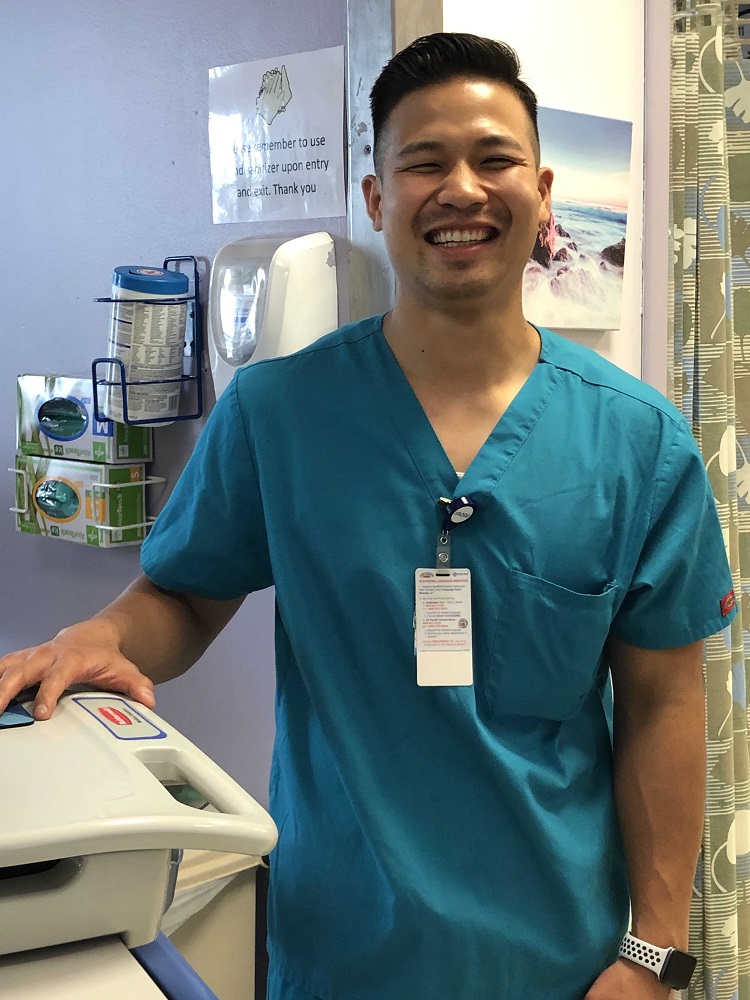
Flushing Hospital’s Nurse of The Month

Our nurses are the pillars of our community. In addition to meeting the demands of being a caregiver, they wear several hats including that of an educator, nurturer,  and comforter.

Not only to do nurses care for patients; they provide support to families and loved ones during difficult times.

Our nurses pour their hearts into all aspects of their job, and this is one of the many reasons why we celebrate their accomplishments.

Join us in congratulating  Adrienne Diaz, RN for receiving Flushing Hospital Medical Center’s Nurse of the Month,

Meet Adrienne:

Q&A:

Q: How long have you been working for FHMC?
A: I have been working at Flushing for 4 years since 2014.
Q: On which unit do you currently work?
A: I work in the Med-Surg unit 4N1.
Q: Why did you want to become a nurse?
A: Growing up in a community that lacked healthcare resources and had a language barrier I always knew I wanted to contribute and give back to my community. As a nurse at Flushing Hospital, which is so diverse and part of the community I grew up in, I am able to fulfill that goal of giving back.
QWhat is the best part of your job?
A: The best part of my job is being able to impact someone’s life in a positive way even by a small gesture such as, when a patient tells me how happy they are that I am their nurse for the day or a simple thank you from a patient when I’m having a stressful day.

All content of this newsletter is intended for general information purposes only and is not intended or implied to be a substitute for professional medical advice, diagnosis or treatment. Please consult a medical professional before adopting any of the suggestions on this page. You must never disregard professional medical advice or delay seeking medical treatment based upon any content of this newsletter. PROMPTLY CONSULT YOUR PHYSICIAN OR CALL 911 IF YOU BELIEVE YOU HAVE A MEDICAL EMERGENCY.

What you should know about Type 1 (T1D) Diabetes

Diabetes is on the rise and what has significantly increased is the rate of type 1 diabetes (T1D), formerly known as “juvenile” or “juvenile onset” diabetes. The Centers for Disease Control and Prevention (CDC) has found that more than 13,000 children and young people are diagnosed with type 1 diabetes each year.

T1D is often first diagnosed in children, teenagers, or young adults. However, people may develop T1D at any age. The exact cause of T1D is unknown, there is no cure and it cannot be outgrown. In most cases of T1D, the body’s own immune system, which normally fights harmful bacteria and viruses, mistakenly destroys the insulin-producing cells in the pancreas. Doctors believe genetics may play a role in this process, and exposure to certain environmental factors, such as viruses, may trigger the disease.

Symptoms for T1D include:
• Increased thirst
• Frequent urination
• Bedwetting in children who previously didn’t wet the bed during the night
• Extreme hunger
• Unintended weight loss
• Irritability and other mood changes
• Fatigue and weakness
• Blurred vision
• In females, frequent vaginal yeast infections

The good news is that it can be controlled with insulin therapy, exercise and diet. A simple blood test can identify type 1 diabetes. Be sure to consult with a physician if you or a family member is experiencing any of the above symptoms by contacting Flushing Hospital Medical Center’s Ambulatory Care Center at 718-670-5486.


All content of this newsletter is intended for general information purposes only and is not intended or implied to be a substitute for professional medical advice, diagnosis or treatment. Please consult a medical professional before adopting any of the suggestions on this page. You must never disregard professional medical advice or delay seeking medical treatment based upon any content of this newsletter. PROMPTLY CONSULT YOUR PHYSICIAN OR CALL 911 IF YOU BELIEVE YOU HAVE A MEDICAL EMERGENCY.

Flushing Hospital Medical Center Celebrates Registered Dietitian Nutritionist Day

Flushing Hospital Medical Center (FHMC) joins the Academy of Nutrition and Dietetics in celebrating National Dietitian Nutritionist Day, today, Wednesday, March 13th.  As the nation’s food and nutrition experts, registered dietitian nutritionists are committed  to improving the health of their patients, clients and communities.  We applaud their great work!

All content of this newsletter is intended for general information purposes only and is not intended or implied to be a substitute for professional medical advice, diagnosis or treatment. Please consult a medical professional before adopting any of the suggestions on this page. You must never disregard professional medical advice or delay seeking medical treatment based upon any content of this newsletter. PROMPTLY CONSULT YOUR PHYSICIAN OR CALL 911 IF YOU BELIEVE YOU HAVE A MEDICAL EMERGENCY.

March is Problem Gambling Awareness Month

Problem gambling is a serious issue that affects millions of people in the United States. An estimated two million people can be classified as having a gambling addiction and an additional four to six million people can be said to have a problem with gambling. Uncontrolled gambling can ruin families, finances, and careers.

The National Council on Problem Gambling began a campaign 16 years ago in order to raise awareness and to suggest ways that these people can be helped. There are three main goals of this campaign:

  • Increase public awareness of problem gambling
  • Increase awareness of the resources to aid with problem gambling
  • Encourage medical providers to screen for gambling problems

Some of the criteria for defining problem gambling include:

  • Patterns that compromise, disrupt or damage family or work
  • Preoccupation with gambling and the need to bet money
  • Restlessness or becoming irritable when attempting to quit
  • Continuing to chase the big payoff

Compulsive gambling can be described as having the same effect on certain people as using drugs or alcohol. They build up a tolerance to it and are always in need of more in order to satisfy their urges.

A person who feels that they have a gambling issue should contact their physician to see about getting help. You can also go to the website of Gamblers Anonymous for referrals in your community.

All content of this newsletter is intended for general information purposes only and is not intended or implied to be a substitute for professional medical advice, diagnosis or treatment. Please consult a medical professional before adopting any of the suggestions on this page. You must never disregard professional medical advice or delay seeking medical treatment based upon any content of this newsletter. PROMPTLY CONSULT YOUR PHYSICIAN OR CALL 911 IF YOU BELIEVE YOU HAVE A MEDICAL EMERGENCY.