
Lice – A Real Head Scratcher


As the summer is nearly over, parents are now turning their attention to back to school preparations. One of the many things parents should be prepared for is the transmission of head lice.

Lice are tiny little parasitic insects that receive their nutrition from the blood of their host. They do not have wings and are therefore spread by close contact with people who are infected with them or with the items of clothing or bedding that those people may be using. Since lice do not fly, it is sometimes thought that they either crawl or jump from one person to another. There are three types of lice to be aware of. , Head Lice, Body Lice and Pubic Lice. The most commonly found are the lice that live on the hair and scalp, known as Head Lice.

The signs and symptoms of head lice are itchy scalp, small bumps on the back of the neck and on the scalp that are red in color, the presence of tiny off-white or light brown insects crawling in the hair or back of the neck, and finding lice eggs also called nits, about the size of a pin head, attached to the hair shafts. Some people who are infected with lice have swollen neck glands, indicating a possible infection.

Detecting head lice can be difficult, since they can be confused to the untrained eye with other things found in people’s hair like dandruff, lint, sand, and dirt. The difference is that lice, especially their eggs (nits) are usually firmly attached to the hair follicle and do not come out with simple rinsing or combing. One method of diagnosing lice is to wet the person’s head, separate the hair in to sections, sit them under a very bright light, and using a very fine comb made specifically for this purpose, comb the hair from the scalp outwards looking for lice and their eggs.

Treating lice involves using a shampoo made specifically for this purpose. These shampoos are very different than regular hair products and they are to be used very carefully, making sure that the instructions are followed closely. Usually the recommendation is to use the product once and wait a few days to see if it is working.
Each day after treatment it is recommended to use the special fine tooth comb to remove the lice and the nits. It is also recommended that all bedding be thoroughly washed in hot water and dried at a high temperature to limit the possibility of reoccurrence.  If the signs and symptoms of an infestation persist, it is advised to see a dermatologist who may prescribe a stronger medication to treat the problem.

When a person is diagnosed with lice, it is wise to limit their contact with others until the problem is resolved. This is especially true of school aged children.

If you suspect that your child has lice and over-the-counter remedies are not successful, please schedule an appointment with a physician at Flushing Hospital by calling 718- 670-8939.


All content of this newsletter is intended for general information purposes only and is not intended or implied to be a substitute for professional medical advice, diagnosis or treatment. Please consult a medical professional before adopting any of the suggestions on this page. You must never disregard professional medical advice or delay seeking medical treatment based upon any content of this newsletter. PROMPTLY CONSULT YOUR PHYSICIAN OR CALL 911 IF YOU BELIEVE YOU HAVE A MEDICAL EMERGENCY.

Flushing Hospital Offers Tips to Avoid Bug Bites

Summer usually means picnics and family reunions, but it also means a reunion with insects that can wreak havoc on outdoor activities. Follow these tips to minimize the potential for bug bites and bee stings.

When outdoors – especially in wooded areas – wear long sleeves, pants, and socks to help protect your skin from insect bites. Be aware that insects may be drawn to scented soaps and perfumes. Also, cover food and drain or dump standing water.

“Although applying insect repellent may help adults and children avoid bug bites, these products are unsafe to use on infants,” says Deborah Asnis, MD, Infectious Disease Specialist and Chief of Infectious Diseases at Flushing Hospital Medical Center. “Repellents containing citronella or less than 10 to 30 percent DEET are safe for older children, but they should only be applied once and washed off as soon as possible.”

Treating Bites and Bee Stings

If a sting occurs, remove the stinger as soon as possible by scraping the area with your fingernail or something with a flat surface, such as a credit card. For bee and wasp stings and non-poisonous spider bites, wash the area thoroughly with soap and water and apply ice to reduce swelling. Continue to wash two or three times daily until the skin has healed.

“Be sure to talk with your physician before taking antihistamines or other over-the-counter medications for itching to avoid potential drug interactions,” says Dr. Asnis..

Severe Reactions

“If you notice swelling or a rash around the site of a sting or if pain persists for three days, seek medical attention,” says Dr. Asnis. “Dizziness, nausea, tightness of the throat or chest, wheezing, or swelling of the lips, face, or tongue can indicate a severe allergic reaction, which requires immediate emergency medical attention.”

If you or your child is stung in the mouth, seek medical attention immediately. Severe swelling occurs quickly in oral mucous membranes and can block airways, making breathing difficult or impossible.

If you have a severe reaction to a bug bite, go to the nearest hospital Emergency Room or call 911. Otherwise, to schedule an appointment, please call 718-670-3012.

All content of this newsletter is intended for general information purposes only and is not intended or implied to be a substitute for professional medical advice, diagnosis or treatment. Please consult a medical professional before adopting any of the suggestions on this page. You must never disregard professional medical advice or delay seeking medical treatment based upon any content of this newsletter. PROMPTLY CONSULT YOUR PHYSICIAN OR CALL 911 IF YOU BELIEVE YOU HAVE A MEDICAL EMERGENCY.
Say Goodbye to Varicose Veins

According to the U.S. Department of Health and Human Services, approximately half of Americans age 50 and older have varicose veins.  These veins appear to bulge from the skin and are dark purple or blue in color. They are most commonly located in the legs and are caused by the pooling of blood in enlarged veins.

“Veins in a person’s legs pump blood from the legs back up to the heart and should only allow blood to flow in one direction,” says Alan Zeitlin, MD, Vascular Surgeon for Flushing Hospital. “When a person’s veins become weak and allow blood to flow away from the heart, blood pools and the veins in that area become stretched or enlarged, thereby, creating a varicose vein.”

While varicose veins are very common among both men and women, there are several factors that can increase a person’s risk of being affected. This includes:

  • Heredity
  • Hormonal changes, such as puberty, pregnancy, and menopause
  • Increasing age
  • Obesity
  • Sun exposure

The Dangers of Varicose Veins
Not only can varicose veins cause discomfort and embarrassment for the men and women who have them, but they can also sometimes lead to more serious health conditions. If left untreated, varicose veins can lead to:

  • Blood Clots- Blood clots are extremely dangerous, as they may dislodge from the vein and travel to the lungs or heart, preventing either from functioning properly.
  • Sores and Ulcers- Varicose veins may lead to sores and ulcers of the skin because of long-term buildup of fluid.

Varicose veins may also cause ongoing swelling, rashes, and pain, and can increase a person’s chances of infection.

Seeking Medical Attention
Varicose veins may signal a higher risk for circulatory problems. If you have varicose veins that cause pain, swelling, itching, tiredness, or numbness in the legs, you should seek medical attention. Flushing Hospital offers a variety of options to treat varicose veins.

“Treatment methods of the past were often quite invasive, “Dr. Zeitlin says. “Today, however, most procedures are minimally invasive and allow patients a quick recovery.”

Treatment options available at Flushing Hospital include:

  • Sclerotherapy: A solution is injected to seal off the area in which blood is pooling.
  • Laser treatment: Without the use of needles or incisions, strong bursts of light are delivered precisely onto varicose veins to make them fade and eventually disappear.
  • Endovenous Radiofrequency: A catheter is inserted into the vein and radiofrequency or laser energy seals the vein wall.  This approach is used in treating deeper varicose veins.
  • Surgical litigation and stripping: Varicose veins are removed entirely.

If you have varicose veins and would like to schedule a consultation with a vascular surgeon at Flushing Hospital, please call 718-544-0442.


All content of this newsletter is intended for general information purposes only and is not intended or implied to be a substitute for professional medical advice, diagnosis or treatment. Please consult a medical professional before adopting any of the suggestions on this page. You must never disregard professional medical advice or delay seeking medical treatment based upon any content of this newsletter. PROMPTLY CONSULT YOUR PHYSICIAN OR CALL 911 IF YOU BELIEVE YOU HAVE A MEDICAL EMERGENCY.

Knowing When Memory Loss Means More

Occasionally misplacing keys or forgetting to keep an appointment can happen to anyone. Forgetfulness is a common complaint in older adults. While memory loss can be a part of the aging process, it is important to understand what is normal and when to be concerned.

Normal Memory Loss vs. Dementia
Memory loss is an expected part of the aging process. In fact, it is natural for older adults to become easily distracted. Failing to remember details of a conversation or where things were left, occasionally forgetting an appointment, and not being able to retrieve thoughts that are “on the tip of your tongue” are not early warning signs of dementia but natural occurrences typically experienced by most individuals as they get older. However, if symptoms are frequent and are a cause of concern for family members, you should make an appointment with a physician.

Dementia is an impairment of thinking and memory that interferes with a person’s ability to do things that he or she was able to do before. There are different forms of dementia that can affect a person as they age. The most commonly known forms are vascular dementia and Alzheimer’s disease. Vascular dementia is a decline in thinking skills caused by conditions that block or reduce blood flow to the brain, therefore, depriving brain cells of oxygen and nutrients. Risk factors for vascular dementia are the same as risk factors for heart disease. These factors include age, high cholesterol, high blood pressure, smoking, and a sedentary lifestyle. Many of these vascular factors can increase your risk for Alzheimer’s disease.

Alzheimer’s disease is a progressive condition of the brain, which causes problems with memory, thinking and behavior severe enough to affect ones work and social life. Early signs of Alzheimer’s disease can include:

  • Memory loss that disrupts daily life
  • Challenges in solving problems
  • Confusion with time or place
  • Withdrawal from work or social activities
  • Decreased or poor judgment or changes in mood and personality

Medication can also have an effect on your memory. Maintain a list of your medications, as it may be helpful to explain temporary memory lapses. Medication such as sleeping pills, antihistamines, blood pressure, arthritis medication can have an effect on memory since they are processed more slowly in older adults.

Preventing Memory Loss
“There is no cure for Alzheimer’s disease or reversing the effects of dementia, but there are ways of keeping your mind sharp as you age,” says Dr. Peter Barra, Medical Director and Geriatric specialist at Flushing Hospital Medical Center.

Dr. Barra suggests the following to help reduce your risks of age related dementia:

  • Keep the mind busy by reading books, completing puzzles and socializing.
  • Don’t smoke and keep your blood pressure, cholesterol and blood sugar within recommended limits.
  • Eat a healthy and balanced diet along with exercise to maintain a healthy weight.
  • Limit your alcohol consumption.

For a consultation or for more information on the geriatric services at Flushing Hospital, please contact 718-670-5454.

All content of this newsletter is intended for general information purposes only and is not intended or implied to be a substitute for professional medical advice, diagnosis or treatment. Please consult a medical professional before adopting any of the suggestions on this page. You must never disregard professional medical advice or delay seeking medical treatment based upon any content of this newsletter. PROMPTLY CONSULT YOUR PHYSICIAN OR CALL 911 IF YOU BELIEVE YOU HAVE A MEDICAL EMERGENCY.

Flushing Hospital Promotes Breast Feeding

Flushing Hospital has recently joined “Latch On NYC,” a new city-wide initiative aimed at supporting breastfeeding mothers. By joining the initiative, the hospital will no longer voluntarily distribute formula, literature on formula, or other products that promote formula to new mothers unless it is medically required or at a mother’s request.

“Latch On NYC” is a wonderful initiative,” explained Maria Smilios, MS-ACNS-RNC-OB, IBCLC, Assistant Director of Nursing-Maternal Child Services at Flushing Hospital. “Our hospital has always encouraged new mothers to breastfeed, however, we, like many other local hospitals, would provide our new mothers with go-home bags that included formula, which sent mixed messages.” Ms. Smilios added, “Now, we can educate mothers about the benefits of breastfeeding and feel confident that they have the information they need to make an informed decision about their infant’s dietary needs.”

According to the New York City Department of Health, breastfeeding can prevent childhood and adult obesity and reduce the risk of ear infections, diarrhea, and pneumonia. And while 90% of NYC mothers begin breastfeeding, only 31% of mothers are still exclusively breastfeeding their child by the time they reach two months, even though it is recommended that an infant exclusively breastfeeds for the first six months of their life.

“Latch on NY” is one of several efforts Flushing Hospital has recently taken to encourage mothers to breastfeed. Earlier this year, the facility received a “Communities Putting Prevention to Work” grant for its commitment to support breastfeeding and help reduce childhood obesity. The grant allowed staff members to become Certified Lactation Consultants. The hospital has also applied to become a “Baby Friendly” hospital, a global initiative that promotes, protects, and supports breastfeeding through ten steps to successful breastfeeding. The hospital also boasts an active breastfeeding support group.

Breast milk is best for babies and Flushing Hospitals is not afraid to say it, or show it. For more information on Flushing Hospital’s Latch On Program, or our division of Maternal-Child services, please call 718-670-8992.

All content of this newsletter is intended for general information purposes only and is not intended or implied to be a substitute for professional medical advice, diagnosis or treatment. Please consult a medical professional before adopting any of the suggestions on this page. You must never disregard professional medical advice or delay seeking medical treatment based upon any content of this newsletter. PROMPTLY CONSULT YOUR PHYSICIAN OR CALL 911 IF YOU BELIEVE YOU HAVE A MEDICAL EMERGENCY.

Heart Health: Things You Should Know

Every year, more than 1.2 million Americans die from heart attacks. According to the Centers for Disease Control and Prevention, almost 50 percent of those deaths occur outside the hospital—a figure suggesting many people with heart disease don’t act on early warning signs.

“Chest pain or discomfort that lasts more than a few minutes is a primary heart attack symptom,” says Dr. Subrahmanya Bhat  of Flushing Hospital Medical Center’s Cardiology Department. “Shortness of breath, cold sweats, nausea, lightheadedness, and upper body discomfort are also red flags and an indication to immediately call 911. Just a few wasted minutes can stand between life or death.”

There are several factors that can put you at risk for heart disease, including high blood pressure, being overweight, having diabetes, and being over 55 years old for men and 65 years old for women.

Despite having these risk factors, it is possible to protect yourself against the biggest heart health conditions. Dr. Bhat encourages individuals to maintain a nutritious diet, exercise regularly, manage stress, and quit smoking. In addition to making healthy lifestyle changes, other ways to manage heart disease is medication.

Flushing Hospital offers a non-invasive Cardiology Lab, as well as other services for heart diseases, such as arrhythmia, coronary heart disease, and cardiomyopathy. Our non-invasive Cardiology Laboratory performs the following tests:

• Electrocardiograms, which allow the electrical activity of the heart to be examined
• Echocardiograms, which use sound waves to take pictures of the heart to assess how it is working
• Stress tests, both chemical and exercise, with and without imaging modalities to assess the blood flow to the heart and the function of the heart with exercise
• Holter monitors
• Event recorders
• Tilt table testing
• Nuclear wall motion studies
• Ambulatory blood pressure monitoring

Non-invasive treatment of coronary artery disease is available for patients who are not candidates for angioplasty, stenting or coronary artery bypass surgery, but who have continued chest pain or angina.

To speak with a cardiologist about your heart health or to obtain more information about the cardiology services offered at Flushing Hospital, please call 718-670-5489.

All content of this newsletter is intended for general information purposes only and is not intended or implied to be a substitute for professional medical advice, diagnosis or treatment. Please consult a medical professional before adopting any of the suggestions on this page. You must never disregard professional medical advice or delay seeking medical treatment based upon any content of this newsletter. PROMPTLY CONSULT YOUR PHYSICIAN OR CALL 911 IF YOU BELIEVE YOU HAVE A MEDICAL EMERGENCY.

Addiction: Is It Affecting You and Your Family?

Addiction is a condition that affects not just individuals, but all those who are close to them. If you, or anyone you know, is struggling with substance abuse, we urge you to reach out to us for treatment,” says Joseph P. Cannavo, MD, Director of Addiction Services at Flushing Hospital Medical Center.

Flushing Hospital Medical Center’s Department of Psychiatry and Addiction Services provides comprehensive assessment and treatment of chemical dependency through its Chemical Dependency Unit (CDU) and Reflections Outpatient Program. Both programs are staffed by a multidisciplinary team of professionals that includes psychiatrists, internists, credentialed alcohol and substance abuse counselors, clinical social workers and nurses.

The holistic approach uses an abstinence-based program and encourages participation in 12 step programs, self help groups, and other sources of sober support. The programs focus on treating addiction and the impact it has on patients, their loved ones, and the community.

The CDU is a 30-bed unit that provides medically managed detoxification for alcohol and chemical dependency in a safe and therapeutic environment.  The goal of this unit is to stabilize patients going through withdrawal from alcohol and drugs, along with the various medical and psychiatric conditions that often come along with addiction.

The Reflections Outpatient Program provides a level of treatment that focuses on the maintenance of sobriety. Modalities such as guided relaxation and reflection are used in conjunction with abstinence and 12 step based approaches, along with traditional group, individual and family counseling.

For more information about the Chemical Dependency unit, please call 718-670-5540. For more information on the Reflections Outpatient Unit please call 718-670-5078.

All content of this newsletter is intended for general information purposes only and is not intended or implied to be a substitute for professional medical advice, diagnosis or treatment. Please consult a medical professional before adopting any of the suggestions on this page. You must never disregard professional medical advice or delay seeking medical treatment based upon any content of this newsletter. PROMPTLY CONSULT YOUR PHYSICIAN OR CALL 911 IF YOU BELIEVE YOU HAVE A MEDICAL EMERGENCY.

Finding Springtime Allergy Relief

If you are one of the millions of Americans who experience springtime allergies, control your seasonal symptoms with this allergy sufferer’s survival guide.

Allergies occur when your immune system tries to defend your body against substances that are harmless to others, causing itchy or watery eyes, sneezing, wheezing, and a stuffy or runny nose. About 50 million Americans suffer from year-round allergies to mold, dust, and pets. However, seasonal allergies are the most common cause. Typically, in early Spring, symptoms are most likely caused by pollen from trees while in late spring they are probably due to grass pollens.

“There is no cure for allergies, but proper treatment can help keep your allergy symptoms from getting worse,” says Stanley Fine, MD, allergist at Flushing Hospital Medical Center.  “If you suffer from seasonal allergies, your doctor can help you control symptoms so you will feel better,” Dr. Fine says. “The simplest remedy may be just to avoid what is triggering your allergy symptoms, but if this is too difficult, try an over-the counter antihistamine.  If you know you suffer from allergies in the springtime, start taking the medication just before the season begins.”

Allergies vs Cold

Since allergy symptoms are similar to those of a common cold, it can sometimes be hard to tell the two apart. “If the condition lasts for more than two weeks, seems to be triggered by a certain substance (an allergen), or returns every season, then it’s probably an allergy instead of a cold. Symptoms that include significant itchiness are also most likely allergy related,” says Dr. Fine.

Finding Relief

If an over-the-counter remedy doesn’t help, an allergist at Flushing Hospital’s Ambulatory Care Center can offer a variety of treatment options to considerably minimize your allergy symptoms.

“You don’t have to be a victim of the season,” says Dr. Fine. “Often, when over-the counter solutions don’t work, a nasal spray or prescription medication can lessen allergy symptoms.”

Dr. Fine adds: “If more complex treatment is needed, your physician may recommend allergy shots – which are effective about 80 percent of the time. The bottom line is that even if you do suffer from seasonal allergies, you don’t have to dread the spring.”

To schedule an appointment with an allergist at Flushing Hospital, please call 718-670-5486.

All content of this newsletter is intended for general information purposes only and is not intended or implied to be a substitute for professional medical advice, diagnosis or treatment. Please consult a medical professional before adopting any of the suggestions on this page. You must never disregard professional medical advice or delay seeking medical treatment based upon any content of this newsletter. PROMPTLY CONSULT YOUR PHYSICIAN OR CALL 911 IF YOU BELIEVE YOU HAVE A MEDICAL EMERGENCY.

Coping With COPD

Breathing should be easy. However, nearly 24 million Americans experience shortness of breath—a common sign of Chronic Obstructive Pulmonary Disease (COPD).

COPD reduces air that flows in and out of the lungs, which can result in a variety of symptoms—constant coughing, shortness of breath, excessive mucus, feeling unable to breathe, and/or wheezing.

“It’s extremely important to recognize the symptoms of COPD,” explained Charles Almeda, Associate Director of Respiratory Care at Flushing Hospital. “Too often, individuals don’t think much of these symptoms and by the time they are diagnosed, the disease has progressed significantly. Fortunately, COPD can be detected early and managed.”

Flushing Hospital’s Department of Respiratory Care boasts a Pulmonary Laboratory that uses state-of-the-art equipment to test for COPD. The tests, which are ordered by your physician, may include a simple pulmonary stress test (a six minute walk), a noninvasive pulse oximetry test (which measures one’s red blood cells), or a pulmonary diffusion capacity test to determine how well oxygen moves into and out of the lungs.

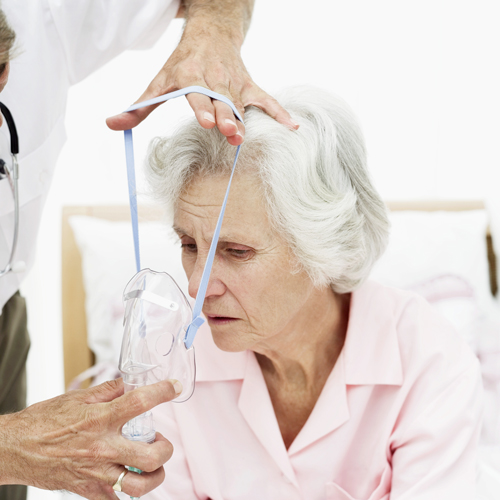
“While lung damage is irreversible, it can be managed with different treatment options,” said Almeda. “At Flushing Hospital, we provide a multidisciplinary approach to manage COPD including education, breathing techniques, nutritional advice, and oxygen therapy, which administers oxygen to the lungs, and medication.”

According to the American Lung Association, individuals should be aware of the risk factors associated with COPD. Smoking, air pollution, and genetics are all factors that can contribute to the development of COPD. To help prevent COPD and lead a longer, healthier life, it is recommended that individuals, especially those over 45 years old, pay attention to their risk-factors and seek a physician as soon as possible for treatment.
If you are at-risk for COPD or have been experiencing symptoms of COPD, please speak with your doctor or make an appointment to see one of our pulmonary specialists here at Flushing Hospital’s Ambulatory Care Center.  Appointments can be made at 718-670-5486, Monday through Friday, from 8:30am to 6:00pm.

If your doctor requires that you undergo pulmonary function testing and you would like your test to be performed by one of Flushing Hospital’s highly qualified respiratory therapists, call the facility’s Pulmonary Lab at 718-670-8888, Monday through Friday, between the hours of 8:00am to 4:30pm. The laboratory also tests for several other respiratory conditions, including asthma and chronic bronchitis.

All content of this newsletter is intended for general information purposes only and is not intended or implied to be a substitute for professional medical advice, diagnosis or treatment. Please consult a medical professional before adopting any of the suggestions on this page. You must never disregard professional medical advice or delay seeking medical treatment based upon any content of this newsletter. PROMPTLY CONSULT YOUR PHYSICIAN OR CALL 911 IF YOU BELIEVE YOU HAVE A MEDICAL EMERGENCY.

The Healing Power of Honey

If you are one of the approximately 5 million Americans living with a non-healing or chronic wound, the Wound Care Center at Flushing Hospital Medical Center can help. Combining advanced diagnostic and surgical options with the expertise of a staff of nurses, podiatrists, and general, cosmetic, and vascular surgeons, the Center offers patients effective care when traditional measures fall short.

“Research has demonstrated that centers dedicated to wound care deliver better results for patients due to their staffs’ range of expertise and interdisciplinary approach to care,” says Frances Pugliese, Director of the Wound Care Center at Flushing Hospital. “Our patient success rate stands at 91 percent, which is well above the national average.”

Flushing Hospital Medical Center’s Wound Care Center is a leader in treating patients who need post-surgical care. Specifically, the Center treats patients with wounds caused by diabetes, weak circulation, trauma, vascular disease, and immobility. The facility offers personalized, individualized patient assessments and utilizes a variety of treatment options, including MediHoney, the first honey-based medical product cleared for wound care by the FDA.

For thousands of years, honey has been used around the world as a natural wound-healer. Today, thanks to scientific research and the backing of the United States Food and Drug Administration (FDA), the healing power of honey is regaining popularity and is available at Flushing Hospital Medical Center.

HOW DOES HONEY HEAL WOUNDS?
Honey is a great treatment option mostly because of its germ killing or antibacterial properties. However, honey works differently from most other antibiotics, which usually attack the cell wall of bacteria or shut down its internal functions. Instead, honey draws moisture out of bacteria and dehydrates it.

MediHoney is used on:

  • First and second-degree burns
  • Diabetic foot sores (ulcers)
  • Leg ulcers
  • Pressure ulcers
  • Traumatic and surgical wounds

Most medical honeys currently on the market come from various honeys found in New Zealand and Australia, such as Manuka honey. In addition to being antibiotic and fluid absorbing, these honeys help dissolve dead tissue and prevent odor. Keep in mind that honey as a cure for wounds is not for everyone, especially for people with sever bee allergies.

To find out more about honey dressings or other treatments at Flushing Hospital Medical Center’s Wound Care Center, please call 718-670-4542.

All content of this newsletter is intended for general information purposes only and is not intended or implied to be a substitute for professional medical advice, diagnosis or treatment. Please consult a medical professional before adopting any of the suggestions on this page. You must never disregard professional medical advice or delay seeking medical treatment based upon any content of this newsletter. PROMPTLY CONSULT YOUR PHYSICIAN OR CALL 911 IF YOU BELIEVE YOU HAVE A MEDICAL EMERGENCY.