Lyme Disease Prevention Tips

With summer approaching we will be spending more time doing activities outdoors in areas such as parks, forests and hiking trails.  While getting out and keeping physically fit is strongly encouraged it is important to keep in mind that being in these areas can put you at risk for Lyme disease.

Dr. Sherman Klein, MD, specializing in Internal Medicine at Flushing Hospital Medical Center’s Ambulatory Care Center offers the following information on Lyme disease, how it is spread, its symptoms, and treatment.

Lyme disease is the most common tick-born infection in New York City and in the United States.  On the east coast, Lyme disease is spread by the bite of a black-legged tick infected with the bacterium Borrelia burgdorferi.  Not all black-legged ticks carry this bacterium and, even if they are infected, they must be attached for at least 36 – 48 hours after a person is bitten to transmit the disease.

Blacklegged ticks are rarely found in NYC, but if you have been traveling in more rural areas of New York such as Westchester and Long Island you are at greater risk of coming into contact with an infected tick.

The annual number of cases of Lyme disease reported continues to rise each year in non-rural communities.

Some of the early warning signs of Lyme disease are:

  • Muscle aches
  • Headache
  • Fatigue
  • Fever
  • Rash

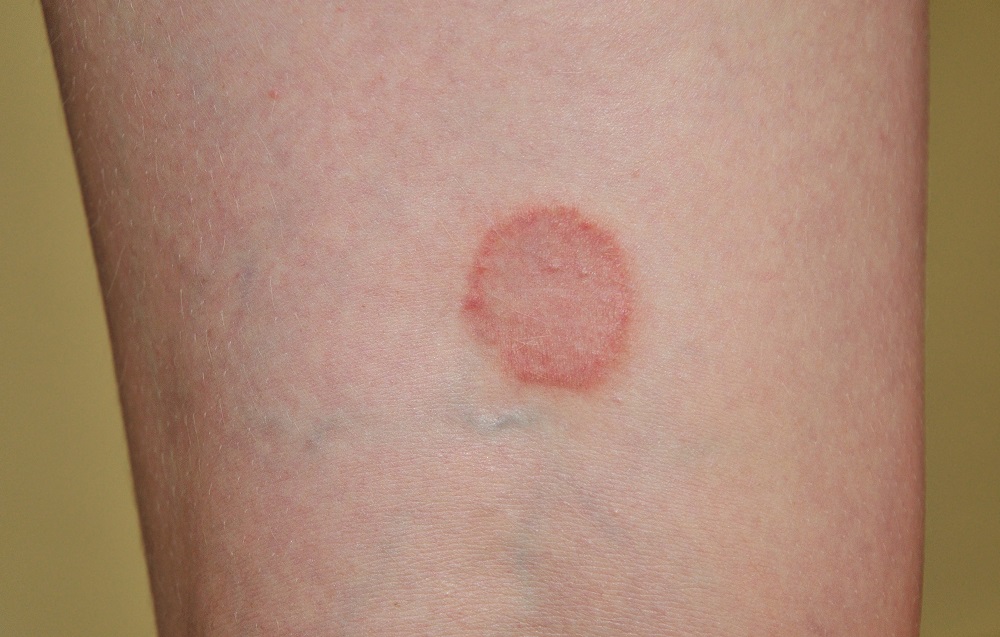
These signs and symptoms may occur anywhere from three to 30 days after being bitten.  After an infected tick bite, a widening red area may appear at the infected site that is clear in the center, forming a bull’s eye appearance.

Dr. Klein suggests that the best way to avoid contracting Lyme disease is to avoid direct contact with ticks.  You can do this by avoiding wooded and brushy areas, and high grass.  If you are hiking, try to walk in the center of the trails and wear long pants and a long-sleeved shirt. If in a wooded area you should use a strong repellent.  Dr. Klein cautions that when using any repellent, you should avoid applying the solution to your hands, eyes and mouth.

Some of the tips to find and remove ticks from your body and clothing are:

  • Do a check of your entire body viewing under your arms, behind and in your ears, inside your navel, behind your knees, along your legs, waist and hair. Also, check your pet.
  • Take a shower soon after returning indoors. If you wash within two hours of returning indoors, the ticks are more easily found and washed off your body.
  • Once you are indoors, take your clothing and place them in the wash using hot water and then put them in the dryer on “high” for at least 10 minutes; if the clothes were washed in cold water, place them in the dryer on “high” for at least 90 minutes

If Lyme disease is left untreated, it can spread to other parts of the body causing arthritis cardiac and nervous system problems.   Dr. Sherman Klein is one of the many qualified doctors specializing in Internal Medicine at Flushing Hospital Medical Center.  To schedule an appointment with him, or any of our other doctors, please call 718-670-5486


All content of this newsletter is intended for general information purposes only and is not intended or implied to be a substitute for professional medical advice, diagnosis or treatment. Please consult a medical professional before adopting any of the suggestions on this page. You must never disregard professional medical advice or delay seeking medical treatment based upon any content of this newsletter. PROMPTLY CONSULT YOUR PHYSICIAN OR CALL 911 IF YOU BELIEVE YOU HAVE A MEDICAL EMERGENCY.

Do You Have a Deviated Septum?

Ours nose is in the middle of our face, so naturally we pay a great deal of attention to how it looks. If we look carefully though, most of us will find that our nose is not perfectly straight. In fact, it is estimated that approximately 80% of Americans have a nose that is off-center.  Known as a deviated septum, this condition is not a cause of concern for most, for those with a severely deviated septum the condition can result in multiple issues.

Rhinoplasty

So what exactly is a deviated septum? There is a thin wall of cartilage and bone that separates our nostrils called the septum. A deviation of the septum occurs when it is displaced to one side, making one nasal passage smaller than the other. When severe, a deviated septum can restrict airflow and make breathing difficult. A person can be born with a deviated septum, can develop one during normal childhood growth, or sustain one as the result of an injury or trauma, such as a broken nose.

Regardless of the cause of a deviated septum, when significant enough, it can be the cause of many problems, including:

  • Difficulty breathing through the nose
  • Nasal congestion (usually on one side)
  • Recurring sinus infections
  • Nosebleeds
  • Sleep disorders, including snoring or sleep apnea
  • Facial pain or headaches
  • Postnasal drip
  • Dry mouth (due to chronic mouth breathing)

A doctor, usually an otolaryngologist, also known as an ear nose and throat specialist can perform a physical examination using an instrument called a nasal speculum to determine how severe the septum is deviated. Based on the doctor’s findings, an appropriate course of treatment will be provided.  In most cases, the symptoms of a deviated septum can be treated through a variety of medications, such as decongestants, antihistamines, or steroid sprays.

If medications don’t relieve your symptoms, surgical intervention may be recommended.  A procedure, known as a septoplasty, where the nasal passage is straightened and repositioned in the center of the nose, can be performed. The procedure is usually performed on an outpatient level, meaning you can return home the same day, but healing normally takes a few weeks. Symptoms associated with a deviated septum are often completely resolved after surgery.

To make an appointment with a doctor at Flushing Hospital’s Ambulatory Care Center, please call 718-670-5440.

All content of this newsletter is intended for general information purposes only and is not intended or implied to be a substitute for professional medical advice, diagnosis or treatment. Please consult a medical professional before adopting any of the suggestions on this page. You must never disregard professional medical advice or delay seeking medical treatment based upon any content of this newsletter. PROMPTLY CONSULT YOUR PHYSICIAN OR CALL 911 IF YOU BELIEVE YOU HAVE A MEDICAL EMERGENCY.

Is It A Cold Or Is It Allergies?

The transition from winter to spring can be challenging to your health. The change in seasons often results in an overlap of symptoms that could be either the remnants of a winter cold or the first signs of spring allergies.

Woman coughing and blowing her nose in autumn

While many of the symptoms of colds and allergies are similar, the causes of each are very different.

Colds are contagious and they are contracted when a person is exposed to an individual infected with a cold virus.  Our body’s immune system will launch a counter attack against the virus. This response usually brings on the classic symptoms, such as a runny nose or cough.

An allergic reaction is caused by an overactive immune system that mistakes harmless things, such as pollen, and attacks them. To combat what it thinks are germs, your body releases chemicals called histamines as a defense. The release of these histamines can cause a swelling of the nasal passages and result in coughing and sneezing. Allergies are not contagious.

While many of the symptoms are similar, the easiest way to determine if you have a cold or are suffering from allergies is the duration of your condition. While most colds last from three to 14 days, allergies can last for months as long as the person is in contact with the allergen. Other differences are:

  • An allergic reaction will begin immediately after exposure to an allergen while cold symptoms usually take approximately three days to appear after exposure
  • Colds can sometimes cause fever and body aches while allergies never do
  • An allergic reaction can often result in itchy, watery eyes, which a cold rarely produces this type of reaction

Once a determination between cold or allergy is made, the appropriate treatment can be applied.

There is no cure for a cold, but there are medications that can help alleviate the symptoms. Cough syrups, pain relievers, decongestant sprays, or multi-symptom cold relief medicines can all be used to help, but should only be taken after consulting your doctor, especially if you are taking other medications or if you have other underlying health conditions. Drinking plenty of liquids also speeds up the recovery process.

To treat allergies, your doctor may recommend an over-the-counter antihistamine to block the reaction to the allergens. There are many forms of antihistamines and some may cause drowsiness so be sure to look for the non-drowsy formula or only take them at night. Decongestants may also be suggested to relieve nasal congestion and avoid an infection.

If you are not sure if you have a cold or allergies, please speak with your doctor. If you do not have a doctor, Flushing Hospital’s Ambulatory Care Center can help. To make an appointment, please call 718-670-8939.

All content of this newsletter is intended for general information purposes only and is not intended or implied to be a substitute for professional medical advice, diagnosis or treatment. Please consult a medical professional before adopting any of the suggestions on this page. You must never disregard professional medical advice or delay seeking medical treatment based upon any content of this newsletter. PROMPTLY CONSULT YOUR PHYSICIAN OR CALL 911 IF YOU BELIEVE YOU HAVE A MEDICAL EMERGENCY.
Q and A: Medication Expiration Dates

Q: Do over -the-counter and prescription medications have expiration dates? Do they mean anything and is it safe to take them past the expiration date?

A: Over-the-counter and prescription medications are time stamped with expiration dates. Time stamps can be found on the labels or on the actual container. It is important that you pay attention to these dates. The expiration dates indicate a guarantee of full potency and safety within the recommended shelf life.

Person holding vial of pills, pointing at label, Close-up of hands

According to the United States Food and Drug Administration (FDA) – “Don’t be tempted to take expired medications.” The FDA states, using expired medical products is “risky and possibly harmful to your health.” This is because the efficiency of a medication may lessen over time due to changes in its chemical composition or a decrease in its potency.


All content of this newsletter is intended for general information purposes only and is not intended or implied to be a substitute for professional medical advice, diagnosis or treatment. Please consult a medical professional before adopting any of the suggestions on this page. You must never disregard professional medical advice or delay seeking medical treatment based upon any content of this newsletter. PROMPTLY CONSULT YOUR PHYSICIAN OR CALL 911 IF YOU BELIEVE YOU HAVE A MEDICAL EMERGENCY.

Five Best Tips for Putting Your Best Fork Forward to Shed the Winter Pounds

Did you know that March is National Nutrition Month?  Every year, the Academy of Nutrition and Dietetics generates a nutrition, education and information campaign.  This year’s message is “Put Your Best Fork Forward.”

Each person has the tools to make healthy dietary choices.  Now  that winter is coming to an end, and spring is approaching, it is a wonderful time to reflect on our current habits and lifestyle and decide which tools we will use to shed some excess weight gained over the winter months.

Tool #1 – Balance

  • Visit Choose My Plate at – Use the “my plate” method of ½ plate non starchy veggies, ¼ plate protein, ¼ plate fiber rich carbohydrate to balance your nutrients throughout the day.
  • Drink water or mild instead of sweetened beverages (soda or juice).
  • Eat healthy snacks, such as fruits/nuts with yogurt or crackers with peanut butter.
  • Substitute processed or artificially flavored food items with natural unprocessed foods. By skipping the cookies and having a piece of fruit, you will get more vitamins and fiber allowing your body to feel more energized throughout the day.

Tool #2 – Let’s get Physical

Physical activity, in any form, is imperative for managing weight. Some ways to get more active are:

  • Consider non weight bearing exercises such as using resistance bands for building muscle and increasing flexibility, stationary bike or water aerobics.
  • Walking 10,000 steps per day is equivalent to walking five miles! Aim to achieve as many steps as possible throughout the day such as parking your car a little further from your destination, taking the stairs instead of the elevator and partaking in walking breaks, especially if you are sitting for most of the day.
  • March gives us extra daylight, so the best way to utilize this extra time is by being active. Activities such as walking, jogging, gardening, swimming and yoga are perfect ways to spend 30 minutes doing an outside activity.

Tool #3 – Reduce Stress

  • Everyone has stress which can obstruct weight loss. Stress increased the hormone called cortisol, which can contribute to weight gain.  Stress also contributes to emotional eating and other damaging behaviors.
  • It is important to ask for help and have support to get through the daily stressors of life. Consider support groups, meditation, coloring, knitting or spending time with a loved one to relieve the stressors in your daily life and help you stay focused and on track of your goals and progress.

Tool #4 – Be SMART About Your Goals

By setting SMART goals, results are greater!  SMART goals encompass five parameters to make the goal more productive:

S          is the SPECIFICS of the goal.  Is the goal definable?

M         is the MEASURABILITY of the goal. Is it possible to track/measure progress?

A          is ATTAINABILITY of the goal.  Is the goal a reasonable one ?

R          is RELEVENCY of the goal.  Is the goal worthwhile and will it meet your needs?

T          is TIMELINESS of the goal.  How much time can you give to accomplishing goals?

Tool #5 – Track Your Progress

  • Keep a diary or journal and record your progress and shortcomings.
  • Keep a food log and track your dietary intake.
  • “There’s an App for that” – There are so many wonderful Apps for goal setting and tracking caloric intake, physical activity, etc., utilize the technology on your smart phone or tablet to monitor your progress.

This article was submitted by Sadia Tahir Khan MS, RD and Michelle Hill, RD, CDN, CDE, Food and Nutrition Department of Flushing Hospital Medical Center


All content of this newsletter is intended for general information purposes only and is not intended or implied to be a substitute for professional medical advice, diagnosis or treatment. Please consult a medical professional before adopting any of the suggestions on this page. You must never disregard professional medical advice or delay seeking medical treatment based upon any content of this newsletter. PROMPTLY CONSULT YOUR PHYSICIAN OR CALL 911 IF YOU BELIEVE YOU HAVE A MEDICAL EMERGENCY.

What Are the Keys to Successful Aging?

Understanding Physical and Mental Health: Depression
Ira Frankel, PhD, LCSW, Administrator of Psychiatry and Addiction Services

“Just as long as we have our health,” is something that I’ve said and have heard others say very frequently in the past few months. And, by health, we mean both physical and mental health.

Portrait of a senior man in a tuxedo showing the thumbs up

In a very basic way, health can be thought of as the absence of disease. A reason that our doctors ask us how we’re feeling when we go to see him or her is because he or she wants to know about our comfort or our absence of pain or trouble. Each one of us knows best what our physical or mental pain or trouble consists of because we feel it directly.

Another way to think of the issue of health is to describe the path to achieve it over the long course of our lives. Studies1 have shown that a path to health is achieved with a behavioral prescription for successful aging that includes diet, exercise, the pursuit of mental challenges, self-efficacy, and social support. The more we are able to follow this behavioral prescription, the more we will be free from physical or mental pain or trouble.

Let’s look at this a little more closely. Most of us already know that if we maintain a healthy diet and exercise frequently, then we will tend to be healthier. In fact, exercise is now considered a “magic bullet” in modern medicine. But, maintaining a good diet and exercising frequently is a mental challenge of self-mastery. And, most of us know how difficult it is to master ourselves to maintain both activities. There are many other mental challenges. For example, each one of us is a mental challenge to other people. In fact, getting along with others is one of the most difficult mental challenges that we will ever have to face.

The fourth successful aging ingredient is self-efficacy. Those of us who believe that we can achieve a particular goal, for example, health and longevity, will continue to do the things, such as diet, exercise, and the pursuit of mental challenges, which will help us achieve the goal. We can build up self-efficacy by taking small, rather than giant steps, towards diet, exercise, and the pursuit of mental challenges

The final successful aging ingredient is social support. If we help each other take the steps described in the previous paragraphs, then each one of us will be more likely to feel at ease, that is, without disease, successfully age, and live longer.

Self-mastery is necessary for both physical and mental health. The behavioral prescription for successful aging in the previous paragraphs are just a general outline of self-mastery steps. Self-mastery is a mental challenge.

Many things get in the way of self-mastery. One of these things is depression. If we are depressed, then we have a hard time maintaining a good diet, exercising as we should, thinking well about self-mastery, feeling self-efficacy, or being with and getting along with other people. There is a fairly simple way to ask ourselves whether we are depressed. It is called the PHQ-2, which stands for the Patient Health Questionnaire-2 because it has two questions.

Ask yourself: Over the past 2 weeks, how often have you been bothered by any of the following symptoms: 1) Little interest or pleasure in doing things; and, 2) Feeling down, depressed, or hopeless. Answers are either (0) not at all, (1) several days, (2) more than half the days, or (3) nearly every day. Bring your answers to your primary care doctor the next time you see him or her.

Taking the self-mastery steps towards successful aging and longevity is a main task of modern medicine. Taking the self-mastery steps is a very important mental challenge. If you are experiencing any difficulties taking these steps, such as depression or any other difficulty on your path to ease and comfort, then speak with your primary care doctor in the community or one at Flushing Hospital’s Ambulatory Care Center at 718-670-8939

All content of this newsletter is intended for general information purposes only and is not intended or implied to be a substitute for professional medical advice, diagnosis or treatment. Please consult a medical professional before adopting any of the suggestions on this page. You must never disregard professional medical advice or delay seeking medical treatment based upon any content of this newsletter. PROMPTLY CONSULT YOUR PHYSICIAN OR CALL 911 IF YOU BELIEVE YOU HAVE A MEDICAL EMERGENCY.

Resolve to Eat Right

With the holidays drawing to a close, it will soon be the time for resolutions.  Why not make eating right a part of your resolution.

Eating right doesn’t have to be complicated.  You can begin with a simple shift to lean meats, fruits, vegetables, and complex carbohydrates into your nutritional regimen while lessening your intake of processed foods, white flour and sugar.

For more information on eating right, contact the Flushing Hospital Medical Center’s  Ambulatory Care Center at  718-670-5486 to speak with a nutritionist.

All content of this newsletter is intended for general information purposes only and is not intended or implied to be a substitute for professional medical advice, diagnosis or treatment. Please consult a medical professional before adopting any of the suggestions on this page. You must never disregard professional medical advice or delay seeking medical treatment based upon any content of this newsletter. PROMPTLY CONSULT YOUR PHYSICIAN OR CALL 911 IF YOU BELIEVE YOU HAVE A MEDICAL EMERGENCY.
National Handwashing Awareness Week 2016

Flushing Hospital Medical Center believes that Infection prevention is important to all of us and each of us has a valuable role to play in keeping patients safe from infection.

According to the CDC, handwashing is like a “do-it-yourself” vaccine—it involves five simple and effective steps (Wet, Lather, Scrub, Rinse, Dry) you can take to reduce the spread of diarrheal and respiratory illness so you can stay healthy. Regular handwashing, particularly before and after certain activities, is one of the best ways to remove germs, avoid getting sick, and prevent the spread of germs to others. It’s quick, it’s simple, and it can keep us all from getting sick. Handwashing is a win for everyone, except the germs.

Dr. Javeria Shakil, Director of Infection Prevention at FHMC and Maria Savarese, RN, Clinical Coordinator and Hand Hygiene Champion (pictured above) know that proper hand hygiene is important in the prevention of spreading germs.

FHMC will be hosting an educational table in the lobby of the hospital, as well as continuing our hand hygiene initiatives throughout the hospital to continue our commitment to keeping our patients safe from infection.


All content of this newsletter is intended for general information purposes only and is not intended or implied to be a substitute for professional medical advice, diagnosis or treatment. Please consult a medical professional before adopting any of the suggestions on this page. You must never disregard professional medical advice or delay seeking medical treatment based upon any content of this newsletter. PROMPTLY CONSULT YOUR PHYSICIAN OR CALL 911 IF YOU BELIEVE YOU HAVE A MEDICAL EMERGENCY.

Protect Yourself From Getting Sick While Flying This Holiday Season

preventing sickness while flyingAir travelers are up to 100 times more likely to catch a cold or the flu while flying than during normal day-to-day activities.

The primary cause for an increased rate of infection is low cabin humidity on planes. Most airplanes fly in an elevation range of 30,000 to 35,000 feet, where humidity is much lower. At very low levels of humidity, our natural defense system of mucus in our noses and throats dries up, creating an ideal environment for germs to infect us.

The best way to maintain these natural defenses is to stay hydrated. Drinking plenty of water will not only counter the overall dehydrating effects of air travel, but it can actually strengthen the body’s natural immune system.

It is recommended to sip water regularly throughout the flight rather than drink a large amount at once to protect against long dry spells in your defense system. Hot beverages are a good way to keep your protective mucous membranes working because they assist in keeping you generally hydrated and also provide moisture in the form of steam. Conversely, it is recommended that you avoid caffeine or alcoholic beverages as they can dehydrate you.

Using nasal sprays or saline mists have also been proven to be an effective means of keeping mucous membranes in your nose and throat moist. They can increase your resistance to infection while on a dry aircraft. Yet another way to defend against viruses while flying is to use a germ-killing mouthwash, which adds another layer of protection while simultaneously helping to keep your throat moist. Other experts recommend taking vitamins before flights to help boost immunity levels.

By following these tips and practicing proper hand washing behavior, you will greatly increase your chances of arriving at your destination healthy.

All content of this newsletter is intended for general information purposes only and is not intended or implied to be a substitute for professional medical advice, diagnosis or treatment. Please consult a medical professional before adopting any of the suggestions on this page. You must never disregard professional medical advice or delay seeking medical treatment based upon any content of this newsletter. PROMPTLY CONSULT YOUR PHYSICIAN OR CALL 911 IF YOU BELIEVE YOU HAVE A MEDICAL EMERGENCY.

The Flu Vaccine

Influenza – the unwelcome guest that comes calling on us every year – often with many very unpleasant consequences. Historically, widespread flu epidemics have had devastating effects on large portions of the earth’s population. It wasn’t until the 1930’s that two scientists, Dr. Jonas Salk and Dr. Thomas Francis developed the first vaccine to prevent the flu virus. The vaccine was given to American soldiers during World War II and was found to be useful in preventing the widespread outbreaks that had been common before the vaccines were used. In the years after the war, the vaccine was made available to the general public and has greatly reduced the widespread epidemics that were so common before. Research has helped to develop better vaccines with fewer side effects and also better suited to combat strains of the influenza virus that keep changing every year. Over the past 60 years millions of people have been given the flu vaccine each year. There is still a debate going on as to whether the flu vaccine is safe. Many people still are hesitant about getting the vaccine at all. The flu still comes calling every year, and many people are still being affected. However there are much fewer catastrophic epidemics throughout the world, and symptoms appear to be lessened, thanks in large part to the work done by Dr Salk and Dr. Francis in the early part of the last century.

All content of this newsletter is intended for general information purposes only and is not intended or implied to be a substitute for professional medical advice, diagnosis or treatment. Please consult a medical professional before adopting any of the suggestions on this page. You must never disregard professional medical advice or delay seeking medical treatment based upon any content of this newsletter. PROMPTLY CONSULT YOUR PHYSICIAN OR CALL 911 IF YOU BELIEVE YOU HAVE A MEDICAL EMERGENCY.