
How Much You Can Save by Quitting Smoking

Quitting smoking enriches your life in several ways. One of the major benefits of quitting is improving your health; another great benefit is saving money.

On average, a pack of cigarettes in New York costs $13. While this may not seem like a lot, it does add up and can become expensive.  Quitting can help you to save and apply your money towards other items or goals.  Here is an example of how much you can potentially save over time and a few ideas of how you could spend the extra money.


The journey to quit smoking can be difficult but you do not have to do it alone. Flushing Hospital Medical Center’s smoking cessation team wants to help you to develop a plan leading to your “quit day”. The hospital has partnered with the American Lung Association to bring you Freedom from Smoking, a comprehensive and successful group-based smoking cessation program. Learn how to overcome your addiction to tobacco and enjoy the benefits of better health in a fun and interactive environment. Receive personalized attention as well as the support from group members who are experiencing this journey with you. For more information, please call 718 206 8494.


All content of this newsletter is intended for general information purposes only and is not intended or implied to be a substitute for professional medical advice, diagnosis or treatment. Please consult a medical professional before adopting any of the suggestions on this page. You must never disregard professional medical advice or delay seeking medical treatment based upon any content of this newsletter. PROMPTLY CONSULT YOUR PHYSICIAN OR CALL 911 IF YOU BELIEVE YOU HAVE A MEDICAL EMERGENCY.

Appendicitis

Appendicitis is an inflammation of the appendix; a small organ attached to the large intestine.   Anyone can develop appendicitis but it most commonly occurs in people between the ages of 10 and 30.

There are early signs that warn of an inflammation of the appendix. Warning signs include pain by the belly button or upper abdomen that becomes sharper as it moves toward the lower-right side of the abdomen and a mild fever.  Additional signs and symptoms that may present are:

  • Nausea and vomiting
  • Constipation or diarrhea
  • Loss of appetite
  • Abdominal bloating

If you are experiencing symptoms it is recommended that you see your doctor immediately, because if left untreated complications can develop.  The appendix can become swollen and filled with pus.  This can result in peritonitis, a condition that occurs when the appendix ruptures and allows infectious materials to spread throughout the abdomen.  Peritonitis can lead to death.

In order to diagnose appendicitis, your doctor will take a history of your symptoms and run a series of tests and examinations to rule out other possible causes. If it is determined that you have appendicitis, your doctor may prescribe antibiotics and will most likely recommend an appendectomy (surgery to remove the inflamed appendix).

All content of this newsletter is intended for general information purposes only and is not intended or implied to be a substitute for professional medical advice, diagnosis or treatment. Please consult a medical professional before adopting any of the suggestions on this page. You must never disregard professional medical advice or delay seeking medical treatment based upon any content of this newsletter. PROMPTLY CONSULT YOUR PHYSICIAN OR CALL 911 IF YOU BELIEVE YOU HAVE A MEDICAL EMERGENCY.

Drug and Food Interactions

Certain foods that you eat or drink can negatively affect the way your medications work. When drugs and food interfere with each other’s functionality this is known as a “Food-Drug Interaction.”

According to Salvatore Sica, Pharmacist at Flushing Hospital Medical Center, food can interact with your medicine in one of three ways; it can enhance, delay or decrease the absorption of medication.  Changes in your body’s ability to metabolize medication properly can result in an increased risk of side effects.

Knowing which foods to avoid when taking certain medications can decrease the risk of adverse reactions. Here are a few common food-drug interactions you should know:

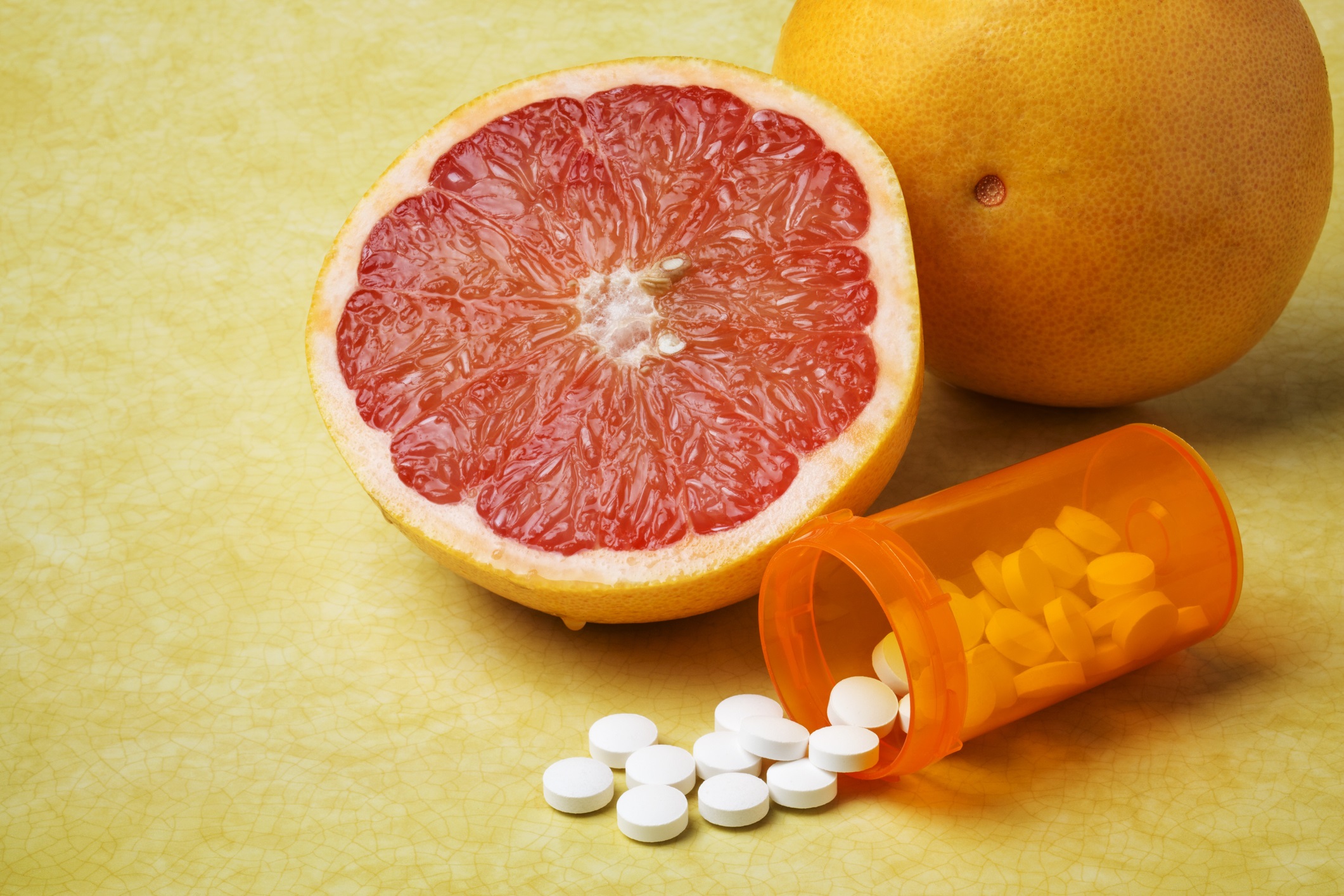
Grapefruit Juice:  Should not be consumed when taking certain medications.  Grapefruit juice can block enzymes in the intestines, affecting the way drugs are metabolized by the body.  It may allow excessive amounts of the drug to enter the blood which can lead to side effects. Your doctor may recommend that you do not consume grapefruit juice if you are taking medications that are cholesterol-lowering agents as well as some allergy, heart, immune system or anti-anxiety drugs.

Vitamin-K Rich Foods:  Blood thinners are often prescribed to people to prevent life-threatening blood clots from developing. Eating foods that are rich in vitamin K such as spinach, broccoli and asparagus can decrease the effects of blood thinners.

Dairy – Calcium-rich foods including, cheese, yogurt or other dairy products can interfere with certain medications such as antibiotics.  These medications can bind to calcium and form an insoluble substance that is difficult for the body to absorb.

Alcohol:  According to a study conducted by the National Institutes of Health, the most common types of medications that interact with alcohol are high blood pressure, pain, diabetes, antipsychotic, and antidepressant medications as well as sleeping pills.  Drinking alcohol while taking these medications may lead to harmful reactions such as hypotension (low blood pressure), liver injury, ulcers or disruptions in your breathing (which can lead to death). It is also important to keep in mind that alcohol-drug interactions are not limited to prescription drugs, harmful reactions can also occur when taking over-the-counter medications.

If you are unsure of how certain foods may interact with your medications, your pharmacist can be a great help in providing this information.   It is also recommended that you inform your doctor and pharmacist of any changes in your diet, as they can advise on precautions you may need to take.

For your convenience, a full-service pharmacy is located at Flushing Hospital Medical Center in the Medical Science Building providing prescription services to discharged, emergency department and clinic patients as well as employees. Please feel free to contact our friendly pharmacists at 718-353-3160.

All content of this newsletter is intended for general information purposes only and is not intended or implied to be a substitute for professional medical advice, diagnosis or treatment. Please consult a medical professional before adopting any of the suggestions on this page. You must never disregard professional medical advice or delay seeking medical treatment based upon any content of this newsletter. PROMPTLY CONSULT YOUR PHYSICIAN OR CALL 911 IF YOU BELIEVE YOU HAVE A MEDICAL EMERGENCY.
Pregnancy and Gastrointestinal Issues

Gastrointestinal issues are common during pregnancy.  This may be due in part to several factors such as an increase in hormones or the limited amount of abdominal space available for digestive organs to function normally.

As your baby grows, your organs will rearrange themselves to accommodate uterine growth.   The enlarged uterus displaces the stomach, esophagus and intestines which can contribute to reflux of gastric contents or other digestive problems.

Hormonal changes can also contribute to digestive problems.  Pregnant women produce high levels of the hormone progesterone. This hormone causes bowel muscles to relax and can affect their ability to work efficiently.

These changes in a woman’s body during pregnancy may cause the following symptoms to develop:

  • Nausea and vomiting
  • Constipation
  • Acid Reflux
  • Diarrhea

If you are experiencing these symptoms, speak with your doctor right away.  Your doctor will determine if they are pregnancy-related and recommended the best treatment options for your health.

To schedule an appointment with a doctor at Flushing Hospital Medical Center, please call 718-670-5486.

All content of this newsletter is intended for general information purposes only and is not intended or implied to be a substitute for professional medical advice, diagnosis or treatment. Please consult a medical professional before adopting any of the suggestions on this page. You must never disregard professional medical advice or delay seeking medical treatment based upon any content of this newsletter. PROMPTLY CONSULT YOUR PHYSICIAN OR CALL 911 IF YOU BELIEVE YOU HAVE A MEDICAL EMERGENCY.

Belly Bloat

Belly bloat is a very common condition, and many are familiar with the feeling of discomfort that it brings.

Bloat typically occurs as a result of a buildup of gas in the abdomen caused by swallowing air or a disturbance in digestion. This may lead to symptoms such as:

  • Frequent burping or belching
  • Excessive flatulence
  • Abdominal rumbling
  • Pain
  • Swelling and hardness of the abdomen

One of the ways to avoid belly bloat is to reduce the amount of air you swallow. This may be achieved by:

  • Limiting consumption of carbonated beverages
  • Eating slowly
  • Avoiding foods that can cause gas
  • Avoiding dairy products if you are lactose intolerant
  • Avoiding or minimizing chewing gum

There are several solutions you can try to relieve symptoms or minimize the occurrence of bloating, they include:

  • Adding probiotics and fiber to your diet
  • Trying abdominal massages
  • Using over-the-counter gas medications
  • Drinking more water

In most cases bloating is not serious; however, if you experience symptoms for an extended period of time, you should see a doctor.   Seek immediate treatment if bloating is accompanied by symptoms such as bleeding, diarrhea, vomiting or weight loss.

All content of this newsletter is intended for general information purposes only and is not intended or implied to be a substitute for professional medical advice, diagnosis or treatment. Please consult a medical professional before adopting any of the suggestions on this page. You must never disregard professional medical advice or delay seeking medical treatment based upon any content of this newsletter. PROMPTLY CONSULT YOUR PHYSICIAN OR CALL 911 IF YOU BELIEVE YOU HAVE A MEDICAL EMERGENCY.

Skin Tags

Skin tags are small, benign growths of skin. They can develop anywhere on the body but typically occur in places where there is constant friction against the skin or areas of the body where skin folds.

Skin tags are very common.  According to the American Osteopathic College of Dermatology, “It is estimated that almost half of adults have at least one of these harmless growths.”

The exact cause for skin tags is unknown; however, it is believed that hormones, insulin resistance or genes may be contributing factors.

Some people are more likely to get skin tags than others.  Those who are at a higher risk include:

  • People with diabetes
  • Those who are overweight or obese
  • Pregnant women
  • Those with certain forms of the human papillomavirus (HPV)
  • Those who have family members with skin tags

Skin tags are generally harmless and painless, but they may get caught in jewelry or clothing.  Some have them removed due to this issue or for cosmetic reasons.

Skin tags can be removed with the assistance of a doctor or with over-the-counter treatments. It is strongly advised that you see your doctor before attempting to remove them on your own.

If needed, your doctor may apply the following treatments to remove skin tags:

  • Cryosurgery (freezing)
  • Cauterization (burning)
  • Excision(cutting)
  • Ligation( interrupting blood supply)

These procedures should only be performed by a trained skin care specialist, such as a dermatologist. To schedule an appointment with a doctor at Flushing Hospital Medical Center, please call 718-670-5486.

All content of this newsletter is intended for general information purposes only and is not intended or implied to be a substitute for professional medical advice, diagnosis or treatment. Please consult a medical professional before adopting any of the suggestions on this page. You must never disregard professional medical advice or delay seeking medical treatment based upon any content of this newsletter. PROMPTLY CONSULT YOUR PHYSICIAN OR CALL 911 IF YOU BELIEVE YOU HAVE A MEDICAL EMERGENCY.

Talking to Children About Sexual Abuse

Research conducted by the Centers for Disease Control and Prevention (CDC) estimates that 1 in 6 boys and 1 in 4 girls are sexually abused before the age of 18.   One of the most effective ways to prevent abuse from occurring is through education.

Sexual abuse is a sensitive but much-needed discussion that parents should have with their children.   Experts suggest that this discussion should begin with children at a young age as part of conversations about safety, and talks about sexual abuse should be ongoing throughout a child’s development.

Lessons about sexual abuse can be introduced by first teaching children about their bodies. Teach them the proper names for the parts of their bodies, and also inform them that some areas are private and should not be touched or looked at by others.  Other important lessons that should be included in your talks are:

  • Secrets are not okay- According to the Rape, Abuse and Incest National Network (RAINN), “Perpetrators will often use secret-keeping to manipulate children.” Let your child know that they should not keep secrets and that they can speak to you about anything. Providing an environment of openness and patience will help them to feel secure.
  • Do not accept bribes- People who sexually abuse children sometimes use bribery to keep them from telling. Teach your child not to accept gifts from adults without your permission.
  • It is okay to say “no”- Teach your child it is okay to say no when touched in a way that makes them uncomfortable or if touched in private areas. Respect your child’s decision to say “no.” Do not force them to give hugs or sit in the laps of adults if they refuse to.

Although the topic of sexual abuse is often dreaded by parents, it must be done in order to protect children from harmful situations.  Parents should not risk abuse because of their own discomfort.

If you are uncomfortable about speaking about this topic, experts recommend reading books with your child to build a bridge of communication. Your pediatrician can also be a helpful resource, they may recommend child health professionals or organizations that can provide you with the support you need.

All content of this newsletter is intended for general information purposes only and is not intended or implied to be a substitute for professional medical advice, diagnosis or treatment. Please consult a medical professional before adopting any of the suggestions on this page. You must never disregard professional medical advice or delay seeking medical treatment based upon any content of this newsletter. PROMPTLY CONSULT YOUR PHYSICIAN OR CALL 911 IF YOU BELIEVE YOU HAVE A MEDICAL EMERGENCY.

Social Anxiety Disorder

Mental Health Clinic Queens Social anxiety disorder or social phobia is a common type of anxiety disorder that affects approximately 15 million adults living in the United States.  According to the Anxiety and Depression Association of America, it is characterized by “an intense anxiety or fear of being judged, negatively evaluated, or rejected in a social or performance situation.”

There is no exact known cause for social anxiety disorder; although, it is believed that genetics play a significant role.  Social phobia is also linked to having an overactive amygdala; the part of the brain that controls our response to fear.  Others factors believed to contribute to the disorder are a history of abuse or bullying.

The onset of social anxiety disorder typically begins in the early to mid –teens; however, it can also occur in young children and adults.

Those with social anxiety disorder often experience physical symptoms associated with fear or anxiety in social situations. These symptoms may include rapid heart rate, dizziness, muscle tension, sweating or nausea.

Symptoms of social anxiety disorder can profoundly affect an individual’s ability to live a normal life.  Those affected often avoid or have trouble with normal, day-to-day social situations such as making eye contact, entering rooms where there are people, using public restrooms, eating in front of people or going to work or school.

These behaviors are often indicative of a more serious problem that could be developing as a result of social anxiety disorder. If left unaddressed, social phobia can lead to low self-esteem, negative thoughts, depression, substance abuse or suicide.

The best approach to treating social anxiety disorder is to receive assistance from a mental health professional.  They will be able to assess your health to determine whether you have social anxiety disorder or other mental health conditions.  As part of your treatment, a mental health professional may recommend psychotherapy or medications.  They may also suggest implementing lifestyle changes such as exercising, learning stress reduction skills or participating in support groups.

To make an appointment or to speak with a health provider at Flushing Hospital Medical Center, please call 718-670-5562.

All content of this newsletter is intended for general information purposes only and is not intended or implied to be a substitute for professional medical advice, diagnosis or treatment. Please consult a medical professional before adopting any of the suggestions on this page. You must never disregard professional medical advice or delay seeking medical treatment based upon any content of this newsletter. PROMPTLY CONSULT YOUR PHYSICIAN OR CALL 911 IF YOU BELIEVE YOU HAVE A MEDICAL EMERGENCY.

National Family Caregivers Month

November is National Family Caregivers Month.  The observance was created by the Caregiver Action Network as an initiative to honor family caregivers across the United States.

Taking care of a loved one with a serious illness can be physically and mentally challenging. Many family caregivers often experience sleep deprivation, poor eating habits, stress, anxiety or depression; all of which can take a toll on their health.

As a family caregiver, it is important to keep in mind that taking care of your own health is equally as important as caring for the health of loved ones.   You need to be at your best in order to take good care of others.

Here are a few tips to help you take care of yourself while caring for loved ones:

  • Recognize when you are stressed-Paying attention to early signs of stress can you help to identify stressors and put a plan into action to diminish or reduce their effects.
  • Make time for yourself- It is important to take breaks to avoid burnout and help you re-energize.
  • Take care of your health-Neglecting your health can lead to medical complications. It is important that you eat healthy, exercise and keep up with routine doctor visits.
  • Ask for help- Caring for a loved one can be overwhelming; feeling alone and overwhelmed can lead to depression or anxiety. It is important that you do not isolate yourself and seek the support of a group or individual that can help you navigate challenges.

Being a caregiver often requires a 24/7 commitment. While this level of dedication can be difficult, there are many resources available to alleviate some of the challenges.  The Caregiver Action Network provides helpful tools to help you overcome obstacles you may encounter. Please visit caregiveraction.org for more information.

All content of this newsletter is intended for general information purposes only and is not intended or implied to be a substitute for professional medical advice, diagnosis or treatment. Please consult a medical professional before adopting any of the suggestions on this page. You must never disregard professional medical advice or delay seeking medical treatment based upon any content of this newsletter. PROMPTLY CONSULT YOUR PHYSICIAN OR CALL 911 IF YOU BELIEVE YOU HAVE A MEDICAL EMERGENCY.

Household Products and Asthma

Keeping your home clean can minimize your exposure to various asthma triggers such as dust and mold.  However, some household cleaning products contain harmful chemicals that can induce asthma symptoms.

Certain cleaning products are known to release volatile organic compounds (VOCs) in the air while they are being used.  VOCs are dangerous gases that can cause adverse reactions, and contribute to chronic respiratory problems.   According to the American Lung Association (ALA), “Cleaning supplies and household products containing VOCs and other toxic substances can include, but are not limited to: aerosol spray products, chlorine bleach, detergent and dishwashing liquid, rug and upholstery cleaners and oven cleaners.”

The ALA also warns people with asthma and other chronic respiratory health problems against the use of products that contain a mixture of bleach and ammonia.   This harmful combination is a known asthma trigger. In some cases, symptoms that result from the use of both products can lead to death.

One of the most effective ways to avoid using harmful household products is to carefully read their labels.  Purchase products that contain zero or reduced amounts of VOCs, irritants or fragrances.   The ALA recommends using milder products such as baking soda, vinegar, borax, or lemon juice to make alternative and safer cleaning solutions. If you must use a chemical product choose those that are certified green by reputable organizations such as the Environmental Protection Agency (EPA). Follow the manufacturer’s instructions and wear protective masks and gloves.

It is also important to keep in mind that while you are cleaning to keep your area well ventilated. Do not use products in an enclosed area; open your windows and doors.  Proper ventilation reduces the effects that poor air quality can have on your health.

For additional information on safe ways to clean your home, visit the American Lung Association’s website at www.Lung.org

To schedule an appointment with a doctor at Flushing Hospital, please call 718-670-5486.

All content of this newsletter is intended for general information purposes only and is not intended or implied to be a substitute for professional medical advice, diagnosis or treatment. Please consult a medical professional before adopting any of the suggestions on this page. You must never disregard professional medical advice or delay seeking medical treatment based upon any content of this newsletter. PROMPTLY CONSULT YOUR PHYSICIAN OR CALL 911 IF YOU BELIEVE YOU HAVE A MEDICAL EMERGENCY.