What You Should Know About Legionnaire’s Disease

Legionnaire's Disease Legionella is a type of bacterium that is typically found in freshwater environments; however, it can also grow in man-made water systems such as cooling towers for industrial air conditioning mechanisms, grocery store misting machines, decorative fountains, as well as hot water tanks and heaters.

Exposure to Legionella is known to cause legionnaire’s disease which is a severe form of pneumonia.  This disease can develop after a person breathes in small droplets of water contaminated by bacteria.  Infection may also occur through aspiration -when water accidentally gets into the lungs while drinking.

Legionnaire’s disease usually develops between two to 10 days after exposure to legionella. The most common symptoms include:

  • Coughing
  • Fever
  • Shortness of breath
  • Muscle aches
  • Chills
  • Headaches
  • Chest pain
  • Gastrointestinal symptoms such as diarrhea, nausea or vomiting

Some people are more prone to develop legionnaire’s disease than others. Individuals who are most at risk include:

  • Smokers
  • Adults who are 50 years of age  and older
  • People with weakened immune systems
  • Those who have a chronic lung disease

Treatment of legionnaire’s disease involves the administration of antibiotics and may require hospitalization.  If symptoms are left untreated they can develop into life-threatening conditions such as septic shock, respiratory failure and acute kidney failure.

Legionnaire’s disease can be prevented. According to the Centers for Disease Control and Prevention (CDC), “the key to preventing Legionnaires’ disease is to make sure that building owners and managers maintain building water systems.”  Smokers are also advised to quit smoking, as this can reduce their risk.

To learn more about Legionnaire’s disease please visit https://www.cdc.gov/legionella/index.html

All content of this newsletter is intended for general information purposes only and is not intended or implied to be a substitute for professional medical advice, diagnosis or treatment. Please consult a medical professional before adopting any of the suggestions on this page. You must never disregard professional medical advice or delay seeking medical treatment based upon any content of this newsletter. PROMPTLY CONSULT YOUR PHYSICIAN OR CALL 911 IF YOU BELIEVE YOU HAVE A MEDICAL EMERGENCY.


Asthma and Humidity

Severe weather conditions such as high humidity can negatively affect those living with asthma.

Excessive moisture and the heaviness of the air caused by humidity can make it difficult to breathe. Hot and humid air can also help allergens which trigger asthma symptoms such as mold to thrive.

High humidity levels can cause the following asthma symptoms to occur:

  • Chest tightness
  • Wheezing
  • Shortness of breath
  • Chronic coughing

To avoid or minimize the risk of these symptoms, the Centers for Disease Control and Prevention (CDC) advises that humidity levels should be kept between 35%-50% in the home.  When temperatures are hot and humid, it is best to use an air conditioner or dehumidifier, or both.

If you are experiencing symptoms of asthma, take medications as directed or contact your doctor immediately.

To schedule an appointment with a doctor at Flushing Hospital Medical Center, please call 718-670-5486.

All content of this newsletter is intended for general information purposes only and is not intended or implied to be a substitute for professional medical advice, diagnosis or treatment. Please consult a medical professional before adopting any of the suggestions on this page. You must never disregard professional medical advice or delay seeking medical treatment based upon any content of this newsletter. PROMPTLY CONSULT YOUR PHYSICIAN OR CALL 911 IF YOU BELIEVE YOU HAVE A MEDICAL EMERGENCY.

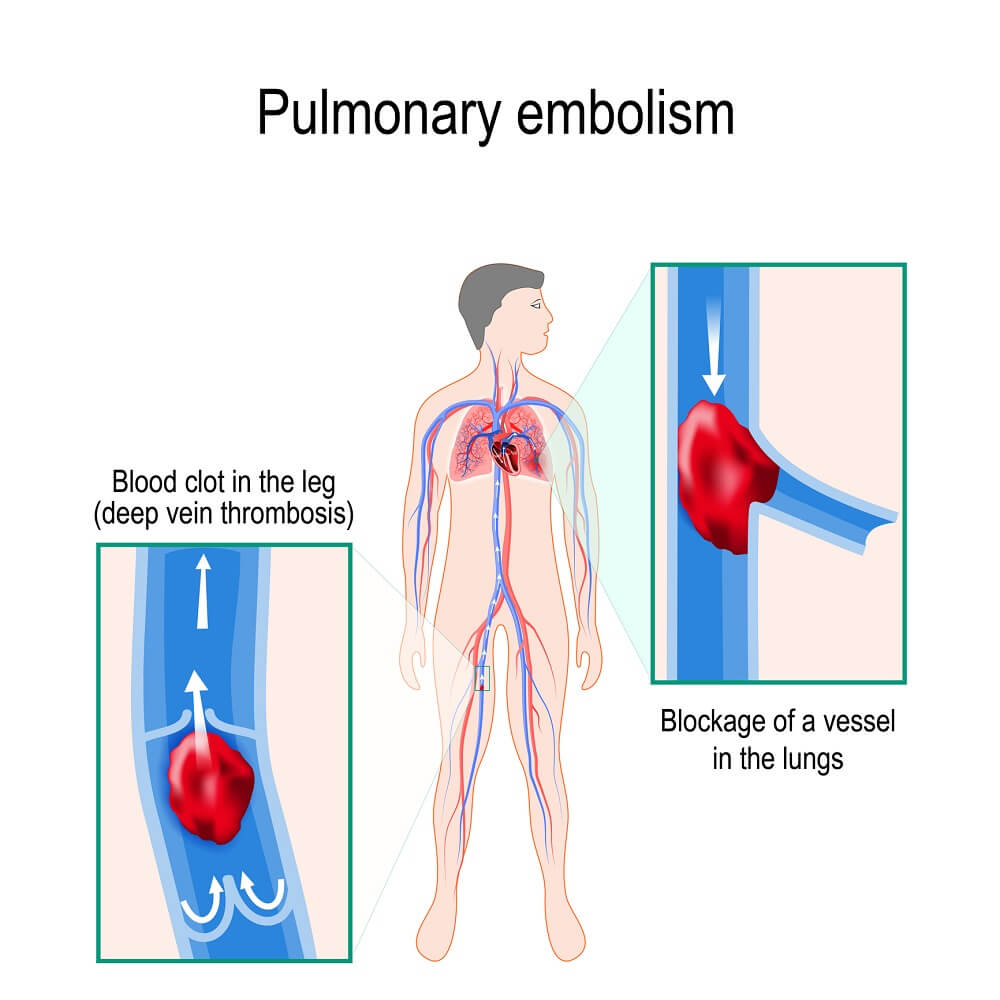
What is A Pulmonary Embolism?

A pulmonary embolism is a blockage of an artery in the lung. In most cases, an embolism results from a blood clot that has traveled to the lung. When this occurs blood flow is obstructed which increases the risk of serious damage to organs or death.  However, if symptoms are recognized and treatment is received promptly these risks can be reduced.

Symptoms of a pulmonary embolism may vary depending on the size of the clot, how much of your lung is affected or if you have preexisting health conditions such as heart or lung disease.  Symptoms tend to come suddenly and may include:

  • Shortness of breath
  • Blue nails or lips
  • Chest pain, which may worsen with exertion or each time you breathe deeply
  • Coughing that may produce bloody or blood-streaked sputum
  • Lightheadedness
  • Excessive sweating

If you are experiencing these symptoms it is highly advised that you seek immediate medical attention.

Knowing your risks and exercising preventative measures can also reduce your chances of developing a pulmonary embolism.  You are at an increased risk if you:

  • Are pregnant
  • Are taking estrogen supplements or birth control pills that contain estrogen
  • Are a smoker
  • Recently had major surgery
  • Have a disease that increases the risk of blood clotting
  • Are obese
  • Are on bed rest or confined to a space for an extensive amount of time

You can prevent the occurrence of a pulmonary embolism by:

  • Taking medication(blood thinners) as prescribed
  • Elevating legs
  • Wearing compression stockings as recommended
  • Being physically active or moving around as much as possible
  • Drinking plenty of fluids

Pulmonary medicine is the branch of medicine that deals with the causes, diagnosis, prevention and treatment of diseases affecting the lungs. The Division of Pulmonary Medicine at Flushing Hospital Medical Center is dedicated to providing outstanding inpatient and outpatient care through the use of certified physicians and modern research.

To learn more about the Division of Pulmonary Medicine at Flushing Hospital or to schedule an appointment with a specially-trained physician, please call 718-670-5639.

All content of this newsletter is intended for general information purposes only and is not intended or implied to be a substitute for professional medical advice, diagnosis or treatment. Please consult a medical professional before adopting any of the suggestions on this page. You must never disregard professional medical advice or delay seeking medical treatment based upon any content of this newsletter. PROMPTLY CONSULT YOUR PHYSICIAN OR CALL 911 IF YOU BELIEVE YOU HAVE A MEDICAL EMERGENCY.

Children’s Vitamins

Ideally, most children should receive their daily recommended vitamins and minerals from the food they eat. However, for parents who are challenged for time and aren’t able to prepare well-balanced meals throughout the day; children who are picky eaters or those with certain chronic illnesses, supplements are essential for providing nutrients needed.

There are many types of children’s vitamins available for purchase, but before doing so, it is highly recommended that you speak to your child’s pediatrician.  They can help you to determine what kinds of vitamins and minerals are needed as well as the appropriate daily dose.  This is important because overdosing can lead to symptoms such as headaches, rashes, nausea or even more severe adverse reactions.

Some of the essential vitamins children need to grow healthy and strong include:

  • Iron– Prevents anemia and helps build muscles  and healthy red blood cells
  • Vitamin D– Most children do not receive enough Vitamin D. It is needed to help with bone growth and development
  • Vitamin A-Promotes normal growth and development, as well as healthy eyes and skin. It also aids in repairing bones and tissues
  • Calcium-Helps to build strong bones as children grow

Remember to keep in mind that children’s vitamins are supplements and should not replace healthy, well- balanced meals.  Try to provide your child with foods that are nutrient-rich and those that are low in calories and sugar. Encourage them to eat as much whole fruits and vegetables as possible. If their diet allows for meat, include meats that are lean and avoid or limit frying as a method of preparation.

All content of this newsletter is intended for general information purposes only and is not intended or implied to be a substitute for professional medical advice, diagnosis or treatment. Please consult a medical professional before adopting any of the suggestions on this page. You must never disregard professional medical advice or delay seeking medical treatment based upon any content of this newsletter. PROMPTLY CONSULT YOUR PHYSICIAN OR CALL 911 IF YOU BELIEVE YOU HAVE A MEDICAL EMERGENCY.

Sunscreen and Skin Cancer Prevention

Many of us enjoy soaking up the sun in the summer, however, it is important that we do so safely and with discretion to prevent skin cancer.

One of the best ways to protect our skin from the sun’s harmful rays is to wear sunscreen.  Studies show that using sunscreen regularly reduces the incidence of melanoma (a form of skin cancer) by 50-73%.

Sunscreen works by preventing the sun’s ultraviolet (UV) radiation from reaching the skin.  Your sunscreen’s ability to prevent radiation from damaging your skin is measured by its SPF (Sun Protecting Factor). It is highly advised that you use sunscreens with an SPF of 15 or higher, as this offers better protection.

The Skin Cancer Foundation also recommends using a broad-spectrum sunscreen which offers protection against UVA and UVB radiation. Too much exposure from either type of radiation has been linked to skin cancer.

Additional recommendations for proper sunscreen use include:

  • Applying sunscreen approximately 30 minutes before sun exposure to ensure the product has enough time to properly bind to skin
  • Applying sunscreen generously and regularly
  • Checking product instructions for how often  sunscreen should be applied
  • Reapplying sunscreen after swimming or excessive sweating

It is important to keep in mind that protecting your skin from the sun does not only include wearing sunscreen. Remember to wear protective clothing or accessories such as broad-brimmed hats and long-sleeved shirts and limit the amount of time spent in the sun.

All content of this newsletter is intended for general information purposes only and is not intended or implied to be a substitute for professional medical advice, diagnosis or treatment. Please consult a medical professional before adopting any of the suggestions on this page. You must never disregard professional medical advice or delay seeking medical treatment based upon any content of this newsletter. PROMPTLY CONSULT YOUR PHYSICIAN OR CALL 911 IF YOU BELIEVE YOU HAVE A MEDICAL EMERGENCY.

Is Fruit Juice Healthy For Kids?

Although many parents perceive fruit juices, including boxed juices as healthy, the reality is most are not. Typically, packaged juices often contain large amounts of added sugar and are of no comparison to 100% fresh juice or whole fruit which offers several nutritional benefits.

According to an article published by the American Academy of Pediatrics, when served with a well-balanced meal in children over the age of one, 100% fresh or reconstituted juice in moderation can be a healthy part of a child’s diet.  It is important that the amount of juice consumed is moderated as studies have found that drinking too much can result in obesity and compromise dental health.

The American Academy of Pediatrics offers the following recommendations to help parents with making better health decisions for their children and moderating their juice intake:

  • Juice should not be given to children under the age of one because it offers no nutritional benefit.
  • If juice is given, intake should be limited to, at most, 4 ounces daily for toddlers age 1-3. For children age 4-6, fruit juice should be restricted to 4 to 6 ounces daily; and for children ages 7-18, juice intake should be limited to 8 ounces or 1 cup of the recommended 2 to 2 ½ cups of fruit servings per day.
  • Toddlers should not be given juice from bottles or easily transportable “sippy cups” that allow them to consume juice easily throughout the day. The excessive exposure of the teeth to carbohydrates can lead to tooth decay, as well. Toddlers should not be given juice at bedtime.
  • Consumption of unpasteurized juice products should be strongly discouraged for children of all ages.
  • Children who take specific forms of medication should not be given grapefruit juice, which can interfere with the medication’s effectiveness. In addition, fruit juice is not appropriate in the treatment of dehydration or management of diarrhea.
  • Children should be encouraged to eat whole fruits and be educated about the benefits of the fruit as compared with juice, which lacks dietary fiber and may contribute to excessive weight gain.

The best options for children’s health are water and fresh fruit.  Fruit juice offers no nutritional advantages when compared to whole fruit.  Water is ideal for hydration and offers more benefits. To speak with a doctor at Flushing Hospital Medical Center about your child’s nutrition, please call 718-670-5406.

All content of this newsletter is intended for general information purposes only and is not intended or implied to be a substitute for professional medical advice, diagnosis or treatment. Please consult a medical professional before adopting any of the suggestions on this page. You must never disregard professional medical advice or delay seeking medical treatment based upon any content of this newsletter. PROMPTLY CONSULT YOUR PHYSICIAN OR CALL 911 IF YOU BELIEVE YOU HAVE A MEDICAL EMERGENCY.
What is Vacuum Assisted Closure Therapy?

One of the many wound care treatment options available at Flushing Hospital Medical Center is wound VAC (Vacuum Assisted Closure) therapy.  This form of therapy is effective in treating large or chronic wounds.

A VAC device is utilized during treatment and is composed of a gauze or foam dressing, an adhesive strip which seals the wound and the dressing, as well as a drainage tube that connects to a vacuum pump.

The VAC system works to heal wounds more quickly by decreasing air pressure on the affected area. It may also help to accelerate the healing process by:

  • Reducing swelling
  • Draining excess fluids
  • Increasing blood flow
  • Reducing bacteria
  • Helping to draw the edges of a wound together

In addition to promoting rapid wound healing, VAC therapy can offer other advantages such as decreased levels of discomfort and a reduced risk of infections.

If you suffer from chronic wounds that may be caused by conditions such as diabetes, speak to your health care provider about exploring this form of therapy as a treatment option.

The Wound Care Center at Flushing Hospital Medical Center is a state-of-the-art outpatient unit that provides specialized, interdisciplinary wound care to patients who suffer from non-healing or chronic wounds.

Designed to bring technically advanced, surgically-oriented wound care to patients whose wounds are resistant to traditional forms of treatment, the center is staffed with plastic surgeons, general surgeons, podiatrists, vascular surgeons and nurses certified in wound care. It currently boasts a success rate which is above the national average, and has expanded to a six-bed unit to better accommodate its growing number of patients.

To schedule an appointment Flushing Hospital’s Wound Care Center or to obtain more information about services provided, please call 718-670-4542.

All content of this newsletter is intended for general information purposes only and is not intended or implied to be a substitute for professional medical advice, diagnosis or treatment. Please consult a medical professional before adopting any of the suggestions on this page. You must never disregard professional medical advice or delay seeking medical treatment based upon any content of this newsletter. PROMPTLY CONSULT YOUR PHYSICIAN OR CALL 911 IF YOU BELIEVE YOU HAVE A MEDICAL EMERGENCY.

Causes of Ovarian Cysts

Ovarian cysts are fluid-filled sacs that develop in the ovary or on its surface. Many women will develop at least one cyst during their lifetime.

The two most common types of ovarian cysts are follicle and corpus luteum cysts. Other cysts that are less common include endometriomas, dermoids and cystadenomas.

Causes for ovarian cysts include:

  • Hormonal problems
  • Pregnancy
  • Severe pelvic infections
  • Endometriosis

In most cases, ovarian cysts are symptomless and do not lead to further complications. Typically, they disappear within a few months without treatment. However, if cysts continue to grow and become enlarged, symptoms such as pelvic pain, bloating, painful intercourse and pain in the lower back or thighs can develop.  Cysts can also lead to complications such as infertility.

If you are experiencing symptoms, speak with your doctor.  If cysts are discovered after a thorough examination and testing, your doctor will determine the course of treatment based on the type of cyst and severity.  Medication or surgery may be recommended.

If it is determined that surgery is needed, a common procedure known as an ovarian cystectomy can be performed utilizing robotic technology.   The da Vinci Robot Surgical System is the platform most popularly used by surgeons.  Doctors at Flushing Hospital Medical Center operate using this state-of-the-art equipment because of the many benefits it can offer.

The advantages of operating with the robot include a reduced risk of infection, shorter hospital stays and minimal pain.  The dexterity of the machine also allows for greater control and precision than the human wrist.

To learn more about the da Vinci robotic ovarian cystectomy or to schedule a consultation with a doctor at Flushing Hospital Medical Center, please call 718-670-8994.

All content of this newsletter is intended for general information purposes only and is not intended or implied to be a substitute for professional medical advice, diagnosis or treatment. Please consult a medical professional before adopting any of the suggestions on this page. You must never disregard professional medical advice or delay seeking medical treatment based upon any content of this newsletter. PROMPTLY CONSULT YOUR PHYSICIAN OR CALL 911 IF YOU BELIEVE YOU HAVE A MEDICAL EMERGENCY.

The Stages of Alzheimer’s and How the Disease Progresses

Alzheimer’s disease is an irreversible, progressive brain disorder that destroys memory and other mental functions over time, eventually leading to the inability to carry out daily activities.

Progression of the disease can vary by the individual. The average life expectancy of a person diagnosed is eight to 10 years. However, depending on several factors, a person could live as long as twenty years or more after diagnosis.

As the disease gradually worsens, symptoms that are associated with the three main stages of Alzheimer’s will appear. It is important to note that these stages serve as a general guideline as symptoms may vary.  The three stages are:

Stage 1:  Mild, Early Stage – During this stage a person may function independently but may experience memory lapses and other difficulties in concentration such as problems coming up with correct names or words and staying organized.

Stage 2: Moderate, Middle Stage – Typically, this is the longest stage and can last many years. At this point symptoms become more noticeable, and the individual will require more care as they may not be able to successfully complete some routine activities on their own.  Symptoms may include moodiness or withdrawal, confusion about what day it is or location, difficulty controlling bladder or bowel movements and increased risk of wandering.

Stage 3: Severe, Late Stage –This is the final stage of Alzheimer’s and individuals will need an extensive amount of help and care.  At this stage, a person loses many physical abilities such as eating, sitting or walking.   Other symptoms that can occur include having difficulty communicating, significant personality changes, lack of awareness of surroundings and becoming more susceptible to life- threatening infections such as pneumonia.

Recognizing the symptoms of  Alzheimer’s is important; as early detection of the disease can help individuals to receive the maximum benefits from available treatments, maintain their independence longer and better prepare for their care in the future.

During Alzheimer’s and Brain Awareness Month, organizations such as the Alzheimer’s Association and Flushing  Hospital Medical Center are raising awareness about the disease as it affects an estimated  5.7 million people  living in the United Sates.  Through education we hope to increase public knowledge of the disease, and its effects on individuals as well their caregivers.  To learn more about Alzheimer’s, please visit the Alzheimer’s Association’s website at www.alz.org

All content of this newsletter is intended for general information purposes only and is not intended or implied to be a substitute for professional medical advice, diagnosis or treatment. Please consult a medical professional before adopting any of the suggestions on this page. You must never disregard professional medical advice or delay seeking medical treatment based upon any content of this newsletter. PROMPTLY CONSULT YOUR PHYSICIAN OR CALL 911 IF YOU BELIEVE YOU HAVE A MEDICAL EMERGENCY.

The Difference Between Preconception and Prenatal Care

Preconception care and prenatal care while different are both very important factors in the health of a woman and her unborn child.

Preconception care consists of the healthcare you receive before conceiving.   During this time, your doctor will assess your health to determine if there are conditions that can affect your future pregnancy. Potential risks may be reduced or eliminated by applying interventions such as medication or lifestyle changes.   Lifestyle changes that are encouraged may include eating a healthy diet, maintaining a healthy weight, taking supplements that contain folic acid, receiving pertinent vaccinations, getting mentally healthy, quitting smoking and avoiding alcohol consumption.

There are many benefits associated with preconception care, they include:

  • Reducing infant and maternal mortality
  • Reducing the risk of complications during pregnancy
  • Preventing certain birth defects

Most doctors recommend receiving preconception care three to six months before the time you intend to conceive.

Prenatal care is healthcare you receive while you are pregnant. It is important because it helps improves your chances of having a healthy pregnancy. Your visits with your doctor may involve physical exams, imaging tests, blood tests or screening tests to detect fetal abnormalities.  It is recommended that you ask your physician lots of questions and express your concerns during these visits.  Your physician will serve as a guide and source of support as your body changes.

Women who receive regular prenatal care may receive benefits that include:

  • Reducing the risk of pregnancy complications
  • Managing preexisting medical conditions such as high blood pressure which can affect pregnancy
  • Receiving accurate nutritional information
  • Ensuring that medications being taken are safe
  • Physician monitoring of the baby’s development
  • Decreasing the possibility of preterm labor

Prenatal care is essential in promoting the best possible outcomes for mother and child. The sooner you receive care the better.

To receive information about preconception or prenatal care at Flushing Hospital Medical Center or to schedule an appointment with one of our doctors, please call 718-670-5486.

All content of this newsletter is intended for general information purposes only and is not intended or implied to be a substitute for professional medical advice, diagnosis or treatment. Please consult a medical professional before adopting any of the suggestions on this page. You must never disregard professional medical advice or delay seeking medical treatment based upon any content of this newsletter. PROMPTLY CONSULT YOUR PHYSICIAN OR CALL 911 IF YOU BELIEVE YOU HAVE A MEDICAL EMERGENCY.