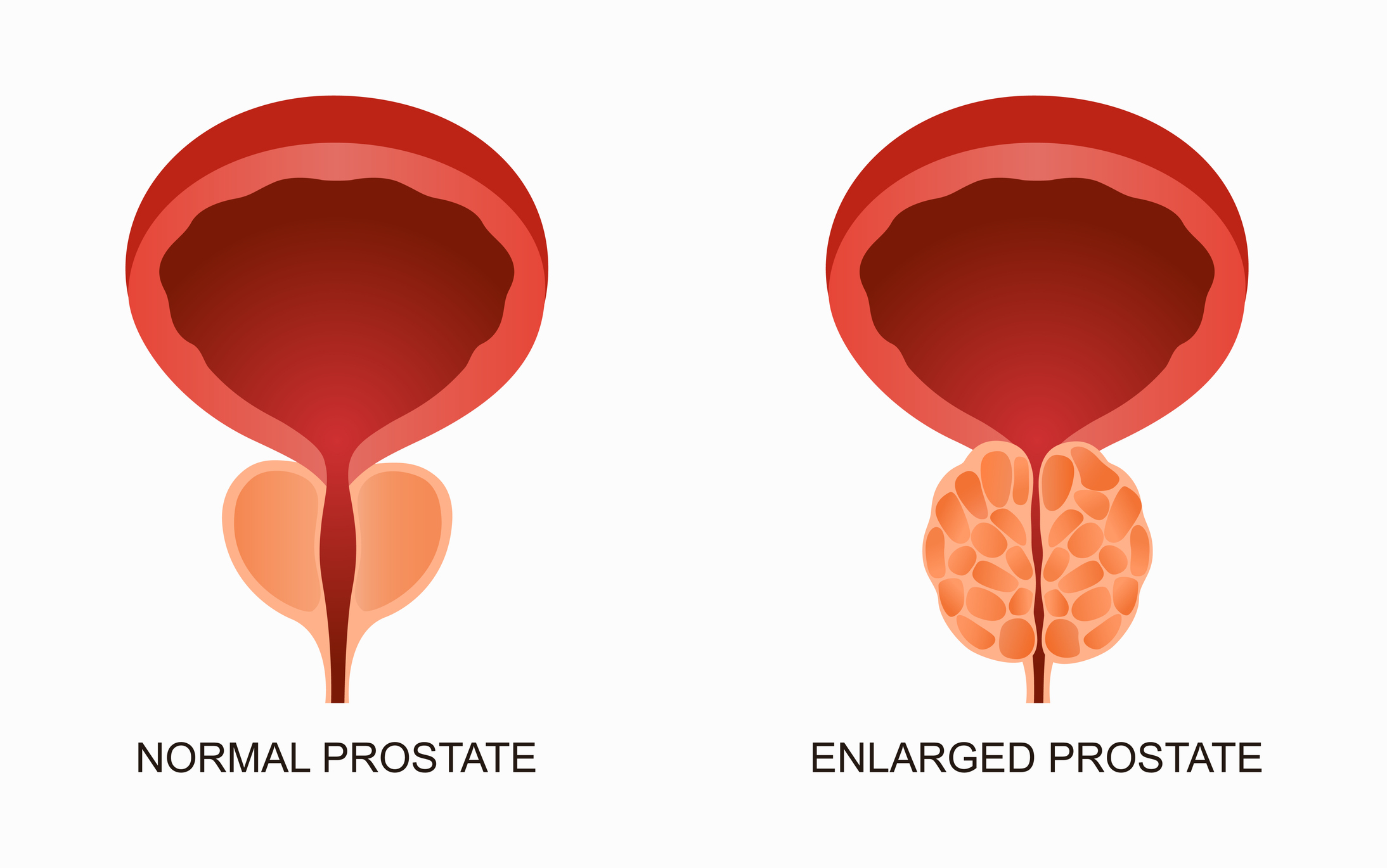
 An enlarged prostate, or benign prostatic hyperplasia (BPH), is a condition that causes the prostate to grow in size.
The prostate can become enlarged for several reasons, including:
- The prostate increasing in size commonly occurs as men age
- Prostatitis, resulting from an infection, an inflammatory process, irritation, or an injury
- Prostate cancer
An enlarged prostate can cause symptoms that may bother you, such as:
- Blocking the flow of urine
- Bladder, urinary tract, or kidney problems
Other common symptoms of an enlarged prostate include:
- Frequent or urgent need to pee
- Peeing more often at night
- Weak urine stream or a stream that stops and starts
- Dribbling at the end of urination
- Not being able to empty the bladder fully
- Trouble starting to pee
There are several risk factors for an enlarged prostate, including:
- Aging
- Diabetes and heart disease
- Family history
- Lifestyle
To diagnose an enlarged prostate, a healthcare provider will start by asking questions about your symptoms, as well as performing a physical exam, which includes:
- A digital rectal exam
- Urine test
- Blood test
After the physical exam, your healthcare provider may need other tests to help confirm an enlarged prostate diagnosis. These tests include:
- Prostate-specific antigen (PSA) blood test
- Urinary flow test
- Postvoid residual volume test
- 24-hour voiding diary
If there is a more complex health problem, your healthcare provider may order more tests, such as:
- A prostate biopsy
- A transrectal ultrasound
- Urodynamic and pressure flow studies
- Cystoscopy
The best treatment for an enlarged prostate depends on the size of your prostate, how serious your symptoms are, your age, and your overall health.
Treatment options for an enlarged prostate include medicines, surgery, and procedures that involve smaller, fewer, or no cuts.
If you or a loved one is experiencing symptoms of an enlarged prostate, you can receive treatment at Flushing Hospital Medical Center’s Ambulatory Care Center. To schedule an appointment, please call (718) 670-5486.
All content of this newsletter is intended for general information purposes only and is not intended or implied to be a substitute for professional medical advice, diagnosis or treatment. Please consult a medical professional before adopting any of the suggestions on this page. You must never disregard professional medical advice or delay seeking medical treatment based upon any content of this newsletter. PROMPTLY CONSULT YOUR PHYSICIAN OR CALL 911 IF YOU BELIEVE YOU HAVE A MEDICAL EMERGENCY.