
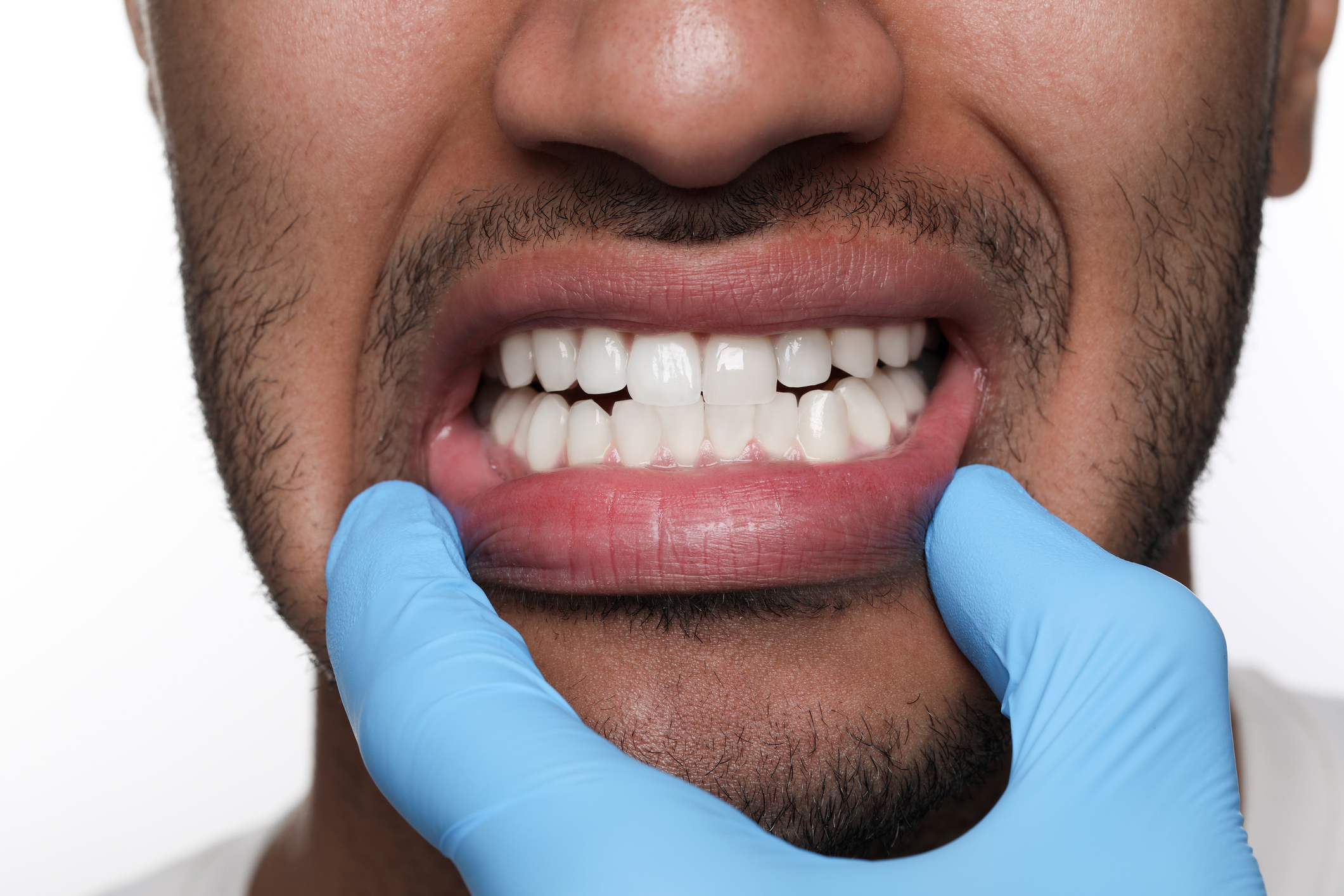
 The alignment of your teeth and how your upper and lower teeth fit together is called your bite. A malocclusion or misaligned bite occurs when your upper and lower teeth don’t fit together properly when you close your mouth.
Common causes of malocclusions include genetic or hereditary factors such as jaw size; dental issues such as impacted teeth, early or late tooth loss, or jaw or facial injury; developmental conditions such as cleft palate; childhood habits such as thumb sucking or long-term pacifier use; and poor oral health.
Healthcare providers may use these terms when describing the different types of malocclusions:
- Open bite, where the front or side teeth do not touch when the mouth is closed
- Overbite, where the upper front teeth excessively overlap the lower front teeth vertically.
- Crossbite, where one or more upper teeth bite inside the lower teeth.
- Underbite, where the lower front teeth extend past the upper front teeth.
- Spacing, where there are excessive gaps between teeth.
- Crowding, where there isn’t enough space for teeth to erupt properly
When left untreated, malocclusions can lead to a host of health problems, such as:
- Gum irritation
- Difficulty chewing
- Lisping
- Increased risk of cavities and gum disease
- Jaw pain
- Temporomandibular joint (TMJ) problems
- Mouth breathing
- Sleep apnea
- Tooth loss
Malocclusions should be treated as soon as possible to avoid these problems. Your dentist can diagnose misaligned bites by conducting an examination and using X-rays, dental impressions, and dental records. Your dentist may also refer you to an orthodontist for further evaluation and treatment.
Treatment may involve braces, clear aligners, jaw surgery, tooth extractions, prosthodontic treatments such as veneers, or orthodontic headgear. Treatment is based on severity, the patient’s age, the type of malocclusion, and functional and cosmetic needs.
To schedule an appointment with a dentist at Flushing Hospital Medical Center, please call (718) 670-5521.
All content of this newsletter is intended for general information purposes only and is not intended or implied to be a substitute for professional medical advice, diagnosis or treatment. Please consult a medical professional before adopting any of the suggestions on this page. You must never disregard professional medical advice or delay seeking medical treatment based upon any content of this newsletter. PROMPTLY CONSULT YOUR PHYSICIAN OR CALL 911 IF YOU BELIEVE YOU HAVE A MEDICAL EMERGENCY.